Why Roads Become Potholed and What It Means for Infrastructure and Drivers
Potholes form when water infiltrates cracks in the road surface, weakens the underlying soil structure, and is subsequently displaced by traffic loads, leading to the collapse of the asphalt. This phenomenon signifies localized structu...
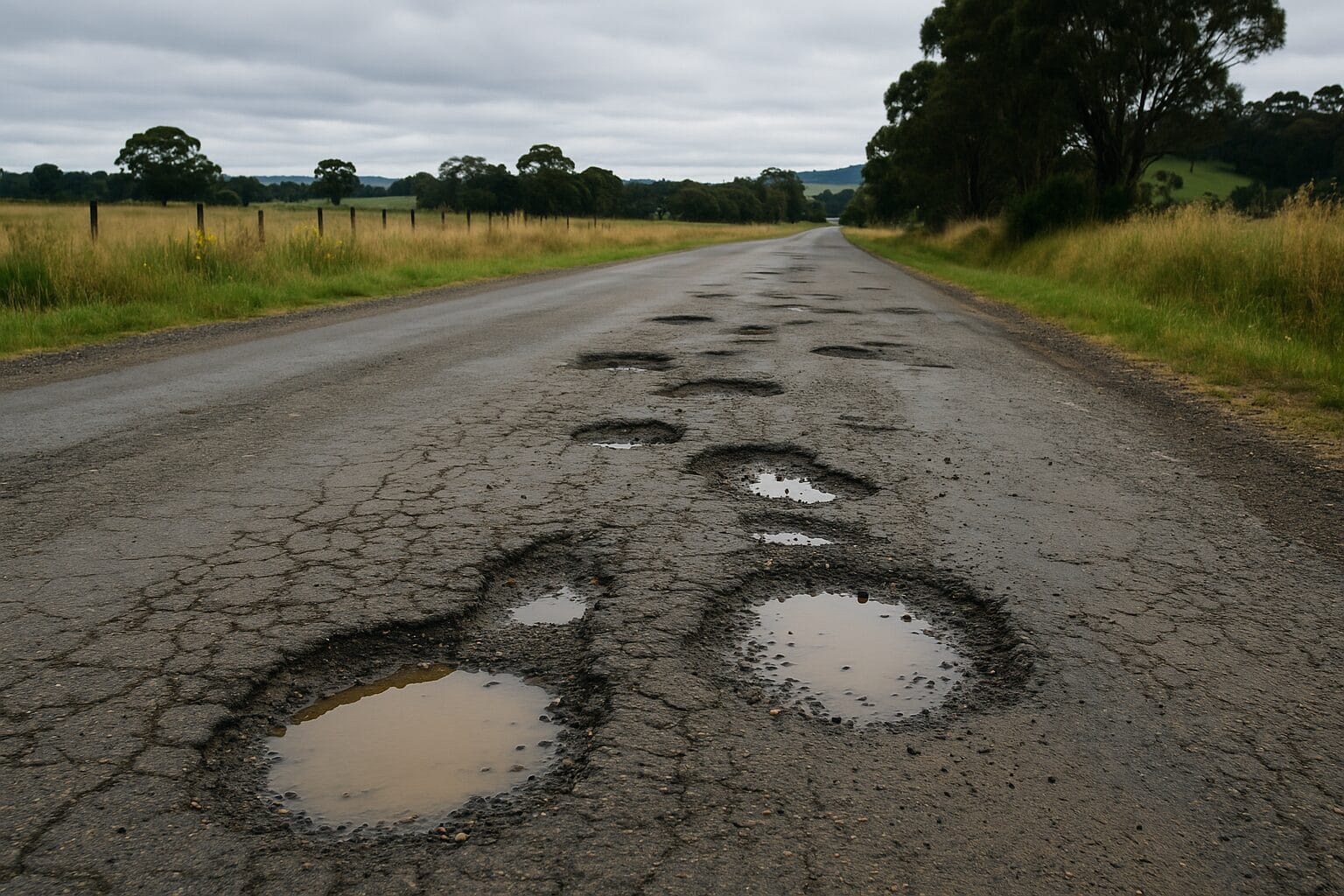
Potholes form when water infiltrates cracks in the road surface, weakens the underlying soil structure, and is subsequently displaced by traffic loads, leading to the collapse of the asphalt. This phenomenon signifies localized structural failure that poses significant risks to vehicle safety, increases maintenance costs for municipalities, and serves as an early indicator of wider pavement degradation.
Contents
The Mechanics of Pothole Formation
Understanding how a pothole develops requires a look at the interaction between environmental factors and structural engineering. Roads are typically built in layers: a subgrade of compacted earth, a sub-base of aggregate, and a surface course of asphalt or concrete.
The process usually begins with minor surface distress, such as "alligator cracking"—a network of small cracks resembling reptile skin. These cracks provide a pathway for surface water, such as rain or melting snow, to penetrate the pavement. Once water enters the sub-base, it softens the soil. If this occurs during winter months in regions with fluctuating temperatures, the moisture freezes and expands, forcing the pavement upward. When the ice thaws, it leaves behind a void beneath the road surface.
Once this void exists, the structural integrity of the pavement is compromised. As heavy vehicles drive over this unsupported section, the asphalt flexes downward and eventually crumbles into the void. This cycle repeats, with every passing tire acting as a piston that displaces the loose material, rapidly expanding the hole in size and depth.
The Significance of Potholes in Infrastructure Management
A pothole is more than an annoyance; it is a diagnostic symptom of a failing road network. Infrastructure engineers use the appearance of these surface defects to categorize the health of a roadway system.
When a pothole appears, it signifies that the "seal" of the road has been broken. If left unaddressed, the localized damage allows water to reach deeper into the structural layers of the road. This leads to "base failure," where the entire cross-section of the road becomes unstable. At this stage, simple patch repairs are insufficient. The municipality must then consider "full-depth reclamation," which involves milling out the damaged asphalt and often reconstructing the underlying sub-base.
Table: Stages of Pavement Degradation
| Stage | Manifestation | Structural Meaning | Required Intervention |
|---|---|---|---|
| Initial | Hairline cracks | Surface oxidation | Crack sealing (preventative) |
| Intermediate | Alligator cracking | Water infiltration | Seal coating or patching |
| Advanced | Pothole formation | Sub-base failure | Pothole patching (temporary) |
| Terminal | Deep rutting/sinkholes | Total subgrade collapse | Full-depth reconstruction |
Implications for Vehicle Safety and Financial Cost
For drivers, a pothole represents a direct threat to vehicle integrity and safety. Striking a deep pothole at speed can result in immediate, high-cost damage, including bent wheel rims, punctured tires, misaligned suspension systems, and damage to steering components.
Beyond the immediate repair costs, there are indirect safety risks. Drivers may swerve abruptly to avoid a pothole, potentially leading to collisions with other vehicles or stationary objects. Furthermore, as roads deteriorate, the lack of a smooth, uniform surface can lead to increased fuel consumption due to rolling resistance and, in extreme cases, a loss of vehicle control.
For government entities, the financial burden is cyclical. Reactive maintenance—patching holes only after they appear—is significantly more expensive over time than proactive pavement preservation. Agencies that prioritize preventive maintenance often utilize Pavement Management Systems (PMS) to track road conditions and intervene before the "terminal" stage of cracking occurs.
Addressing the Problem: Maintenance Strategies
Infrastructure agencies employ several methods to combat the proliferation of potholes. The choice of method depends on the budget, the severity of the road damage, and the season.
- Throw-and-Roll: This is the most common emergency method. Workers fill the hole with cold-mix asphalt and compact it with the tires of the maintenance truck. It is considered a temporary, "stop-gap" measure.
- Semi-Permanent Repair: This involves removing debris, squaring the edges of the hole to reach sound pavement, and using a high-quality asphalt mixture that is compacted with a plate compactor. This offers a much longer service life than simple patching.
- Spray Injection: This method uses a truck to blow debris out of the hole, spray a tack coat of asphalt binder, and then blow a mixture of aggregate and emulsion into the hole. This creates a dense, durable repair that can often be completed without manual compaction.
FAQ: Understanding Road Deterioration
Why do potholes seem to appear overnight? While the development of the underlying void may take weeks or months, the final collapse of the pavement surface often occurs under the stress of a single heavy load or during a rapid freeze-thaw cycle. This makes the emergence of the hole seem instantaneous.
Does road material matter? Yes. Different asphalt compositions have varying resistance to water penetration and thermal expansion. Additionally, the quality of the compaction during the initial paving process determines how prone the road is to the early-stage cracking that leads to potholes.
Are all roads equally susceptible? No. Roads with poor drainage, high volumes of heavy truck traffic, and those located in climates with frequent temperature swings around the freezing point are significantly more prone to pothole development.
Can I be compensated for pothole damage? In many jurisdictions, government agencies have "sovereign immunity," meaning they are not liable for road damage unless it can be proven that they were aware of the hazard and failed to address it within a reasonable timeframe. Documentation, including photographs and official maintenance logs, is typically required for any claims process.
What is the role of weather in road longevity? Weather is the primary driver of deterioration. Heat causes asphalt to oxidize and become brittle, while cold and moisture cause the physical expansion and structural weakening that eventually break the bond of the pavement.
Next Steps for Drivers
If you encounter a severe pothole, report it to the local department of public works or transportation agency immediately. Many cities in 2026 offer mobile applications or web portals for reporting road hazards. When reporting, provide the exact location, the approximate size of the pothole, and whether it poses an immediate safety hazard. If your vehicle sustains damage, photograph both the road condition and your vehicle’s damage, and contact your insurance provider or the responsible municipal body to inquire about potential claims procedures.
Image Gallery