Understanding the OTOC Workers Compensation System: A Comprehensive Guide
The OTOC workers' compensation system, often referenced in the context of the Offshore Territories and Overseas Contractors (OTOC) framework, serves as a specialized insurance structure designed to provide mandatory coverage for employ...
The OTOC workers' compensation system, often referenced in the context of the Offshore Territories and Overseas Contractors (OTOC) framework, serves as a specialized insurance structure designed to provide mandatory coverage for employees operating in high-risk, remote, or international jurisdictions. It ensures that staff receive medical care, wage replacement, and rehabilitation benefits following work-related injuries or occupational illnesses regardless of their distance from domestic administrative hubs.
Contents
Defining the Scope of OTOC Coverage
When discussing the OTOC workers' compensation system, it is vital to distinguish between standardized domestic insurance and the specialized, often multi-jurisdictional nature of offshore and overseas contracting insurance. Unlike traditional state-based programs, this system frequently operates under specific federal mandates or contractual requirements necessitated by the Defense Base Act (DBA) or similar maritime and international labor regulations.
The primary objective is to eliminate the legal and financial uncertainty that arises when an employee is injured in a location where local judicial systems may be inadequate, inaccessible, or unfavorable to the claimant. By establishing a unified system, contractors ensure that their workforce—whether engaged in construction, logistics, or administrative support—remains protected under a consistent set of legal standards, regardless of the physical project site.
Eligibility and Prerequisites for Coverage
Accessing benefits within the OTOC framework begins with the classification of the employment contract. Not every overseas worker falls under the same regulatory umbrella. Eligibility is typically determined by the following criteria:
- Contractual Nexus: The employer must be under a direct contract with the government or a government-sanctioned entity. In many cases, this pertains to civilian contractors supporting military or reconstruction efforts in remote territories.
- Geographic Scope: The work must take place outside the continental United States or in designated "overseas" zones defined by specific legislative acts.
- Employment Status: Coverage extends to both primary contractors and, in many instances, subcontractors, provided their work is tied to the primary government-funded objective.
Before a claim can be processed, employers must verify that their policy is active and that the specific site of the incident falls within the geographical bounds defined in the policy declaration pages. It is the responsibility of the employer to document the exact location and nature of the task performed at the time of the injury.
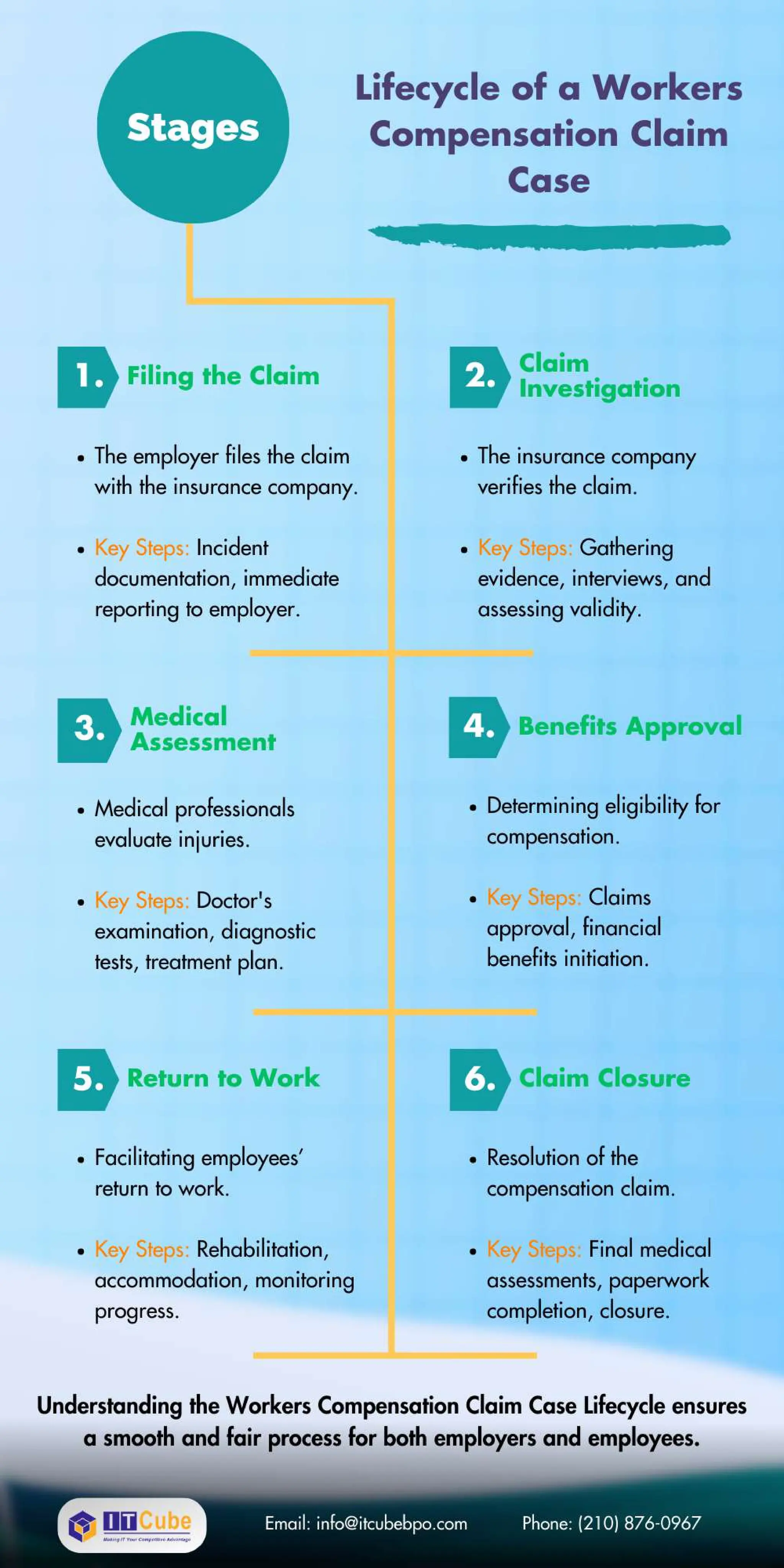
The Lifecycle of a Workers' Compensation Claim
Navigating a claim within this system requires a systematic approach to documentation and communication. Because the administrative offices are often thousands of miles from the site of the injury, procedural errors can result in significant delays.
- Immediate Medical Intervention: The priority is the stabilization of the injured party. Under OTOC guidelines, employers are required to facilitate access to the nearest capable medical facility.
- Notification of Incident: A formal notice must be filed with the designated insurance carrier and, where applicable, the relevant government oversight office. This notice must be submitted within the specific statutory timeframe, which may differ from domestic standard-of-care requirements.
- Medical Evaluation and Reporting: All medical documentation must be centralized. Detailed records including physician notes, diagnostic imaging, and treatment plans are required to prove that the injury occurred "in the course and scope" of employment.
- Benefit Disbursement: Once the claim is approved, the system coordinates wage replacement (typically a percentage of the Average Weekly Wage) and the coverage of necessary medical expenses.
- Rehabilitation and Return-to-Work: The system emphasizes recovery and, where possible, a return to active duty or transition to light-duty status.
Comparative Analysis: Domestic vs. OTOC Systems
| Feature | Standard Domestic Workers' Comp | OTOC / Offshore Workers' Comp |
|---|---|---|
| Jurisdiction | State-level oversight | Federal or International oversight |
| Benefit Caps | Determined by state law | Often tied to federal statutes (e.g., DBA) |
| Medical Network | State-mandated provider lists | Global, often specialized trauma networks |
| Legal Recourse | State Workers' Comp Boards | Federal Administrative Law Judges |
| Premium Basis | Payroll by state location | Risk-based, site-specific, and hazard rating |
Common Challenges and Troubleshooting
One of the most frequent issues encountered by claimants is the "denied claim" based on jurisdictional ambiguity. If an employee is transferred between job sites, the insurance carrier may challenge which policy is responsible for the payout.
To prevent this, ensure that your personnel files are updated in real-time with the exact location and status of every contractor. Use encrypted digital logs to track when an employee crosses a jurisdictional border. If a claim is denied, the worker generally has the right to appeal to an Administrative Law Judge. This process involves proving that the work performed at the time of injury was essential to the government contract.
Another challenge is the currency and tax implication of benefit payments. Since many overseas workers are paid in a mix of currencies or under tax equalization agreements, determining the "Average Weekly Wage" can be complex. Always consult with a tax professional experienced in the specific treaty or labor agreement governing your contract.
Frequently Asked Questions
1. Does the OTOC system cover commute-related accidents? Generally, no. Similar to domestic workers' compensation, the injury must occur during the performance of work duties. However, if the employer provides mandatory transportation to a remote site as part of the contract, the "going and coming" rule may be superseded, potentially offering coverage.
2. What happens if I am injured in a country with no medical infrastructure? The OTOC system mandates that the employer provide for medical evacuation if local facilities are inadequate. The cost of such evacuation and subsequent care in a third-party country is typically a covered expense under the policy.
3. Are subcontractors included under the primary contractor's policy? This depends on the contractual language. While many "wrap-up" insurance policies cover all personnel on site, it is a common point of failure. Subcontractors should always verify the specific inclusion clauses in their service agreements before deployment.
4. How long does it take to process a claim in this system? While simple injury claims can be processed within 30 days, complex cases involving international coordination and specialized legal review often take 60 to 90 days. Ongoing documentation and clear communication with the carrier are the best ways to reduce this timeframe.
5. Can I hire my own physician? In many cases, the insurance carrier has a network of preferred providers. You have the right to seek emergency care from any facility, but for long-term treatment, you must coordinate with the carrier to ensure that the chosen physician's bills are covered under the policy guidelines.
Next Steps and Professional Guidance
If you are currently managing personnel under the OTOC system, the most important step is to conduct a policy audit. Review your insurance declarations to ensure that all active work sites are listed and that the policy limits reflect the current risk profile of your 2026 operations. If you are an employee, maintain a digital archive of your employment contract, deployment orders, and all initial medical records related to any incident.
For those navigating a denied claim or complex injury, seeking counsel from an attorney specializing in federal contractor insurance is highly recommended. These professionals can navigate the nuances of the Defense Base Act and other relevant statutes to ensure your rights are protected.
Image Gallery