Understanding Stocks Trading for Beginners
Stock trading is the process of buying and selling shares of publicly traded companies through a brokerage account to profit from price fluctuations. Beginners typically navigate this by opening an account, conducting fundamental or te...
Stock trading is the process of buying and selling shares of publicly traded companies through a brokerage account to profit from price fluctuations. Beginners typically navigate this by opening an account, conducting fundamental or technical analysis, and placing orders via electronic exchanges, keeping in mind that all investments carry the risk of capital loss.
Contents
The Foundation: What is a Stock?
At its core, a stock represents an equity interest in a corporation. When you purchase a share of stock, you are effectively becoming a partial owner of that entity. Publicly traded companies divide their ownership into millions or billions of shares, which are listed on national exchanges such as the New York Stock Exchange (NYSE) or the Nasdaq.
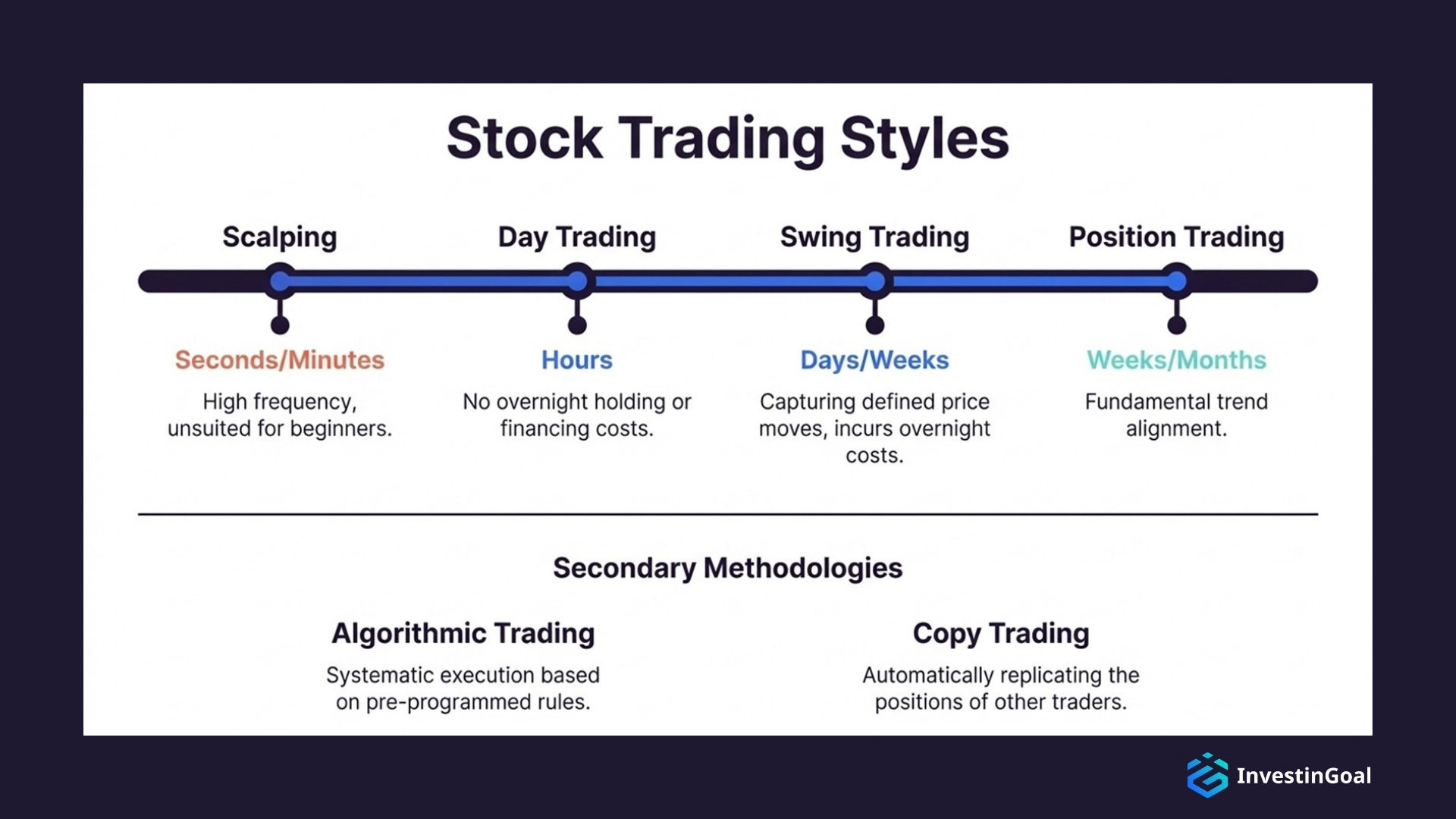
For beginners, it is essential to distinguish between investing and trading. Investing generally implies a long-term strategy, often characterized by a "buy and hold" mentality focused on long-term appreciation and dividends. Trading, conversely, involves shorter-term positions, where the primary objective is to capitalize on short-term market movements, whether those periods last for hours (day trading) or weeks (swing trading). Understanding your time horizon is the first step in aligning your strategy with your financial goals.
Prerequisites for Getting Started
Before executing your first trade, you must establish the necessary infrastructure and legal framework. Trading is not a theoretical exercise; it requires an active interface with financial markets.
1. The Brokerage Account
You cannot trade stocks directly on an exchange; you must go through a licensed intermediary known as a broker. In 2026, most trading is conducted via online brokerage platforms. When choosing a broker, consider the following:
- Commission Fees: Many modern brokerages offer zero-commission trading for stocks and exchange-traded funds (ETFs).
- Trading Tools: Ensure the platform provides adequate charting software, news feeds, and research reports.
- Minimum Balance: Some platforms require a specific minimum deposit to open an account, while others allow you to start with as little as $1.
- Regulation: Ensure your broker is registered with the Securities and Exchange Commission (SEC) and is a member of the Financial Industry Regulatory Authority (FINRA). This status provides access to the Securities Investor Protection Corporation (SIPC) coverage, which protects your assets if the brokerage firm fails.
2. Capital and Risk Management
Never trade with "essential" money. Use funds that you do not need for rent, mortgage, debt obligations, or emergency expenses. Trading is a high-risk activity; it is possible to lose more than your initial investment if you utilize margin (borrowing money from the broker to trade). Beginners are strongly advised to stick to cash accounts until they fully understand market volatility.
Types of Market Orders
Understanding how to enter the market is just as important as knowing what to buy. You will encounter several types of orders that dictate how your transaction is executed:
- Market Order: An order to buy or sell a stock immediately at the best available current price. This guarantees execution but not a specific price.
- Limit Order: An order to buy or sell a stock only at a specific price or better. This guarantees the price but not the execution.
- Stop-Loss Order: An order that automatically sells a stock when it hits a specified price, designed to limit losses on an open position.
- Stop-Limit Order: A combination of a stop-loss and a limit order. It triggers a limit order once the stop price is reached.
Order Comparison Table
| Order Type | Execution Speed | Price Certainty | Best Used For |
|---|---|---|---|
| Market | Immediate | Low | Highly liquid stocks, urgent entry/exit |
| Limit | Variable | High | Controlling entry/exit prices |
| Stop-Loss | Contingent | Low | Protecting against significant downside |
| Stop-Limit | Contingent | Moderate | Precision risk management |
Analysis Methods: How to Choose a Stock
Once your account is funded, the question remains: what to trade? Traders generally rely on two primary schools of thought: Fundamental Analysis and Technical Analysis.
Fundamental Analysis
This approach involves assessing a company’s intrinsic value by examining financial statements, management quality, competitive advantages, and macroeconomic indicators. Key metrics include the Price-to-Earnings (P/E) ratio, Earnings Per Share (EPS), and the company's debt-to-equity profile. Fundamental analysis is usually preferred by those with a longer-term outlook.
Technical Analysis
This method focuses on price and volume data. Technical traders believe that historical price movements often repeat in predictable patterns. They use charts to identify trends, support and resistance levels, and momentum indicators like the Relative Strength Index (RSI) or Moving Averages. Technical analysis is the primary tool for short-term traders.
Common Mistakes for Beginners
Avoiding common pitfalls is often more important than identifying "winning" trades.
- Emotional Trading: Succumbing to "Fear of Missing Out" (FOMO) leads to buying at peaks. Panicking during market dips often leads to selling at bottoms. Develop a plan and stick to it.
- Lack of Diversification: Putting all your capital into a single stock or sector exposes you to unnecessary idiosyncratic risk. Spreading your capital across different industries can mitigate this.
- Overtrading: Attempting to trade every market move often leads to higher transaction costs and exhaustion. Quality of execution is superior to quantity.
- Ignoring Risk-Reward Ratios: Before entering a trade, calculate your potential gain versus your potential loss. A sensible trader rarely risks $5 to make $1.
Regulatory and Professional Advice Notice
Stock trading is subject to market risk and regulatory oversight. This article is for educational purposes only and does not constitute financial, legal, or investment advice. Taxes on capital gains are applicable, and you should consult with a tax professional regarding how your trading activity impacts your annual filings. Always review the disclosures provided by your brokerage firm regarding account types, margin interest, and specific asset risks.
Frequently Asked Questions
How much money do I need to start trading? Many online brokers in 2026 allow you to open accounts with $0 minimums. However, you should have enough capital to build a diversified portfolio or execute your strategy without the costs of trading (like data fees) eating into your margin.
What is the difference between a stock and an ETF? A stock is an ownership share in one specific company. An ETF is a basket of stocks (or other assets) that trades on an exchange like a single stock. ETFs offer instant diversification, which is often safer for beginners.
What are "Blue Chip" stocks? Blue chip stocks are shares of large, well-established, and financially sound companies that have operated for many years. They are generally considered lower-risk compared to small-cap or "penny" stocks.
Can I trade stocks outside of market hours? Yes, most brokers offer extended-hours trading (pre-market and after-hours). However, liquidity is typically lower during these sessions, and prices can be more volatile than during the regular trading session (9:30 AM to 4:00 PM ET).
What is a margin account? A margin account allows you to borrow money from your broker to purchase stocks. This increases your buying power but also amplifies your risk; if the value of your stocks drops significantly, you may face a "margin call" requiring you to deposit more cash immediately.
Next Steps for the Aspiring Trader
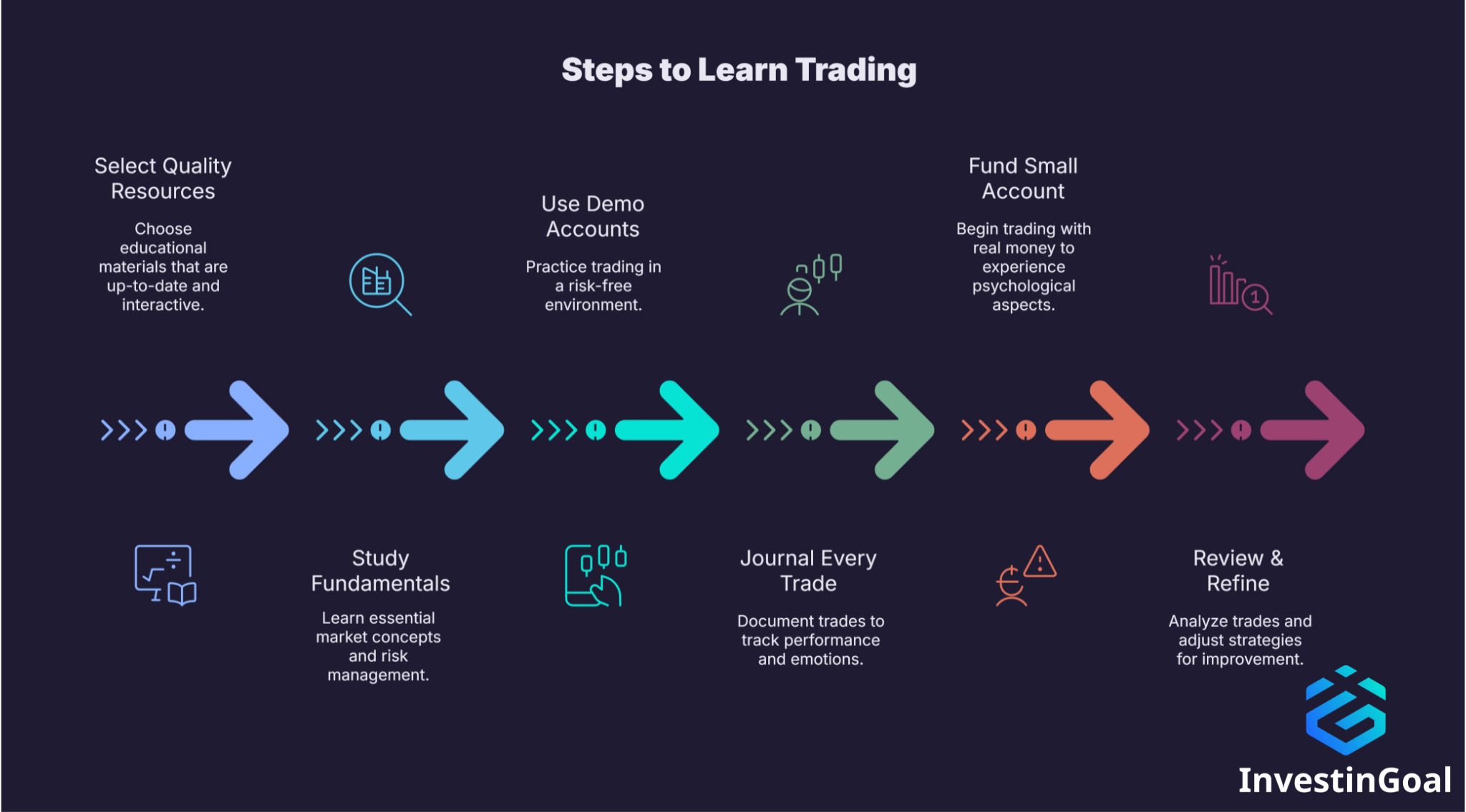
Your first practical action should be to educate yourself on your chosen platform’s interface. Most reputable brokerages offer "paper trading" accounts, which are simulators that allow you to trade using real-time market data with virtual money. Spend at least 30 days practicing in a paper trading environment before risking your actual capital. Once you have a consistent strategy, start with a small amount of capital to test your discipline in real-market conditions.
Image Gallery