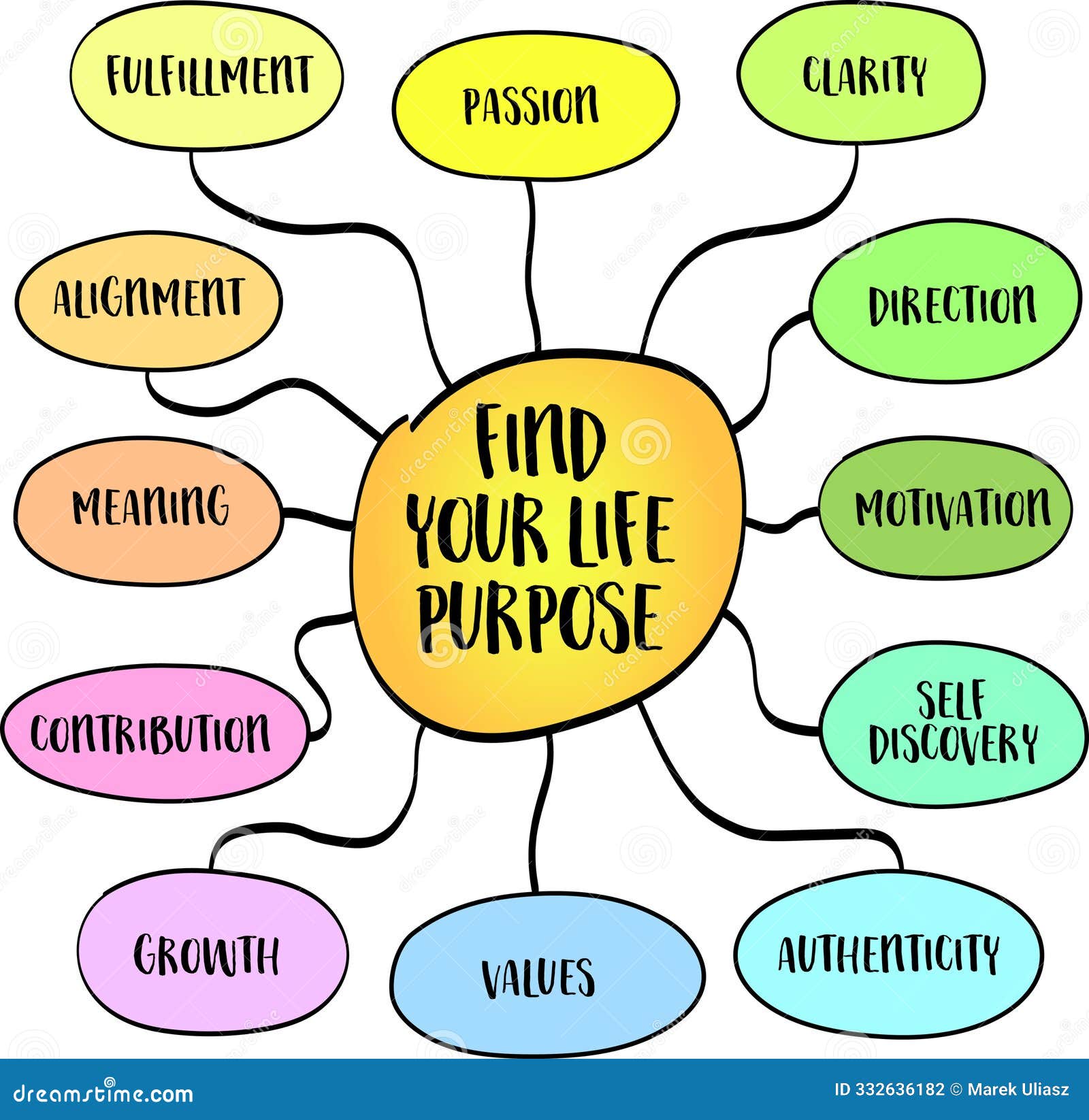
Finding Your Direction: A Comprehensive Guide to Discovering Your Purpose in 2026
Finding your purpose is the process of aligning your unique talents, passions, and core values with a contribution to the world. It is not a fixed destination but a dynamic, evolving framework that provides direction, enhances mental w...
Finding your purpose is the process of aligning your unique talents, passions, and core values with a contribution to the world. It is not a fixed destination but a dynamic, evolving framework that provides direction, enhances mental well-being, and builds resilience by connecting your daily actions to a broader sense of meaning.
Contents
The question "What is my purpose?" is a universal human inquiry that spans philosophy, psychology, and modern self-development. While it is often popularized in media—ranging from the existential dread of the "Butter Robot" in Rick and Morty to deep philosophical treatises—the practical search for purpose is a tangible journey involving self-reflection and trial. In 2026, as the boundaries between work, technology, and personal identity continue to shift, defining a clear sense of "why" has become more essential than ever for maintaining mental health and long-term fulfillment.
Understanding the Difference Between Meaning and Purpose
To effectively answer "What is my purpose?", it is necessary to distinguish between "meaning in life" and "purpose in life." While these terms are often used interchangeably, researchers in the field of positive psychology distinguish them by their orientation.
Meaning is largely retrospective and evaluative. It is about how you make sense of your past experiences, your relationships, and your place in the world. It answers the question, "Does my life make sense?"
Purpose, conversely, is prospective and aspirational. It is a goal-directed motivation that guides your future decisions and daily behaviors. It is the "North Star" that dictates how you use your time and energy. You can find meaning in a beautiful sunset or a memory, but purpose requires an active engagement with the world. By 2026 standards, psychologists emphasize that a healthy individual usually possesses both: a clear understanding of their history (meaning) and a motivated drive toward a future contribution (purpose).
The Ikigai Framework: A Multi-Dimensional Approach
One of the most effective tools for identifying purpose is the Japanese concept of Ikigai, which translates roughly to "a reason for being." This framework suggests that purpose is found at the intersection of four distinct areas of life. If any of these are missing, the sense of purpose may feel hollow or unsustainable.
- What you love: Your natural interests, hobbies, and activities that create a state of "flow."
- What you are good at: Your skills, talents, and areas where you have a natural or developed proficiency.
- What the world needs: The problems you see in society, the needs of your community, or the gaps in your industry that you feel called to fill.
- What you can be paid for: The economic reality of sustaining yourself, which allows your purpose to be a central part of your life rather than just a weekend hobby.
When these four elements overlap, you find a balance that provides both internal satisfaction and external stability. In 2026, the "what you can be paid for" segment has expanded significantly due to the creator economy and specialized niche markets, allowing individuals to monetize increasingly specific or unconventional purposes.
Comparing Philosophical Approaches to Purpose
| Philosophy | Core Concept | Primary Goal | Practical Application |
|---|---|---|---|
| Stoicism | Virtue and Duty | Living in accord with nature | Focusing only on what you can control to serve the common good. |
| Existentialism | Radical Freedom | Creating your own meaning | Rejecting inherent purpose to define oneself through choices and actions. |
| Ikigai | Balance and Harmony | Finding a "reason for being" | Aligning passion, mission, vocation, and profession. |
| Essentialism | Disciplined Pursuit | Doing less, but better | Eliminating non-essentials to focus on the highest point of contribution. |
The Science and Benefits of Having a Purpose
The pursuit of purpose is not merely a "feel-good" exercise; it has documented physiological and psychological benefits. Longitudinal studies have consistently shown that individuals with a high sense of purpose live longer and experience better health outcomes.
Physical Health and Longevity
Research published in journals such as The Lancet and by the National Institutes of Health indicates that a strong sense of purpose is linked to a reduced risk of cardiovascular events, including heart attacks and strokes. Purpose-driven individuals often exhibit lower levels of pro-inflammatory cytokines and more robust immune responses. This is partly because people with a clear "why" are more likely to engage in preventive health behaviors, such as regular exercise and balanced nutrition, to ensure they can continue pursuing their goals.
Cognitive Resilience
Neurological studies suggest that purpose acts as a buffer against cognitive decline. In older adults, those with a defined purpose show a slower rate of decline in executive function and a lower risk of developing Alzheimer’s disease. The brain's neuroplasticity is supported by the constant learning and problem-solving required to fulfill a complex life goal.
Mental Well-being
From a psychological perspective, purpose provides a sense of "agency." When you believe your actions matter, you are less likely to experience the feelings of helplessness associated with depression and anxiety. In 2026, mental health professionals frequently incorporate "purpose-finding" exercises into Cognitive Behavioral Therapy (CBT) and Acceptance and Commitment Therapy (ACT) to help patients build resilience against modern stressors.
Practical Steps to Identify Your Purpose
Finding your purpose is rarely a "eureka" moment. Instead, it is a process of elimination and experimentation. If you feel stuck, utilize the following steps to begin narrowing your focus.
1. Conduct a "Values Audit"
Your purpose must be rooted in your core values. If you value "security" above all else, a purpose rooted in high-risk social activism may lead to burnout. Use a values assessment tool or list 20 values (e.g., honesty, creativity, service, wealth, autonomy) and narrow them down to your top three. Any purpose you define must honor these three pillars.
2. Analyze Your "Pain Points"
Often, our purpose is found in the things that frustrate us the most. What problems in the world make you angry? What inefficiencies in your career drive you to distraction? Often, your "why" is tied to solving a specific problem that you are uniquely equipped to handle because of your personal history or professional expertise.
3. The "Five Whys" Technique
Borrowed from industrial manufacturing but highly effective for personal growth, the "Five Whys" involves taking a basic interest and asking "why" five times to get to the root motivation.
- Interest: "I want to teach people about coding."
- Why? "Because I want them to have better jobs."
- Why? "Because financial stability changes families."
- Why? "Because my family struggled and it was hard."
- Why? "Because I believe no one should be trapped by their circumstances."
- Why? "Because I value universal opportunity."
- Result: Your purpose isn't just "coding"; it is "empowering others through technical literacy to ensure universal opportunity."
4. Low-Stakes Experimentation
Do not quit your job to follow a "purpose" you haven't tested. Volunteer, start a side project, or take a course. Purpose is verified through action, not just contemplation. Observe where you feel most energized and where you feel most drained.
Overcoming Common Barriers
The search for purpose is frequently stalled by several common psychological and social hurdles. Recognizing these as you navigate 2026 is vital for progress.
- The Myth of the "One Thing": Many people believe they have a single, pre-ordained purpose. In reality, most people are "multipotentialites" who can find deep meaning in several different areas over a lifetime. Your purpose at 25 may be different from your purpose at 50, and that is a sign of healthy growth.
- Purpose Anxiety: This is the stress caused by the feeling that you should have a world-changing purpose but don't. Remember that purpose does not have to be "grand." Being a supportive parent, a reliable neighbor, or a craftsman who takes pride in their work are all valid and vital purposes.
- External Expectations: Societal pressure to achieve high status or wealth often masks one's true purpose. It is important to decouple "success" as defined by others from "fulfillment" as defined by you.
The Evolution of Purpose Over Time
As we move through 2026, the concept of a "career for life" has largely vanished. This makes the search for purpose even more critical, as it provides the continuity that a single job no longer does. Your purpose is the thread that connects various roles, industries, and life stages.
For instance, an individual whose purpose is "to protect the environment" might start as a field researcher, move into environmental law, and eventually become a consultant for sustainable tech startups. The jobs change, but the purpose remains constant, providing a sense of integrity and progress throughout their life.
FAQ
Can my purpose be my family? Absolutely. Purpose is about contribution and impact. For many, the most significant impact they can have is raising healthy, compassionate children or supporting their aging parents. This is a profound and valid purpose that provides immense social and personal value.
What if I have no passions? Passion is often the result of mastery, not the prerequisite for it. If you don't feel "passionate" about anything, focus on being "useful." Look for a problem that needs solving and apply your skills to it. Passion often grows as you see the positive impact of your efforts.
How do I know if I’ve found my purpose? You will know when you feel a sense of "rightness" in your actions, even when the work is difficult. Purpose does not make life easy; it makes challenges meaningful. If you find yourself willing to endure hardship for the sake of your goal, you are likely operating within your purpose.
Is purpose the same as a career? No. While a career can be a vehicle for your purpose, they are distinct. A career is a structural role in the economy. A purpose is the "why" behind the role. You can fulfill the same purpose in many different careers, or even through hobbies and volunteerism.
Does my purpose have to change the world? Not in a global sense. Purpose is about the scale of your world. For a teacher, "the world" is their classroom. For a doctor, it is their patients. Small-scale purpose is just as valid and necessary as large-scale purpose.
Final Recommendation
To begin your journey toward a clearer purpose, start a "Daily Reflection Log" for the next 14 days. At the end of each day, write down one moment when you felt most useful or energized. At the end of the two weeks, look for patterns. These small moments of "alignment" are the breadcrumbs leading to your broader purpose. Focus on where your skills meet a genuine need, and commit to one small, consistent action that serves that intersection.
Image Gallery