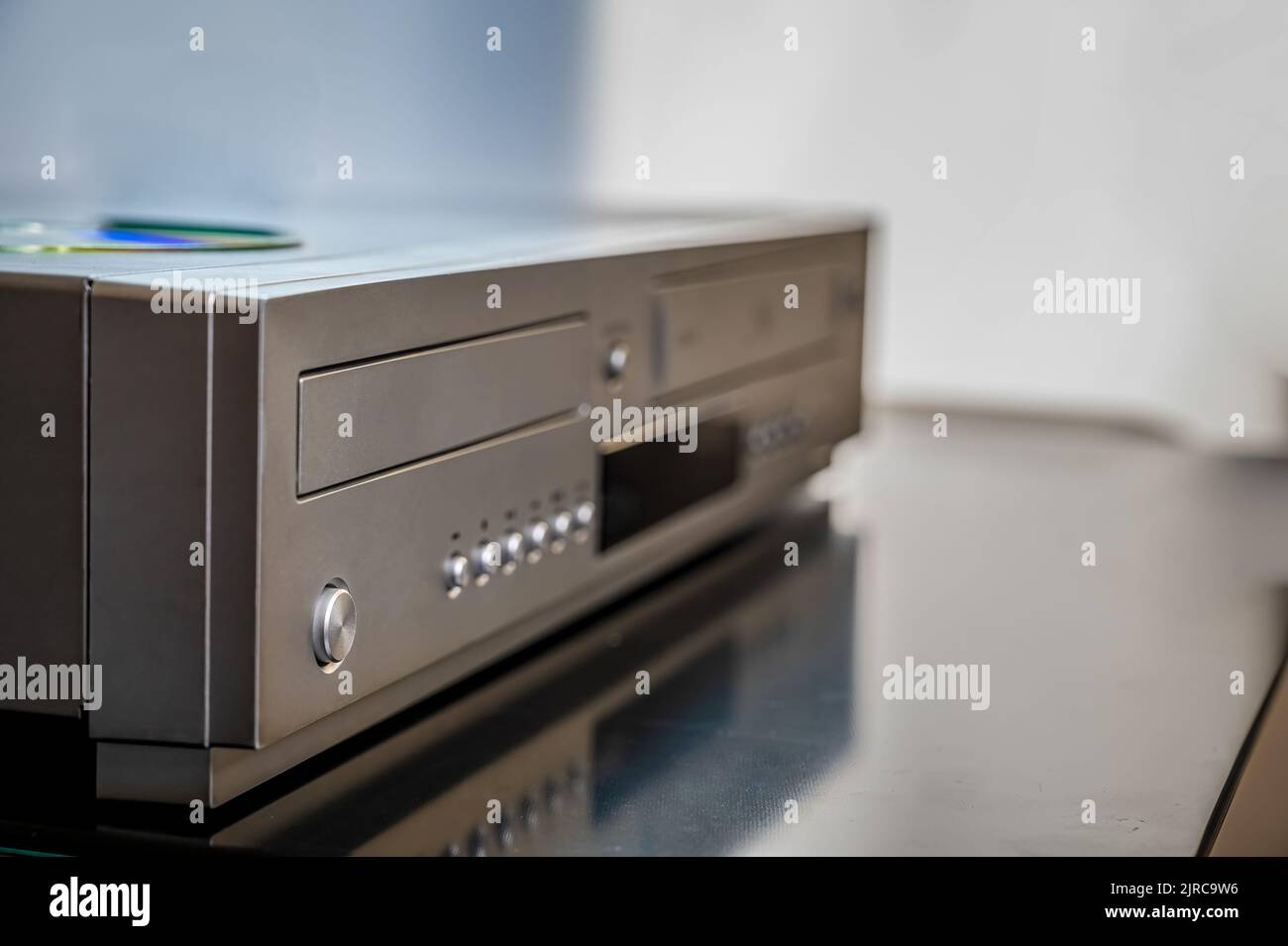
Do They Still Make VHS Players? The Reality of VCR Production and Availability
No, major electronics manufacturers no longer produce new VCRs or VCR/DVD combo players. Funai Electric, the last known company to manufacture standalone VHS VCR units under the Sanyo brand, ended production in July 2016 due to declini...
No, major electronics manufacturers no longer produce new VCRs or VCR/DVD combo players. Funai Electric, the last known company to manufacture standalone VHS VCR units under the Sanyo brand, ended production in July 2016 due to declining component availability and shrinking demand. Today, anyone looking to play home video tapes must rely on the secondhand market, specialized refurbished units, or alternative conversion services.
Contents
Understanding the current landscape of analog media requires examining how the consumer electronics industry shifted away from magnetic tape, where surviving hardware comes from, and what options remain for archiving aging home videos.
The End of an Era: When and Why VCR Manufacturing Stopped
The consumer electronics industry transitioned away from magnetic tape rapidly during the mid-2000s as DVD technology matured and high-definition digital formats emerged. Blockbuster video stores phased out VHS tapes entirely by 2006, and Hollywood studios released their final major commercial Hollywood movie on VHS in late 2006 (A History of Violence).
Despite the commercial death of prereleased VHS tapes, hardware manufacturers continued producing VCR units for a niche market of consumers who still owned extensive home video libraries. Funai Electric remained the last global holdout, building VCRs in China for the North American market under the Funai, Sanyo, and Magnavox brands. By 2016, Funai cited a lack of specialized component suppliers as the final hurdle that forced them to halt assembly lines permanently.
Key factors that drove the permanent cessation of VCR manufacturing include:
- Supply chain depletion for precision mechanical heads and rubber pinch rollers.
- Transition of global manufacturing plants to digital-first semiconductor and flat-panel display fabrication.
- Plummeting consumer demand as streaming services and digital downloads became the standard.
- Retail shelf space reallocation toward high-definition televisions and soundbars.
Sourcing Functional Hardware: Where to Find VHS Players Today
Because new units are entirely unavailable from retail channels, consumers seeking a working VCR must look toward the secondary market. Finding a reliable unit requires knowing where to look and what specific features or mechanical conditions to inspect before purchasing.
| Source Channel | Reliability & Testing | Price Range | Warranty / Return Policy |
|---|---|---|---|
| Specialty Refurbished Electronics Stores | High (Professionally cleaned, belts replaced, heads aligned) | $150 - $400+ | Usually 30 to 90 days |
| Local Thrift Stores (Goodwill, Salvation Army) | Low-to-Moderate (Sold untested, 'as-is') | $10 - $30 | None (Final sale) |
| Online Marketplaces (eBay, Mercari) | Variable (Depends on seller transparency and testing video) | $50 - $200 | Varies by seller protection terms |
| Garage Sales and Estate Sales | Low (Untested equipment sitting in storage) | $5 - $20 | None |
When purchasing a used unit, look for models featuring four or more video heads, which provide superior playback quality for standard play (SP) and long play (LP) tapes. Hi-Fi stereo audio heads are also preferable for capturing high-quality analog audio tracks.
Technical Realities of Playing VHS Tapes on Modern TVs
Connecting a vintage analog VCR to a modern 4K or 8K flat-screen television presents several technical hurdles. VCRs output analog signals via composite video (yellow, red, white RCA cables) or coaxial RF cables, whereas modern displays rely almost exclusively on digital HDMI inputs.
- [VCR Output]
- [Analog RCA Cables] (Yellow/Red/White)
- [AV-to-HDMI Converter Box]
- [Modern TV] (HDMI Cable)
To bridge this technological gap, users must deploy specific hardware converters:
- Composite-to-HDMI Converters: These small active boxes take the analog RCA output from the VCR, upscale the standard-definition 480i signal, and output a digital signal via an HDMI cable to the television.
- VCR/DVD Recorder Combos with HDMI Output: Manufactured primarily in the late 2000s, some rare late-model units include built-in HDMI ports that simplify modern connectivity, though these command high prices on the resale market.
- External USB Video Capture Cards: For computer users looking to digitize tapes, analog-to-USB capture dongles connect directly to a VCR and ingest the video feed into software like OBS Studio or VirtualDub.
Preserving Your Archives: Why Digitization Trumps Hardware Reliance
Magnetic tape is inherently unstable. Over time, the magnetic binder holding iron oxide particles to the polyester base film degrades through a process known as sticky-shed syndrome, or simply due to natural environmental oxidation. Relying on an aging mechanical VCR to watch treasured family memories indefinitely is risky because every pass of the tape wears down the delicate ribbon.
Migrating physical home videos into modern digital file formats (such as MP4, MKV, or MOV) ensures long-term preservation without physical degradation.
Step-by-Step Guide to Digitizing VHS Tapes at Home
- Inspect and Clean the Tapes: Check the physical cassette shell for cracks, mold, or damaged tape edges. Gently clean any mold with an isopropyl alcohol swab before inserting it into a VCR to prevent damaging the machine's video heads.
- Set Up the Capture Hardware: Connect the VCR's audio and video outputs to an analog-to-USB video capture device (such as an Elgato Video Capture or ClearClick unit) plugged into your computer.
- Test Audio and Video Sync: Run a short test recording to verify that audio tracks align properly with the video and that tracking adjustments on the VCR eliminate static lines.
- Capture in Real-Time: Because analog tapes must play at normal speed, initiate playback on the VCR while running capture software on your computer to record the stream uncompressed or in high-bitrate MPEG-4 format.
- Edit and Back Up Files: Trim dead space at the beginnings and ends of files, then store copies across multiple cloud drives and external solid-state drives (SSDs).
Pros and Cons of Maintaining a Vintage VCR Setup
Evaluating whether to hunt down a physical VCR or bypass hardware entirely requires weighing the nostalgic appeal against maintenance challenges.
Pros
- Nostalgic Value: Direct playback offers an authentic retro experience complete with tracking noise, physical media handling, and original television broadcast commercials often found recorded on home tapes.
- No Conversion Required: Instant gratification of watching tapes immediately without waiting for computer rendering or file transfers.
- Access to Rare Media: Many regional sporting events, independent films, and home recordings were never released on DVD, Blu-ray, or digital streaming platforms.
Cons
- Mechanical Fragility: VCRs contain hundreds of moving rubber belts, plastic gears, and electronic capacitors that warp, dry out, and fail over time.
- No Factory Support: Replacement parts are no longer manufactured by original equipment makers, forcing users to rely on salvaged parts or makeshift repairs.
- Sub-Optimal Display Quality: Standard-definition 480i analog video looks heavily pixelated and washed out on modern large-screen 4K and 8K displays without expensive line-doubling upscalers.
Frequently Asked Questions
Can I buy a brand-new VCR anywhere in 2026?
No. Brand-new VCR manufacturing ceased entirely in 2016 when Funai Electric closed its final production line. Any unit advertised as new today is typically old stock found in a warehouse, which often suffers from degraded internal rubber belts even if unused.
Why do old VCRs cost so much on eBay?
Prices remain high because the supply of functional, high-end units is strictly finite while demand from collectors, archivists, and nostalgia enthusiasts remains steady. Units that have been professionally serviced and tested command a significant premium.
Will playing an old moldy tape ruin my VCR?
Yes. Mold spores on magnetic tape will immediately clog the fast-spinning video heads, causing severe tracking loss, blue screens, or permanent scratching of subsequent tapes played in that machine. Tapes must be manually cleaned before playback if mold is visible.
Are professional VHS conversion services a better alternative?
For individuals with large collections and no desire to buy aging hardware, professional transfer services are often safer and more cost-effective. These services use commercial-grade TBC (Time Base Corrector) units to stabilize jitter and deliver superior digital video quality.
How long do VHS tapes actually last in storage?
Under ideal climate-controlled storage conditions (cool, dry, dark environments away from magnetic fields), high-quality VHS tapes can last between 10 to 25 years before experiencing noticeable signal degradation or magnetic shedding.
Practical Recommendation
If you own a collection of irreplaceable family home videos, stop waiting for new VCR hardware to return to store shelves—it never will. Instead, source a tested working VCR from a reputable refurbishment specialist or invest in a professional media transfer service. Digitize your analog archives immediately to secure your memories in a permanent digital format before the physical tapes and the remaining operational hardware fade away entirely.
Image Gallery