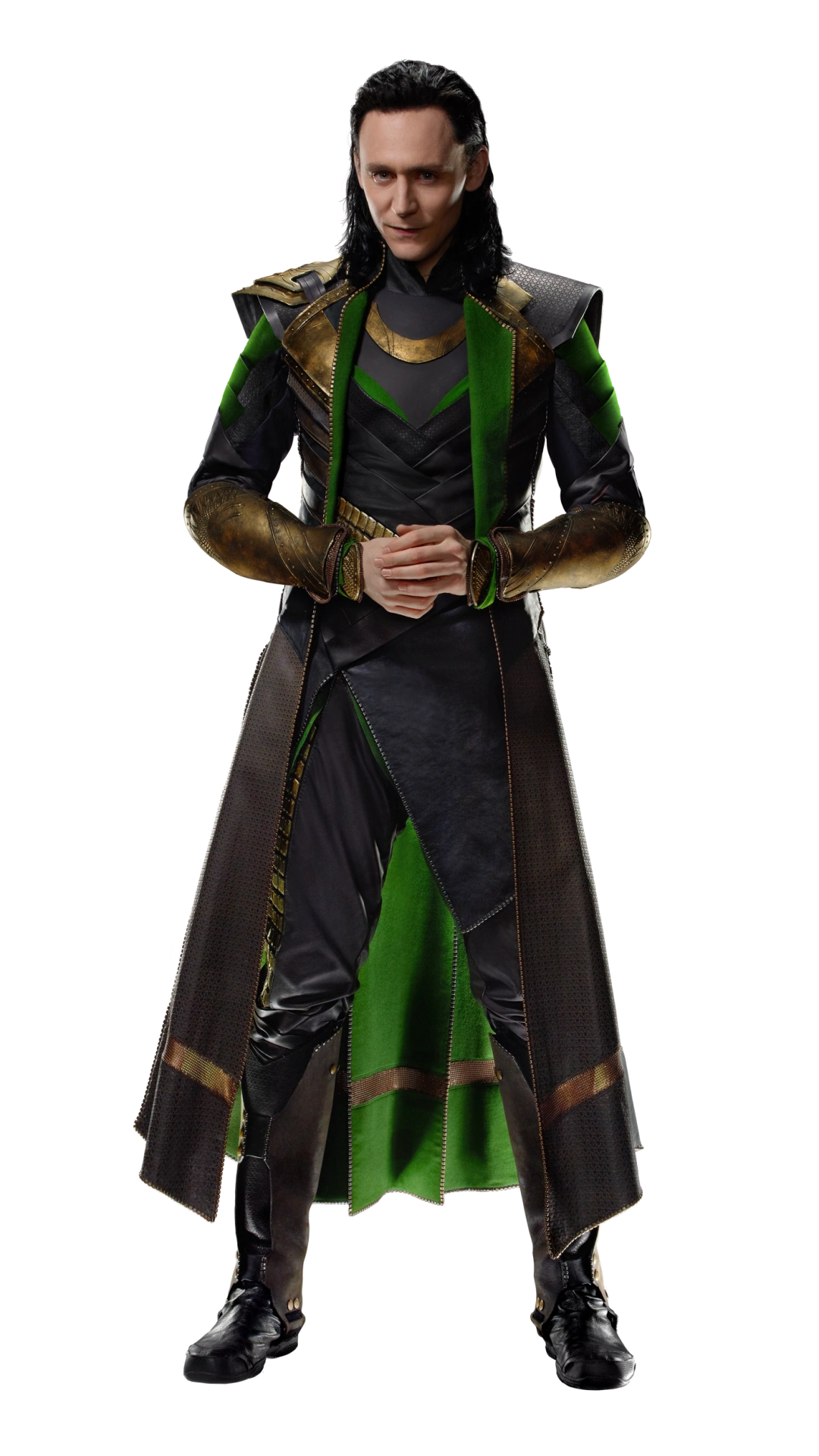
Understanding Loki’s Real Name: The Origins and Significance of Loki Laufeyson
Loki’s real name is Loki Laufeyson, a patronymic title reflecting his biological heritage as the son of Laufey, the King of the Frost Giants of Jotunheim. While he was raised as Loki Odinson in Asgard, his true lineage remains a centra...
Loki’s real name is Loki Laufeyson, a patronymic title reflecting his biological heritage as the son of Laufey, the King of the Frost Giants of Jotunheim. While he was raised as Loki Odinson in Asgard, his true lineage remains a central pillar of his identity, representing his complex transition from an abandoned giant to a multiversal protector.
Contents
To understand why "Loki Laufeyson" is more than just a name, one must explore the intersections of ancient Norse mythology, the Marvel Cinematic Universe (MCU), and decades of comic book lore. As of 2026, the name has evolved from a mark of shame to a symbol of self-actualization, reflecting a character who has transcended his birthright and his upbringing to become something entirely unique.
The Biological Roots: Who is Laufey?
In both Marvel lore and Norse mythology, the name "Laufeyson" identifies Loki as the offspring of Laufey. However, the nature of this relationship varies significantly between the source material and the modern adaptations. In the Marvel Cinematic Universe, Laufey is established as the King of the Frost Giants (Jotnar) in the realm of Jotunheim.
During the war between Asgard and Jotunheim centuries ago, Laufey abandoned his son because the infant was "small for a giant." Odin, the All-Father of Asgard, found the child in a temple and chose to adopt him, raising him alongside his biological son, Thor. For most of his life, Loki believed his name was Loki Odinson. The revelation of his true name, Loki Laufeyson, occurred during the events of the first Thor film (2011), acting as the catalyst for his descent into villainy and his eventual path toward redemption.
The name "Laufeyson" carries heavy weight because it ties Loki to a race—the Frost Giants—that Asgardians were taught to fear and despise. For Loki, discovering he was a Laufeyson meant discovering he was the "monster" in the stories he grew up with. This identity crisis is the foundation of his character arc, driving his motivations across several films and television seasons.
Mythology vs. Marvel: The Reversal of Parentage
Interestingly, the "real" name of Loki in historical Norse mythology presents a fascinating inversion of the Marvel version. In the Prose Edda and Poetic Edda, Loki is frequently referred to as Loki Laufeyjarson.
In ancient Norse culture, names were typically patronymic, meaning children took their father's name (e.g., Thor Odinson, son of Odin). However, in the original myths, Laufey was Loki’s mother, not his father. His father was the giant Fárbauti. Using a matronymic (a name derived from the mother) was highly unusual in Norse society and often suggested that the mother was of a higher social standing or a more significant mythological lineage than the father.
By naming him Loki Laufeyson in the comics and films, Marvel creators flipped the genders of his parents while keeping the name recognizable. This change allowed for a more direct parallel between Loki and Thor; where Thor is the "son of the King of Asgard," Loki is the "son of the King of Jotunheim." This symmetry highlights the tragic nature of their brotherhood and the political tensions between their respective realms.
The Linguistic Breakdown of "Laufeyson"
The construction of the name follows traditional Scandinavian naming conventions, which were prevalent during the Viking Age and persist in some forms (like in Iceland) today.
- Loki: The root name. While the etymology of "Loki" is debated by scholars, it is often linked to the Old Norse word lúka, meaning "to close" (referring to his role in Ragnarok, the end of the world) or lokka, meaning "to lure" or "entice" (referring to his nature as a trickster).
- Laufey: The name of the parent. In Old Norse, Laufey means "leafy island" or "tree."
- -son: The suffix indicating "son of."
When combined, Laufeyson literally translates to "Son of Laufey." In the context of 2026 pop culture analysis, this name represents Loki’s biological truth, whereas "Odinson" represents his legal and cultural upbringing. In many modern interpretations, Loki has moved away from both "Odinson" and "Laufeyson," simply choosing to be "Loki," an entity defined by his own choices rather than his lineage.
Loki Laufeyson in the Marvel Cinematic Universe
The journey of the name Laufeyson in the MCU is a journey of trauma and acceptance. When Loki first learns of his heritage, he views the name as a curse. He attempts to prove his worthiness to Odin by committing genocide against his own biological people in Jotunheim. He wants to kill the "Laufeyson" part of himself to be a "true" Odinson.
However, by the time we reach the Loki series on Disney+, the character's relationship with his name has shifted. In a multiversal landscape filled with "Variants"—including Sylvie, Alligator Loki, and Kid Loki—the specific surname matters less than the essence of the person. By the conclusion of the series' second season, Loki occupies a throne at the center of time. He is no longer defined by being the son of a King of Jotunheim or a King of Asgard; he is the God of Stories.
Key Moments of Identity Reveal
| Event | Name Used/Claimed | Significance |
|---|---|---|
| Early Life in Asgard | Loki Odinson | A period of hidden identity and perceived biological parity with Thor. |
| Discovery in Thor (2011) | Loki Laufeyson | The traumatic realization of his Frost Giant heritage. |
| The Avengers (2012) | Loki of Asgard | An attempt to claim a royal title despite his lack of biological claim to the throne. |
| Ragnarok / Infinity War | Odinson / Rightful King | A reconciliation with his adoptive family before his death at the hands of Thanos. |
| Loki Series (2021-2023) | Loki / Variant | A deconstruction of all titles, moving toward a self-defined identity. |
The "Agent of Asgard" and Comic Book Context
In Marvel Comics, particularly the Loki: Agent of Asgard run, the name Laufeyson is used as a tool for reinvention. The "Old Loki" (the villainous version) was often tied to the failures of the past. When Loki is reborn as a younger, more heroic figure, he consciously uses the name Laufeyson to acknowledge his past while steering toward a different future.
In the comics, the name also highlights Loki's fluid nature. Loki is famously genderfluid and a shapeshifter. Because the name "Laufeyson" is tied to a giant who represents change and chaos, it fits his comic book persona more accurately than the rigid, honor-bound "Odinson" name. The comics emphasize that while he is biologicaly a Laufeyson, he is a "son" of no one but his own ambition.
Why Does the "Real Name" Matter?
For fans and scholars of the character, the distinction between Laufeyson and Odinson is about the nature vs. nurture debate.
- Nature: As a Laufeyson, Loki is biologically predisposed to the cold and possesses the innate magic of the Jotun. His blue skin (visible when he touches Frost Giant artifacts or is in extreme cold) is the physical manifestation of the Laufeyson name.
- Nurture: As an Odinson, Loki was taught Asgardian values, combat, and sorcery (by Frigga). His personality is a product of the gilded halls of Asgard.
The tension between these two names creates the "trickster" persona. Loki is always between two worlds—too small to be a Frost Giant, too "different" to be a true Asgardian. By 2026, the consensus in character analysis is that his "real" name is effectively just Loki. He has spent his existence proving that he cannot be contained by the labels of his fathers.
Common Misconceptions About Loki’s Identity
Several myths persist regarding Loki’s name and status. It is important to clarify these using both mythological and cinematic evidence.
- Is Loki Thor’s biological brother? No. They are brothers by adoption. Thor is the biological son of Odin and Gaea (in comics) or Frigga (in the MCU). Loki is the biological son of Laufey.
- Is "Laufeyson" his legal name? In Asgardian records, he was likely registered as Odinson. "Laufeyson" is his biological patronymic, which he only acknowledged as an adult.
- Did he ever rule Jotunheim? While he is the rightful heir to the throne of Jotunheim as Laufey's son, Loki has rarely shown interest in ruling the Frost Giants, preferring the throne of Asgard or his role in the Time Variance Authority (TVA).
Frequently Asked Questions
Why did Odin change Loki's name to Odinson?
Odin did not "change" it so much as he concealed Loki's origin. By giving Loki the name Odinson, Odin hoped to eventually use Loki as a political tool to bring a permanent peace between Asgard and Jotunheim. He raised Loki as his own to ensure the boy grew up with Asgardian loyalties.
Is Loki's mother's name known in the MCU?
In the MCU, the focus is almost entirely on Laufey (the father). His biological mother is not named in the films. However, in Norse mythology, as mentioned, Laufey is the mother, and the father is Fárbauti. Some fans speculate that in the MCU, the roles were simply swapped, but the films do not provide a mother's name for Loki.
Does Loki ever go back to being called Laufeyson?
In the MCU, he rarely uses the name Laufeyson himself, as it reminds him of his abandonment. However, in the comics, he uses it more frequently as he reconciles with his identity. By the end of his character arc in the Loki series, he has largely moved past the need for any surname.
Can Loki turn into a Frost Giant at will?
Because he is a Laufeyson, his "true" form is that of a blue-skinned Frost Giant. While he usually uses Asgardian magic to maintain a human-like appearance, he can revert to his Jotun form. In the first Thor movie, his skin turns blue upon contact with the Casket of Ancient Winters and when touched by other Frost Giants.
Is "Loki" a title or a name?
Loki is his given name. However, in the context of the Multiverse, "Loki" has become a sort of classification for a specific type of being—one who is destined to lose so that others may achieve their greatness, at least until the "main" MCU Loki broke that cycle.
Final Perspective on Loki Laufeyson
Whether you view him through the lens of 13th-century Icelandic literature or 21st-century blockbuster cinema, the name Loki Laufeyson serves as the definitive marker of the character's origin. It represents the "truth" that Loki spent centuries running from, only to eventually embrace it as part of his multifaceted identity. To call him Laufeyson is to acknowledge his roots in the frozen wastes of Jotunheim, a vital piece of the puzzle that makes him the most complex figure in modern mythology.
Image Gallery