Choosing a Lasik Surgeon in NYC: The Complete Evaluation Guide
Choosing a LASIK surgeon in New York City requires evaluating medical credentials, surgical technology, clinical transparency, and post-operative care structures to ensure both safety and optimal visual outcomes. Because New York featu...
Choosing a LASIK surgeon in New York City requires evaluating medical credentials, surgical technology, clinical transparency, and post-operative care structures to ensure both safety and optimal visual outcomes. Because New York features one of the densest concentrations of refractive surgery centers globally, patients must navigate a vast landscape of marketing claims to identify practitioners who prioritize individualized diagnostic precision over high-volume assembly-line procedures.
Contents
Understanding the NYC Refractive Surgery Landscape
New York City is home to dozens of ophthalmology practices ranging from high-volume corporate laser centers to boutique academic refractive suites. When evaluating this market, prospective patients must recognize that not all facilities operate under the same clinical standards or utilize the same generation of diagnostic and surgical equipment.
The density of providers in Manhattan, Brooklyn, and surrounding boroughs means that pricing structures vary wildly, often spanning thousands of dollars per eye. However, cost should rarely be the primary differentiator. The quality of a LASIK provider is dictated by the surgeon's personal surgical volume, their complication management protocols, the comprehensiveness of their preoperative screening, and their commitment to managing patient expectations rather than pursuing universal surgical candidacy.
Furthermore, a distinction must be made between high-volume commercial centers—where a revolving door of traveling surgeons may operate—and established local practices where the evaluating doctor is also the operating surgeon. Continuity of care from the initial consultation through the final post-operative visit is a cornerstone of safe elective eye surgery.
Essential Criteria for Evaluating a LASIK Surgeon
When researching practitioners in the metropolitan area, patients should apply rigorous, objective criteria to filter out marketing noise and focus on verified clinical excellence.
Board Certification and Subspecialty Training
Any physician performing laser vision correction must be a board-certified ophthalmologist (a medical doctor who has completed specialized residency training in diseases and surgery of the eye). Beyond general ophthalmology board certification, patients should look for fellowship training in cornea and external diseases or refractive surgery. Cornea specialists spend an additional one to two years mastering the delicate micro-anatomy of the cornea—the exact tissue altered during LASIK—giving them superior insight into structural stability, healing patterns, and complication mitigation.
Surgical Experience and Volume
While lifetime surgical volume is a useful metric, recent and consistent annual volume matters more. An active refractive surgeon typically performs thousands of procedures over their career. Prospective patients should feel empowered to ask direct questions during their consultation:
- How many LASIK and surface ablation procedures do you personally perform each week?
- What percentage of your surgical practice is dedicated exclusively to refractive surgery versus general cataract or retinal procedures?
- What is your personal enhancement (re-treatment) rate?
Ethical Candidacy Screening
An ethical surgeon's primary duty is to protect the patient's long-term ocular health, which occasionally means turning a patient away. If an initial consultation feels like a high-pressure sales pitch designed to secure an immediate deposit, or if a provider promises 20/20 vision without acknowledging biological variables, it represents a significant red flag. A reputable surgeon will evaluate corneal thickness, topography, pupil size, tear film quality, and systemic health markers to rule out contraindications such as keratoconus, severe dry eye disease, or unstable prescriptions.
Examining Surgical Technology and Laser Platforms
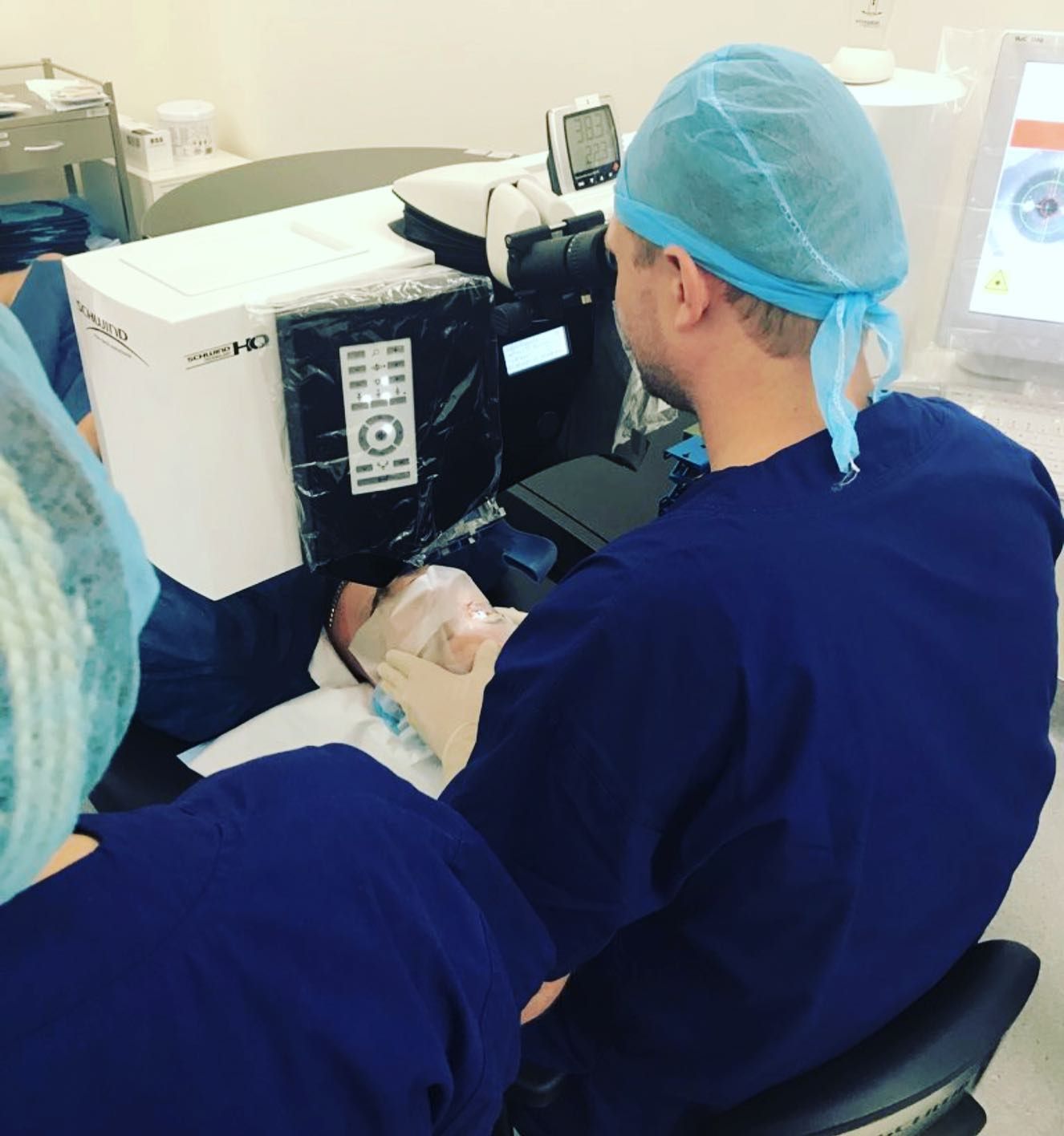
The safety and precision of modern LASIK are deeply tied to the hardware and software utilized in the operating suite. Patients should inquire specifically about the laser platforms employed by the clinic. Modern standard-of-care LASIK is a two-step procedure requiring two distinct lasers: a femtosecond laser to create the corneal flap, and an excimer laser to reshape the underlying stromal tissue.
| Procedure Step | Legacy Technology | Modern Gold-Standard Technology | Clinical Impact |
|---|---|---|---|
| Flap Creation | Microkeratome (mechanical metal blade) | Femtosecond Laser (e.g., IntraLase, Ziemer) | Eliminates mechanical blade complications; allows custom-depth flap creation. |
| Tissue Reshaping | Standard Wide-Area Ablation | Wavefront-Optimized or Wavefront-Guided (Topography-Guided) | Preserves natural corneal asphericity; reduces higher-order aberrations like halos and glare. |
| Eye Tracking | Static or Slow Tracking | High-Speed Active Eye Trackers (500Hz+) | Compensates for involuntary micro-saccades during laser delivery to maintain centration. |
Clinics that utilize older, budget-tier laser systems may offer lower upfront pricing, but they often sacrifice precision, tracking speed, and customization options. Always verify whether the clinic's equipment is regularly calibrated and maintained according to manufacturer specifications.
The Consultation Process: What to Expect
A thorough, unhurried consultation is the single best predictor of a successful surgical partnership. In NYC, reputable clinics typically allocate one to two hours for a comprehensive preoperative evaluation.
Diagnostic Testing Suite
A comprehensive exam must extend far beyond standard visual acuity testing and automated refraction. Essential diagnostic instruments include:
- Corneal Topography and Tomography: Maps the anterior and posterior curvature, thickness profile, and structural integrity of the cornea to detect subclinical keratoconus or irregular astigmatism.
- Pachymetry: Measures exact corneal thickness, ensuring sufficient residual stromal bed remains untouched after ablation to maintain structural strength.
- Pupillometry: Measures mesopic and scotopic pupil size to evaluate the risk of nocturnal visual disturbances such as halos or starbursts.
- Tear Film Assessment: Evaluates meibomian gland function and tear breakup time, as pre-existing dry eye is the most common cause of post-operative discomfort and delayed healing.
Direct Surgeon Access
During the evaluation, patients should meet directly with the surgeon who will perform the procedure, not solely with optometrists, patient coordinators, or technicians. While technicians and optometrists play vital roles in pre-testing, the operating surgeon must perform the final slit-lamp examination, review the topographic scans, and answer all clinical questions regarding risks, benefits, and alternative procedures like PRK (Photorefractive Keratectomy) or ICL (Implantable Collamer Lens) surgery.
Financial Transparency and Pricing Structures
Navigating LASIK pricing in New York City requires looking past "discount" advertisements. Advertised rates starting at nominal fees per eye (e.g., "$295 per eye") almost invariably apply only to low-level prescriptions with outdated technology, functioning as "loss leaders" that subject nearly all patients to significant upcharges.
Understanding All-Inclusive Pricing
A trustworthy practice provides transparent, all-inclusive pricing that outlines:
- Preoperative diagnostic evaluations.
- Surgeon fees and facility fees.
- Intraoperative medications and post-operative eye drops for the initial healing phase.
- Follow-up visits for the first year post-surgery.
- Enhancement policies (whether touch-ups are covered under a lifetime commitment or carry a separate fee).
Financing and Insurance Considerations
Because elective vision correction is generally classified as a non-covered cosmetic or elective procedure by standard health insurance providers, patients typically pay out of pocket. However, many NYC practices partner with medical financing companies (such as CareCredit or Alphaeon Credit) offering promotional zero-interest financing plans over 12 to 24 months. Additionally, patients can often utilize Flexible Spending Accounts (FSAs) or Health Savings Accounts (HSAs) to pay for LASIK with pre-tax dollars, significantly lowering the net cost of the procedure.
Frequently Asked Questions
How do I know if I am a candidate for LASIK in NYC?
Candidacy depends on several physical and ocular metrics: being at least 18 years of age, having a stable eye prescription for a minimum of 12 consecutive months, possessing adequate corneal thickness, and having healthy eyes free from active diseases like severe cataracts, glaucoma, or uncontrolled dry eye. Only a comprehensive diagnostic evaluation by a qualified refractive surgeon can definitively confirm eligibility.
What is the difference between LASIK and PRK, and how do I choose?
While LASIK involves creating a thin corneal flap before reshaping the underlying tissue with an excimer laser, PRK removes the outermost layer of corneal cells (the epithelium) entirely before applying the laser directly to the surface. PRK requires a longer visual recovery period and slightly more post-operative discomfort, but it is often recommended for patients with thinner corneas, recurrent surface abrasions, or specific occupational hazards where flap displacement is a concern.
Are cheap LASIK deals in Manhattan safe?
Ultra-low pricing models often rely on high-volume models utilizing older technology, non-customized ablation profiles, or hidden fees added later in the process. While higher pricing does not automatically guarantee superior clinical care, exceptionally low rates should prompt rigorous questioning regarding equipment generation, surgeon experience, and what services are excluded from the initial quote.
What should I look for in the post-operative care plan?
A robust post-operative protocol includes mandatory follow-up examinations at 24 hours, one week, one month, three months, and one year post-surgery. Patients must ensure they have direct access to their surgeon or an on-call clinical team 24/7 during the immediate recovery window in case of unexpected pain, inflammation, or visual disturbances.
Will my vision be permanently corrected after LASIK?
LASIK permanently alters the shape of the cornea to correct nearsightedness, farsightedness, or astigmatism. However, the procedure does not halt the natural aging process of the eye. Most individuals will still develop presbyopia (the age-related loss of near-focusing ability) in their 40s or 50s, eventually requiring reading glasses, regardless of whether they underwent laser vision correction in their youth.
Next Actions and Final Recommendations
Begin your search by compiling a shortlist of board-certified corneal specialists and refractive surgeons practicing in New York City who operate out of accredited surgical centers with state-of-the-art diagnostic and laser suites. Schedule consultations with at least two different providers to compare diagnostic thoroughness, technological offerings, and communication styles. Do not rush your decision; take the time to review your topography maps, understand your specific prescription parameters, and select a surgeon whose clinical philosophy centers on long-term ocular health and transparent patient education.
Image Gallery