Navigating the Kevin Smith Movies List: Why Chronology, Context, and the View Askewniverse Matter for Fans
The Kevin Smith movies list matters for fans because his filmography functions as an interconnected cinematic universe where character arcs, recurring jokes, and thematic growth span decades. Understanding this viewing order allows aud...
The Kevin Smith movies list matters for fans because his filmography functions as an interconnected cinematic universe where character arcs, recurring jokes, and thematic growth span decades. Understanding this viewing order allows audiences to fully appreciate continuity, easter eggs, and the filmmaker's personal evolution from indie pioneer to veteran auteur.
Contents
For decades, independent cinema has relied on distinct voices to challenge Hollywood conventions. Few figures have maintained as loyal a following, or as distinct a creative ecosystem, as Kevin Smith. From his debut feature in the mid-1990s through his later retrospective projects, Smith built a body of work that rewards deep engagement. Tracking the Kevin Smith movies list is not merely an exercise in checking off titles; it is an exploration of a shared universe, a reflection of generational shifts, and a study in how an independent creator can maintain creative autonomy over thirty years.
The Evolution of the View Askewniverse
At the core of Kevin Smith’s cultural footprint is the View Askewniverse, a fictional universe named after his production company, View Askew Productions. This continuity anchors much of his filmography, linking together distinct stories through shared locations, overlapping timelines, and recurring characters. For fans, tracing this universe requires looking beyond simple release dates to understand how individual films converse with one another.
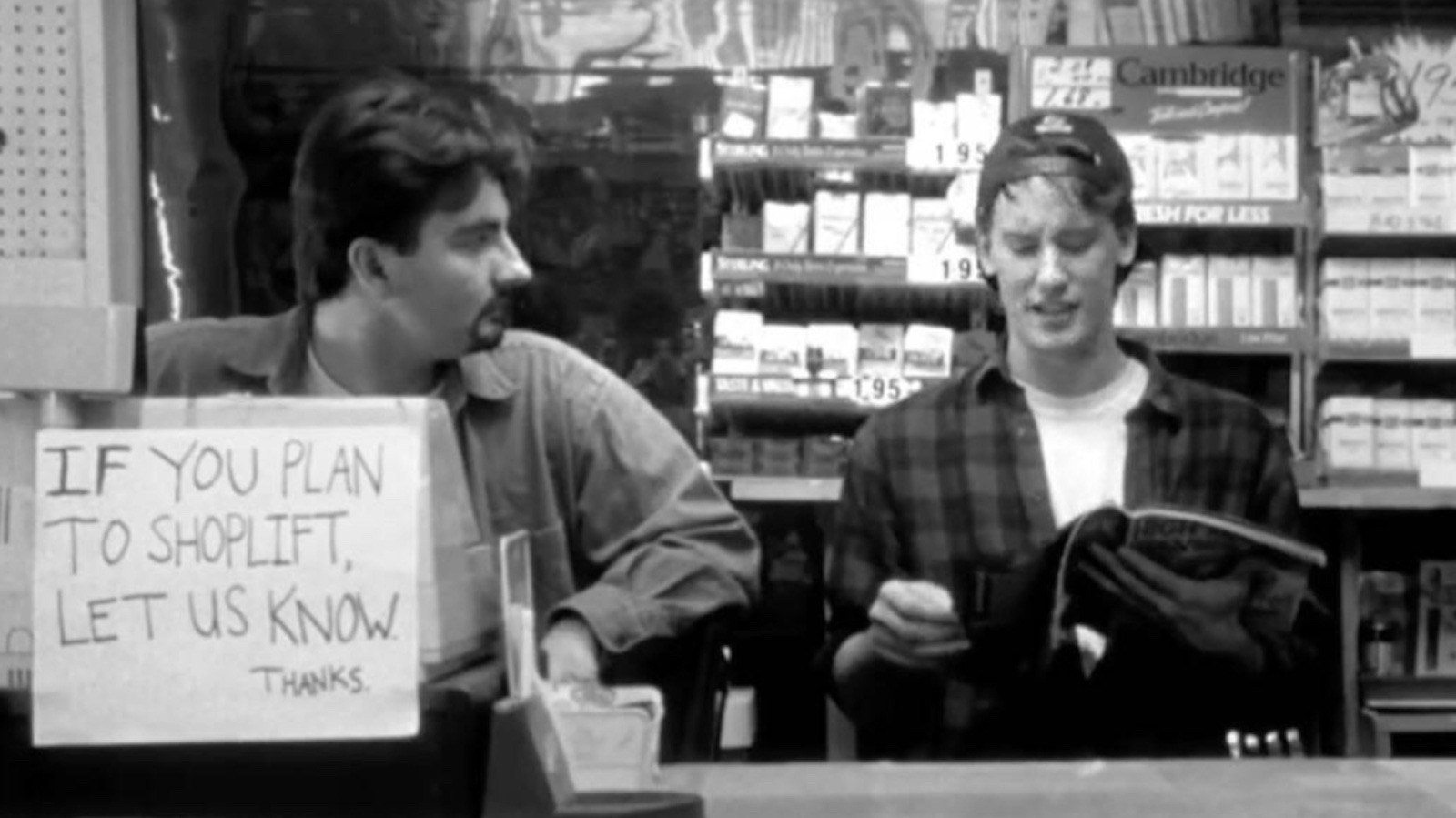
The journey began in 1994 with Clerks, a black-and-white comedy shot on a famously micro-budget that captured the mundane frustrations of retail labor. Rather than treating this film as an isolated experiment, Smith used it as the foundation for a growing tapestry. Characters like Dante Hicks and Randal Graves became fixtures of a New Jersey landscape that expanded outward with each subsequent release.
As the universe grew through films such as Mallrats (1995), Chasing Amy (1997), and Dogma (1999), the stakes shifted. While Mallrats offered a broader, more slapstick-oriented sophomore effort, Chasing Amy introduced dramatic maturity, exploring complex interpersonal relationships and sexual identity within a comic-book subculture. Dogma expanded the scope to theology and satire, proving that Smith’s colloquial dialogue could sustain epic fantasy concepts. This progression culminated in Jay and Silent Bob Strike Back (2001), which served as a celebratory victory lap for the interconnected continuity built up over the previous seven years.
Chronological Order Versus Release Order for Fans
When approaching the Kevin Smith movies list, fans frequently debate whether to watch the films in chronological order of release or internal timeline order. Because the narrative spans decades of real time, the distinction significantly alters the viewing experience.
Release order preserves the cultural context in which the films were made. Watching them as they premiered allows the audience to witness Smith’s technical growth, shifts in cinematic technology, and evolving worldview alongside the popular culture of the 1990s, 2000s, and beyond. For instance, the transition from grainy 16mm film stock in Clerks to high-definition digital production in later decades mirrors the broader technological revolution of the film industry.
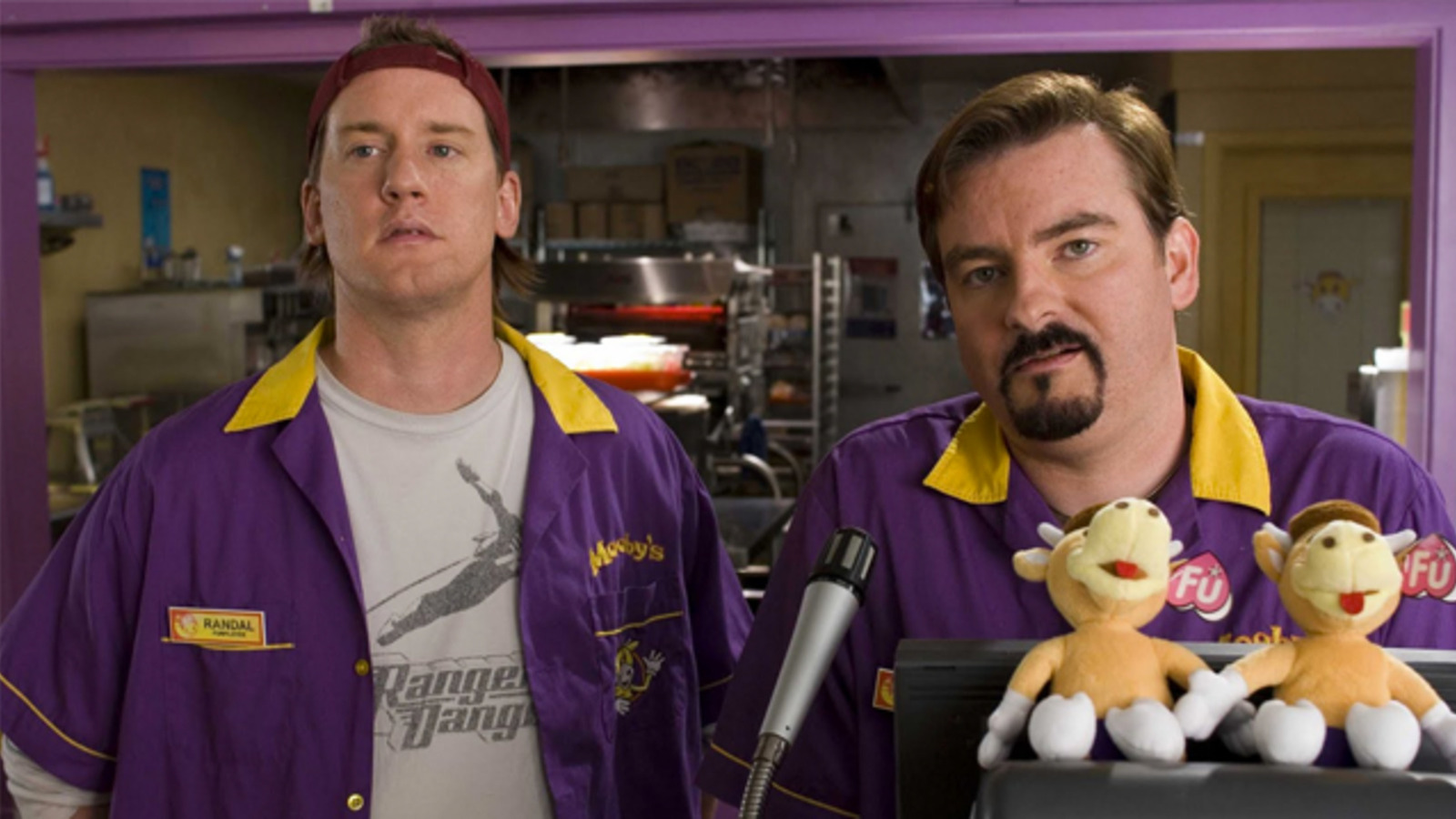
Conversely, internal chronological order arranges the stories based on the fictional timeline of the characters. While most View Askewniverse films unfold roughly in real time, specific entries—such as Clerks II (2006) and Jay and Silent Bob Reboot (2019)—revisit characters years or decades later. A strict chronological approach highlights the aging process of Dante, Randal, Jay, and Silent Bob, transforming the filmography into a literal coming-of-age and aging-in-place epic for slackers.
| Film Title | Release Year | Primary Setting / Niche | Key Characters Introduced / Featured |
|---|---|---|---|
| Clerks | 1994 | Convenience and video stores | Dante Hicks, Randal Graves, Jay, Silent Bob |
| Mallrats | 1995 | Suburban shopping mall | Brodie Bruce, T.S. Quint, Jay, Silent Bob |
| Chasing Amy | 1997 | Comic book convention / New Jersey | Holden McNeil, Banky Edwards, Alyssa Jones |
| Dogma | 1999 | Road trip across the United States | Bethany Sloane, Rufus, Loki, Bartleby |
| Jay and Silent Bob Strike Back | 2001 | Hollywood / East Coast transit | Jay, Silent Bob, Holden McNeil, Brodie Bruce |
| Clerks II | 2006 | Fast-food restaurant | Dante, Randal, Becky, Elias |
| Jay and Silent Bob Reboot | 2019 | Chronic Con / Hollywood | Jay, Silent Bob, Milly Meisa-Smith |
| Clerks III | 2022 | Convenience store / Indie filmmaking | Dante, Randal, Becky, Elias |
The Non-View Askew Catalog: Expanding Beyond New Jersey
While the View Askewniverse dominates fan discussions, a significant portion of the Kevin Smith movies list exists outside this continuity. For fans examining his complete career, these standalone or alternative projects provide vital insight into his range as a director and storyteller.
Projects like Jersey Girl (2004) and Zack and Miri Make a Porno (2008) tested Smith’s ability to work with larger stars and explore different genres, moving away from comic book stores and convenience store counters toward conventional romantic comedy and relationship drama. Jersey Girl, starring Ben Affleck, represented a conscious effort to pivot toward mainstream family-oriented melodrama, while Zack and Miri Make a Porno blended vulgar comedy with earnest economic anxiety during the late-2000s financial downturn.
Later in his career, Smith shifted toward horror and genre filmmaking, beginning with Red State (2011) and continuing with the body-horror dark comedy Tusk (2014) and Yoga Hosers (2016). These films demonstrated a willingness to subvert audience expectations built up over two decades of comedies. Understanding this diverse catalog prevents fans from viewing Smith as a one-note filmmaker and highlights his adaptability within the independent film finance model.
Recurring Motifs and Autographical Elements
A major reason why the Kevin Smith movies list matters to dedicated followers is the deeply autobiographical nature of the storytelling. Smith frequently draws inspiration from his upbringing in Red Bank, New Jersey, his obsession with comic books, pop culture, and hockey, and his personal life milestones.
This self-referential style creates a symbiotic relationship between the creator and the audience. Dialogue often functions as a vehicle for passionate debates about popular culture—most famously regarding the ethics of the Death Star contractors in Clerks or the merits of various comic book iterations. These conversational interludes established a distinct cinematic language defined by rapid-fire banter and extended philosophical arguments over mundane topics.
Furthermore, as Smith experienced major life events—such as fatherhood, health scares, and career shifts—his characters evolved in tandem. The cynical, twenty-something slackers of the 1990s gradually matured into middle-aged adults grappling with mortality, legacy, and regret in films like Clerks III (2022). For long-term fans, tracking this trajectory provides an emotional resonance that purely episodic comedies cannot achieve.
Practical Guidance for Fans and Collectors
For enthusiasts aiming to explore or complete their engagement with the Kevin Smith movies list, structured planning ensures a comprehensive experience. Whether collecting physical media or streaming the catalog, specific steps help maximize appreciation of the work.
- Map the Viewing Strategy: Decide whether to follow the strict release order to witness cultural evolution or group the View Askewniverse films together for continuous narrative flow.
- Explore Special Features: Smith is renowned for his extensive audio commentaries, Q&A lecture tours (such as An Evening with Kevin Smith), and behind-the-scenes documentaries. These materials offer invaluable context regarding independent film distribution and financing.
- Incorporate Companion Works: Expand beyond feature films by exploring Smith’s comic book writing—including runs on Green Arrow and Daredevil—as well as his television projects and podcasts, which heavily influence his later cinematic output.
- Examine Independent Distribution History: Research how films like Clerks were financed through maxed-out credit cards and distributed by Miramax, providing crucial economic context for modern independent cinema.
Frequently Asked Questions
Do I need to watch Kevin Smith's movies in order?
Watching the films in order is not strictly mandatory, but it significantly enhances the experience. While standalone projects like Tusk or Red State can be viewed independently, the View Askewniverse films rely on recurring characters, running gags, and chronological character development that reward sequential viewing.
What is the View Askewniverse?
The View Askewniverse is the fictional shared universe created by Kevin Smith. It encompasses most of his comedic feature films, starting with Clerks in 1994 and continuing through Clerks III in 2022, all connected by recurring characters, locations, and continuity.
Are all Kevin Smith movies comedies?
No. While Smith gained fame primarily through independent comedies, his catalog includes dramatic features like Jersey Girl, political horror thrillers like Red State, and absurdist body-horror films like Tusk.
Where does Clerks III fit in the viewing sequence?
Clerks III (2022) should be viewed near the end of any View Askewniverse marathon. It directly references events from the entire history of the franchise and serves as a reflective, retrospective conclusion to the core Dante and Randal storyline.
What was Kevin Smith's debut film?
Kevin Smith's directorial debut was Clerks, released in 1994. Shot on a famously low budget in the actual convenience and video stores where he worked, the film launched his career and established the aesthetic of 1990s American independent cinema.
Conclusion and Next Actions
Engaging with the Kevin Smith movies list offers a rewarding journey through independent American cinema, marked by shared universes, personal growth, and distinct pop-culture commentary. To begin or deepen your exploration, map out a viewing schedule that prioritizes the View Askewniverse continuity, supplement the feature films with Smith's audio commentaries and Q&A specials, and observe how a singular creative voice adapted to the changing landscapes of Hollywood and independent filmmaking over three decades.
Image Gallery