The Authentic Guide to Italian Granita: History, Flavors, and Regional Traditions
Granita is a semi-frozen Italian dessert composed of water, sugar, and various natural flavorings, most famously associated with the island of Sicily. Unlike smooth sorbet or creamy gelato, authentic granita possesses a unique crystall...
Granita is a semi-frozen Italian dessert composed of water, sugar, and various natural flavorings, most famously associated with the island of Sicily. Unlike smooth sorbet or creamy gelato, authentic granita possesses a unique crystalline texture that varies from coarse to smooth depending on regional preparation styles and specific traditional freezing techniques.
Contents
The Origins and Evolution of Sicilian Granita
To understand what granita is in Italy today, one must look back at the historical intersection of geography and climate. The origins of granita are deeply rooted in the Arab domination of Sicily (9th to 11th centuries), during which the concept of "sherbet" (an iced fruit drink) was introduced to the Mediterranean. However, the Sicilian evolution of this concept relied on a unique natural resource: the snow of Mount Etna and the Peloritani, Iblei, and Nebrodi mountain ranges.
Historically, specialized workers known as nivaroli collected winter snow and stored it in deep stone pits or caves called "neviere." These structures acted as ancient refrigerators, preserving the ice throughout the scorching Sicilian summers. In the 16th century, the recipe was refined with the "pozzetto"—a zinc bucket placed inside a wooden vat filled with a mixture of salt and snow. This setup created a cryogenic effect, allowing the liquid inside the zinc bucket to freeze while being manually stirred.
This manual agitation is what prevented the formation of large, solid ice blocks, instead creating the distinctive grainy texture that gives the dessert its name (granita derives from the Italian word grana, meaning grain). While modern machinery has replaced the nivaroli and the pozzetto, the fundamental chemistry of sugar-water ratios remains the cornerstone of the craft in 2026.
Granita vs. Gelato and Sorbet: Defining the Differences
It is a common misconception among international travelers to categorize granita as a type of "Italian ice" or a grainy sorbet. While they share similar ingredients, the technical execution and resulting mouthfeel are distinct.
Ingredient Composition
Granita is fundamentally dairy-free. While gelato relies on milk, cream, and often egg yolks for a dense, fatty structure, granita relies entirely on the quality of the water and the concentration of the flavoring agent—usually citrus juice, nut paste, or coffee.
The Role of Air and Overrun
In gelato production, air is incorporated (overrun) to create a soft, scoopable texture. In traditional granita, there is almost zero air incorporation. The texture comes from the physical breaking of ice crystals as they form. If a granita is too fluffy, it is likely being served from a commercial "slushie" machine, which many Italian purists consider a deviation from the authentic product.
Freezing Point and Sugar Content
The sugar content in granita is meticulously balanced to act as an anti-freeze. Too much sugar prevents the mixture from freezing sufficiently, while too little results in a hard, unpalatable block of ice. Master artisans in Sicily adjust these levels based on the acidity of the fruit or the fat content of the nuts used.
Regional Variations Within Sicily
Even within Italy, "granita" is not a monolith. The texture and serving style change significantly as you travel across the Sicilian coastlines.
The Messina Style (North-East)
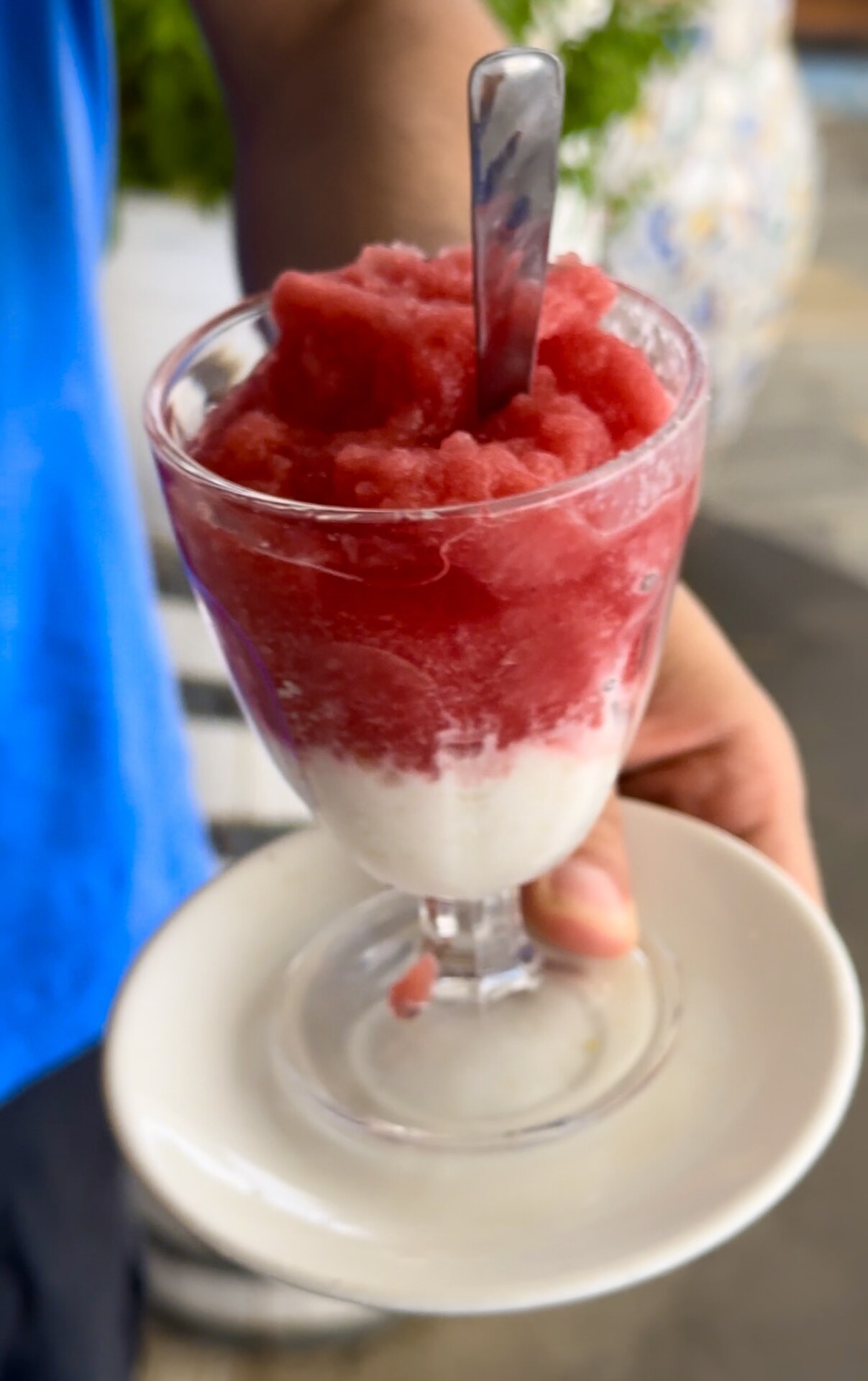
In Messina, granita is often characterized by a smoother, almost creamy consistency, though it contains no dairy. This region is particularly famous for the mezza con panna—a glass filled halfway with coffee granita and topped with fresh whipped cream. The coffee granita here is notoriously dark and intense, designed to be paired with the city's specific brioche traditions.
The Catania Style (East)
Catania is often cited as the heartland of granita culture. Here, the texture remains somewhat grainy but refined. This region focuses heavily on the use of local ingredients like the Bronte Pistachio and almonds from Avola. Catanese granita is typically served in larger portions and is the primary driver of the "granita for breakfast" tradition.
The Siracusa and Noto Style (South-East)
Moving south toward Noto, the granita becomes more rustic. In these areas, you are more likely to find granita made with almond milk or even pieces of the actual fruit or nuts visible within the ice. The flavors are highly seasonal, reflecting the agricultural bounty of the Val di Noto.
Iconic Flavors and Seasonal Availability
The "true" Italian granita experience is strictly governed by the seasons. While some flavors like lemon and coffee are available year-round, others are fleeting highlights of the culinary calendar.
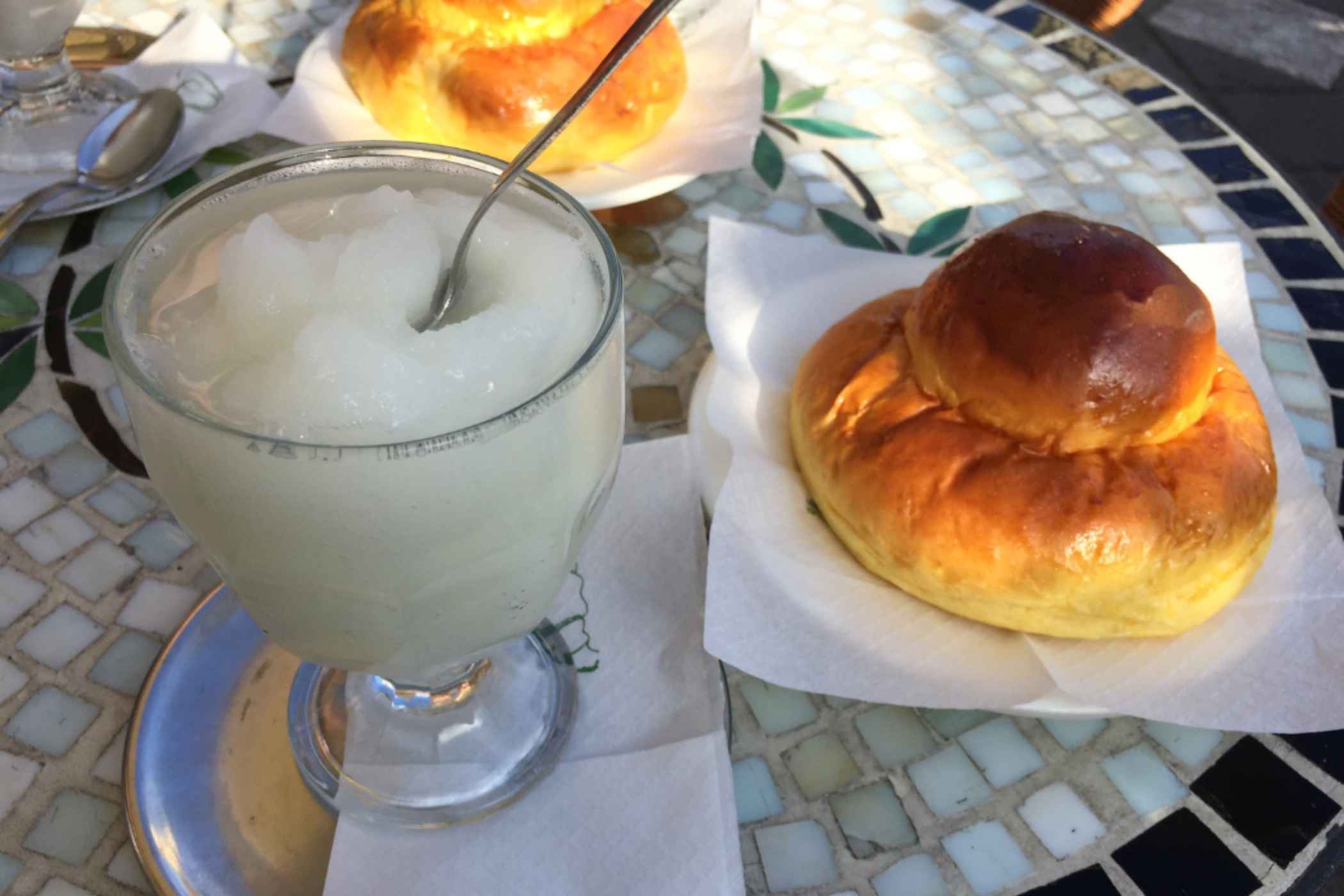
- Limone (Lemon): The most traditional flavor. Authentic lemon granita uses the juice and zest of Sicilian lemons (like the Femminello Siracusano), providing a sharp, refreshing acidity balanced by a delicate sweetness.
- Mandorla (Almond): This is often the litmus test for a quality granita shop. It should be made from real almond paste or crushed almonds, resulting in an opaque, off-white color and a rich, nutty flavor. In some regions, a "toasted" almond version is also available.
- Caffè (Coffee): Served primarily in the mornings. It should taste like a high-quality espresso—strong, slightly bitter, and aromatic.
- Gelsi (Mulberry): A prized summer specialty. The black mulberry (gelsi neri) creates a deep purple, highly stained granita with a unique sweet-tart profile. This flavor is usually only available in June and July.
- Pistacchio: Specifically made with pistachios from Bronte (on the slopes of Mt. Etna). It should be an earthy, brownish-green, never neon green.
- Cioccolato (Chocolate): Most common in the province of Messina and Catania. Unlike a chocolate sorbet, this is often made with Dutch-processed cocoa and has a surprisingly deep, cooling effect.
The Ritual of "Granita e Brioche"
In Sicily, granita is not merely a snack; it is a primary meal, particularly for breakfast during the humid summer months. The experience is incomplete without the brioche col tuppo.
The "tuppo" refers to the small round ball of dough on top of the brioche, resembling a traditional low hair bun (the tuppo in Sicilian dialect). This pastry is a soft, egg-based leavened bread, often flavored with a hint of citrus or honey.
The Etiquette of Eating: The culturally "correct" way to consume this pairing is to tear off the tuppo first and use it to scoop up the granita or the whipped cream. Once the top is gone, the rest of the brioche is dipped directly into the glass. It is a sensory play of temperatures and textures: the warm, pillowy brioche against the freezing, crystalline ice.
Technical Comparison of Italian Frozen Desserts
To help distinguish granita from other popular Italian treats, the following table highlights the key technical and sensory differences:
| Feature | Granita | Gelato | Sorbetto (Sorbet) |
|---|---|---|---|
| Base Ingredients | Water, Sugar, Flavor | Milk, Cream, Sugar, Flavor | Water, Sugar, Fruit/Flavor |
| Fat Content | 0% | 4% – 9% | 0% |
| Texture | Crystalline / Grained | Smooth / Creamy | Smooth / Fine crystals |
| Air (Overrun) | Very Low to None | Moderate (20%–35%) | Low |
| Serving Temp | -10°C to -12°C | -12°C to -15°C | -10°C to -12°C |
| Traditional Serving | Glass / Bowl with Brioche | Cone or Cup | Small Cup (as palate cleanser) |
| Origin | Sicily | Northern/Central Italy | Ancient/Various |
Modern Innovations and Global Influence in 2026
As of 2026, the granita tradition remains remarkably resilient to "fusion" trends, though some high-end pastry chefs in cities like Milan and Rome have begun experimenting with savory versions. You may find tomato and basil granita served as an appetizer in Michelin-starred restaurants, or balsamic vinegar granita used to garnish oysters.
However, in Sicily, the focus remains on botanical purity. There is a growing movement toward "zero-mile" granita, where the fruit is sourced from specific nearby orchards, and the sugar is replaced by carob flour or local honey to cater to modern health-conscious demographics without sacrificing the historical texture.
Common Mistakes to Avoid When Ordering
For those seeking an authentic experience in Italy, certain "red flags" can help identify industrial products masquerading as traditional granita:
- Fluorescent Colors: Real fruit and nuts do not produce neon hues. A pistachio granita should look like a crushed nut, not a green highlighter.
- The "Slushie" Machine: If the granita is being constantly swirled in a clear plastic dispenser with a rotating auger, it is likely a commercial mix. Traditional granita is kept in deep metal containers (pozzetti) with lids to maintain temperature and texture.
- Straws: Real granita is too thick to be sucked through a straw. It should always be served with a spoon.
- Off-Season Flavors: Asking for peach granita in December or mulberry in March will immediately identify you as a tourist. Stick to what is currently growing in the Italian countryside.
Frequently Asked Questions
Is granita vegan and gluten-free?
Granita itself is almost always vegan and gluten-free, as it consists only of water, sugar, and fruit/nuts. However, the traditional accompaniment, the brioche, contains flour (gluten), eggs, and butter (dairy). Those with dietary restrictions should enjoy the granita on its own or check for specialty vegan brioches which are becoming more common in urban Italian centers.
What is the best time of day to eat granita in Italy?
While it is served all day, the peak time is breakfast (between 8:00 AM and 10:30 AM). In the afternoon, it serves as a "merenda" (snack) to combat the midday heat. It is rarely eaten as a dessert after a heavy dinner, as the acidity and sugar are considered better suited for an empty stomach.
Why is Sicilian granita better than the versions in Northern Italy?
The secret often lies in the water and the ingredients. Sicily produces the world's most aromatic lemons and pistachios. Additionally, the cultural importance of granita in the south means that bars compete fiercely on texture and quality, whereas in the north, it is often treated as a secondary menu item.
Can I make authentic Italian granita at home?
Yes, but it requires patience. You don't need a machine; you can place the mixture in a shallow pan in the freezer and stir it with a fork every 30 minutes for several hours. This manual "scraping" mimics the traditional process and creates the necessary ice crystals.
How much does a typical granita cost in Italy?
In 2026, a standard glass of granita in Sicily typically costs between €2.50 and €4.50, depending on the flavor (pistachio and almond are usually more expensive). A brioche will usually add another €1.50 to €2.00 to the price.
Practical Recommendation
When visiting Italy, specifically Sicily, seek out a Bar Pasticceria that displays the "Artigianale" sign. Look for shops where the granita is stored in covered metal tins rather than visible plastic tubs. For the most iconic experience, order a granita di mandorla (almond) and a granita di limone mixed in the same glass—a combination known as "macchiata"—and always ask for your brioche to be served warm.
Image Gallery