Airbus A321 versus Boeing 737-800: Strategic Operational Considerations for Airline Operators
Selecting between the Airbus A321 and the Boeing 737-800 involves balancing fleet commonality, mission profile, and lifecycle economics. While the Boeing 737-800 remains a cornerstone of short-haul, high-frequency networks, the Airbus...
Selecting between the Airbus A321 and the Boeing 737-800 involves balancing fleet commonality, mission profile, and lifecycle economics. While the Boeing 737-800 remains a cornerstone of short-haul, high-frequency networks, the Airbus A321 offers distinct advantages in cabin flexibility and range performance. Operators must weigh these differences against existing pilot training pipelines, maintenance infrastructure, and long-term asset utilization goals.
Contents
Market Context and Operational Scope
As of 2026, both the Airbus A321 (specifically the A321ceo and the pervasive A321neo variants) and the Boeing 737-800 (the most prolific member of the 737 Next Generation family) represent the backbone of global narrow-body operations. The choice between these two platforms often begins not with a blank slate, but with an existing fleet composition.
For an airline, the decision is rarely about which aircraft is "better" in a vacuum; it is about which aircraft integrates most efficiently into the current network. The Boeing 737-800, part of the 737NG family, is renowned for its reliability and its massive secondary market availability. Conversely, the A321, particularly the A321neo, has carved out a niche as a "middle-of-the-market" aircraft, frequently bridging the gap between traditional narrow-body routes and long-haul missions previously reserved for wide-body aircraft.
Cabin Configuration and Payload Capacity
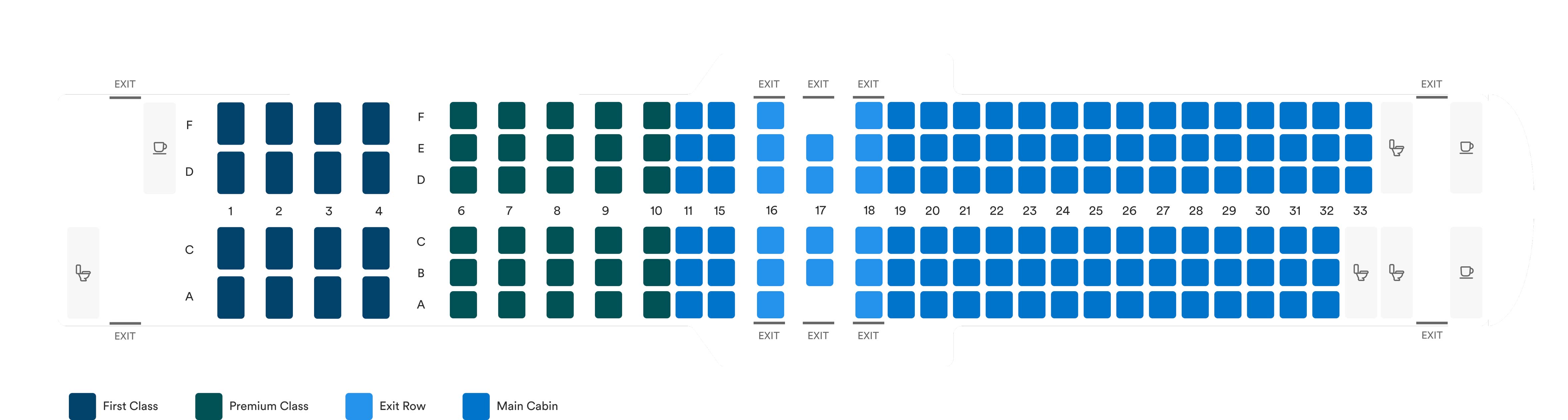
One of the most significant technical differentiators lies in the fuselage cross-section and cabin layout. The Airbus A321 features a slightly wider cabin, which allows for increased comfort in standard seating configurations or the potential for wider seats in a premium cabin.
The A321’s increased length compared to the 737-800 allows for higher seating density while maintaining comfort standards. Operators focused on high-yield, premium-heavy routes often find the A321 superior due to its ability to accommodate more Business or First Class seats without sacrificing the overall passenger count to the same extent as a 737-800.
The Boeing 737-800 is optimized for speed and turn-around efficiency. Its lower center of gravity and height-optimized fuselage facilitate faster baggage loading and passenger boarding through standard terminal bridges. For low-cost carriers (LCCs) that prioritize quick turnaround times—often measured in minutes—the 737-800’s design is a tried-and-tested utility machine.
Technical Performance and Range Capabilities
When comparing technical specifications, the A321 generally outclasses the 737-800 in terms of range and payload capacity, particularly when comparing the A321neo against the 737-800. The A321 has evolved to support transcontinental and even transatlantic missions through the LR (Long Range) and XLR (Extra Long Range) variants, which are not direct equivalents to the standard 737-800.
The Boeing 737-800 is highly efficient for short-to-medium haul routes (2–4 hours). Its CFM56 engines are well-understood by maintenance crews globally, resulting in lower unscheduled maintenance costs due to the depth of the available talent pool and spare parts supply. However, as 737-800 airframes age, the operational cost curve shifts compared to the newer generation Airbus narrow-bodies, which benefit from improved aerodynamic profiles and higher-bypass engine technology.
Comparison Table: Operational Key Metrics
| Feature | Airbus A321 (Baseline) | Boeing 737-800 |
|---|---|---|
| Typical 2-Class Capacity | 180–200 seats | 160–175 seats |
| Fuselage Width | 3.70 meters | 3.54 meters |
| Primary Mission | Short to Long-Haul | Short to Medium-Haul |
| Maintenance Profile | Highly modular | High parts commonality |
| Cockpit Philosophy | Fly-by-wire (Sidestick) | Conventional (Yoke) |
Training and Workforce Considerations
The "human factor" is perhaps the most significant hidden cost in fleet selection. Transitioning a fleet from Boeing to Airbus (or vice versa) requires a massive investment in pilot retraining, cabin crew familiarization, and maintenance technician certification.
Airbus employs a fly-by-wire system with sidestick controls, whereas Boeing maintains a more traditional yoke-and-column interface. Pilots transitioning from one to the other must unlearn years of muscle memory regarding stall protection, flight envelope protection, and cockpit workflow. Airlines often find that the cost of cross-training a flight crew and the subsequent loss of productivity during the transition period can negate the fuel efficiency benefits of switching manufacturers. Therefore, the "incumbent advantage" remains the primary driver of fleet continuity.
Maintenance and Lifecycle Economics
The 737-800 has a mature supply chain. Because the global fleet is so large, parts are readily available, and third-party maintenance, repair, and overhaul (MRO) providers are ubiquitous. For a smaller airline, the ability to source a replacement part for a 737-800 at a remote station is often easier than for an A321, which may require specific logistics support.
However, the A321 benefits from a high level of commonality with the A319 and A320. If an operator already flies the A320 family, adding an A321 is a seamless integration. The maintenance manuals, spare parts, and tooling are largely shared, allowing the airline to scale capacity without scaling their inventory of ground support equipment.
Strategic Selection Guidance
When choosing between these two aircraft, airline management should address the following questions:
- What is the current fleet composition? If the airline currently operates 737s, the marginal cost of adding a 737-800 is significantly lower than adding an A321.
- What is the primary route mission? If the network consists of 6-hour transcontinental flights, the A321’s payload/range advantage becomes a significant revenue driver. If the network is 90-minute hop-and-stop regional flights, the 737-800’s durability and turnaround efficiency are harder to beat.
- What is the capital expenditure strategy? The 737-800 is a mature asset, often available at lower lease rates or purchase prices than newer Airbus variants. However, long-term fuel efficiency and environmental compliance costs may eventually favor the newer A321neo models.
Frequently Asked Questions
Which aircraft is more fuel-efficient? In comparing the baseline A321 and the 737-800, efficiency depends on the specific engine variant. Newer A321neo models are significantly more fuel-efficient than the 737-800 due to advanced engine technology (LEAP-1A or PW1100G). However, the 737-800 is highly optimized for its specific mission profile, making it very efficient for short flights where heavy high-bypass engines might not be necessary.
Is the A321 easier to maintain than the 737-800? Neither is objectively easier. The 737-800 benefits from a larger, more mature global parts ecosystem, making logistics simpler. The A321 benefits from a more modern design, which often features better health-monitoring systems that assist in predictive maintenance, though this requires more specialized technical training.
Can pilots fly both aircraft types? Generally, no. Airbus and Boeing operate under completely different flight control philosophies. While some "mixed fleet" flying exists in rare circumstances for specific types, a pilot cannot legally or safely switch between a 737-800 and an A321 without extensive, separate type-rating training.
Which aircraft has a better resale value? Both aircraft have high liquidity on the secondary market. The 737-800 has historically held strong value due to its popularity as a freighter conversion candidate (BCF/SF). The A321 is currently in high demand for passenger configurations, maintaining a robust premium for newer-generation airframes.
What is the impact on cabin crew training? Cabin crews require specific certification for each aircraft type due to differences in door operation, emergency equipment layout, and galley configurations. An operator switching from one manufacturer to the other must plan for a complete cycle of cabin crew retraining, which involves significant logistical costs.
Recommendation for Operators
Operators should prioritize fleet commonality over individual performance gains unless the route structure mandates a significant shift in mission profile. For current 737 operators, the 737-800 remains a reliable, cost-effective workhorse. For operators seeking to expand into longer, higher-density routes, the A321 provides the necessary payload and range versatility. The ultimate decision rests on the existing maintenance footprint and the training path of the flight operations department.
Image Gallery