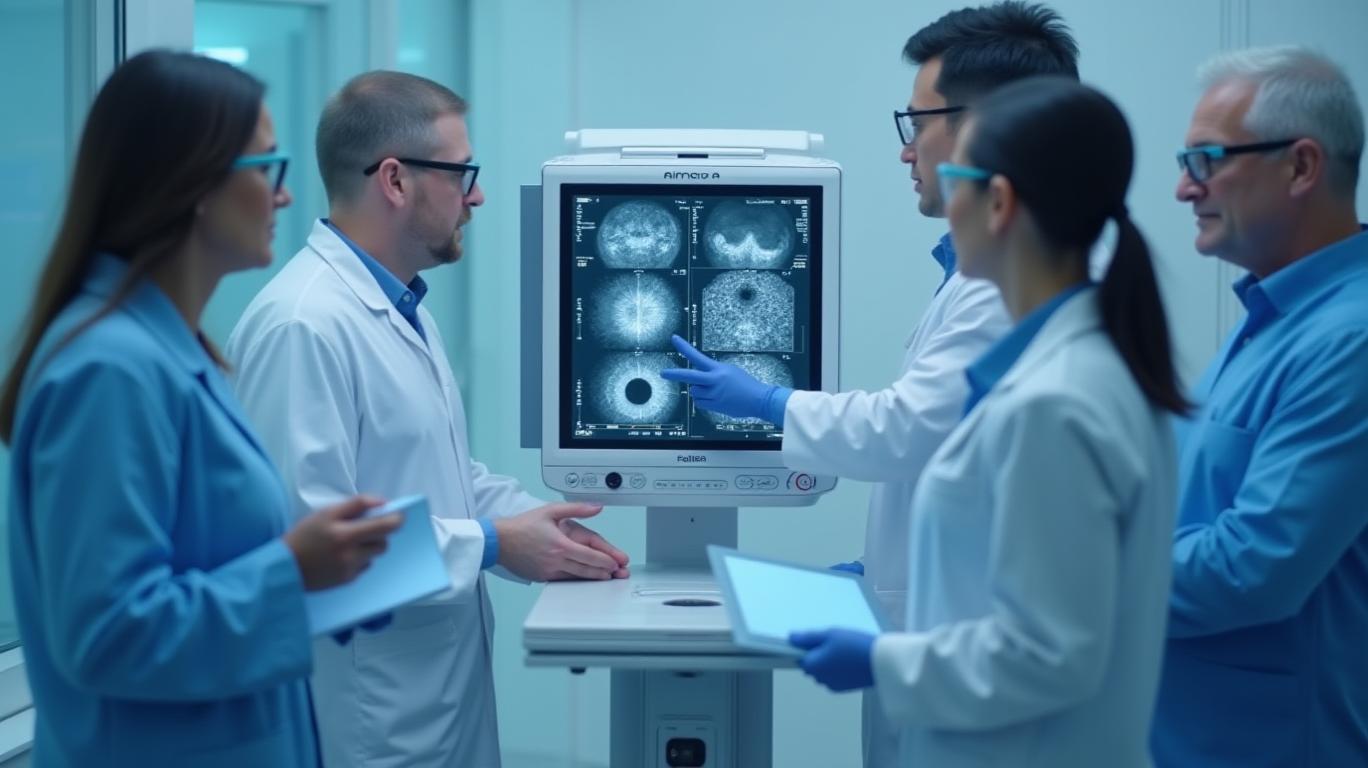
Orion Medical: The Quiet Driver of Modern Healthcare
Orion Medical serves as the foundational infrastructure for modern healthcare by providing advanced interoperability solutions, data analytics, and population health management tools. By integrating disparate health records into a sing...
Orion Medical serves as the foundational infrastructure for modern healthcare by providing advanced interoperability solutions, data analytics, and population health management tools. By integrating disparate health records into a single, unified view, Orion enables clinicians to make informed decisions, reduces administrative burnout, and ensures that patient data follows the individual across the entire continuum of care.
Contents
The Architecture of Interoperability in 2026
In 2026, the global healthcare landscape is no longer defined by individual hospitals or isolated clinics, but by interconnected ecosystems of data. At the center of this shift is Orion Medical, an organization that has transitioned from a software provider to the "quiet driver" of systemic efficiency. The core problem Orion solves is data fragmentation. For decades, patient information was trapped in proprietary Electronic Health Record (EHR) silos, leading to redundant testing, medical errors, and massive administrative waste.
Orion’s platform acts as a translation layer and a central repository. By utilizing the latest HL7 FHIR (Fast Healthcare Interoperability Resources) standards, Orion allows different software systems—ranging from legacy hospital databases to modern wearable health monitors—to communicate seamlessly. This "data liquidity" ensures that when a patient moves from a primary care physician to a specialist or an emergency room, their comprehensive medical history is already there, waiting for the provider.
The technical depth of this integration involves complex mapping of terminology standards such as SNOMED CT for clinical terms and LOINC for laboratory observations. By normalizing this data, Orion ensures that a "glucose level" recorded in one system is recognized and trended correctly in another, regardless of the vendor.
The Amadeus Platform: Big Data for Precision Medicine
The flagship of Orion’s technical suite is the Amadeus platform. In 2026, Amadeus is recognized as one of the most scalable data platforms in the healthcare industry, capable of handling petabytes of both structured and unstructured data. This includes traditional medical records, genomic sequences, social determinants of health (SDOH), and real-time biometric feeds.
The importance of Amadeus lies in its ability to facilitate precision medicine. By aggregating vast datasets, the platform allows researchers and clinicians to identify patterns that were previously invisible. For instance, instead of treating all patients with a specific type of hypertension with the same medication, Orion’s analytics engine can cross-reference genetic markers and lifestyle data to suggest the most effective treatment for that specific individual.
Scalability and Cloud Integration
Orion has optimized its stack for cloud-native environments, primarily utilizing microservices architecture. This allows healthcare providers to scale their data needs dynamically. During a public health crisis or a regional surge in patient volume, the platform can allocate more computing power to data processing without a degradation in performance. This resilience is why Orion is often described as a "quiet" driver; its most vital work happens in the background, ensuring that the front-end clinical systems remain responsive and data-rich.
Population Health Management: From Reactive to Proactive Care
One of the most significant shifts in 2026 is the movement toward value-based care, where providers are compensated based on patient outcomes rather than the volume of services rendered. Orion Medical provides the analytical backbone for this transition through its Population Health Management (PHM) tools.
Orion’s PHM suite allows health systems to risk-stratify their entire patient population. By applying machine learning algorithms to historical data, the system can predict which patients are at the highest risk of developing chronic conditions, such as Type 2 diabetes or congestive heart failure, before they manifest acute symptoms.
- Risk Scoring: Assigning numerical values to patients based on comorbidities and social factors.
- Care Coordination: Providing a shared workspace for doctors, nurses, and social workers to track a patient’s progress.
- Patient Engagement: Feeding data back to patients via portals and mobile apps to encourage self-management.
By identifying these individuals early, healthcare providers can intervene with preventive measures, which are significantly less expensive and more effective than emergency treatments. This proactive approach is essential for the financial sustainability of modern healthcare systems facing aging populations and rising costs.
Technical Specifications and Comparative Advantages
To understand why Orion Medical remains a leader in 2026, it is helpful to compare its open-platform approach with traditional, closed EHR systems. Traditional systems often focus on billing and internal hospital workflows, whereas Orion focuses on the patient-centric longitudinal record.
| Feature | Traditional Siloed EHR | Orion Medical Platform |
|---|---|---|
| Data Architecture | Proprietary/Closed | Open (API-First / FHIR) |
| Interoperability | Limited; requires custom bridges | Native; multi-vendor compatibility |
| Data Sources | Clinical only | Clinical, Genomic, SDOH, IoT |
| Scalability | On-premise limitations | Cloud-native / Elastic |
| Analytics | Retrospective reporting | Predictive & Prescriptive AI |
| User Focus | Billing and Documentation | Clinical Decision Support & Outcomes |
This comparison highlights that Orion is not a replacement for an EHR, but rather a sophisticated layer that sits above it, aggregating data from multiple EHRs to create a "single source of truth."
Security, Privacy, and Regulatory Compliance
As a driver of healthcare data, Orion Medical operates under the highest levels of scrutiny regarding data security. In 2026, the threat landscape for healthcare data has evolved, with ransomware and sophisticated data breaches becoming more frequent. Orion employs a Zero Trust Architecture, meaning that no user or system is trusted by default, regardless of whether they are inside or outside the network perimeter.
Compliance is another area where Orion provides significant value. The platform is designed to meet or exceed international standards, including:
- HIPAA (Health Insurance Portability and Accountability Act) in the United States.
- GDPR (General Data Protection Regulation) in Europe.
- The 21st Century Cures Act requirements for preventing information blocking.
Orion’s "Privacy by Design" approach ensures that data is encrypted both at rest and in transit. Furthermore, the platform includes robust auditing tools that track every instance of data access, providing a clear trail for compliance officers and protecting patient confidentiality.
Implementation Challenges and Solutions
While the benefits of Orion’s infrastructure are clear, implementation within a large health system is a complex undertaking. The primary challenges are rarely technical; they are often cultural and operational.
- Data Quality and Governance: For Orion’s analytics to be effective, the incoming data must be clean. Many organizations struggle with "dirty data"—duplicate records, inconsistent naming conventions, and missing fields. Orion addresses this through its Master Patient Index (MPI), which uses sophisticated matching algorithms to ensure that "John Doe" in the lab system is correctly identified as the same "John B. Doe" in the cardiology system.
- Workflow Integration: Clinicians are often wary of new software that adds to their "clicks." Orion mitigates this by embedding its insights directly into the existing EHR workflow. Instead of logging into a separate portal, a doctor sees Orion’s alerts and longitudinal data directly within the screen they already use.
- Cost and ROI: The initial investment in a data platform can be substantial. However, the Return on Investment (ROI) is realized through reduced readmission rates, optimized resource allocation, and the elimination of duplicate diagnostic tests.
The Future: AI and the Autonomous Health Record
Looking ahead from 2026, Orion Medical is moving toward the concept of the Autonomous Health Record. This involves using Artificial Intelligence to not only aggregate data but to perform autonomous administrative tasks, such as clinical coding and prior authorization requests. By automating these "low-value" tasks, Orion allows healthcare professionals to focus entirely on patient care.
The integration of Large Language Models (LLMs) specifically tuned for medical terminology allows Orion to summarize thousands of pages of medical history into a concise, actionable brief for a surgeon before they enter the operating room. This level of synthesis is the next frontier for the "quiet driver."
Frequently Asked Questions
What is the difference between Orion Medical and a standard EHR?
A standard Electronic Health Record (EHR) is primarily designed to document patient encounters within a single facility and manage billing. Orion Medical is a health information platform that aggregates data from multiple EHRs and other sources (like labs and pharmacies) to create a comprehensive, longitudinal view of a patient’s health across different organizations.
How does Orion Medical handle data from different vendors?
Orion uses international data standards, primarily HL7 FHIR, to communicate with different systems. It acts as a universal translator, taking proprietary data formats from various vendors and converting them into a standardized format that can be analyzed and shared.
Is Orion Medical suitable for small practices?
While Orion’s infrastructure is often deployed at the state, regional, or large health system level, small practices benefit by participating in the Health Information Exchanges (HIEs) that Orion powers. This gives small-practice clinicians access to the same high-level data and patient histories as large hospitals.
How does Orion Medical improve patient safety?
By providing a complete medication list and allergy history in real-time, Orion helps prevent adverse drug events. It also alerts clinicians to gaps in care—such as a patient missing a critical follow-up appointment or a life-saving screening—thereby improving overall safety and outcomes.
Does Orion Medical use Artificial Intelligence?
Yes, Orion integrates AI and machine learning through its Amadeus platform. These tools are used for predictive analytics (identifying high-risk patients), natural language processing (extracting data from handwritten or typed notes), and optimizing hospital operations.
Practical Recommendations for Healthcare Leaders
For organizations looking to leverage Orion Medical as their data driver in 2026, the first step is to conduct a Data Readiness Assessment. Evaluate the current state of your data governance and identify the "silos" that exist within your network.
Successful adoption requires a multi-disciplinary team that includes not only IT professionals but also clinical champions who can ensure the platform meets the practical needs of bedside care. Focus initially on a single use case—such as reducing 30-day readmissions or managing a specific chronic disease—to demonstrate immediate value before scaling the platform across the entire enterprise. For detailed technical standards and implementation guides, refer to the Office of the National Coordinator for Health IT (ONC).
Image Gallery