Standard US King Size Mattress Dimensions and Room Planning Guide
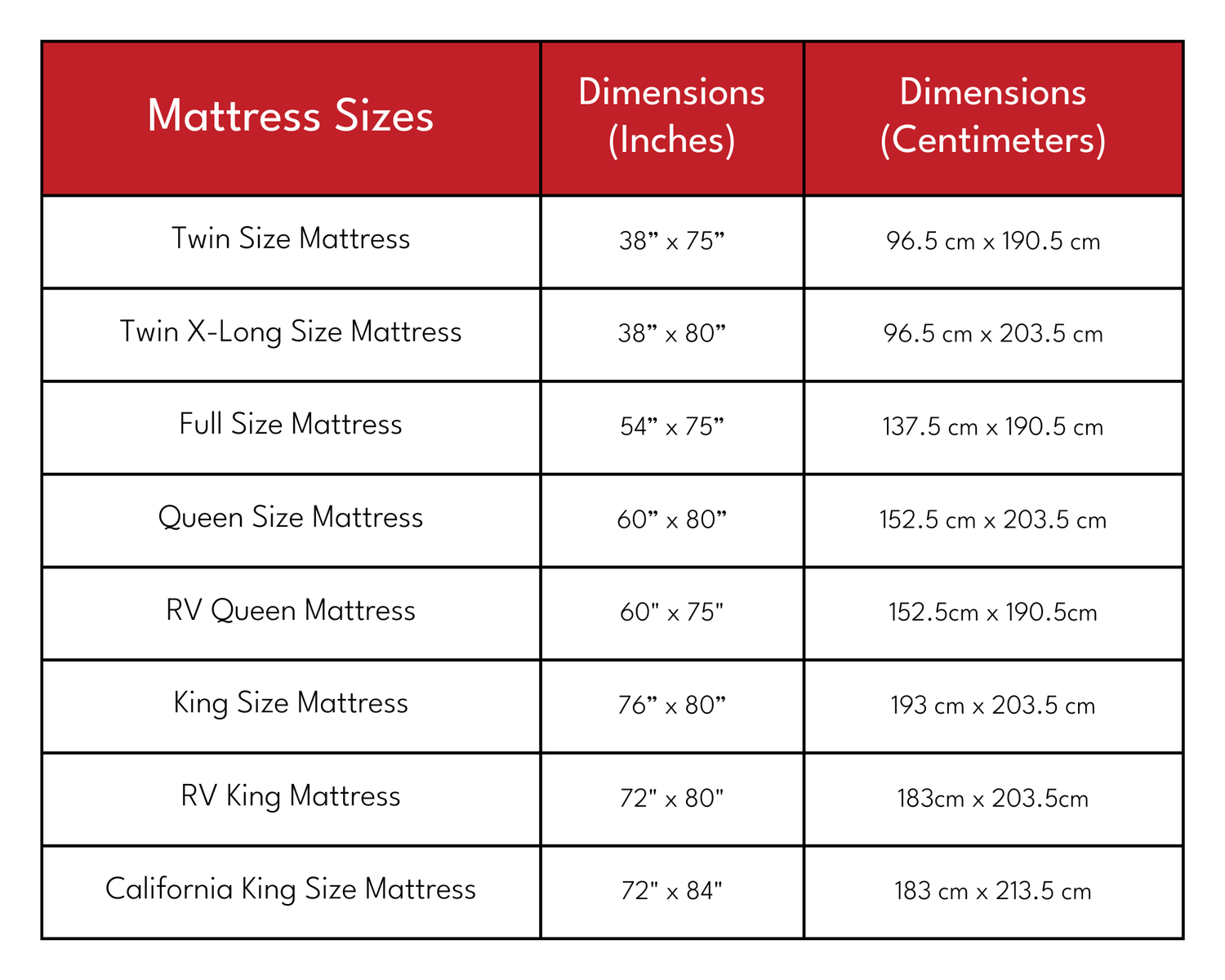
A standard US king size mattress measures 76 inches wide by 80 inches long (approximately 193 centimeters wide by 203 centimeters long). It provides 6,080 square inches of total sleep surface, making it the widest standard mattress ava...
A standard US king size mattress measures 76 inches wide by 80 inches long (approximately 193 centimeters wide by 203 centimeters long). It provides 6,080 square inches of total sleep surface, making it the widest standard mattress available in the United States, designed to give couples maximum personal space or accommodate co-sleeping families.
Contents
Detailed Dimensions of a Standard US King Mattress
When evaluating a standard US king size mattress—often referred to in the bedding industry as an Eastern King—it helps to examine its measurements across multiple standard units of length and profile depth.
- Width: 76 inches (6 feet, 4 inches / 193 cm)
- Length: 80 inches (6 feet, 8 inches / 203 cm)
- Surface Area: 6,080 square inches (42.22 square feet / 3.92 square meters)
- Per-Person Width: 38 inches of lateral width per partner when shared by two sleepers
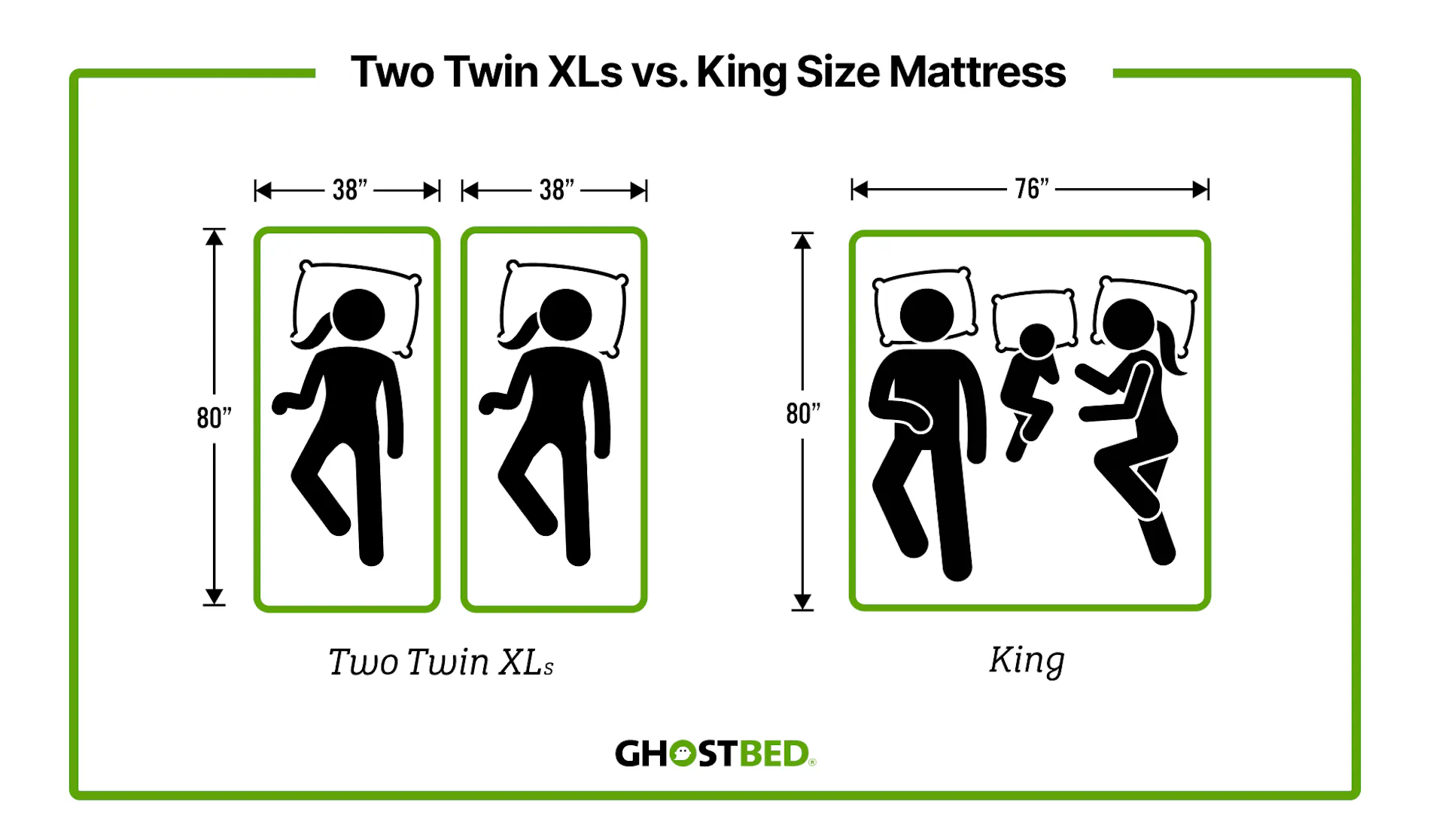
The lateral width of a standard king mattress is equivalent to placing two Twin XL mattresses side-by-side. This gives each individual the exact same horizontal space as a single sleeper on a Twin XL bed, allowing ample room to turn over, stretch out, or share the bed with pets and children without disturbing a sleeping partner.
Profile Height and Mattress Depth
While width and length are standardized across US manufacturers, height (or thickness) varies significantly based on internal construction and materials:
- Standard Profile (8 to 10 inches): Typically found in entry-level all-foam or basic innerspring mattresses.
- Medium Profile (11 to 13 inches): The industry norm for modern hybrid, memory foam, and latex mattresses.
- Deep/Luxury Profile (14 to 18+ inches): Common in multi-layer pillow-top, euro-top, or specialized hybrid mattresses containing heavy coil networks and thick comfort layers.
Mattress depth directly dictates the depth of fitted sheets required. A standard king mattress with a profile exceeding 14 inches usually requires deep-pocket or extra-deep-pocket fitted sheets to ensure a secure fit around the corners.
Comparing US King Sizes and Alternative Configurations
Understanding how a standard US king size compares to other common mattress sizes helps prevent buying errors related to frame selection, room clearance, and sheet compatibility.
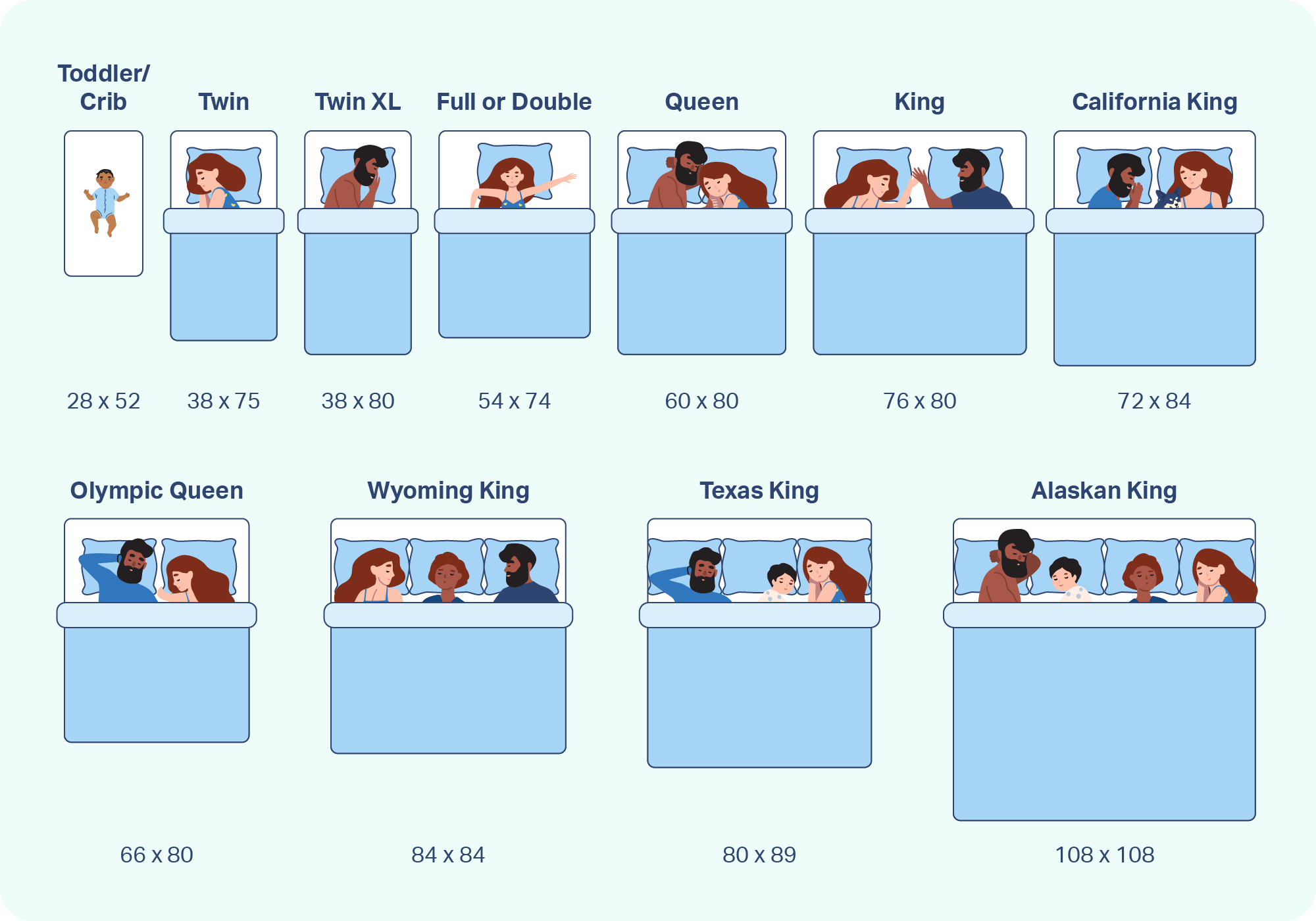
| Mattress Format | Dimensions (Inches) | Dimensions (Centimeters) | Total Area (Sq. Ft.) | Primary Best-Use Case |
|---|---|---|---|---|
| Queen | 60" W × 80" L | 152 cm × 203 cm | 33.33 sq. ft. | Single adults or couples in medium bedrooms |
| Standard King (Eastern) | 76" W × 80" L | 193 cm × 203 cm | 42.22 sq. ft. | Couples wanting maximum width; family co-sleeping |
| California King | 72" W × 84" L | 183 cm × 213 cm | 42.00 sq. ft. | Taller individuals (over 6'2"); narrower bedrooms |
| Split King | Two 38" W × 80" L | Two 96.5 cm × 203 cm | 42.22 sq. ft. | Couples with different firmness needs or adjustable bases |
| Wyoming King | 84" W × 84" L | 213 cm × 213 cm | 49.00 sq. ft. | Oversized luxury master suites; square layouts |
| Texas King | 80" W × 98" L | 203 cm × 249 cm | 54.44 sq. ft. | Extra-tall individuals needing extreme length |
| Alaskan King | 108" W × 108" L | 274 cm × 274 cm | 81.00 sq. ft. | Large co-sleeping families; massive master suites |
Standard King vs. California King
A frequent point of confusion for buyers is the difference between a Standard King and a California King mattress. Contrary to popular belief, a California King is not larger in total surface area than a standard king mattress.
- A Standard King is 76 inches wide by 80 inches long (42.22 sq. ft.). It prioritizes lateral width.
- A California King is 72 inches wide by 84 inches long (42.00 sq. ft.). It trades 4 inches of width for 4 extra inches of length.
A California King is optimal for sleepers over 6 feet 2 inches tall who need extra legroom so their feet do not hang off the end of the bed. However, for couples who prioritize shoulder room and lateral motion distance, the standard US king provides 4 additional inches of width. Standard king mattresses and California king mattresses cannot share sheets, bed frames, or box springs due to these structural dimensional differences.
Standard King vs. Split King
A Split King mattress shares the exact outer dimensions of a standard US king bed (76" x 80"), but it consists of two separate Twin XL mattresses (38" x 80" each) resting side-by-side on a single bed frame or split foundation.
This configuration offers two major advantages:
- Independent Dual Firmness: One side of the bed can be customized to a soft feel for side sleepers, while the other side is customized to a firm feel for back or stomach sleepers.
- Adjustable Base Compatibility: When paired with a dual-zone adjustable bed frame, each partner can independently elevate their head or feet without changing the position of the other side.
When dressing a Split King bed, buyers typically use two separate Twin XL fitted sheets for the individual mattresses, combined with a single King-sized top sheet, comforter, or duvet.
Room Layout, Spatial Planning, and Clearance Guidelines
Installing a standard US king mattress requires thoughtful room planning. Placing a mattress of this size into a room that is too small restricts traffic flow, blocks closet doors, and creates a cramped visual environment.
Minimum and Recommended Bedroom Sizes
- Absolute Minimum Room Size: 10 feet by 12 feet (120 square feet / 11.1 square meters). While a standard king mattress will technically fit into a 10x12 room, it leaves very limited space for nightstands, dressers, or walkways.
- Recommended Room Size: 12 feet by 12 feet (144 square feet / 13.4 square meters) or larger. A 12x12 foot room allows room for standard 24-inch nightstands on both sides of the bed and a comfortable walking clearance along the foot of the bed.
- Optimal Luxury Master Bedroom Size: 14 feet by 16 feet (224 square feet / 20.8 square meters) or larger. This layout allows for full-sized nightstands, an end-of-bed bench, large dressers, and comfortable foot traffic paths around all perimeter furniture.
Recommended Walkway Clearances
To maintain comfortable ergonomics and easy bed-making access:
- Leave at least 24 to 30 inches (61 to 76 cm) of open walking space between the edges of the mattress and any adjacent walls or large furniture pieces.
- Ensure door swings (bedroom entry doors, closet doors, and master bathroom doors) clear the frame by a minimum of 2 inches when fully opened.
- If using built-in under-bed storage drawers, ensure there is at least 36 inches of clearance on the drawer side to allow full extension and access.
Navigating Delivery into Your Home
Before ordering a standard king mattress, measure all access points along the delivery pathway:
- Doorways: Standard interior door openings range from 30 to 36 inches wide. A boxed foam mattress ("bed-in-a-box") easily compresses through narrow doors, but traditional innerspring king mattresses arrive at full size and must be carried vertically.
- Stairwells and Hallways: Verify ceiling heights and turn clearances at landings. Rigid king mattresses cannot bend around tight 90-degree corners in stairwells with low headroom.
- Box Spring Splitting: Traditional king bed sets almost universally require split box springs (two 38" x 80" foundations). Single-piece king box springs are practically impossible to maneuver through standard residential stairways and door frames.
Bedding, Sheet Depth, and Accessory Compatibility
Equipping a standard king size bed requires understanding standard bedding dimensions and physical foundation requirements to ensure long-term comfort and proper structural support.
Fitting Sheets and Mattress Encasements
Because mattress thickness varies from 8 inches to over 18 inches, sheet pocket depth is critical when purchasing bedding for a US king mattress:
- Standard Fitted Sheets: Designed for mattresses up to 12 inches deep.
- Deep Pocket Fitted Sheets: Designed for mattresses 13 to 17 inches deep.
- Extra Deep Pocket Fitted Sheets: Designed for luxury pillow-top mattresses ranging from 18 to 22 inches deep.
Using standard-depth fitted sheets on a 15-inch pillow-top mattress will cause the corners to pop off during sleep. Always check the depth listing on bedding packaging against your mattress’s physical height measurement.
Standard US Bedding Dimensions
To achieve a visually appealing drape over the sides of a standard 76" x 80" king mattress, accessory dimensions typically conform to these standards:
- King Flat Sheet: 108 inches wide by 102 inches long (274 cm × 259 cm)
- King Comforter / Duvet: 104 to 108 inches wide by 88 to 92 inches long
- King Pillowcases: 20 inches wide by 36 inches long (51 cm × 91 cm)
A standard king bed uses two King pillows side-by-side across the head of the mattress. Alternatively, three Standard pillows (20" x 26") can fit across the width of a king headboard for decorative styling.
Bed Frame Support and Structural Requirements
A standard king mattress is significantly heavier than smaller formats. All-foam or hybrid king mattresses frequently weigh between 100 and 180 pounds (45 to 81 kg) without occupants.
To prevent mattress sagging and structural bed frame failure, support foundations must meet specific design standards:
- Center Support Leg Requirement: A king bed frame must feature a rigid center support beam that runs longitudinally down the middle of the frame, backed by at least 2 to 3 vertical legs touching the floor. Frames relying solely on side rails without center support legs will bow under the weight of a king mattress and void most manufacturer warranties.
- Slatted Foundation Spacing: If using a platform bed frame with wooden or metal slats, the space between individual slats should not exceed 3 inches (7.6 cm) for foam or hybrid mattresses to prevent internal material sagging.
- Foundation Weight Capacities: Ensure total frame and foundation weight capacities accommodate the combined weight of the mattress (100–180 lbs) and both adult sleepers (often 300 to 500+ lbs combined).
Oversized King Variants: Beyond Standard Dimensions
For buyers with expansive master bedrooms who find a standard 76" x 80" mattress insufficient, several oversized specialty king mattresses exist in the North American market.
Wyoming King
- Dimensions: 84 inches wide by 84 inches long (7 feet × 7 feet / 213 cm × 213 cm)
- Description: Forms a perfect square, offering 8 additional inches of width compared to a standard king and 4 additional inches of length.
Texas King
- Dimensions: 80 inches wide by 98 inches long (6.67 feet × 8.17 feet / 203 cm × 249 cm)
- Description: Designed primarily for extremely tall sleepers. It adds 4 inches of width to a California king and extends the length by an extraordinary 14 inches.
Alaskan King
- Dimensions: 108 inches wide by 108 inches long (9 feet × 9 feet / 274 cm × 274 cm)
- Description: The largest widely recognized specialty mattress format. Requiring a room at least 16x16 feet, it easily fits co-sleeping families with multiple children and pets.
Note: Oversized variants require custom-built bed frames, specialized mattress foundations, and custom-ordered bedding, as standard consumer retail outlets rarely stock 84", 98", or 108" bedding accessories.
Is a Standard US King Size Mattress Right for You?
Advantages
- Maximum Personal Sleeping Space: Offers 38 inches of lateral width per partner, reducing nocturnal sleep disruptions from body movement or position shifts.
- Ideal for Co-Sleeping: Comfortably accommodates couples plus young children or large pet breeds without crowding.
- Widespread Accessory Availability: Standard king sheets, comforters, protectors, and bed frames are universally stocked across all US mattress and home goods retailers.
Disadvantages
- Large Spatial Footprint: Consumes significant square footage in smaller bedrooms, potentially creating restrictive floor layouts.
- Higher Overall Cost: Mattresses, foundations, sheet sets, and comforters in King sizes carry a price premium of 15% to 30% over equivalent Queen-sized models.
- Heavy and Bulky to Move: Transporting a rigid 76" x 80" king mattress requires two adults and careful navigation around interior doors, corners, and stairways.
Frequently Asked Questions
Is a Standard King mattress the same as an Eastern King?
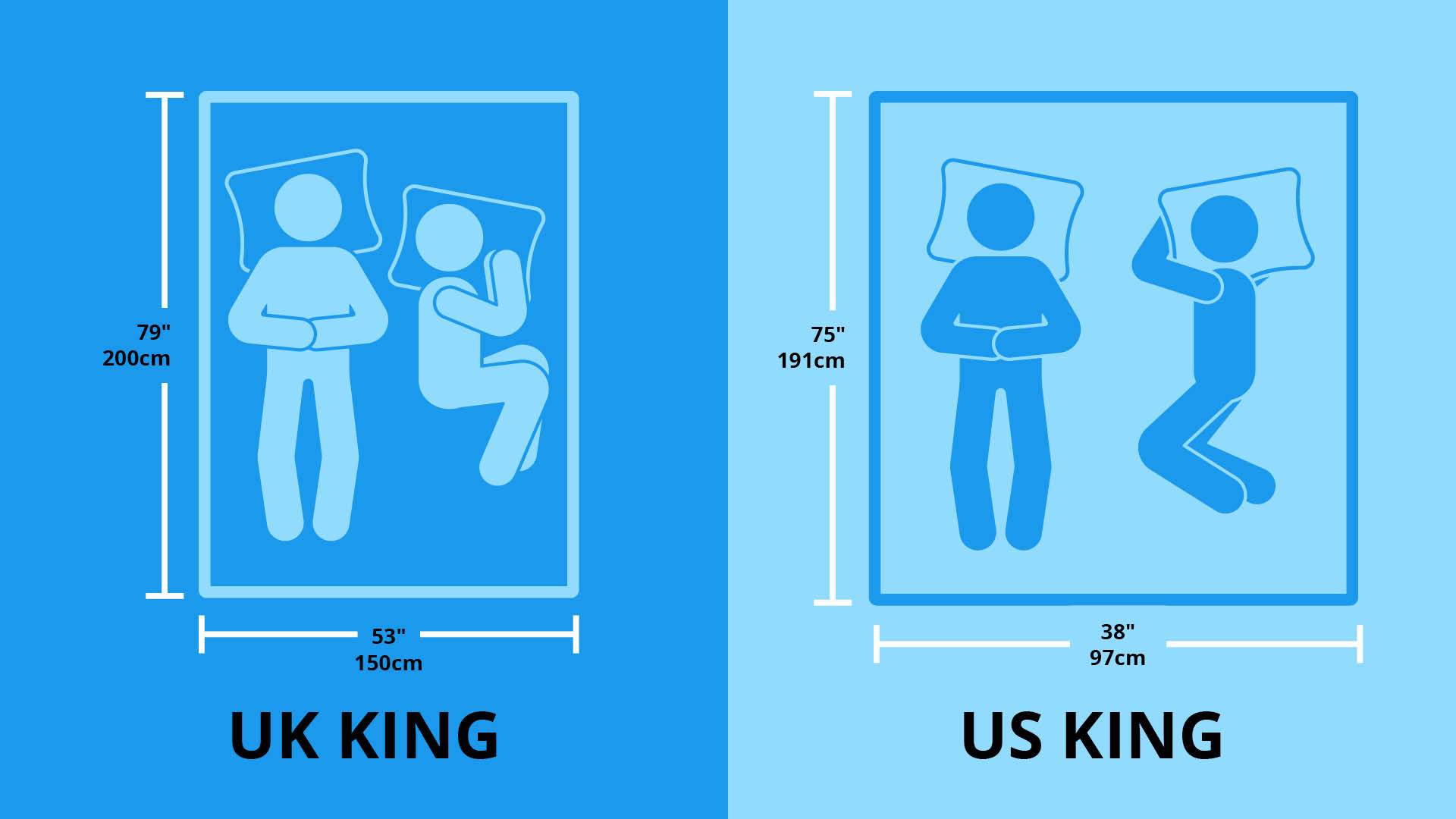
Yes. "Eastern King" and "Standard King" are identical in dimensions (76 inches wide by 80 inches long). The term "Eastern King" was historically introduced to distinguish the standard 76x80 inch mattress from the narrower, longer "California King" developed on the West Coast.
Can standard King sheets fit a California King mattress?
No. Standard king sheets will not fit a California king mattress properly. A standard king sheet is too wide (76" vs 72") and too short (80" vs 84"), causing the fitted sheet corners to slide off the California king mattress during use.
What is the minimum recommended room size for a US king bed?
The absolute minimum room size for a standard king mattress is 10 feet by 12 feet (120 sq. ft.). However, a room size of 12 feet by 12 feet (144 sq. ft.) or larger is strongly recommended to comfortably fit nightstands and leave adequate walking clearance around the bed.
Why do standard King mattress sets come with two split box springs?
Because a single-piece rigid box spring measuring 76 inches wide by 80 inches long cannot fit through most residential entryways, stairwells, and door frames. Standard king sets use two split box springs (38" x 80" each, identical to Twin XL dimensions) side-by-side to allow easy transport into homes.
How much wider is a Standard King than a Queen mattress?
A standard US king mattress is 16 inches wider than a standard queen mattress. Both sizes share the same 80-inch length, but the King increases the width from 60 inches to 76 inches, providing an extra 8 inches of space per partner.
Practical Next Steps for Buyers
- Measure Your Room and Architectural Features: Map out your bedroom footprint. Ensure you have at least 12 feet of width or length along your headboard wall and at least 24 to 30 inches of open perimeter space for walkways.
- Audit Your Access Route: Measure interior doorways, staircases, hall turns, and elevator doors along the path from your front entrance to the target bedroom to verify delivery clearance.
- Confirm Frame Center Support: Verify that your existing bed frame or intended platform bed includes a center support beam with floor legs. If upgrading from a Queen frame, purchase a dedicated King bed frame with proper vertical support.
- Check Mattress Profile Depth Before Accessories: Take an accurate physical height measurement of your target mattress (including top layers) before purchasing fitted sheets to ensure you select the correct standard, deep, or extra-deep pocket size.
Image Gallery