How Often Does Life Insurance Pay in the Case of Suicide? Rules, Clauses, and Payout Rates
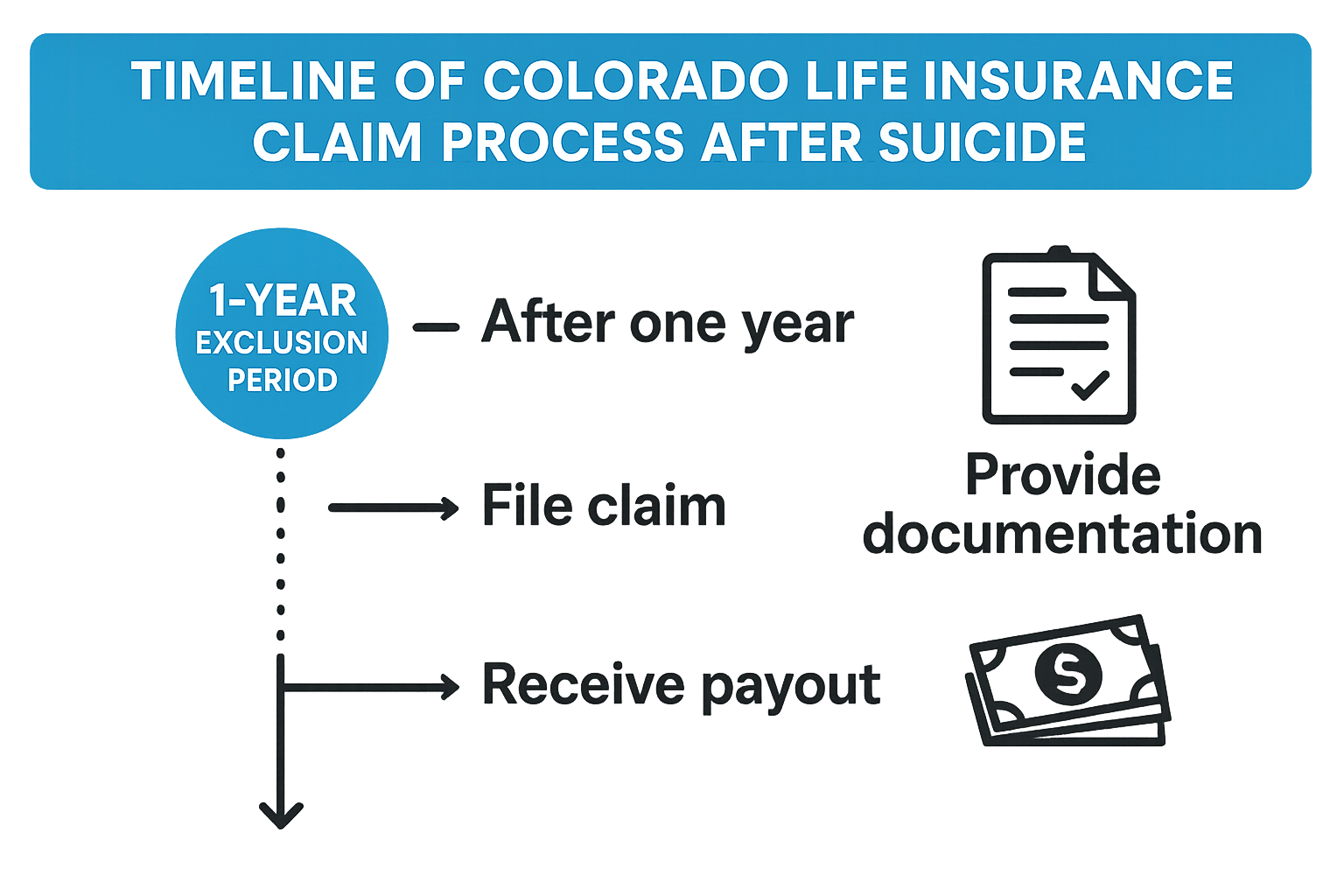
Life insurance policies pay out on suicide claims in the vast majority of cases, provided the policy has passed its initial suicide exclusion period—typically two years from the effective date. If death by suicide occurs after this exc...
Life insurance policies pay out on suicide claims in the vast majority of cases, provided the policy has passed its initial suicide exclusion period—typically two years from the effective date. If death by suicide occurs after this exclusion period, beneficiaries receive the full death benefit. If death occurs within the exclusion window, insurers deny the death benefit but refund paid premiums.
Contents
The Core Rule: How Life Insurance Handles Suicide Claims
A common misconception is that life insurance policies never pay out if the insured individual dies by suicide. In reality, modern life insurance policies routinely pay out suicide claims, provided the policy meets specific legal and contractual conditions.
The primary determinant of whether a life insurance policy pays out is the timing of death relative to the policy purchase date. Insurance contracts contain a standard provision known as the suicide clause. Under this clause, insurance companies established a clear boundary: if a policyholder dies by suicide within a designated period (usually two years from policy inception), the insurer is not obligated to pay the face value of the policy. However, once that timeline passes, suicide is treated like any other cause of death—such as heart disease, illness, or an accident—and the policy pays 100% of the covered death benefit to the designated beneficiaries.
Statistically, life insurance pays out on suicide claims nearly 100% of the time when the policy has been in force beyond the exclusion period, assuming premiums are current and no application fraud took place. Insurers enforce these rules strictly to balance consumer protection with financial risk management.
Why Do Life Insurance Policies Have Suicide Clauses?
The primary reason insurance carriers implement a suicide exclusion window is to prevent adverse selection. Adverse selection occurs when an individual buys a high-value life insurance policy with the intent of ending their life shortly thereafter to transfer wealth to family members or discharge personal debt.
Without a mandatory exclusion period, insurance companies would face extreme financial vulnerability, forcing them to dramatically raise premiums for all policyholders or restrict access to coverage altogether. The standard two-year waiting period acts as a deterrent against purchasing coverage specifically in contemplation of self-harm, while still offering long-term security to policyholders who face mental health crises years down the road.
Key Policy Terms That Determine Payout Eligibility
Understanding how and when an insurer pays requires examining four primary contractual provisions found in life insurance policies across the United States and Canada.
- POLICY ISSUED / APPLICATION APPROVED
- YEARS 0 to 2 (Exclusion Window)
- Suicide Clause active
- Contestability Period active
- Death by suicide results in DENIAL of death benefit
- Premiums paid are REFUNDED to beneficiaries
- AFTER YEAR 2 (Full Coverage Window)
- Suicide Clause expires
- Incontestability Provision takes effect
- Death by suicide results in FULL PAYOUT of face value
- Subject only to active status and absence of initial fraud
1. The Suicide Exclusion Clause
The suicide clause explicitly limits payout rights if self-inflicted death occurs during the initial period of coverage. State insurance laws regulate the maximum length of this clause. In most U.S. states, state law permits insurers to set a maximum exclusion period of up to two years, though a few states restrict this window to one year.
During this exclusion period:
- The full death benefit is not paid.
- The insurer must issue a premium refund to the designated beneficiary or estate, returning the total money paid into the policy up to the date of death, minus administrative fees or policy loans.
2. The Incontestability Provision
Often running concurrently with the suicide clause is the contestability period, which typically lasts two years from the policy’s start date. Under the legal framework established by state regulators and detailed by the Legal Information Institute at Cornell Law School, the incontestability clause prevents an insurer from voiding a policy or denying a claim due to misstatements on the original application after two years have elapsed.
If a policyholder dies by suicide within the two-year window, the insurer will conduct a claim review. During this review, the company examines medical records to determine whether the policyholder hid a history of clinical depression, psychiatric hospitalization, or suicide attempts when applying for coverage. If intentional misrepresentation occurred on the original application, the carrier can rescind the policy entirely, regardless of the cause of death.
3. Policy Reinstatement Reset Rules
If a life insurance policy lapses because the owner failed to pay premiums, and the policyholder subsequently reinstates coverage, the suicide exclusion clock typically restarts.
For example, if a individual owns a term life policy for five years, allows it to lapse due to missed payments, and then reinstates the coverage, a fresh two-year suicide clause goes into effect starting on the date of reinstatement. If suicide occurs within two years of that reinstatement date, the insurer will apply the exclusion rule and deny the benefit claim.
4. Policy Upgrades and Benefit Increases
When an existing policyholder increases their death benefit—such as upgrading a term policy from $250,000 to $1,000,000—the increased coverage amount triggers a new suicide exclusion period. If the insured dies by suicide within two years of the upgrade, the beneficiary will receive the original $250,000 payout (assuming the original policy was older than two years), but the additional $750,000 increase will be denied and its associated premiums refunded.
Comparing Life Insurance Types: What Pays and What Doesn't
Not all life insurance products treat suicide claims in the exact same manner. The specific type of coverage directly influences whether a payout will be made.
Individual Term and Permanent Life Insurance
Individual policies—including term life, whole life, and universal life—follow standard state-regulated suicide rules. They almost universally feature a two-year suicide clause (or one year depending on state jurisdiction and contract terms). Once that period expires, these policies pay out full benefits for death by suicide.
Group Life Insurance (Employer-Sponsored)
Group life insurance offered as an employee benefit by businesses often handles suicide differently than individual insurance. Because group coverage pools risk across hundreds or thousands of employees without individual medical underwriting, many basic group life policies do not enforce a suicide clause.
- Basic Employer-Paid Coverage: Frequently pays the full death benefit from day one, even if death occurs by suicide shortly after hire.
- Supplemental Group Coverage: Voluntary coverage purchased by employees above the basic employer-provided amount usually includes a standard one- or two-year suicide exclusion period.
Accidental Death and Dismemberment (AD&D) Policies
AD&D insurance does not pay for death by suicide under any circumstances. AD&D policies are strictly designed to cover sudden, unintentional fatal accidents—such as motor vehicle crashes, accidental falls, or machinery mishaps.
Every AD&D policy contract explicitly excludes intentional self-inflicted injuries and suicide. Even if an AD&D policy has been active for ten or twenty years, a suicide claim will be denied in full, with no payout to beneficiaries.
Guaranteed Issue Life Insurance
Guaranteed issue policies do not require medical exams or health questions. To compensate for this high risk, insurers include graded death benefits. If the policyholder dies from any non-accidental cause—including suicide—within the first two years, the insurer only pays a return of premiums plus a modest interest rate (typically 10%). After two years, the policy pays the full death benefit regardless of cause.
Overview of Life Insurance Payout Rules by Policy Type
The table below outlines how different policy structures handle suicide claims across timelines, including payout eligibility and financial treatment of paid premiums.
| Policy Type | Exclusion Timeline | Payout Status (Within Exclusion Window) | Payout Status (After Exclusion Window) | Financial Outcome for Exclusion Denials |
|---|---|---|---|---|
| Individual Term Life | 1 to 2 Years | Claim Denied | 100% Paid | Full refund of premiums paid |
| Individual Whole / Universal Life | 1 to 2 Years | Claim Denied | 100% Paid | Refund of premiums paid (less cash value withdrawals) |
| Basic Employer Group Life | 0 to 2 Years (Often 0) | Varies by Group Contract | 100% Paid | Payout usually made immediately unless restricted |
| Voluntary Supplemental Group Life | 1 to 2 Years | Claim Denied | 100% Paid | Full refund of premiums paid |
| Accidental Death & Dismemberment (AD&D) | Permanent Exclusion | Claim Denied | Claim Denied | No benefit paid; no premium refund issued |
| Guaranteed Issue Life Insurance | 2 Years (Graded) | Benefit Restricted | 100% Paid | Refund of premiums plus interest (usually 10%) |
The Claim Investigation Process for Suicide Cases
When a death claim involves suicide, the insurance carrier performs a mandatory administrative review to verify details, ensure contestability periods have elapsed, and confirm application accuracy. Beneficiaries navigating this process should understand what steps take place behind the scenes.
- Beneficiary Files Claim with Death Certificate
- Was Policy Active > 2 Years?
- YES
- Verify Application Fraud
- NO FRAUD: FULL PAYOUT
- FRAUD: RESCIND
- Verify Application Fraud
- NO
- Contestability Investigation
- SUICIDE: PREMIUM REFUND
- ACCIDENT: FULL PAYOUT
- Contestability Investigation
- YES
Required Documentation
To initiate a claim, beneficiaries must submit standard documentation to the insurance company:
- Certified Copy of the Death Certificate: The death certificate specifies the official cause of death (e.g., natural, accidental, homicide, or suicide) and manner of death as determined by a medical examiner or coroner.
- Completed Claim Form (Proof of Death): Form signed by the named beneficiaries establishing identity and payment preferences.
- Policy Document: The original contract details or policy number.
Medical Examiner and Toxicology Reports
If the policy is still within the contestability window or if the cause of death is marked as "pending investigation," the insurer may request official coroner reports, police reports, and toxicology assessments.
If a death occurs within the exclusion period and there is ambiguity regarding whether the death was accidental (such as a drug overdose or single-car crash) or intentional, the burden of proof rests on the insurance company. Insurance companies must prove by a preponderance of evidence that self-harm was intentional to deny a claim based on the suicide clause. If evidence is inconclusive, insurers often pay the full benefit or settle the claim under accidental death terms.
Regulatory bodies such as the National Association of Insurance Commissioners (NAIC) publish guidance and oversee state-level insurance commissioner rules to ensure insurers investigate claims fairly without delaying valid payments unnecessarily.
Common Reasons a Suicide Claim May Be Denied
While suicide claims past the two-year mark are routinely honored, certain situations can lead to a benefit denial:
- Death Occurs Within Exclusion Period: The most frequent reason for non-payment is simply that the policy purchase or reinstatement date was less than two years prior to the date of death.
- Lapsed Policy Status: If the policyholder stopped paying premiums and the grace period passed before the death occurred, the policy is inactive, and no benefit is payable regardless of cause.
- Material Misrepresentation: If the policyholder intentionally falsified answers regarding severe psychiatric illnesses or recent hospitalization on their initial application, the insurer may void the policy under contestability provisions during the first two years.
- Misinterpretation of Policy Type: Beneficiaries sometimes confuse an AD&D policy with standard life insurance. Because AD&D policies completely exclude suicide, claims filed against AD&D policies for self-inflicted death are denied.
- Policy Reinstatement Reset: Policyholders who reinstate lapsed coverage trigger a fresh exclusion period. If death occurs within two years of reinstatement, the claim will be denied under suicide exclusion rules.
Guidance for Beneficiaries Navigating a Claim
Handling an insurance claim after losing a family member to suicide is an emotional process. Following structured steps can streamline the administrative procedures and reduce uncertainty.
Step 1: Locate Policy Documents and Verify the Effective Date
Check the original policy schedule to identify the policy’s effective date, total coverage amount, and specific endorsements. Determine whether the policy was an individual term/whole life plan or an employer-provided group policy. If the policy is older than two years, the suicide exclusion clause no longer applies.
Step 2: Request the Official Death Certificate
Obtain multiple certified copies of the death certificate from the state or county vital statistics office. Ensure the cause of death section is completed by the medical examiner, as insurance companies cannot process death claims without final cause-of-death certification.
Step 3: Contact the Insurer's Claims Department
File the claim promptly through the insurer’s customer support portal or claims department. Provide the policy number, beneficiary identification, and certified death certificate. If the policy is past the contestability window, most payouts are processed within 30 to 60 days.
Step 4: Review Any Denial Letters or Requests for Information
If the insurer requests additional medical records or issues a claim denial:
- Carefully review the written justification provided by the claims manager.
- Check whether the policy fell within the exclusion period. If so, verify that the insurer has issued a full refund of premiums paid into the account.
- If the cause of death is disputed (for instance, if an overdose was ruled suicide but evidence suggests an unintentional accident), consult an independent legal advisor specializing in life insurance litigation to evaluate the medical examiner's findings.
Frequently Asked Questions
Does life insurance pay for suicide after 2 years?
Yes. In almost all individual life insurance contracts, once the policy has been active for two full years, death by suicide is fully covered. The insurer pays 100% of the face value to the named beneficiaries, provided premiums are paid up to date and no application fraud occurred.
What happens if a policyholder dies by suicide within 1 year of buying insurance?
If a policyholder dies by suicide within the policy’s suicide exclusion period (typically one to two years), the insurer denies the death benefit claim. However, the insurer must refund all premiums paid into the policy up to that point to the beneficiary or estate.
Does group life insurance through an employer pay out for suicide?
Basic employer-provided group life insurance often pays out for suicide immediately, as many group policies do not include a suicide clause. However, voluntary supplemental group coverage purchased in addition to the base coverage usually includes a standard one- or two-year suicide exclusion window.
Do AD&D policies cover suicide?
No. Accidental Death and Dismemberment (AD&D) policies strictly exclude suicide and intentional self-inflicted injuries from coverage under all circumstances, regardless of how long the policy has been active.
What happens if a policy lapsed and was reinstated before death?
When a lapsed life insurance policy is reinstated, the two-year suicide exclusion period and contestability window typically restart from the official reinstatement date. If suicide occurs within two years of reinstatement, the insurer will deny the death benefit and refund premiums collected since reinstatement.
Practical Recommendations & Next Steps
If you are managing an estate or serving as a beneficiary for a life insurance policy following a self-inflicted death:
- Verify Key Dates Immediately: Compare the date of policy issuance (or reinstatement) against the date of death. If more than 730 days (two years) elapsed, the policy should pay out full benefits.
- Review Employer Group Benefits: If the deceased had coverage through an employer, request the group policy certificate. Basic group life coverage often yields a full payout even within the first two years of employment.
- Confirm Premium Refund Amounts: If a claim is legitimately denied under a valid suicide clause, verify that the insurance company returns every dollar of premium paid into the contract during its active life.
Critical Crisis Support Notice
If you or someone you know is struggling with difficult emotions, mental distress, or thoughts of self-harm, support is available 24 hours a day, 7 days a week. In the United States and Canada, call or text 988 to reach the Suicide & Crisis Lifeline, offering free, confidential assistance from trained professionals. International resources can be located through Befrienders Worldwide.
Disclaimer: This guide is provided for educational and informational purposes only and does not constitute formal legal, financial, or tax advice. Life insurance policy provisions vary by carrier, product structure, and state regulation. Always review the specific policy contract terms or consult a licensed insurance professional or legal advisor regarding individual coverage questions.
Image Gallery