Securing Cloud Storage in Disaster Recovery: Core Risks and Essential Controls
Cloud storage underpins modern disaster recovery strategies, providing offsite data immobility, rapid elasticity, and geographically redundant replication. However, replicating sensitive assets to remote cloud environments introduces u...
Cloud storage underpins modern disaster recovery strategies, providing offsite data immobility, rapid elasticity, and geographically redundant replication. However, replicating sensitive assets to remote cloud environments introduces unique attack surfaces, configuration complexities, and compliance hurdles. Organizations must meticulously balance rapid restoration time objectives with strict data confidentiality, integrity, and regulatory mandates.
Contents
Understanding the Role of Cloud Storage in Disaster Recovery
Disaster recovery (DR) requires an organization to maintain copies of critical operational data and application states in a location isolated from its primary data center. Traditional on-premises tape archiving and secondary data center deployments often suffer from high capital expenditure, slow physical transport loops, and vulnerability to regional disasters. Cloud storage transforms this paradigm by offering scalable, pay-as-you-go infrastructure capable of ingesting petabytes of structured and unstructured data over high-speed networks.
In a cloud-based DR architecture, primary data is continuously or periodically backed up to remote cloud object stores, block volumes, or managed file systems. When an outage, ransomware attack, or physical disaster strikes, organizations can spin up virtual machines, attach restored cloud storage volumes, and reroute network traffic. This operational agility minimizes downtime. However, it also means that sensitive operational data resides outside the traditional enterprise perimeter, exposed to multi-tenant environments, complex identity hierarchies, and dynamic internet-facing APIs.
Primary DR Architectures Utilizing Cloud Storage
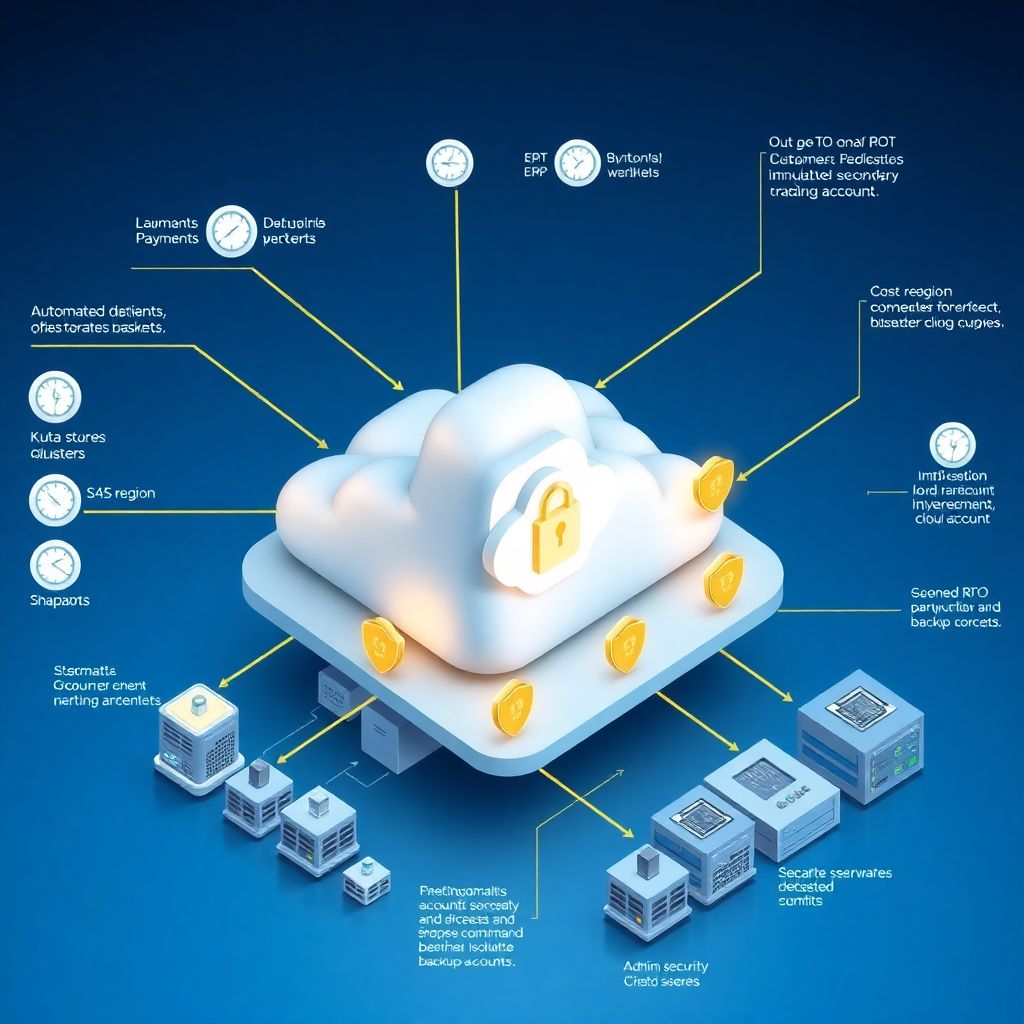
Organizations typically implement cloud storage disaster recovery across three distinct structural tiers, each presenting specific security considerations:
- Backup and Restore: The most cost-effective approach, where periodic snapshots or backups of primary systems are shipped to cloud object storage. While storage costs are low, recovery time objectives (RTOs) are typically longer because data must be re-downloaded and provisioned during an event.
- Pilot Light: A minimal version of the core infrastructure runs continuously in the cloud, syncing critical databases and configuration states. Compute resources remain powered down until a disaster triggers automated orchestration scripts to scale up the environment.
- Warm Standby / Hot Site: A fully operational or near-identical replica of the production environment runs concurrently in a secondary cloud region. This provides near-zero RTO and recovery point objectives (RPO) but requires continuous replication and significantly higher resource expenditure.
Major Security Risks in Cloud Disaster Recovery
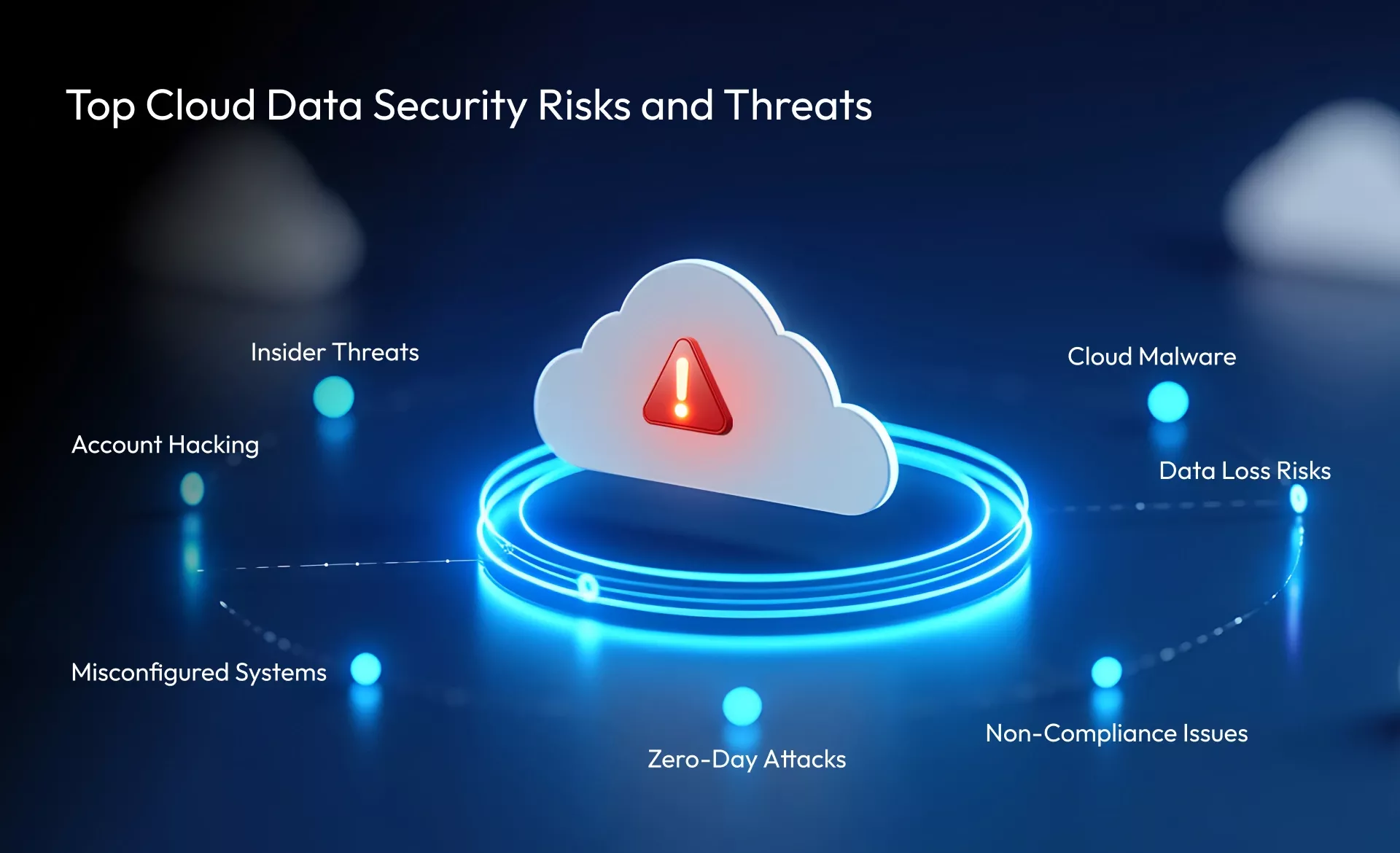
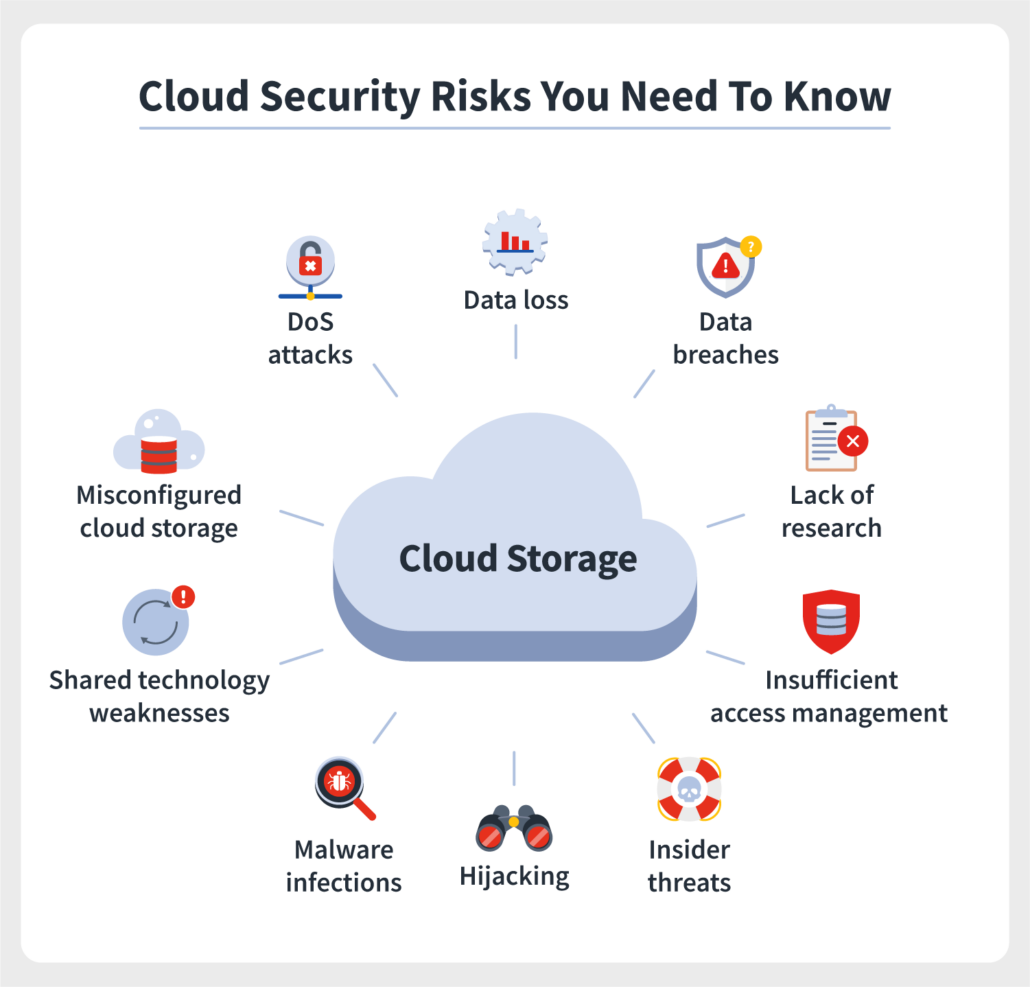
The distributed nature of cloud storage introduces several threat vectors that do not exist or manifest differently in traditional on-premises setups. Failure to address these vulnerabilities can lead to catastrophic data breaches, regulatory penalties, or compromised recovery states during a crisis.
Misconfiguration and Authorization Failures
Cloud storage security relies heavily on logical boundaries defined by identity and access management (IAM) policies rather than physical walls. A common vulnerability is the misconfiguration of access control lists (ACLs) or storage bucket permissions, which can inadvertently expose terabytes of sensitive backup data to the public internet. Furthermore, overly permissive service accounts or leaked API credentials can allow malicious actors to access, modify, or encrypt backup repositories, rendering them useless during a ransomware incident.
Data Transit and At-Rest Vulnerabilities
During disaster recovery operations, data moves continuously between primary data centers, edge gateways, and secondary cloud regions. If data in transit is not encrypted using modern cryptographic protocols (such as Transport Layer Security 1.3), it becomes vulnerable to interception or man-in-the-middle attacks. Similarly, data at rest in cloud storage buckets or block volumes is susceptible to unauthorized access if encryption keys are managed improperly or stored alongside the data they protect.
Ransomware Propagation and Backup Corruption
Sophisticated ransomware attacks now target backup repositories and disaster recovery systems specifically to prevent organizations from restoring operations without paying a ransom. If an attacker compromises primary administrative credentials, they may infiltrate the cloud storage tier, delete snapshot histories, or encrypt backup files. Because automated replication mechanisms mirror data changes rapidly, a ransomware infection on primary systems can quickly corrupt secondary cloud backups if appropriate isolation and immutability controls are absent.
Compliance and Jurisdictional Complications
Organizations bound by strict regulatory frameworks—such as the Health Insurance Portability and Accountability Act (HIPAA), the Payment Card Industry Data Security Standard (PCI DSS), or the European Union’s General Data Protection Regulation (GDPR)—must ensure that replicated disaster recovery data complies with data residency, sovereignty, and privacy laws. Storing encrypted backups in a cloud region located in an unverified foreign jurisdiction can result in severe compliance violations, even if the data is only intended for emergency recovery.
Essential Controls for Mitigating Cloud DR Risks
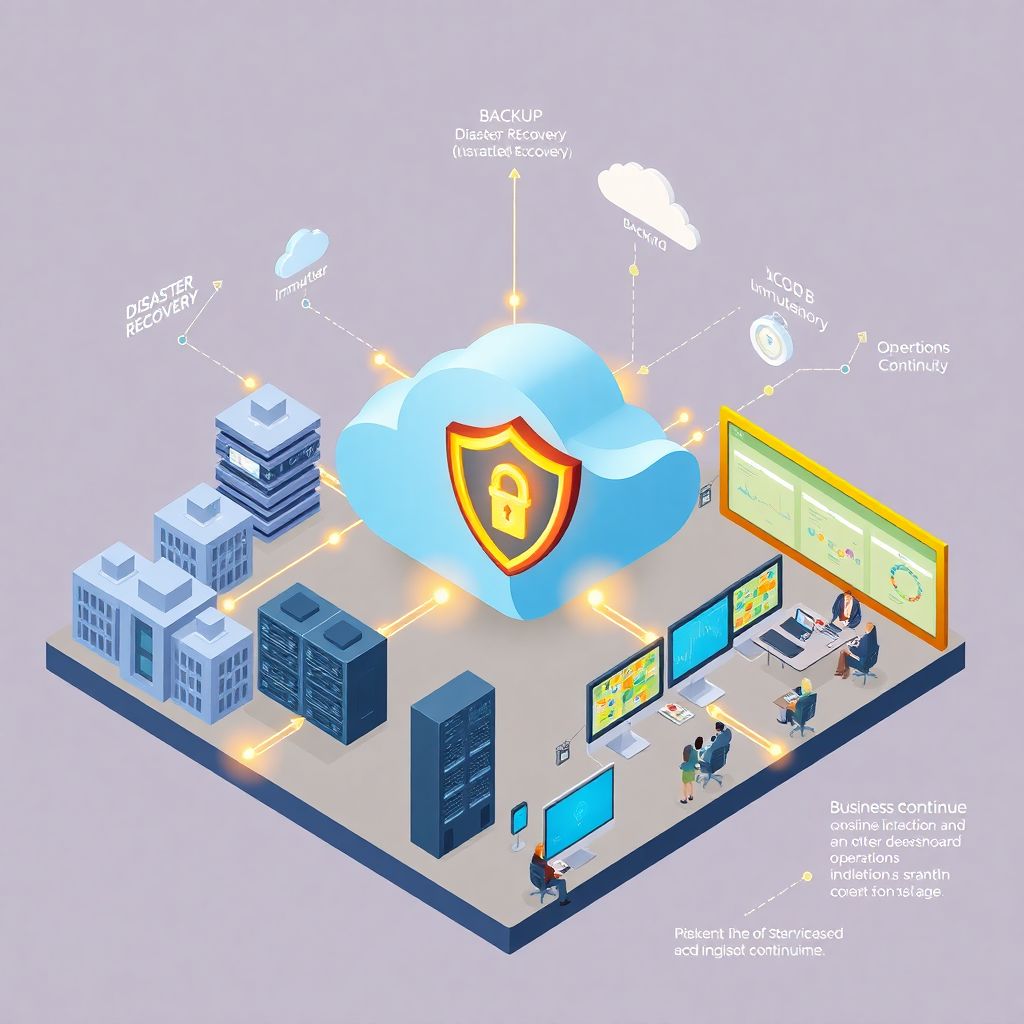
Securing cloud storage for disaster recovery requires a defense-in-depth strategy that combines cryptographic protection, strict access governance, network isolation, and immutable storage architectures.
- Cloud DR Security Architecture
- Primary Environment
- Cloud Storage Bucket (Encrypted over TLS 1.3)
- Customer-Managed Encryption Keys (KMS)
- Object Lock & Immutability (WORM)
- Identity and Access Management (Least Privilege)
Cryptographic Controls for Data Protection
Protecting data confidentiality requires robust encryption mechanisms across all operational states:
- Encryption at Rest: Ensure that all cloud storage volumes and object buckets enforce server-side encryption by default. Organizations should utilize Customer-Managed Keys (CMKs) via cloud Key Management Services (KMS) rather than default cloud-managed keys. This ensures that the enterprise retains direct revocation authority over the cryptographic keys protecting backup data.
- Encryption in Transit: All synchronization traffic, backup uploads, and management API calls must transit over secure channels using TLS 1.3 or higher, with certificate pinning and robust cipher suites enforced at the network gateway.
Access Governance and Identity Management
Minimizing the blast radius of a compromised credential requires strict enforcement of the principle of least privilege:
- Multi-Factor Authentication (MFA): Mandate hardware-token or cryptographic MFA for all human users and automated scripts accessing cloud storage administration consoles and backup management planes.
- Role-Based Access Control (RBAC): Isolate disaster recovery management roles from general cloud administration. Implement granular permissions that restrict backup deletion and modification capabilities to isolated security groups or automated service accounts.
- Regular Auditing: Utilize continuous cloud security posture management (CSPM) tools to audit IAM policies, inspect storage bucket access logs, and detect anomalous data access patterns.
Immutability and Write-Once-Read-Many (WORM) Policies
To protect against malicious deletion, administrative errors, and ransomware encryption, cloud storage environments must incorporate immutability controls:
- Object Locking: Enable object lock features in compliance or governance mode on cloud storage buckets used for backups. This enforces a Write-Once-Read-Many (WORM) posture, ensuring that data files cannot be deleted, overwritten, or modified by any user—including root administrators—until a predefined retention period expires.
- Logical Air-Gapping: Maintain secondary backup copies in an isolated cloud account or distinct cloud provider organization, preventing a compromised primary cloud tenant from propagating destructive commands to the recovery environment.
Comparative Overview of Cloud Storage Security Controls
| Control Category | Implementation Mechanism | Primary Security Objective | Operational Consideration |
|---|---|---|---|
| Data Encryption | Customer-Managed Keys (CMKs) in Cloud KMS | Protects confidentiality against unauthorized storage access | Requires strict key backup and rotation procedures |
| Immutability | WORM Object Lock & Retention Periods | Defends against ransomware and accidental deletion | Increases storage costs by preventing premature cleanup |
| Access Control | Least-Privilege RBAC & MFA | Limits blast radius of compromised credentials | Requires continuous auditing of permission drift |
| Network Security | VPC Endpoints & Private Service Connect | Prevents exposure of backup traffic to the public internet | Increases architectural complexity during setup |
Frequently Asked Questions
What is the primary advantage of cloud storage in disaster recovery?
Cloud storage provides scalable, offsite data redundancy without the high capital expenditure of maintaining a secondary physical data center. It enables automated backups and rapid elastic restoration during critical outages.
How does object locking protect disaster recovery backups from ransomware?
Object locking enforces a Write-Once-Read-Many (WORM) state, preventing any user—even system administrators—from deleting or modifying backup files until a specified retention period expires, stopping ransomware from destroying recovery points.
What is the difference between encryption at rest and encryption in transit for cloud backups?
Encryption at rest protects stored data files residing within cloud storage disks or object buckets using cryptographic keys. Encryption in transit secures data while it is moving over networks from primary systems to the cloud repository.
Why are Customer-Managed Keys (CMKs) recommended over cloud-provided keys?
CMKs allow an organization to retain direct control over the cryptographic keys protecting their data. If a security incident occurs, organizations can immediately revoke the key, instantly rendering the stored backup data unreadable to unauthorized parties.
How do compliance regulations impact cloud storage disaster recovery design?
Regulations like GDPR, HIPAA, and PCI DSS dictate where backup data must physically reside, how long it must be retained, and who can access it. DR architectures must respect these geographic and privacy boundaries to avoid regulatory penalties.
Recommended Next Actions
- Audit Current Access Policies: Review existing cloud storage IAM roles, ensuring that least-privilege principles are enforced and multi-factor authentication is mandatory for all administrative actions.
- Enable Immutability: Evaluate and deploy object-locking or WORM retention policies on all cloud storage buckets dedicated to disaster recovery backups.
- Test Restoration Workflows: Schedule regular, simulated disaster recovery drills to verify that backup integrity is intact and that recovery time objectives (RTO) can be met under realistic operational constraints.
Image Gallery