Comprehensive Guide to Toyota RAV4 Interior and Cargo Space
The Toyota RAV4 offers a versatile and spacious interior designed to accommodate five passengers comfortably while providing substantial cargo utility. It features approximately 37.6 cubic feet of cargo space behind the rear seats, whi...
The Toyota RAV4 offers a versatile and spacious interior designed to accommodate five passengers comfortably while providing substantial cargo utility. It features approximately 37.6 cubic feet of cargo space behind the rear seats, which expands to 69.8 cubic feet when the second row is folded flat. These dimensions make it a leader in the compact SUV segment for practicality and daily usability.
Contents
Since its inception, the Toyota RAV4 has defined the crossover category by balancing the footprint of a compact car with the utility of a larger SUV. As of 2026, the RAV4 remains a benchmark for interior packaging efficiency. Whether you are considering the traditional internal combustion engine (ICE) model, the Hybrid, or the RAV4 Prime plug-in hybrid, understanding the nuances of its dimensions is critical for determining if it meets your lifestyle needs. This guide provides a technical breakdown of the Toyota RAV4’s spatial offerings, from passenger volume to specialized cargo features.
Exterior Dimensions: The Foundation of Interior Space
Before diving into the interior, it is essential to understand the exterior envelope. The RAV4’s physical footprint dictates how it maneuvers in tight spaces and how much raw volume is available for engineers to distribute inside the cabin.
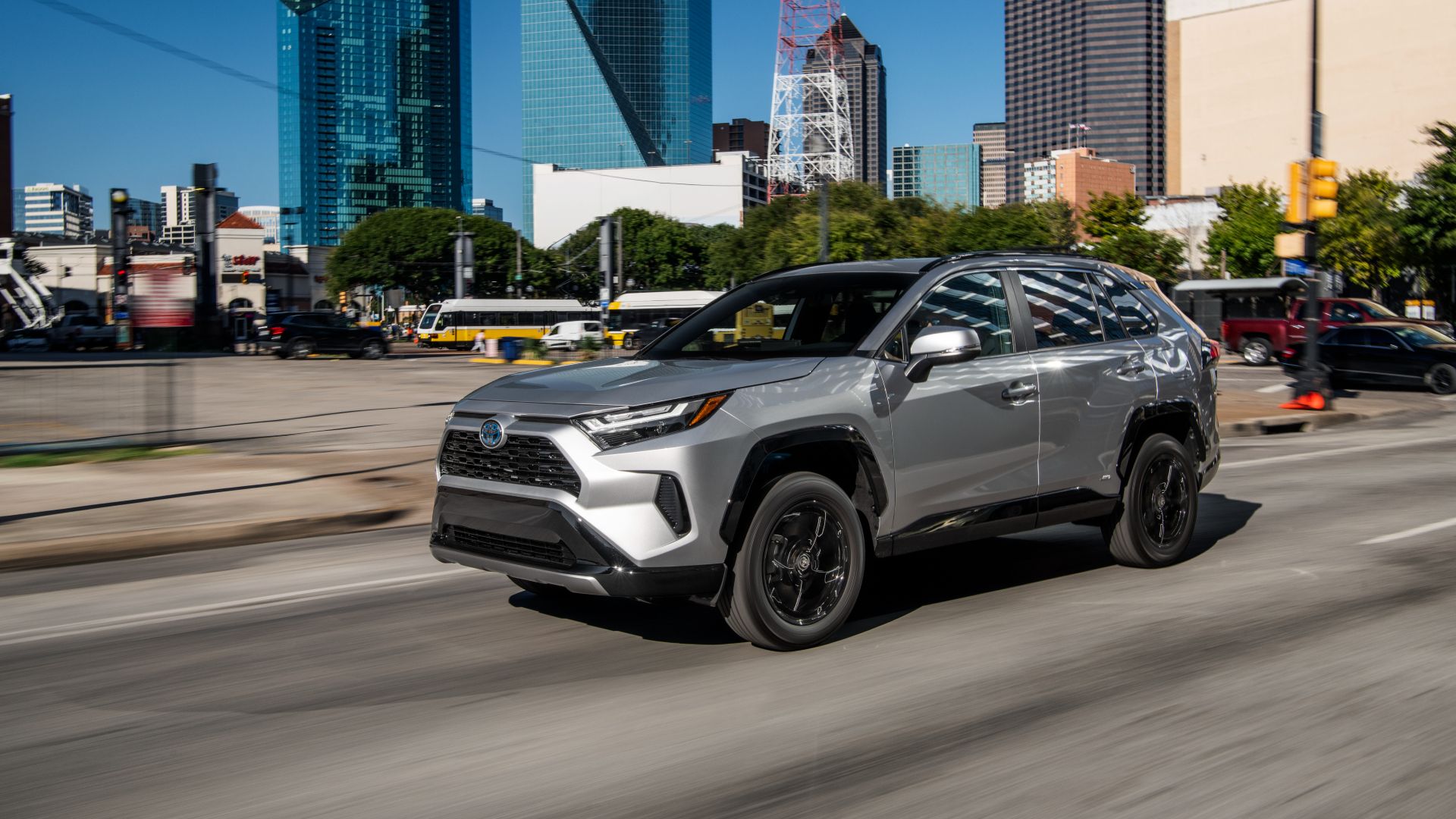
The current generation of the RAV4 typically measures approximately 180.9 to 181.5 inches in length, depending on the trim level. This length is relatively compact, making it easy to park in standard residential garages and urban parking spots. The width stands at 73.0 inches, providing enough lateral space to avoid a "cramped" feeling between the driver and the front passenger.
Height is a crucial factor for both entry/exit and interior headroom. The RAV4 stands between 67.0 and 68.6 inches tall. The slight variation in height usually comes down to the inclusion of roof rails on trims like the Adventure or TRD Off-Road, and the choice of wheels, which can range from 17 to 19 inches. A ground clearance of 8.1 to 8.6 inches not only aids in off-road capability but also raises the "H-point" (hip point), making it easier for passengers to slide into the seats rather than climbing up or dropping down.
Passenger Space: Comfort for All Occupants
The Toyota RAV4 is designed as a two-row, five-passenger vehicle. Toyota has prioritized a "people-first" cabin layout that maximizes legroom and shoulder room, ensuring that even three adults can sit in the back for shorter trips.
Front Row Dimensions
The front seats are the most spacious area of the vehicle. Drivers of various heights will find the RAV4 accommodating due to its generous adjustment ranges.
- Headroom: 37.7 inches with a moonroof; up to 39.5 inches without.
- Legroom: 41.0 inches.
- Shoulder Room: 57.8 inches.
- Hip Room: 54.3 inches.
The dashboard design is pushed forward and kept relatively low to enhance the sense of openness. The center console is wide enough to provide armrest comfort for both the driver and passenger without impeding on knee room.
Rear Row Dimensions
The rear seat is often the deciding factor for families. The RAV4 provides a nearly flat floor, which is a significant advantage for the middle-seat passenger.
- Headroom: 39.5 inches (the roofline stays high toward the rear).
- Legroom: 37.8 inches.
- Shoulder Room: 56.4 inches.
- Hip Room: 47.7 inches.
While some competitors might offer an extra inch of legroom, the RAV4’s seat cushioning and recline angle contribute to a high level of long-distance comfort. The door openings are wide, and the roofline does not slope aggressively, which helps when installing bulky child safety seats.
Cargo Capacity: Versatility and Measurements
The primary reason many buyers choose the RAV4 is its reputation for "swallowing" gear. The cargo area is boxy and well-shaped, with minimal intrusion from the wheel arches.
Standard Cargo Volume
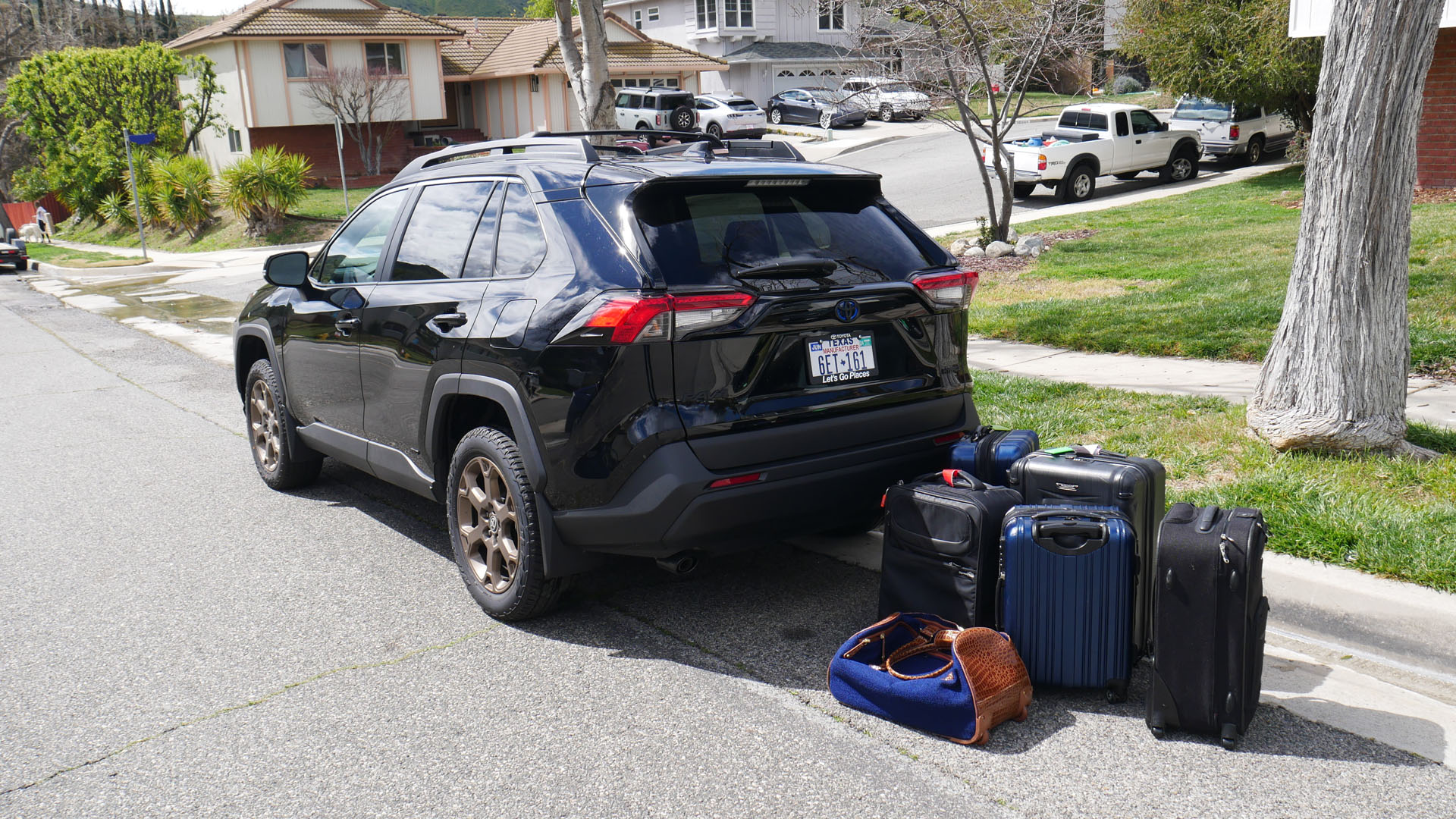
With all seats in the upright position, the RAV4 offers 37.5 to 37.6 cubic feet of space. This is more than enough for a week's worth of groceries for a large family, several sets of golf clubs, or four medium-sized suitcases.
Maximum Cargo Volume
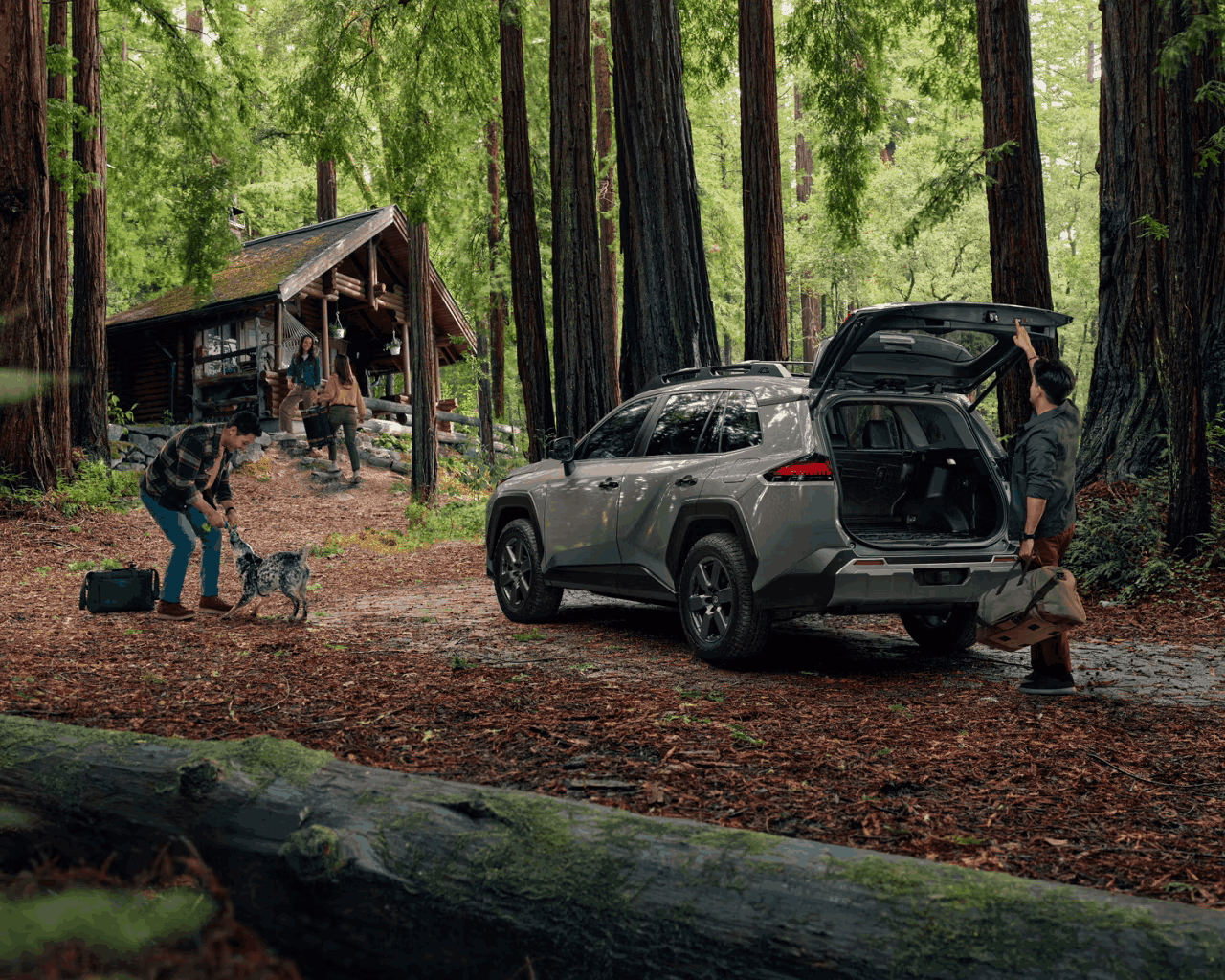
Folding the 60/40 split-folding rear seats opens the cabin up to 69.8 cubic feet. The transition from the cargo floor to the folded seatbacks is nearly flat, though there is a slight incline. This allows for the transport of larger items such as mountain bikes (with front wheels removed), small furniture, or camping equipment.
The Loading Floor
The RAV4 features a reversible cargo floor liner on many trims. One side is carpeted for a premium feel and noise dampening, while the other is a hard plastic surface that is easy to wipe down after carrying muddy boots or wet gear. Additionally, the floor can be positioned at two different heights. In the higher position, it creates a flat load floor with the folded seats; in the lower position, it maximizes vertical space for taller items.
Spatial Comparison: Gas vs. Hybrid vs. Prime
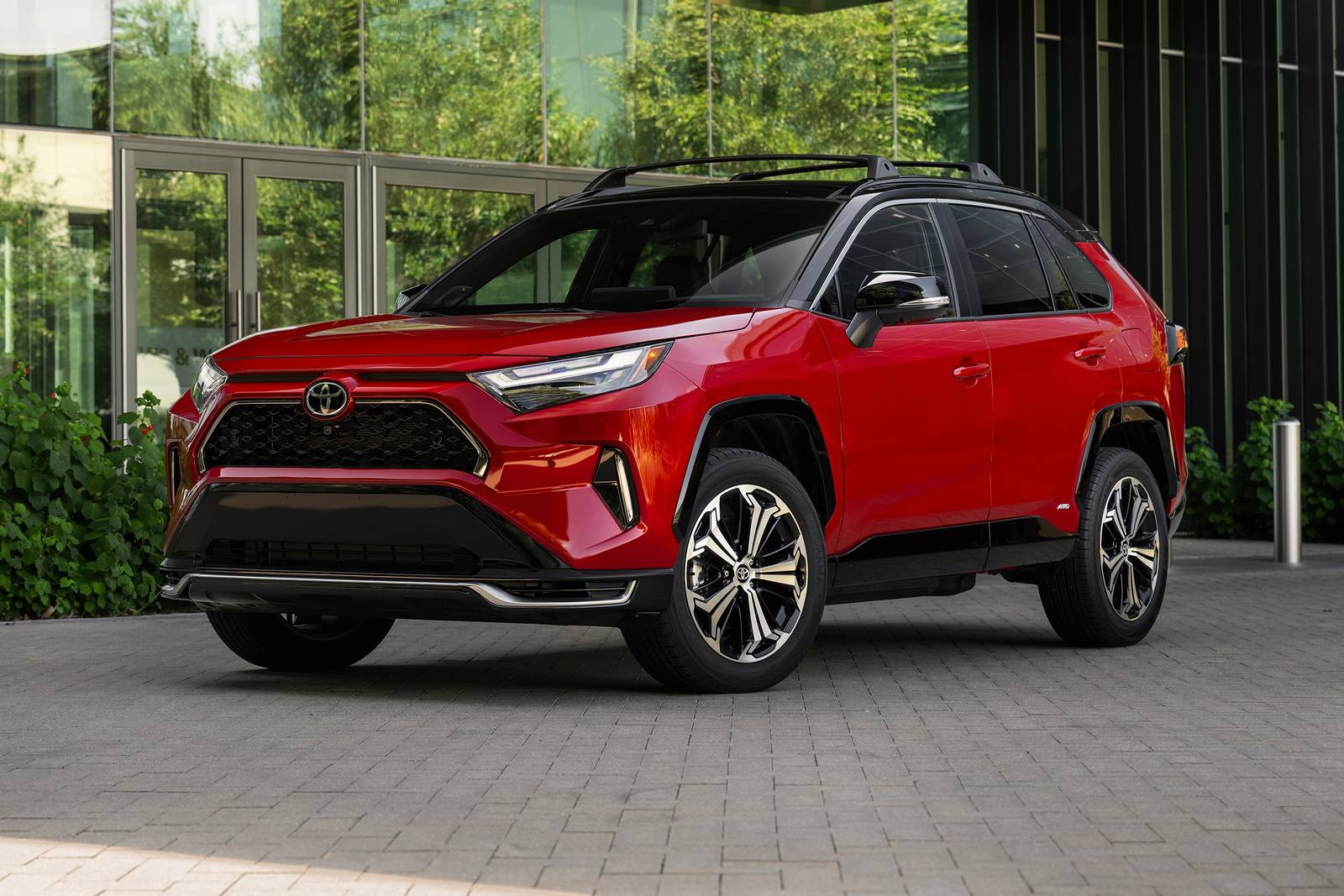
A common concern among SUV buyers is whether the battery packs in electrified models eat into the available space. Toyota engineers have cleverly packaged the batteries under the rear seats in the RAV4 Hybrid and RAV4 Prime.
| Feature | RAV4 (Gas) | RAV4 Hybrid | RAV4 Prime (PHEV) |
|---|---|---|---|
| Cargo Vol. (Rear Seats Up) | 37.6 cu. ft. | 37.5 cu. ft. | 33.5 cu. ft. |
| Cargo Vol. (Seats Folded) | 69.8 cu. ft. | 69.8 cu. ft. | 63.2 cu. ft. |
| Passenger Volume | 98.9 cu. ft. | 98.9 cu. ft. | 98.9 cu. ft. |
| Legroom (Front/Rear) | 41.0 / 37.8 in. | 41.0 / 37.8 in. | 41.0 / 37.8 in. |
| Ground Clearance | 8.4 - 8.6 in. | 8.1 in. | 8.0 in. |
Note: The RAV4 Prime sees a slight reduction in cargo volume because the floor is raised slightly to accommodate the larger plug-in hybrid battery components and onboard charging hardware. However, passenger volume remains identical across all three powertrains.
Small Item Storage and Cabin Ergonomics
Space isn't just about the trunk; it’s about where you put your daily essentials. The RAV4 excels in "utility storage."
- Dashboard Shelf: There is a long, notched tray built into the dashboard in front of the passenger and to the left of the steering wheel. It is perfect for smartphones, sunglasses, or wallets.
- Center Console: The bin under the armrest is deep and includes USB ports, making it an ideal spot for tablets or larger items you want to keep out of sight.
- Door Pockets: All four doors feature pockets that can hold large water bottles (up to 32 oz in some cases).
- Cupholders: Two deep cupholders sit in the center console, and two more are located in the fold-down rear armrest.
The ergonomic layout ensures that every inch of the interior is functional. The physical knobs for climate control and volume don't just feel high-quality; they also take up less mental "space" for the driver compared to menus hidden in a touchscreen.
Comparative Context: How Does It Stack Up?
To understand if the RAV4 offers enough space, it helps to look at its primary rivals in the compact SUV segment.
- Honda CR-V: Historically, the CR-V offers slightly more maximum cargo space (around 76 cubic feet) and more rear legroom. However, many users find the RAV4’s cargo floor more durable and its interior storage cubbies more intuitive.
- Hyundai Tucson: The Tucson offers a very similar cargo capacity (38.7 / 74.8 cu. ft.) and has grown significantly in its latest generation. It offers a more tech-forward cabin but lacks the RAV4's reputation for rugged material durability.
- Mazda CX-5: The CX-5 is often criticized for its tighter interior. With only about 30 cubic feet of cargo space behind the seats, the RAV4 is significantly more practical for those who prioritize hauling capacity.
According to Car and Driver, the RAV4 remains a top pick because its space is "usable" rather than just looking good on a spec sheet. The squared-off roofline is a major contributor to this real-world utility.
Practical Tips for Maximizing RAV4 Space
To get the most out of the Toyota RAV4’s dimensions, consider these professional tips:
- Utilize the Roof: If the interior is full, the standard roof rails can support a variety of cargo boxes or racks. The RAV4 TRD Off-Road and Adventure trims have higher-profile rails specifically designed for heavy-duty use.
- Remove the Cargo Cover: The retractable tonneau cover is great for security, but it can be bulky. Toyota provides a dedicated storage spot for this cover under the cargo floor, so you don't have to leave it in your garage when hauling tall items.
- Adjust the Front Seats: If you need to fit a rear-facing car seat, sliding the front passenger seat forward slightly can create a massive amount of clearance without making the front passenger uncomfortable, thanks to the scalloped dashboard design.
Frequently Asked Questions
Does the RAV4 have enough space for a family of five?
Yes, for most families. While three adults across the back seat might feel snug on long road trips, the RAV4 easily accommodates two car seats and a middle passenger, or three older children. The 37.6 cubic feet of cargo space is generally sufficient for family vacations.
Can you fit a bike in a Toyota RAV4?
Yes. With the rear seats folded down, a standard adult mountain bike or road bike will fit inside the cargo area. You will likely need to remove the front wheel of the bike to make it fit comfortably without scratching the interior panels.
Is the RAV4 Hybrid's cargo space smaller than the gas version?
Technically, it is nearly identical. The Hybrid loses about 0.1 cubic feet of space, which is imperceptible to the user. The battery is located under the rear seat, preserving the flat load floor and the spare tire well.
How many suitcases can fit in the trunk of a RAV4?
With the rear seats up, you can typically fit four medium-sized suitcases (24-26 inches) stacked or standing on their sides. If you remove the cargo cover and stack to the roof, you can fit even more, though this may obstruct rear visibility.
Does the RAV4 have a third row?
No, the Toyota RAV4 is strictly a two-row, five-passenger vehicle. If you require a third row, Toyota offers the Highlander or the Grand Highlander, both of which provide significantly more interior volume and seating capacity.
Summary of Findings
The Toyota RAV4 remains a premier choice for those seeking a compact footprint with mid-size utility. Its 37.6 to 69.8 cubic feet of cargo space is complemented by a thoughtfully designed passenger cabin that prioritizes headroom and ease of entry. While competitors like the Honda CR-V may offer slightly more raw volume, the RAV4’s combination of ergonomic storage, durable materials, and clever packaging—especially in the Hybrid models—makes it a highly efficient choice for 2026.
If you frequently transport bulky equipment or have a growing family, the RAV4 offers the versatility required to handle daily commutes and weekend adventures alike. For your next step, consider visiting a local dealership to test the "load-in" height yourself, as the physical ease of moving items in and out of the vehicle is one of the RAV4's strongest attributes.
Image Gallery