Comprehensive Guide to Nursing Home Lawsuits in 2026: Steps, Rights, and Recoveries
A nursing home lawsuit is a civil legal action filed against a long-term care facility to seek damages for injuries, neglect, or wrongful death occurring under the facility's care. These claims aim to hold providers accountable for fai...
A nursing home lawsuit is a civil legal action filed against a long-term care facility to seek damages for injuries, neglect, or wrongful death occurring under the facility's care. These claims aim to hold providers accountable for failing to meet the established "standard of care," providing families with compensation for medical expenses, pain, and suffering.
Contents
When a family member is placed in a skilled nursing facility, there is an inherent trust that the institution will provide a safe, dignified environment. Unfortunately, systemic issues such as understaffing, inadequate training, and corporate negligence often lead to preventable harm. Pursuing a lawsuit is not only a path to financial recovery but also a critical mechanism for enforcing safety standards across the healthcare industry. In 2026, the legal landscape surrounding elder care continues to evolve, with increased scrutiny on corporate ownership and staffing ratios.
Common Grounds for a Nursing Home Lawsuit
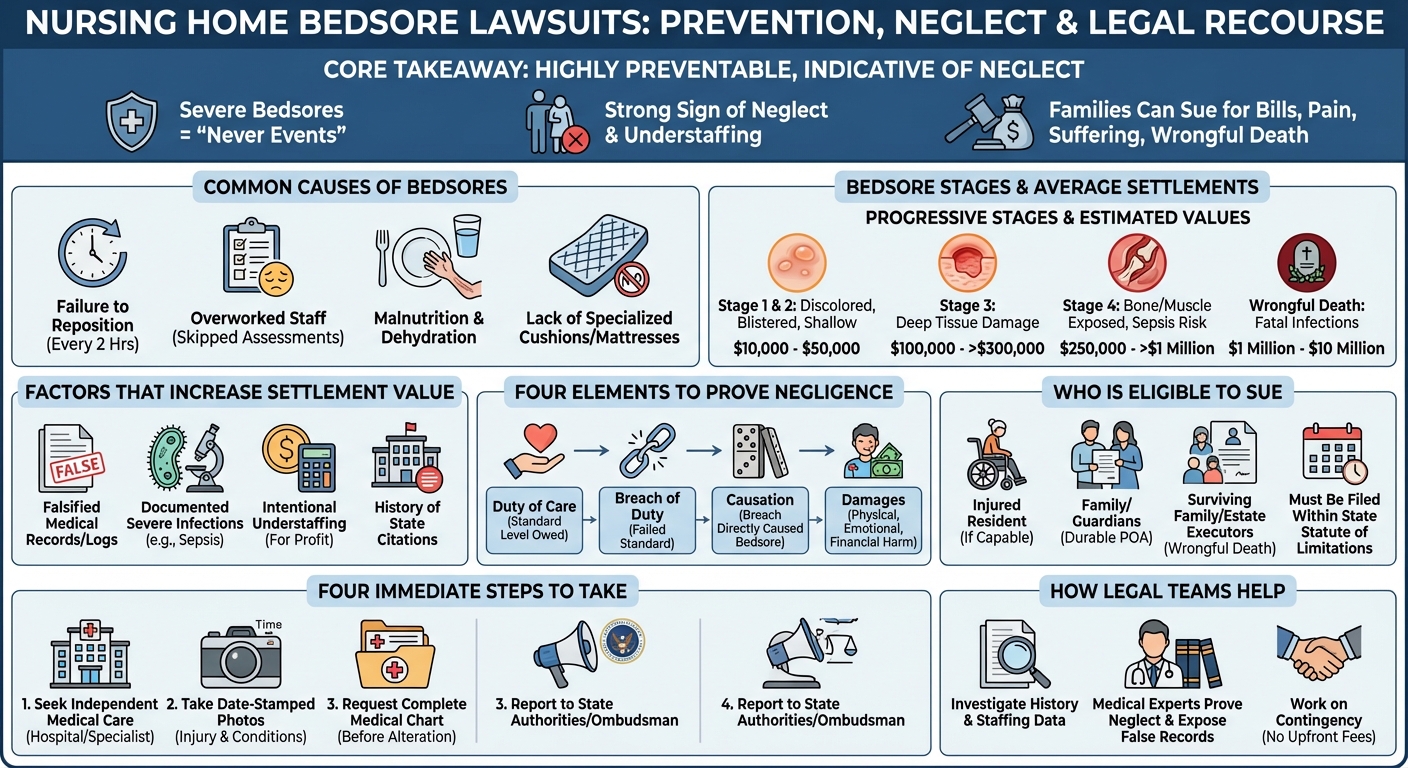
The basis of most nursing home litigation rests on the concept of negligence. To prevail, a plaintiff must demonstrate that the facility owed the resident a duty of care, breached that duty, and that the breach directly caused harm. While "neglect" and "abuse" are often used interchangeably, they represent different legal theories.
Physical and Emotional Neglect
Neglect is often an "omission"—a failure to provide the basic necessities of life. This can include failure to provide adequate food and water (dehydration and malnutrition), failure to maintain hygiene, or failure to administer medications as prescribed. In many 2026 cases, neglect is linked to "failure to monitor," where residents are left alone for extended periods, leading to unattended falls or the development of preventable conditions.
Medical Malpractice and Medication Errors
Nursing homes are medical facilities, and they are held to professional standards. Lawsuits frequently arise from medication errors, such as administering the wrong dosage, failing to provide life-sustaining drugs, or using "chemical restraints"—the practice of using antipsychotic medications to sedate "difficult" patients rather than providing appropriate behavioral support.
Physical and Sexual Abuse
Unlike neglect, abuse is an intentional act of harm. This includes physical battery by staff or other residents, as well as sexual assault. Facilities can be held liable for these acts if it is proven they failed to perform adequate background checks on employees or failed to provide sufficient security to prevent resident-on-resident violence.
Bedsores and Pressure Ulcers
In the legal community, advanced stage pressure ulcers (decubitus ulcers) are often referred to as "never events." With proper turning and positioning protocols, these injuries should almost never occur. A lawsuit centered on bedsores often focuses on the facility’s failure to follow a resident’s individual care plan, which is a clear violation of federal regulations.
The Legal Framework: Federal and State Protections
Nursing home litigation is governed by a combination of federal regulations and state-specific statutes. The most significant federal influence remains the Nursing Home Reform Act of 1987, which established a Resident’s Bill of Rights. This act mandates that facilities must provide services that help each resident "attain or maintain the highest practicable physical, mental, and psychosocial well-being."
In 2026, many lawsuits also leverage the recent federal minimum staffing standards. If a facility falls below the mandated hours of care per resident day, this data serves as powerful evidence that the facility was systemically incapable of providing adequate care. Furthermore, state laws often provide specific causes of action for "elder abuse," which may allow for the recovery of attorney’s fees and enhanced damages, making these cases more viable for families.
Steps to Filing a Nursing Home Lawsuit in 2026
Navigating a lawsuit against a healthcare corporation requires a structured approach. Because these facilities are often owned by complex chains of Limited Liability Companies (LLCs) designed to shield assets, the procedural steps are vital.
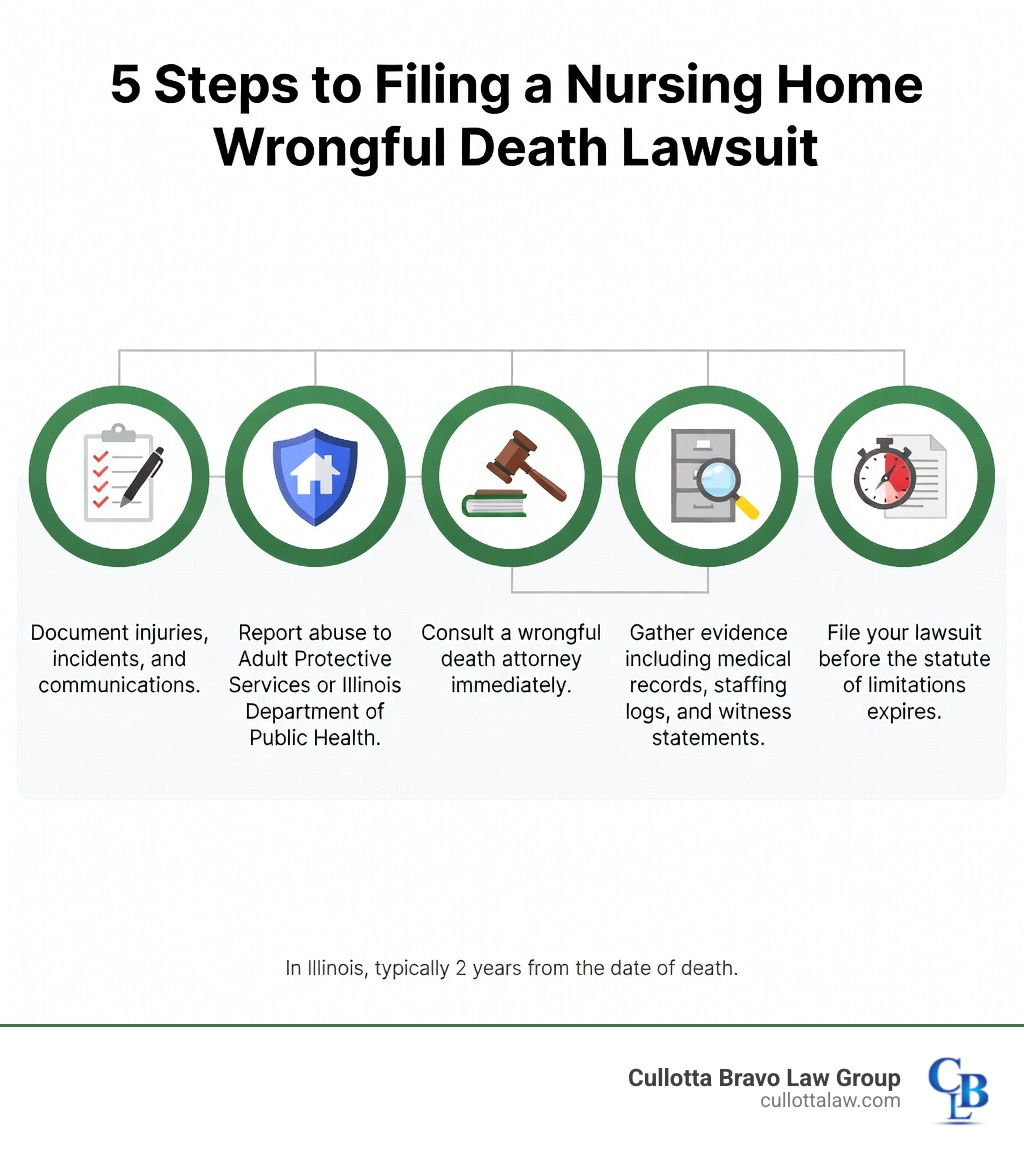
1. Secure the Resident’s Immediate Safety
Before any legal action is taken, the resident must be safe. If you suspect active abuse or life-threatening neglect, the first step is contacting local law enforcement or Adult Protective Services (APS). Moving the resident to a different facility or a hospital is often necessary to prevent further harm and to document the current state of their health.
2. Comprehensive Document Collection
Evidence is the foundation of any claim. Families should request the complete medical record from the nursing home. Under federal law, the facility must provide these records within a specific timeframe. Additionally, collect:
- Photographs of injuries, bedsores, or unsanitary conditions.
- Correspondence with facility administrators (emails, letters).
- Records of "Incident Reports" filed by the staff.
- Financial records showing payments made to the facility.
3. Consultation with a Specialized Attorney
Nursing home law is a niche field that bridges personal injury and medical malpractice. A specialized attorney will evaluate the case on a contingency fee basis, meaning they only get paid if they win. During the initial consultation, the attorney will determine if the "statute of limitations"—the legal deadline for filing—is still open.
4. The Investigation and Expert Review
In most jurisdictions, a nursing home lawsuit cannot proceed without an affidavit from a qualified medical expert. This expert (often a doctor or a registered nurse with geriatric experience) reviews the records and certifies that the facility’s care fell below the accepted standard.
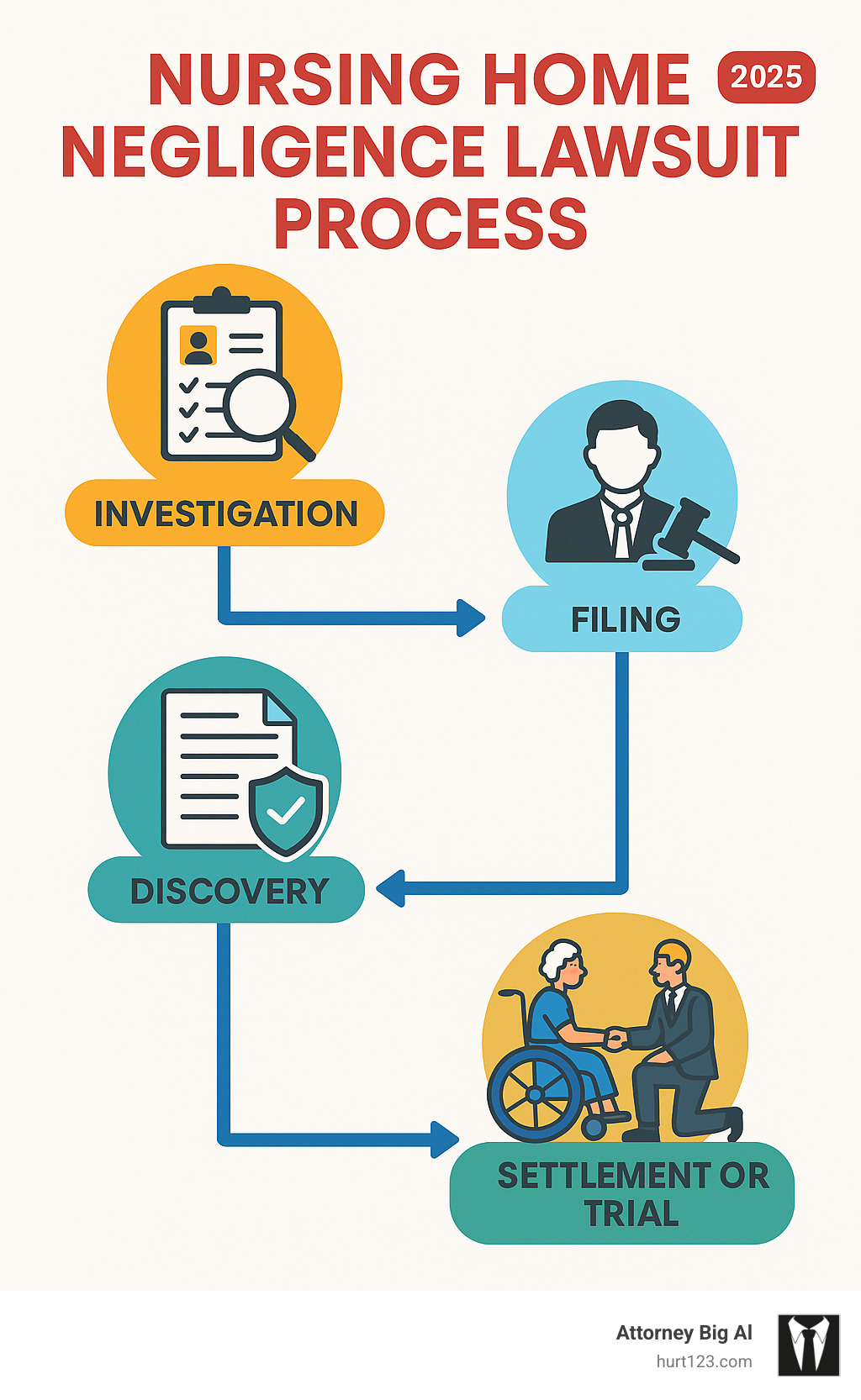
5. Filing the Complaint and Discovery
The "Complaint" is the formal document filed in court that outlines the allegations. Once filed, the case enters the "Discovery" phase. This is the most critical stage of the lawsuit, where your attorney can demand internal documents, such as:
- Staffing rosters and timecards.
- Internal emails regarding budget cuts.
- The facility’s history of citations from state health departments.
- Deposition testimony from the nurses and aides who cared for the resident.
| Feature | Neglect-Based Claim | Abuse-Based Claim |
|---|---|---|
| Primary Cause | Failure to act (omission) | Intentional harm (commission) |
| Common Evidence | Medical charts, staffing logs | Witness testimony, police reports |
| Key Indicators | Bedsores, weight loss, falls | Bruises, fear of staff, fractures |
| Legal Focus | Breach of standard of care | Criminal acts, negligent hiring |
| Typical Goal | Compensation for medical bills | Punitive damages and safety changes |
Understanding Damages and Compensation
The goal of a nursing home lawsuit is to make the resident or their estate "whole" through financial compensation. Damages are generally categorized into three types:
- Economic Damages: These are quantifiable financial losses. They include the cost of additional medical treatment required due to the neglect, the cost of moving to a new facility, and funeral expenses in the event of a wrongful death.
- Non-Economic Damages: These cover intangible losses such as physical pain, mental anguish, loss of enjoyment of life, and the loss of companionship (in wrongful death cases). Many states have "caps" or limits on non-economic damages in medical malpractice cases, which your attorney will need to navigate.
- Punitive Damages: In cases of "gross negligence" or "malice," a court may award punitive damages. These are not intended to compensate the victim but rather to punish the facility and deter other corporations from engaging in similar conduct.
The Role of Arbitration Agreements
A major hurdle in 2026 litigation remains the "Mandatory Arbitration Agreement." Upon admission, many facilities ask residents or their families to sign documents stating that any disputes will be handled by a private arbitrator rather than a jury.
While the Centers for Medicare & Medicaid Services (CMS) has implemented rules to ensure these agreements are not a condition of admission, many families sign them unknowingly. If an agreement exists, your attorney may need to file a motion to "void" the agreement on the grounds that it is unconscionable or that the person signing it lacked the legal authority (Power of Attorney) to do so.
Frequently Asked Questions
What is the statute of limitations for a nursing home lawsuit?
The timeframe varies significantly by state, typically ranging from one to three years from the date the injury occurred or was discovered. Because medical records can be lost or "corrected" over time, it is essential to consult an attorney as soon as neglect is suspected.
How much does it cost to sue a nursing home?
Most reputable elder law attorneys work on a contingency fee basis. This means the law firm covers all upfront costs—such as expert witness fees and court filing fees—and receives a percentage (usually 33% to 40%) of the final settlement or verdict. If there is no recovery, the family typically owes nothing.
Can I sue if my loved one has already passed away?
Yes. If the neglect or abuse contributed to the death, the family can file a "wrongful death" claim. If the resident passed away from unrelated causes but suffered neglect while alive, the estate can file a "survival action" to recover damages for the pain and suffering the resident endured prior to death.
How long does a nursing home lawsuit take to resolve?
A typical case can take anywhere from 18 months to three years. The duration depends on the complexity of the medical evidence, the court’s schedule, and the facility’s willingness to settle. Many cases settle shortly before trial during a process called "mediation."
What if the nursing home claims the injury was just "old age"?
This is a common defense. Facilities often argue that falls or skin breakdowns are an inevitable part of the aging process. A successful lawsuit counters this by using medical experts to show that while the resident was frail, the specific injury was preventable with "reasonable care," such as using bed alarms or specialized mattresses.
Practical Next Steps
If you suspect a loved one is a victim of nursing home neglect, do not wait for the facility to admit fault. Take the following actions immediately:
- Document everything: Save all photos and keep a journal of every conversation with staff.
- Report to the State: File a formal complaint with your state’s Department of Health or the Long-Term Care Ombudsman. Their independent investigation can provide vital evidence for your future lawsuit.
- Request the "Chart": Obtain the resident’s full medical record before it can be altered.
- Legal Review: Contact a specialized nursing home litigation firm for a free case evaluation to determine if a breach of duty has occurred.
Disclaimer: This article provides general information and does not constitute legal advice. Laws vary by jurisdiction and are subject to change. Always consult with a qualified attorney regarding your specific legal situation.
Image Gallery