Evaluating the Best Star Spangled Banner Performance: A Critical Analysis
Identifying the "best" Star Spangled Banner performance is a subjective endeavor that balances vocal technicality, emotional resonance, and cultural impact. While hundreds of artists have tackled Francis Scott Key’s challenging composi...
Identifying the "best" Star Spangled Banner performance is a subjective endeavor that balances vocal technicality, emotional resonance, and cultural impact. While hundreds of artists have tackled Francis Scott Key’s challenging composition at high-profile events, a small handful of renditions are consistently cited by music historians, vocal coaches, and the public as the gold standard for navigating the anthem's notoriously difficult melodic range.
Contents
Understanding the Technical Challenges of the Anthem
The Star Spangled Banner is widely considered one of the most difficult national anthems to sing primarily due to its wide vocal range. Spanning an octave and a half, the melody requires a performer to navigate both low, gravelly registers and high, soaring notes that test the limits of vocal stamina and pitch control.
A "best" performance is typically defined by how a vocalist manages these transitions without succumbing to the temptation of over-singing or losing the melodic integrity of the original 1814 poem. Professional performers must manage the pressure of a live setting—often without traditional backing tracks or stage monitors—while delivering an arrangement that honors the historical gravity of the lyrics.
Criteria for Musical Excellence in Anthem Renditions
When analyzing the merit of a performance, critics generally evaluate several key technical and stylistic pillars:
- Breath Control: Because the phrases are long and demanding, the ability to sustain notes without audible gasping is essential.
- Melodic Fidelity: While creative liberty is common in pop, jazz, or soul arrangements, the primary requirement is maintaining the recognizable structure of the anthem.
- Emotional Restraint: The best performances often avoid excessive vocal runs or "gymnastics" that distract from the lyrical content, opting instead for a powerful, steady delivery.
- Audience Connection: The ability to command a massive stadium or arena environment, often amidst high noise levels, serves as a test of projection and presence.
Historical Benchmarks: Iconic Performances
While musical taste evolves, three performances consistently emerge as the most influential in American popular culture.
Whitney Houston (Super Bowl XXV, 1991)
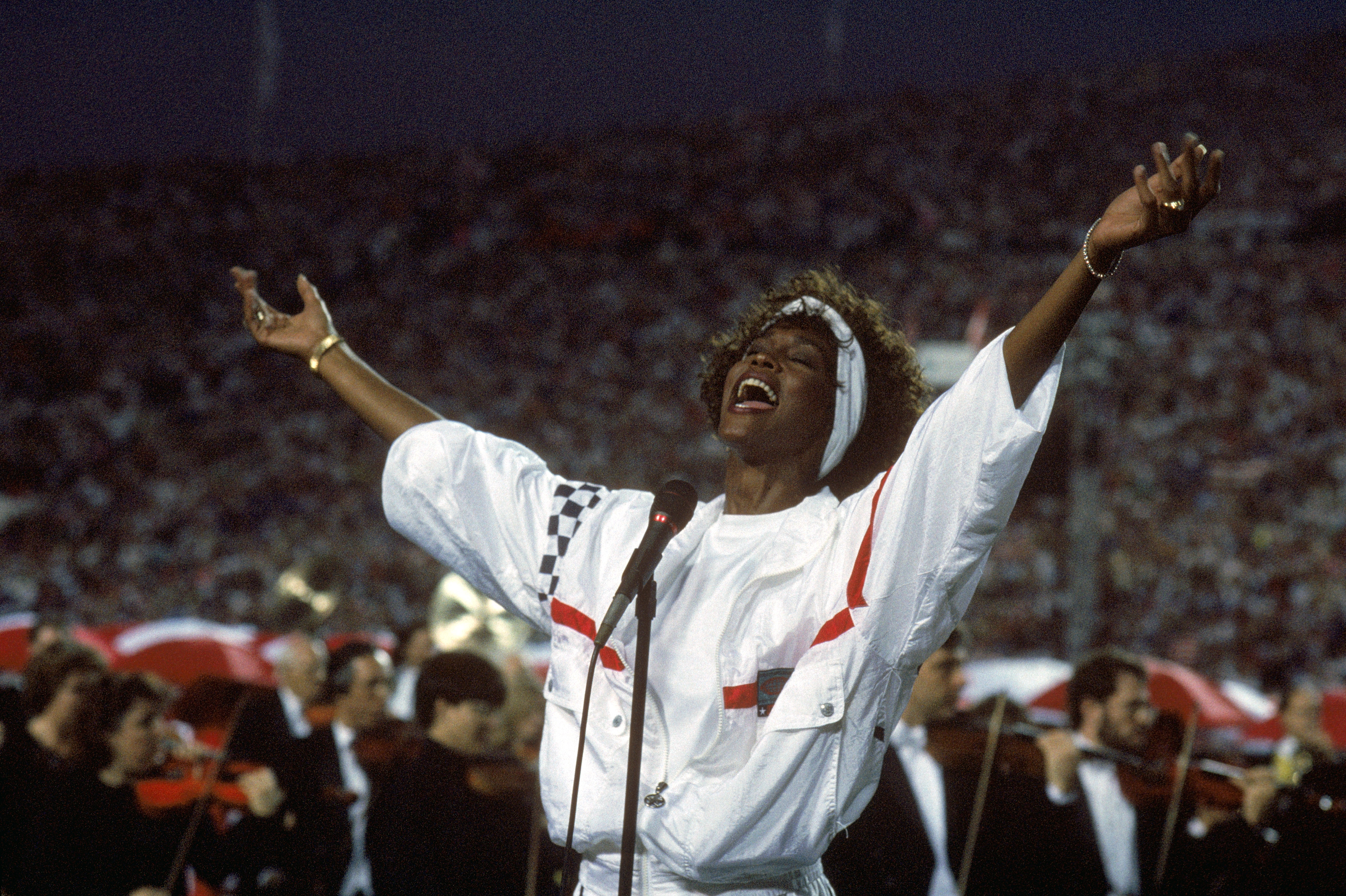
Often cited as the definitive modern interpretation, Whitney Houston’s performance at Tampa Stadium is frequently used as a pedagogical tool for vocal students. Houston utilized a sweeping orchestral arrangement that allowed her to showcase her power in the lower register before building to a clean, controlled crescendo. Her technical precision during this performance—specifically her rhythmic timing—set a standard that many contemporary artists have since attempted to mirror.
Marvin Gaye (1983 NBA All-Star Game)
Marvin Gaye’s rendition remains the most significant departure from the traditional march-tempo delivery. By infusing the anthem with a soulful, rhythmic groove, Gaye demonstrated that the composition could withstand structural reinterpretation. His performance is categorized as the "best" in terms of cultural impact, as it validated the use of personal artistic style to express patriotism in a way that felt authentic and fresh.
Jimi Hendrix (Woodstock, 1969)
While not a vocal performance, the instrumental rendition by Jimi Hendrix is arguably the most recognizable version in American history. By utilizing feedback, distortion, and technical guitar prowess, Hendrix transformed the melody into a sonic protest. For those evaluating the "best" performance based on innovation and cultural commentary, Hendrix remains the undisputed benchmark.
Comparative Analysis of Performance Styles
| Performer | Style | Primary Strength | Technical Approach |
|---|---|---|---|
| Whitney Houston | Pop/Ballad | Power & Pitch | Strict adherence to melody with controlled dynamics |
| Marvin Gaye | Soul/R&B | Rhythmic Feel | Syncopation and emotional delivery |
| Jimi Hendrix | Electric Guitar | Creative Expression | Sonic interpretation of war and unrest |
| Jennifer Hudson | Gospel/Soul | Vocal Range | Heavy use of melisma and controlled vibrato |
Common Pitfalls in Anthem Performance
The most common failure point for performers is the "over-singing" trap. Because the anthem is short, artists often feel the pressure to pack as much vocal complexity as possible into ninety seconds. This frequently leads to:
- Pitch Instability: Pushing for high notes without proper breath support leads to flat or sharp intonation.
- Tempo Drift: Attempting to manipulate the tempo to build "drama" can cause the performance to drag or lose its steady, rhythmic pulse.
- Stylistic Over-Indulgence: Excessive ad-libbing or changing the cadence of the lyrics can alienate audiences who prefer a traditional, reverent delivery.
How to Evaluate a Performance
If you are looking to judge a new performance, listen for the "Red Glare" transition. This is the moment where the song requires the highest vocal effort. A performer who can hit this note with clarity while maintaining the energy of the rest of the song demonstrates a high degree of technical mastery. Listen specifically for whether the vocalist keeps the focus on the lyrics or if the vocal runs obscure the meaning of the words.
Frequently Asked Questions
Why is the Star Spangled Banner considered so hard to sing? The composition covers an octave and a half, forcing the singer to bridge different vocal registers. Most songs stay within a tighter range, making this anthem a test of vocal agility and range.
Does a performance have to be traditional to be considered "the best"? Not necessarily. Excellence is often found in the intent. Both traditional, orchestral versions and creative, genre-bending renditions can be considered the best, provided the performer demonstrates mastery over their chosen style.
What role does the instrumental arrangement play? The arrangement is critical. A bad mix—such as excessive reverb or an orchestra that is too loud—can drown out the singer, regardless of their vocal quality.
How does audience reaction affect the status of a performance? While public acclaim is a factor, musicologists focus on technical accuracy and artistic integrity. A "popular" performance might be criticized for poor technique, while a technically "perfect" performance might lack the emotional connection required for a public anthem.
Can a performance be "the best" if the singer misses a note? Technically, no. High-level performance is defined by consistency. However, in live environments, a performer’s ability to recover from a minor mistake can be seen as a sign of professionalism that elevates the performance's legacy.
Recommendation
If you are seeking the benchmark for technical perfection, the 1991 Whitney Houston recording remains the most reliable study. If you are interested in the evolution of the song as an artistic medium, compare the traditional styles of the mid-20th century against the soul-infused versions popularized in the 1980s. Regardless of your personal preference, the "best" performance is ultimately the one that balances the demands of the complex melody with the emotional requirements of a public ceremony.
Image Gallery