The Video Game Definition Explained
A video game is an electronic or computerized interactive form of entertainment in which a player controls actions through a hardware interface, responding to visual or auditory feedback displayed on a screen. This definition encompass...
A video game is an electronic or computerized interactive form of entertainment in which a player controls actions through a hardware interface, responding to visual or auditory feedback displayed on a screen. This definition encompasses everything from early 1950s mainframe experiments to modern, hyper-realistic, cloud-streamed open-world adventures across PCs, consoles, and mobile devices.
Contents
Understanding the precise nature of video games requires looking past casual consumer habits into the foundational elements of interactive media. As technology has evolved, the medium has expanded from simple pixelated shapes bouncing across cathode-ray tubes into a multi-billion-dollar global industry. This growth has blurred lines between art, narrative storytelling, competitive sports, and computer science, making a clear definition essential for legal, academic, and industrial purposes.
Core Characteristics That Define a Video Game
While the phrase "video game" sounds straightforward, establishing a rigorous technical and academic definition requires identifying specific criteria. Not every piece of interactive software qualifies as a game, and not every electronic display constitutes a video system.
- Core Elements of Video Games
- Interactivity: Player input actively alters the state of the software.
- Visual/Audio: Feedback delivered via monitors, TVs, or speakers.
- Rules & Goals: Governing systems, win/loss states, or open-ended objectives.
Interactivity and Player Agency
At its core, a video game requires human-computer interaction. Unlike traditional media such as literature or cinema, where the consumer remains a passive observer, a video game demands active participation.
The player provides input via hardware controllers, keyboards, mice, touchscreens, or motion sensors. The software processes these inputs in real time, rendering a corresponding change in the game world. Without this loop of input, processing, and feedback, software shifts into the category of passive entertainment or utility applications.
Visual and Auditory Feedback Systems
The "video" component of a video game necessitates a display mechanism. Historically, this meant a cathode-ray tube television or arcade monitor. Today, it spans liquid crystal displays, organic light-emitting diodes, virtual reality headsets, and projection systems.
Simultaneously, auditory feedback—ranging from simple synthetic beeps in early systems to fully orchestrated musical scores and spatial 3D audio—complements the visual stimuli. This combination creates an immersive environment that signals the success, failure, or progression of the player's actions.
Rules, Mechanics, and Objectives
A true game must possess a system of rules that constrain player behavior and define how the simulation operates. These mechanics govern physics, item usage, character movement, and environmental interaction.
Unlike purely open-ended software toys, traditional games typically incorporate goals, challenges, scorekeeping, or competitive win/loss states. Even sandbox games that minimize explicit objectives rely on underlying rules and systemic mechanics to provide structured play.
Evolution of the Medium: From Simplicity to Simulation
The definition of a video game has stretched significantly over the decades. Tracking this evolution clarifies why modern titles look and feel radically different from their historical predecessors while retaining the same fundamental DNA.
Early Experiments and Dedicated Hardware
The genesis of video games dates back to academic experiments in the 1950s and 1960s, such as Tennis for Two (1958) and Spacewar! (1962). These projects ran on large institutional mainframes or oscilloscope displays, designed primarily to demonstrate computing power.
The commercialization of the industry began in the 1970s with coin-operated arcade machines like Pong and home consoles such as the Magnavox Odyssey and Atari 2600. These early systems operated on rigid, hard-coded rulesets with very limited memory, where the definition of a game was tied directly to simple scoring mechanisms and reflex-based challenges.
The Rise of Narrative and Complex Simulation
As processing power grew exponentially through the 1980s, 1990s, and 2000s, developers introduced complex storytelling, persistent worlds, and advanced physics engines. Genres diversified drastically, giving rise to role-playing games (RPGs), real-time strategy (RTS) titles, and expansive 3D sandbox environments.
During this era, the video game transformed from a mere arcade diversion into a sophisticated medium capable of deep emotional resonance, complex strategic planning, and collaborative social interaction through early local and online multiplayer architectures.
Technical Components of Modern Video Games
Underneath the artistic assets, voice acting, and marketing campaigns, every video game relies on complex software architecture. Understanding these technical layers demystifies how the definition translates into actual engineering execution.
The Game Engine
Most modern titles are built upon a game engine—a core software framework designed to handle the repetitive, heavy lifting of game development. Prominent engines like Unreal Engine and Unity provide pre-built systems for:
- Rendering pipelines: Managing how light, shadow, and geometry appear on screen.
- Physics simulation: Calculating gravity, collision detection, and rigid-body dynamics.
- Audio mixing: Processing sound propagation and volume scaling in real time.
- Scripting interfaces: Allowing developers to program game logic efficiently without rewriting foundational code.
Hardware Infrastructure
The execution of a video game depends heavily on the target hardware platform. Dedicated consoles (such as Sony's PlayStation series or Microsoft's Xbox line), personal computers, and mobile devices each impose distinct performance parameters.
Developers must optimize rendering resolutions, frame rates, and memory management to ensure the game runs smoothly within the hardware limitations of the user's device.
Comparing Interactive Entertainment Categories
To accurately place video games in the broader landscape of media and software, it helps to compare them against adjacent categories that share similar technological foundations.
| Category | Primary Interaction Model | Core Objective | Examples |
|---|---|---|---|
| Video Game | Active control with rules, feedback loops, and win/loss or sandbox goals. | Entertainment, challenge, and immersive play. | Super Mario Bros., Minecraft, Elden Ring |
| Interactive Simulation | Real-time modeling of real-world physics, training, or environments without strict game rules. | Professional training, scientific analysis, or procedural study. | Flight simulators, architectural walkthroughs, physics models |
| Productivity Software | Task-oriented input-output processing driven by utility rather than play. | Document creation, data management, and operational efficiency. | Spreadsheets, word processors, video editing suites |
| Traditional Media | Passive consumption of pre-recorded audio-visual or textual content. | Narrative transmission and artistic observation. | Feature films, novels, recorded music albums |
Frequently Asked Questions
What makes a video game different from normal software?
A video game requires active player interaction governed by a set of rules and a feedback loop (visual and auditory) designed primarily for engagement or entertainment. While standard software aims to complete a utilitarian task like word processing or data calculation, a video game prioritizes challenge, simulation, and play within a designed rule system.
Are mobile phone apps considered video games?
Yes, mobile applications built around interactive play, rules, and scoring systems—ranging from simple puzzle games to complex multiplayer strategy titles—fully qualify as video games. The platform or hardware form factor does not change the fundamental definition of the medium.
Do text-based games count as video games?
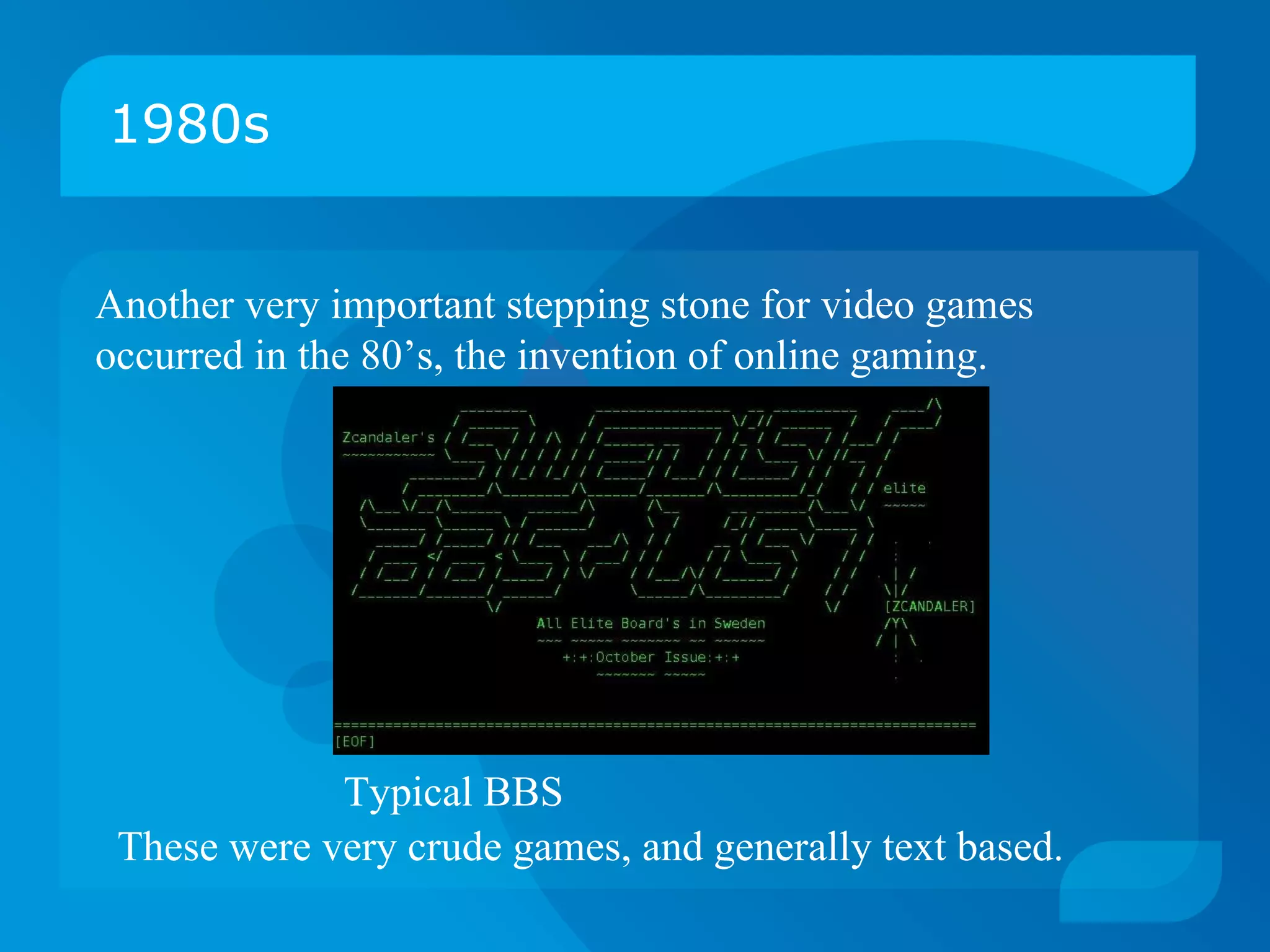
Yes. Despite lacking advanced graphical rendering, historical text adventures and modern interactive fiction rely on electronic displays (screens), digital text input, and algorithmic rule processing to create an interactive loop, fitting squarely within the definition.
Can virtual reality experiences be classified as video games?
It depends on the specific experience. If a virtual reality application features interactive mechanics, goals, or rules, it is a video game. However, if it functions purely as a passive 360-degree video viewing experience or a utility visualization tool, it falls outside the gaming definition.
Is gamification the same thing as a video game?
No. Gamification applies game-like elements—such as points, badges, and leaderboards—to non-gaming environments, like educational apps or fitness trackers, to boost user motivation. Gamification uses mechanics inspired by games, but the underlying software remains utility-focused rather than a standalone game.
Practical Recommendations for Exploring the Medium
For those looking to understand the scope and technical depth of video games firsthand, a strategic approach is beneficial.
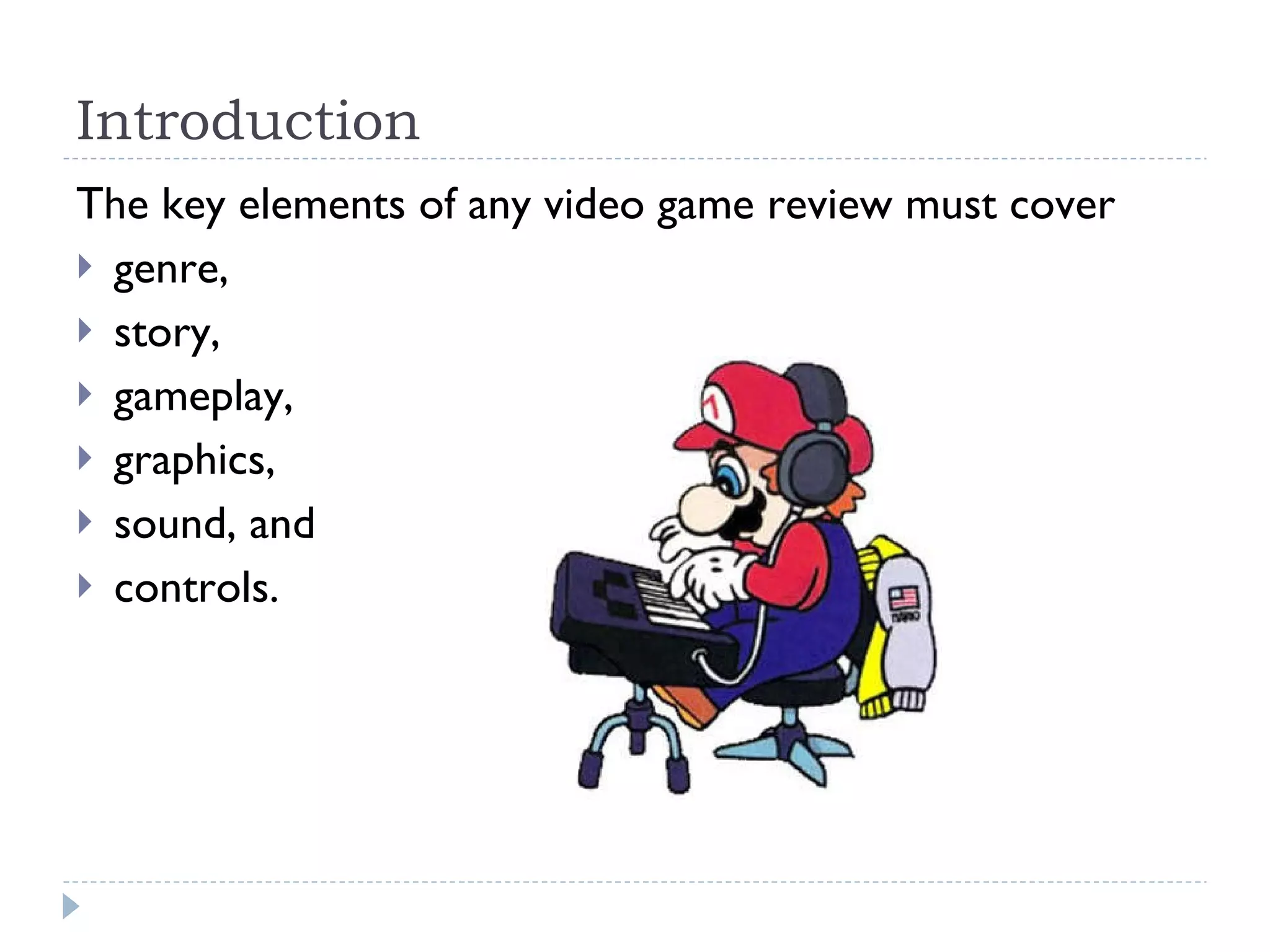
Begin by sampling foundational titles across contrasting genres—such as a classic puzzle game for pure rule mechanics, an open-world RPG for narrative scale, and an indie title for innovative design concepts. Pay attention to how interface design, audio cues, and control responsiveness shape your emotional and cognitive engagement. By examining the mechanics rather than just the surface-level graphics, you will gain a comprehensive appreciation of what defines modern interactive entertainment.
Image Gallery