What an HRMS Solution Provides: A Comprehensive Guide for 2026 Organizations
A modern Human Resource Management System (HRMS) provides a centralized digital infrastructure to manage the entire employee lifecycle, from recruitment and onboarding to payroll, performance tracking, and retirement. By integrating co...
A modern Human Resource Management System (HRMS) provides a centralized digital infrastructure to manage the entire employee lifecycle, from recruitment and onboarding to payroll, performance tracking, and retirement. By integrating core HR functions with advanced data analytics and automation, an HRMS solution streamlines administrative tasks, ensures regulatory compliance, and improves overall workforce productivity.
Contents
Human Resource Management Systems have evolved significantly by 2026. What was once a simple database for storing employee contact information has transformed into a sophisticated, AI-driven ecosystem that serves as the operational heart of the enterprise. In the current business landscape, an HRMS is no longer a luxury for large corporations; it is a foundational requirement for any organization seeking to manage a distributed, diverse, and high-performing workforce efficiently.
The Core Functional Pillars of an HRMS Solution
At its most fundamental level, an HRMS solution provides a "single source of truth" for all people-related data. This centralization eliminates the fragmented spreadsheets and siloed paper files that historically plagued HR departments. By housing all data in one secure, cloud-based environment, organizations can ensure data integrity and accessibility across various departments.
Centralized Employee Records and Self-Service
The bedrock of an HRMS is the employee database. This goes beyond basic contact information to include employment history, emergency contacts, digital document storage (such as signed contracts and certifications), and identification records.
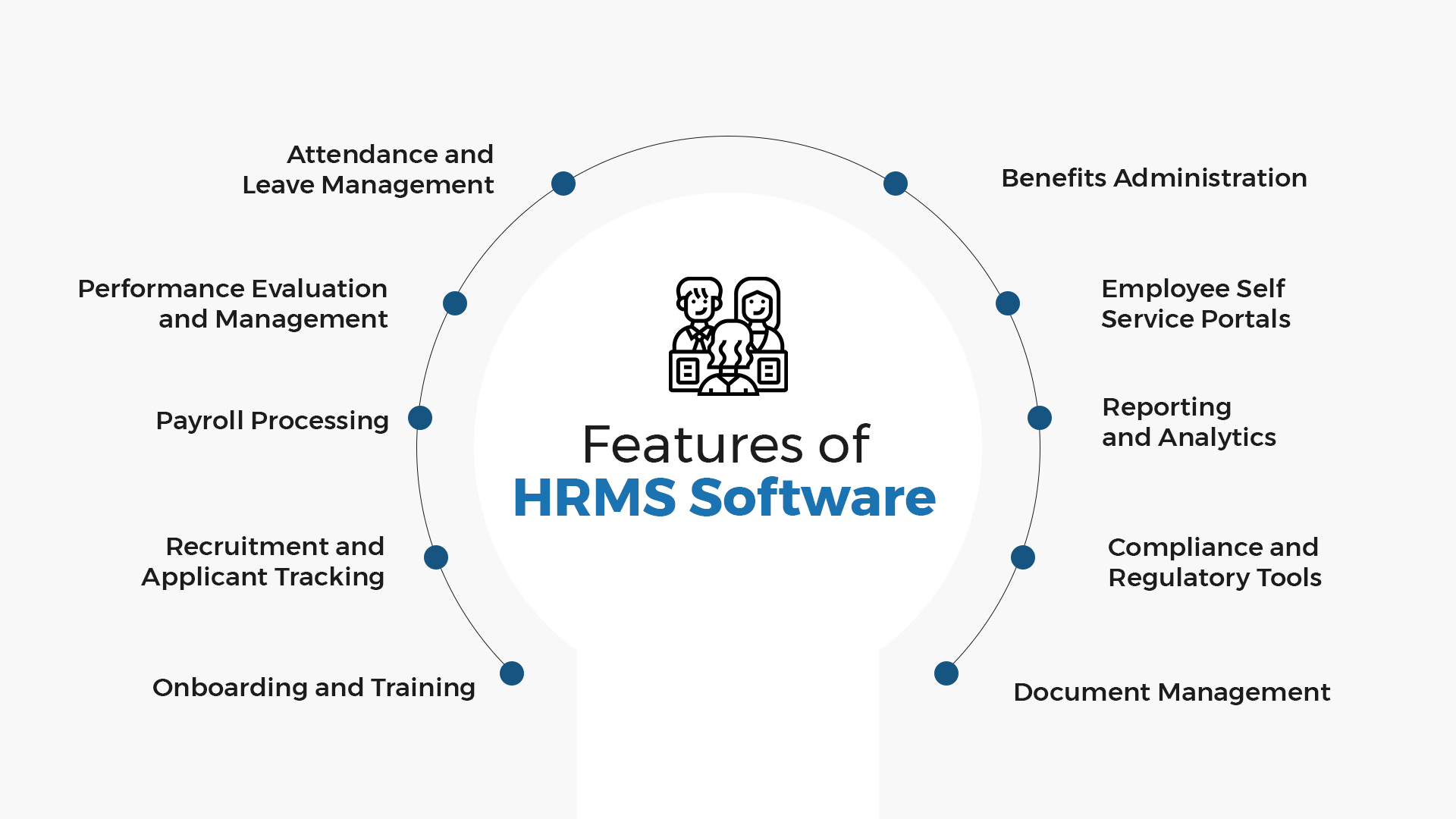
A critical feature provided by modern solutions is the Employee Self-Service (ESS) portal. This functionality empowers workers to manage their own personal information, view pay stubs, request time off, and update tax withholdings without intervention from HR staff. By shifting these low-value administrative tasks to the employees themselves, HR professionals are freed to focus on strategic initiatives like culture building and talent development.
Automated Payroll and Tax Administration
Payroll processing remains one of the most complex tasks an HRMS handles. A robust solution provides automated calculations for gross-to-net earnings, factoring in complex variables such as overtime, shift differentials, bonuses, and commission structures.
In 2026, these systems are deeply integrated with national and local tax authorities to ensure real-time compliance with changing tax codes. They automatically generate and file necessary tax documentation, manage voluntary deductions (such as retirement contributions or health insurance premiums), and handle involuntary deductions like wage garnishments. This automation significantly reduces the risk of human error, which can lead to costly legal penalties and employee dissatisfaction.
Recruitment and Applicant Tracking (ATS)
The talent acquisition module within an HRMS provides a streamlined workflow for identifying and hiring new talent. It manages the entire process: posting job openings to multiple boards simultaneously, screening resumes using AI-driven keyword matching, scheduling interviews, and managing candidate communications.
Modern systems provide sophisticated "candidate experience" features, allowing applicants to track their status in real-time. For the hiring team, the HRMS offers collaborative tools where interviewers can leave feedback and score candidates against standardized rubrics, ensuring a more objective and data-driven hiring process.
Advanced Capabilities in the 2026 Landscape
Beyond the administrative basics, current HRMS solutions leverage advanced technologies to provide deeper business value. These features are designed to address the challenges of the modern workplace, including hybrid work models and the global "skills gap."
Performance Management and Continuous Feedback
The traditional annual performance review has largely been replaced by continuous feedback loops facilitated by the HRMS. These modules provide tools for setting "Objectives and Key Results" (OKRs), tracking progress in real-time, and enabling peer-to-peer recognition.
By 2026, many systems have integrated AI that analyzes productivity patterns and sentiment data to alert managers when an employee might be at risk of burnout or disengagement. This proactive approach allows for early intervention and personalized development plans, which are crucial for retaining top talent in a competitive market.
Learning and Development (L&D) Integration
A comprehensive HRMS provides or integrates with a Learning Management System (LMS) to track employee growth. It identifies skill gaps within the organization and suggests specific training modules to help employees advance their careers.
These systems track certifications and mandatory compliance training (such as workplace safety or cybersecurity awareness), automatically notifying employees and supervisors when renewals are due. This ensures the organization remains compliant with industry standards and legal requirements without manual oversight.
Time, Attendance, and Workforce Management
For organizations with hourly workers or complex scheduling needs, an HRMS provides sophisticated time-tracking tools. These include geofenced mobile clock-ins, biometric verification, and automated shift bidding. The system synchronizes this data directly with payroll, ensuring that employees are paid accurately for the exact time worked, including any applicable overtime or holiday pay.
Comparing HRMS, HRIS, and HCM
While the terms are often used interchangeably, there are distinct differences in scope. Understanding these differences helps organizations choose the solution that best fits their operational needs.
| Feature Category | HRIS (Information System) | HRMS (Management System) | HCM (Capital Management) |
|---|---|---|---|
| Core Focus | Data storage and reporting | Process automation and HR tasks | Strategic workforce optimization |
| Payroll & Benefits | Basic tracking | Full automation and filing | Global multi-currency support |
| Recruitment | Basic applicant tracking | Advanced ATS with onboarding | Workforce planning and modeling |
| Talent Management | Limited | Performance and L&D modules | Succession planning and analytics |
| Best For | Small businesses | Mid-sized to large enterprises | Global, complex organizations |
Strategic Benefits of an HRMS Solution
The decision to implement an HRMS is driven by the need for efficiency, but the strategic benefits extend far beyond simple time savings.
Enhanced Data Security and Privacy
With the proliferation of data privacy regulations like the GDPR and the CCPA, protecting sensitive employee information is a legal imperative. An HRMS provides robust security features, including multi-factor authentication (MFA), role-based access control (RBAC), and end-to-end encryption. These systems are designed to ensure that only authorized personnel can view sensitive data, such as salary information or medical records, thereby reducing the risk of internal and external data breaches.
Informed Decision-Making via Analytics
One of the most powerful things an HRMS provides is actionable data. Human Capital Analytics modules allow executives to visualize trends in turnover rates, diversity and inclusion metrics, and labor costs. For example, a company can analyze which departments have the highest turnover and correlate that with specific management styles or compensation levels. This data-driven approach moves HR from a reactive department to a proactive strategic partner.
Scalability and Global Compliance
As a business grows, its HR needs become exponentially more complex. An HRMS solution provides the scalability required to expand into new territories. It can handle multiple languages, currencies, and local labor laws, ensuring that a company remains compliant as it scales. This is particularly important for 2026 organizations that utilize global remote talent, where navigating the labor laws of dozens of different countries would be impossible without automated support.
Implementation Prerequisites and Common Challenges
While the benefits are substantial, successful implementation requires careful planning. An HRMS is not a "plug-and-play" solution; it requires a alignment of technology and corporate policy.
- Data Cleansing: Before migrating to a new HRMS, organizations must ensure their existing data is accurate and formatted correctly. Entering "garbage" data into a new system will only lead to inaccurate reporting.
- Stakeholder Buy-in: Implementation often fails not because of the technology, but because of a lack of adoption. Managers and employees must understand the benefits of the system to use it effectively.
- Integration Mapping: Most businesses use other software, such as accounting tools (ERP) or communication platforms (Slack/Teams). Ensuring the HRMS provides robust API support for these integrations is essential for a seamless workflow.
Frequently Asked Questions
Does an HRMS replace the need for an HR department?
No, an HRMS does not replace HR professionals; rather, it augments their capabilities. By automating repetitive administrative tasks, the system allows the HR team to focus on high-level strategy, employee relations, and organizational development. It is a tool that makes the HR department more efficient and data-driven.
How much does an HRMS solution typically cost in 2026?
Pricing is usually based on a "Per Employee Per Month" (PEPM) model. Basic systems may start at $5 to $10 per employee, while full-featured enterprise suites with advanced AI analytics and global payroll capabilities can range from $20 to $50 per employee. Implementation fees and data migration costs are usually separate.
Is an HRMS suitable for small businesses with fewer than 50 employees?
Yes, many vendors now offer "lite" versions of their HRMS platforms specifically designed for small businesses. These versions focus on core needs like payroll, time tracking, and document storage, providing a professional infrastructure that can scale as the business grows.
How does an HRMS handle remote work compliance?
Modern HRMS solutions include features for tracking the physical "tax home" of remote employees. This ensures that the company withholds the correct state and local taxes based on where the employee is actually working, which is a critical compliance requirement in the modern hybrid work era.
Can an HRMS help with diversity, equity, and inclusion (DEI) goals?
Most advanced HRMS solutions now include DEI dashboards. These provide anonymized data on hiring pipelines, promotion rates, and pay equity across different demographics. This allows organizations to identify unconscious bias and track their progress toward specific diversity goals objectively.
Moving Forward with an HRMS
To effectively leverage what an HRMS solution provides, organizations should begin by conducting a thorough "needs analysis." Rather than purchasing a system based on the most features, focus on the specific pain points of your current HR process—whether that is payroll errors, high turnover, or a slow hiring cycle.
The next step is to evaluate vendors based on their security certifications (such as SOC 2 Type II), the quality of their mobile experience, and their track record of customer support. Once a system is selected, prioritize a phased rollout, starting with core modules like employee records and payroll before moving into more advanced areas like predictive analytics and AI-driven career pathing. By treating the HRMS as a long-term strategic investment rather than a one-time software purchase, your organization can build a more resilient, efficient, and engaged workforce.
Image Gallery