Understanding Apple Country of Origin: Regulatory Requirements and Consumer Verification
When purchasing produce, identifying the apple country of origin is a straightforward process governed by international trade regulations and mandatory labeling laws designed to ensure transparency. In most global markets, retailers ar...
When purchasing produce, identifying the apple country of origin is a straightforward process governed by international trade regulations and mandatory labeling laws designed to ensure transparency. In most global markets, retailers are legally required to display the country of origin on the packaging or signage for fresh fruit, allowing consumers to trace the product back to its place of harvest.
Contents
The Legal Framework for Origin Labeling
The regulation of food labeling, including the mandatory disclosure of a product’s country of origin, is established by national and regional regulatory bodies. For instance, in the United States, the Department of Agriculture (USDA) administers Country of Origin Labeling (COOL) requirements. These laws stipulate that fresh produce must be clearly marked so that the consumer can distinguish between domestic products and those imported from foreign markets.
These regulations serve multiple purposes. First, they provide consumers with the information necessary to make informed purchasing decisions based on personal preferences, such as supporting local farmers or avoiding produce from specific regions. Second, they are essential for supply chain traceability. In the event of a food safety concern, such as a product recall, being able to verify the country of origin—and often the specific farm or packing house—is critical for public health.
International standards are often harmonized through organizations like the World Trade Organization (WTO) and the Codex Alimentarius Commission. These bodies develop guidelines that nations adopt to ensure that labeling requirements are transparent, non-discriminatory, and based on objective evidence rather than protectionist trade barriers.
Identifying Origin in Retail Environments
Consumers typically find the country of origin information on one of three places: the individual fruit, the retail packaging, or the shelf display.
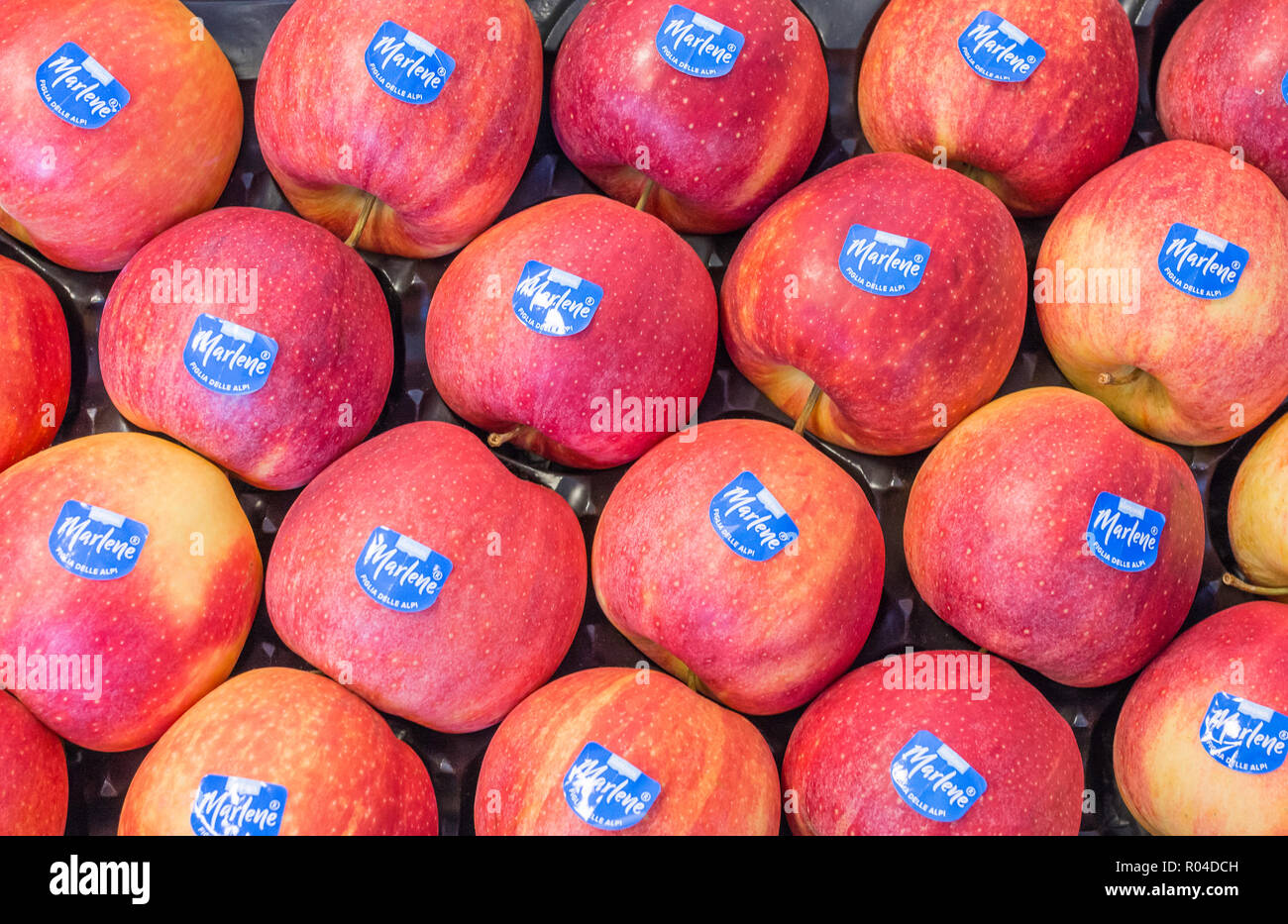
- Produce Stickers (PLU Codes): Many apples sold in supermarkets feature small adhesive labels. While these labels primarily contain the Price Look-Up (PLU) code to help cashiers identify the variety and pricing, they are often accompanied by the country of origin, printed in small, clear text.
- Bulk Packaging: If you are purchasing apples in a pre-packaged bag or clamshell, the country of origin is legally required to be printed on the packaging itself. This information is usually found near the weight, barcode, or nutritional information.
- Shelf Signage: For loose fruit displayed in open bins, the store is generally required to provide origin information on the shelf-edge sign or display placard. If this information is missing, store management is typically required to provide it upon request.
Distinguishing Domestic vs. Imported Produce
Understanding the difference between domestic and imported apples is essential for navigating the global fruit market. While many countries produce their own varieties, international trade fills the gaps during off-seasons.
The northern and southern hemispheres operate on opposing harvest cycles. When the North American harvest concludes in late autumn, retailers often stock apples from the Southern Hemisphere—particularly Chile, New Zealand, and South Africa—to ensure year-round availability.
Factors Influencing Global Apple Supply
| Factor | Domestic Production | Imported Production |
|---|---|---|
| Seasonality | Available shortly after harvest | Available during the off-season |
| Transport | Short-haul, lower carbon footprint | Long-haul, high-efficiency cold chain |
| Regulatory Oversight | Domestic USDA/FDA standards | International equivalency agreements |
| Varietal Availability | Region-specific popular varieties | Global varieties like Gala, Fuji, Granny Smith |
Traceability and Supply Chain Integrity
Behind the simple label indicating an apple's origin lies a complex system of logistics and quality control. Once an apple is harvested, it is sent to a packing house where it is washed, graded, sorted, and packed. During this process, the fruit is assigned a batch number or a lot code. These codes are not always visible to the consumer, but they are tracked internally by retailers and distributors.
If a consumer encounters an issue with a product—such as physical damage or a concern regarding food safety—these internal tracking codes allow retailers to pinpoint the exact orchard of origin. This level of transparency is standard in modern agricultural supply chains, ensuring that any localized issue does not result in the unnecessary disposal of vast quantities of perfectly healthy food.
Common Misconceptions Regarding Origin
A frequent misunderstanding involves the assumption that a label indicates the point of sale rather than the point of growth. For example, a bag of apples might be packed in a specific country, but the apples themselves may have been grown elsewhere. Regulatory bodies require that the country of origin refers to where the agricultural product was grown and harvested, not merely where it was processed or packaged.
Another misconception is that the "Country of Origin" label guarantees specific pesticide or chemical usage standards. While most countries have strict import requirements, the regulatory standards of the country of origin remain the primary governing force for how the product is grown. Consumers who prioritize organic certification should look for the organic seal of their respective national governing body, which serves as a supplemental layer of verification alongside the origin label.
Navigating Potential Labeling Issues
While labeling is mandatory, mistakes occur. If you are unable to find the country of origin, the following steps are recommended:
- Check the SKU/PLU: Use a smartphone to check the PLU code if you are unsure of the variety, though the PLU itself does not confirm the country.
- Request Information: Ask the produce manager at the grocery store. They are required to have access to this documentation for all items in their department.
- Consult Company Websites: Many major retailers maintain online portals that provide details on their sourcing practices, including the general regions from which they procure their seasonal produce.
The Role of Technology in Future Traceability
By 2026, the integration of blockchain and QR code technology in the fresh produce sector is becoming more widespread. Some premium apple brands now include QR codes on their packaging that, when scanned, provide a digital footprint of the apple’s journey from the orchard to the retail shelf. This technology goes beyond simple country-of-origin labeling, offering consumers a deeper connection to the agricultural source and verifying the authenticity of the product's origin.
Frequently Asked Questions
Is the country of origin always listed on the apple itself? No, it is not always on the individual fruit. While some producers print the country on the PLU sticker, federal regulations often allow for this information to be communicated via bulk packaging or clear shelf signage at the point of purchase.
Can I rely on the barcode to determine the country of origin? No. A barcode, specifically the GS1 prefix, indicates the country where the company is registered, not necessarily where the product was grown or manufactured. Always look for the explicit text stating "Product of [Country Name]."
What should I do if I find an unlabeled bin of apples? You should inform the store's customer service or produce manager. Retailers are legally obligated to provide clear origin information for all fresh produce. If they cannot provide this information, it is advisable to refrain from purchasing that specific batch.
Does "Grown in" mean the same thing as "Product of"? In many jurisdictions, they are treated as synonyms for legal labeling. Both phrases are intended to inform the consumer where the fruit was cultivated and harvested, rather than where it was merely processed or re-packed.
Are there different rules for organic apples? The labeling requirements for the country of origin are the same for organic and conventional apples. However, organic apples must also comply with strict certification standards, which are often listed near the origin information to confirm the product meets the national organic program's criteria.
Next Steps for Informed Consumers
To ensure you are fully informed about the produce you purchase, make a habit of inspecting the bin signage before selecting your fruit. If you have specific preferences regarding the distance the produce has traveled or the agricultural standards of a specific region, consult your retailer's corporate transparency reports. For those interested in deeper traceability, look for brands that utilize scannable technology on their packaging, as these provide the most comprehensive data regarding the orchard-to-table journey.
Image Gallery