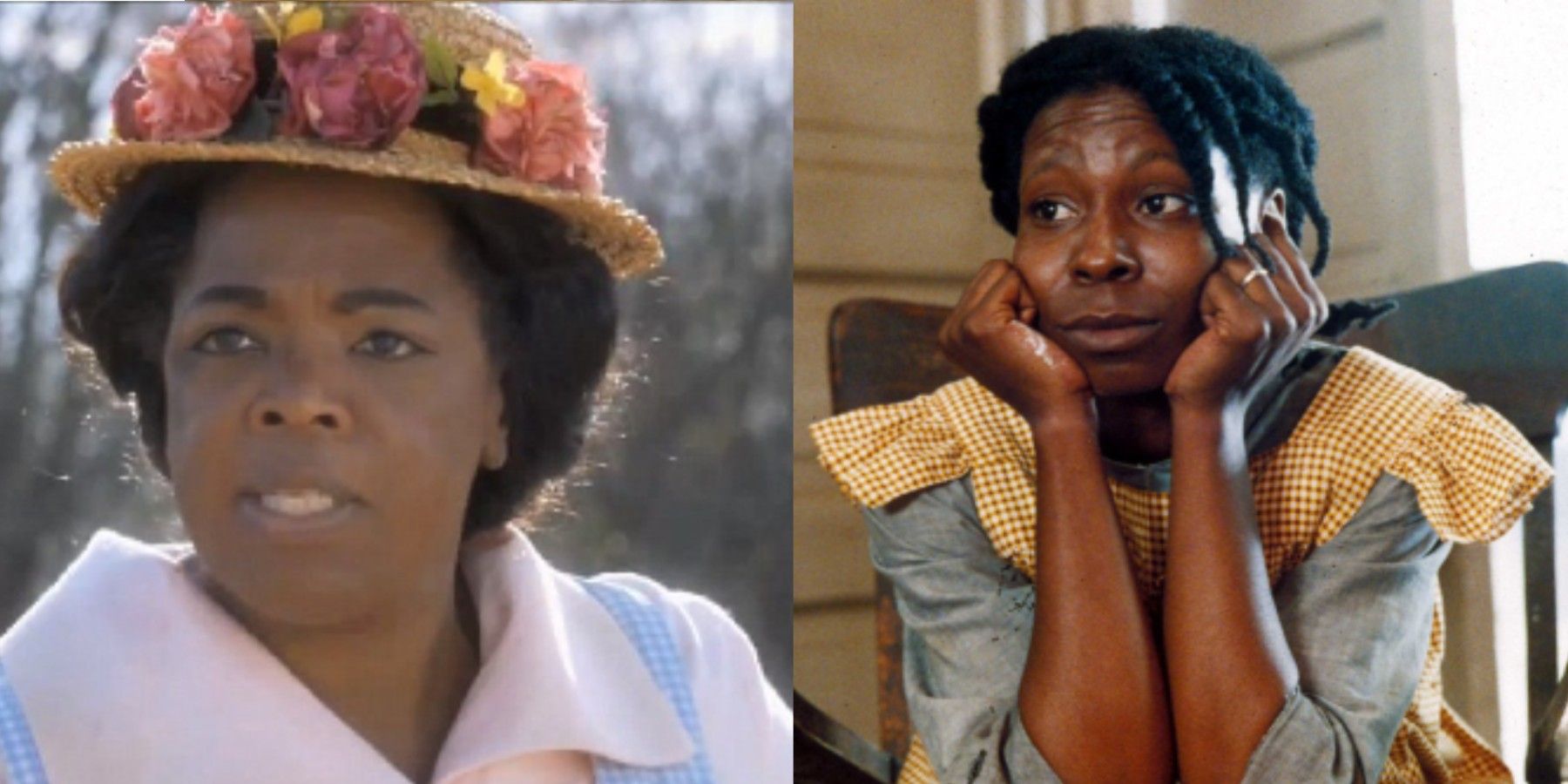
Oprah Winfrey’s Portrayal of Sofia in The Color Purple: A Definitive History
Oprah Winfrey made her cinematic debut as the fiercely independent Sofia in the 1985 film adaptation of The Color Purple, directed by Steven Spielberg. This performance earned her an Academy Award nomination for Best Supporting Actress...
Oprah Winfrey made her cinematic debut as the fiercely independent Sofia in the 1985 film adaptation of The Color Purple, directed by Steven Spielberg. This performance earned her an Academy Award nomination for Best Supporting Actress and solidified her transition from a Chicago talk-show host to a globally recognized dramatic actress.
Contents
The Cultural Significance of Sofia in Alice Walker’s Narrative
Before analyzing Oprah Winfrey's specific performance, it is essential to understand the literary weight of the character created by Alice Walker. In the 1982 Pulitzer Prize-winning novel, Sofia serves as the structural antithesis to the protagonist, Celie. While Celie begins the story as a passive victim of systemic abuse and patriarchal dominance, Sofia enters the narrative as a whirlwind of self-possession and physical strength.
Sofia’s character is defined by her refusal to submit to the traditional gender roles of the early 20th-century American South. Her mantra, "All my life I had to fight," serves as a cornerstone for the theme of female agency. In the context of the 1985 film, Sofia is the first character to show Celie that a woman can say "No" to a man—and specifically to a husband. This defiance is not merely a personality trait; it is a radical political act within the timeframe of the story. Winfrey’s ability to embody this resistance became the defining element of her early career, influencing how Black female strength was portrayed in Hollywood for decades to follow.
The Casting Journey: How a Talk-Show Host Became Sofia
The story of how Oprah Winfrey secured the role of Sofia is one of the most famous casting legends in Hollywood history. In 1984, Winfrey was the host of AM Chicago, a local talk show that was beginning to gain traction. She was a devotee of Alice Walker’s book, reportedly carrying it around and handing out copies to strangers. Despite having no professional acting experience, she felt a spiritual connection to the character of Sofia.
Quincy Jones, who was producing the film, reportedly discovered Winfrey by accident. While in Chicago for a legal deposition, he saw her on television and was immediately struck by her presence. He felt she possessed the inherent "earthiness" and fire required for the role.
Winfrey’s path to the screen was not without personal struggle. At the time, she was concerned that her weight would disqualify her from the role. She famously checked herself into a "fat farm" in hopes of losing weight to appear more like the character she imagined. It was during this retreat that she received a call from Steven Spielberg, who told her that if she lost a single pound, she might lose the part. This anecdote highlights the physical requirements of the role: Sofia needed to be a woman of "substance"—both physically and emotionally—to stand up to the men in her life.
Analyzing the Performance: Defiance and Vulnerability
Winfrey’s portrayal of Sofia is often categorized by two distinct phases: the warrior and the broken woman. To understand why this performance remains a masterclass in supporting acting as of 2026, one must examine the technical choices Winfrey made in both phases.
The Warrior Phase: "Hell No!"
The first half of the film showcases Sofia's indomitable spirit. Winfrey utilized a powerful, resonant vocal register and a grounded physical stance to command every scene she entered. The "Hell No!" monologue—delivered when Celie suggests that Harpo (Sofia’s husband) should beat her to make her mind—is a pivotal cinematic moment. Winfrey played the scene not with simple anger, but with a sense of deep, ancestral disappointment that another woman would suggest such violence.
The Transition: The Encounter with Mayor Millie
The turning point for the character occurs when Sofia is confronted by the white Mayor and his wife, Millie. Sofia’s refusal to work as a maid for a white family leads to a physical altercation where she is struck and then retaliates. This scene required Winfrey to transition from a figure of strength to a victim of state-sanctioned violence in a matter of seconds. The "clink" of the handcuffs and the subsequent beating represent the crushing weight of Jim Crow-era racism.
The Broken Woman Phase
Following an eight-year prison sentence, Sofia returns to the screen as a shell of her former self. Winfrey’s acting in these later scenes is characterized by a "thousand-yard stare" and a slowed, rhythmic pattern of speech. The loss of her spark serves as a tragic reminder of the costs of rebellion in an oppressive society. However, her eventual "awakening" during the famous dinner table scene—where she finally laughs and speaks again—remains one of the most cathartic moments in film history.
Technical Impact and Academy Recognition
The 1985 release of The Color Purple was a massive commercial success, though it faced criticism for its depiction of Black men and Spielberg’s "glossy" directorial style. However, critics were almost unanimous in their praise for Winfrey.
In 1986, Winfrey received an Academy Award nomination for Best Supporting Actress. While she did not win (the award went to Anjelica Huston for Prizzi's Honor), the nomination validated her as a serious dramatic force. The film itself received 11 nominations but famously won zero, a record it shares with The Turning Point.
From a technical standpoint, Winfrey's performance was lauded for its authenticity. Unlike trained stage actors who might have over-projected, Winfrey used the intimacy of the camera to convey internal shifts in Sofia’s psyche. Her chemistry with Whoopi Goldberg (Celie) and Willard Pugh (Harpo) provided the film with its emotional heartbeat.
Legacy and the 2023 Reimagining
Decades after her portrayal, Oprah Winfrey returned to the world of The Color Purple, but this time as a producer for the 2023 musical film adaptation. This transition represents a full-circle moment in her career.
In the 2023 version, the role of Sofia was played by Danielle Brooks, who had previously played the role on Broadway. Winfrey was a vocal supporter of Brooks, famously calling her to deliver the news that she had won the part. While the 2023 film added musical numbers that expanded on Sofia’s internal monologue (notably the song "Hell No!"), the DNA of the character remained rooted in the foundation Winfrey built in 1985.
Comparison of Sofia’s Cinematic Portrayals
| Feature | 1985 Portrayal (Oprah Winfrey) | 2023 Portrayal (Danielle Brooks) |
|---|---|---|
| Medium | Traditional Period Drama | Musical Adaptation |
| Director | Steven Spielberg | Blitz Bazawule |
| Character Focus | Grounded Realism/Tragedy | Expressive Defiance/Musicality |
| Key Musical Moment | N/A (Score by Quincy Jones) | "Hell No!" Solo |
| Critical Accolades | Academy Award Nomination | Academy Award Nomination |
| Winfrey's Role | Actor | Producer |
Why the Portrayal Still Matters in 2026
As of 2026, the character of Sofia remains a touchstone for discussions regarding Black womanhood and resilience. Winfrey’s portrayal did more than just launch a career; it provided a blueprint for portraying "difficult" women on screen without stripping them of their humanity.
Sofia’s story is a reminder that resilience is not just about surviving; it is about the struggle to reclaim one’s joy after it has been systematically stolen. Winfrey’s ability to convey that journey—from the boisterous joy of her wedding to the silent misery of her domestic servitude and back to a state of grace—ensures that her work in The Color Purple will be studied by film historians for generations.
Frequently Asked Questions
Did Oprah Winfrey win an Oscar for The Color Purple?
No, Oprah Winfrey did not win the Academy Award for her role as Sofia. She was nominated for Best Supporting Actress at the 58th Academy Awards in 1986, but the award was won by Anjelica Huston. Despite the loss, the nomination was a significant milestone, as it was her first-ever film role.
How did Oprah get the role of Sofia?
Oprah was discovered by producer Quincy Jones, who saw her on her Chicago talk show. Winfrey was already a massive fan of the novel and had been praying for an opportunity to be involved in a film adaptation. After a successful audition for casting director Reuben Cannon and director Steven Spielberg, she was cast despite having no prior professional acting experience.
Who played Sofia in the 2023 version of The Color Purple?
Danielle Brooks portrayed Sofia in the 2023 musical film. Brooks had previously earned a Tony Award nomination for playing the same role in the 2015 Broadway revival of the show. Oprah Winfrey served as a producer for the 2023 film and was instrumental in Brooks' casting.
Is the character of Sofia based on a real person?
While Alice Walker’s characters are often inspired by the archetypes and stories of women in the American South, Sofia is a fictional creation. She embodies the "Amazon" archetype—a woman of great physical and emotional strength who refuses to be subservient to the patriarchal structures of her time.
What is Sofia's most famous line in the movie?
The most famous line associated with Sofia is "All my life I had to fight." This line is delivered during a poignant conversation with Celie, where Sofia explains that while she has had to fight her uncles, her brothers, and her cousins, she never expected to have to fight for her dignity within her own home.
Final Recommendation for Viewers
For those looking to understand the evolution of Oprah Winfrey's career and the history of Black cinema, a dual viewing of the 1985 and 2023 versions of The Color Purple is highly recommended. Start with the 1985 film to witness Winfrey’s raw, breakout performance, which captures a specific era of Hollywood storytelling. Follow this with the 2023 musical version to see how the character of Sofia has been expanded through song and how the mantle of the character was passed to a new generation. Both films are essential viewing for their exploration of trauma, sisterhood, and ultimate redemption.
Image Gallery