Comprehensive Overview of Data Security in the Mobile Cloud Computing Paradigm
Mobile Cloud Computing (MCC) integrates mobile devices and cloud resources to enhance performance, but this synergy creates unique security vulnerabilities. Protecting data in this paradigm requires addressing the intersection of wirel...
Mobile Cloud Computing (MCC) integrates mobile devices and cloud resources to enhance performance, but this synergy creates unique security vulnerabilities. Protecting data in this paradigm requires addressing the intersection of wireless communication risks, mobile hardware constraints, and centralized cloud storage vulnerabilities through robust encryption, identity management, and decentralized security architectures.
Contents
Understanding the Mobile Cloud Computing Paradigm
Mobile Cloud Computing (MCC) is an infrastructure where both the data storage and the data processing happen outside of the mobile device. In this model, mobile applications move the computing power and data storage away from mobile phones and into the cloud, bringing applications to not just smartphone users but also a much broader range of mobile subscribers. As of 2026, this paradigm has matured into a seamless fabric where users often cannot distinguish between local and remote processing.
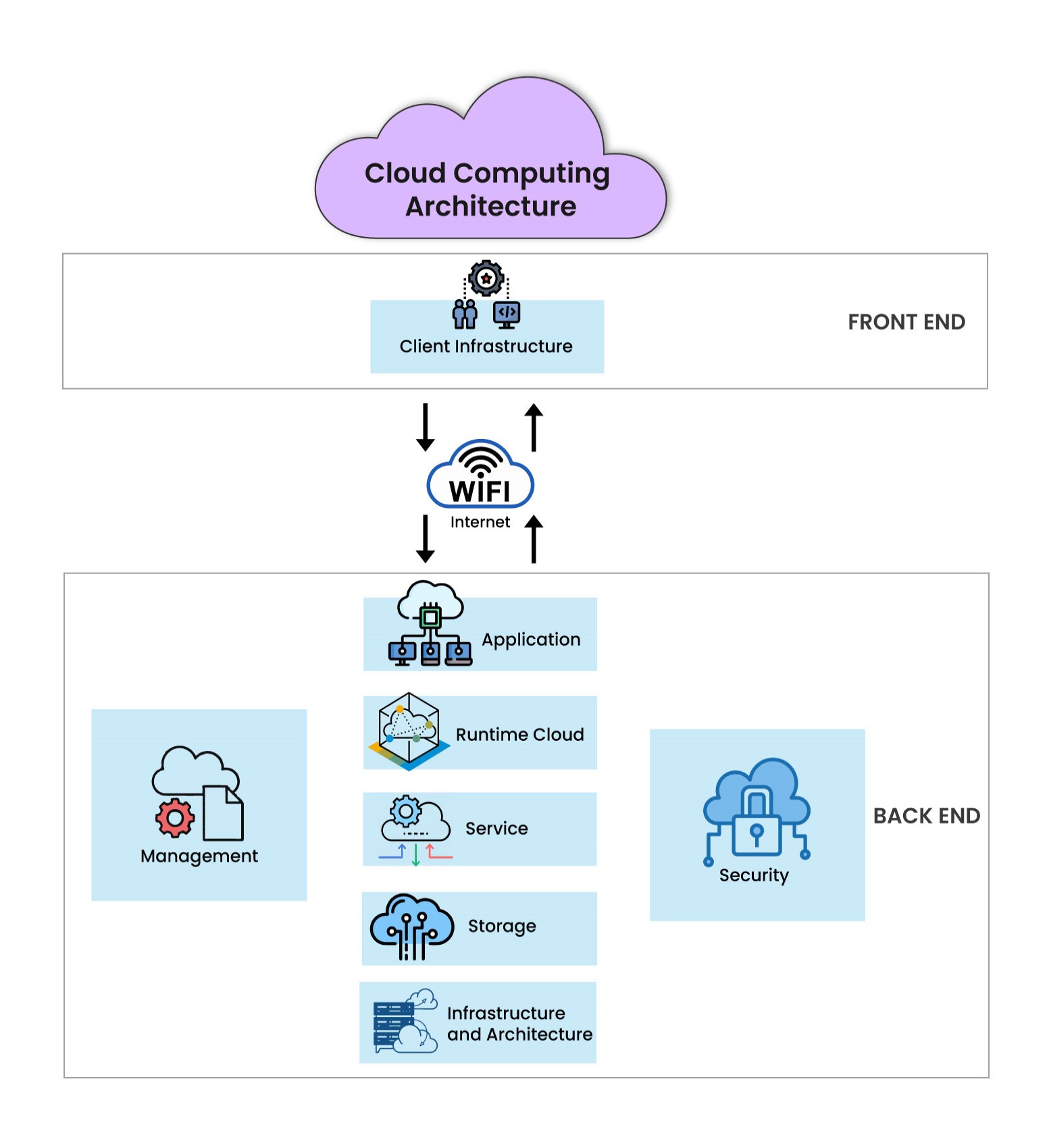
The MCC architecture typically consists of three main components: mobile devices, wireless networks, and cloud service providers. Mobile devices (the "Mobile" part) act as terminals for user interaction. Wireless networks (the "Network" part) provide the bridge for data transfer, utilizing technologies such as 5G, 6G, and Wi-Fi 7. Finally, the Cloud Service Providers (the "Cloud" part) offer the heavy-lifting capabilities—computation, storage, and specialized services—that the mobile device lacks.
While MCC solves the inherent limitations of mobile devices—such as battery life, storage capacity, and processing power—it introduces a complex attack surface. Because data must travel across public and private networks to be processed by a third party, the "security perimeter" effectively disappears. Data is no longer confined to a single physical or logical location, necessitating a shift from perimeter-based security to data-centric security.
Core Pillars of Data Security in MCC
To ensure the integrity and safety of the mobile cloud ecosystem, security frameworks focus on three traditional pillars (Confidentiality, Integrity, and Availability) while adding critical dimensions for the mobile context: Privacy and Authentication.
Data Confidentiality
Confidentiality ensures that sensitive information is not disclosed to unauthorized individuals, entities, or processes. In the MCC paradigm, confidentiality must be maintained at three distinct stages: data at rest (on the device or cloud), data in transit (over the wireless network), and data in use (during processing). Encryption is the primary tool here, but the limited processing power of some IoT and mobile devices often requires "lightweight" cryptographic algorithms that provide high security with low computational overhead.
Data Integrity
Integrity guarantees that data has not been altered or destroyed in an unauthorized manner. In the cloud, this is particularly challenging because the data owner loses physical control over their information. If a cloud provider suffers a silent data corruption or a malicious actor alters a database entry, the mobile user might receive incorrect results. Verification mechanisms, such as digital signatures and Message Authentication Codes (MACs), are essential to confirm that the data retrieved from the cloud is identical to the data stored.
Data Availability
Availability ensures that the cloud services and data are accessible to the mobile user whenever needed. For MCC, this is often the most fragile pillar. Factors ranging from network congestion and signal loss to Distributed Denial of Service (DDoS) attacks on the cloud provider can render the entire system useless. High availability is achieved through redundancy, load balancing, and failover mechanisms that span both the network and the cloud infrastructure.
Significant Security Threats in the MCC Ecosystem
The hybrid nature of MCC means it inherits vulnerabilities from both mobile computing and cloud computing, while also generating new threats unique to their intersection.
- Malicious App Injection: Mobile devices are susceptible to malware that can intercept data before it is encrypted for the cloud. These apps can also exploit the "offloading" process, where a device sends a task to the cloud, by injecting malicious code into the offloaded packet.
- Data Leakage via Side-Channels: In a multi-tenant cloud environment, multiple users share the same physical hardware. Malicious actors may use side-channel attacks to monitor the resource usage of other Virtual Machines (VMs), potentially inferring sensitive data or cryptographic keys.
- Insecure APIs: Most mobile apps communicate with cloud services through Application Programming Interfaces (APIs). If these APIs are not properly secured, they become an entry point for attackers to bypass authentication or perform unauthorized data injections.
- Man-in-the-Middle (MitM) Attacks: Because mobile devices frequently switch between different networks (cellular, public Wi-Fi, home Wi-Fi), they are prime targets for MitM attacks. An attacker can intercept the communication channel to steal credentials or modify data being sent to the cloud.
- Privacy Breaches through Profiling: Beyond the data itself, the metadata associated with MCC—such as location, time of access, and usage patterns—can be used to build invasive profiles of users without their explicit consent.
Technical Solutions and Security Mechanisms
Addressing these threats requires a multi-layered approach that combines traditional security with innovative, cloud-native technologies.
Advanced Encryption Standard (AES) and RSA
For data at rest and in transit, AES-256 remains the industry standard for symmetric encryption due to its speed and security. For key exchange, asymmetric encryption like RSA or Elliptic Curve Cryptography (ECC) is utilized. ECC is particularly favored in the mobile paradigm because it provides equivalent security to RSA with much smaller key sizes, reducing the burden on mobile processors and batteries.
Attribute-Based Encryption (ABE)
ABE is a type of public-key encryption in which the secret key of a user and the ciphertext are dependent upon attributes (e.g., job role, location, seniority). In MCC, this allows for fine-grained access control where data stored in the cloud can only be decrypted if the user's attributes match the policy defined by the data owner. This is significantly more flexible than traditional "all-or-nothing" access.
Zero Trust Architecture (ZTA)
In 2026, the industry has moved away from "trusted networks." Zero Trust operates on the principle of "never trust, always verify." Every access request, regardless of where it originates or what resource it accesses, must be fully authenticated, authorized, and encrypted. For mobile users, this means that being on a "corporate VPN" is no longer enough; their device health, identity, and context are continuously evaluated during the session.
Homomorphic Encryption (HE)
One of the most significant breakthroughs for MCC is Homomorphic Encryption. This allows the cloud to perform computations on encrypted data without ever decrypting it. For example, a mobile healthcare app could send encrypted patient data to the cloud for statistical analysis. The cloud performs the math on the ciphertext and sends back an encrypted result, which the mobile user decrypts. The cloud provider never sees the actual sensitive data.
Comparison of Security Approaches in MCC
The following table compares different security technologies currently utilized in the mobile cloud computing paradigm as of 2026.
| Security Technology | Primary Benefit | Resource Overhead | Complexity | Best Use Case |
|---|---|---|---|---|
| AES-256 | High-speed data protection | Low | Moderate | Encrypting large files at rest |
| ECC | Efficient key exchange | Very Low | Moderate | Mobile device authentication |
| ABE | Fine-grained access control | Moderate | High | Multi-user corporate data sharing |
| Homomorphic Encryption | Data-in-use privacy | Very High | Very High | Sensitive medical/financial analytics |
| Blockchain | Immutable integrity logs | High | High | Verifying data history and audits |
| TEEs (Enclaves) | Hardware-level isolation | Low | Moderate | Secure biometric processing |
The Role of Edge and Fog Computing in Data Security
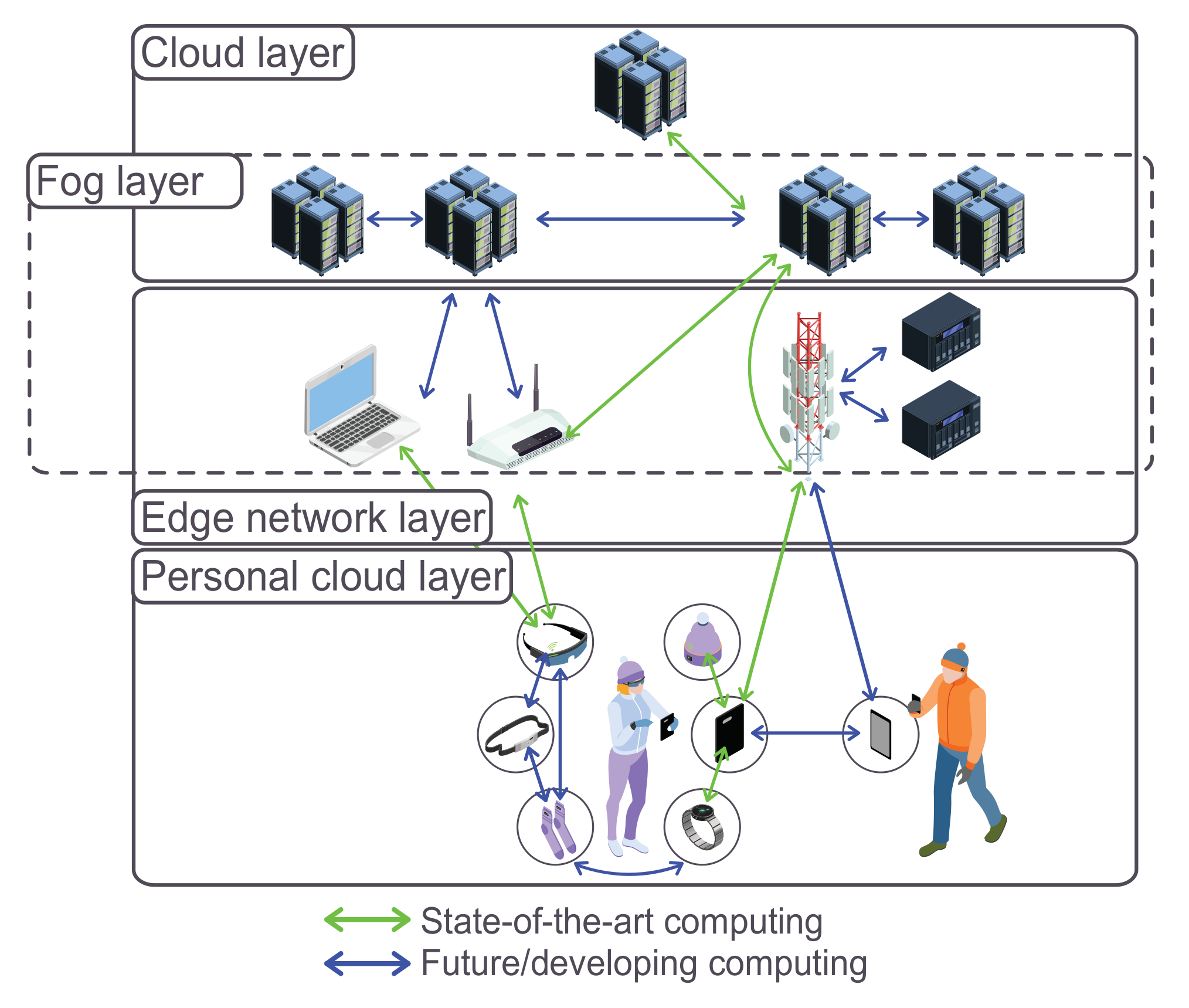
As the MCC paradigm has evolved toward 2026, Edge and Fog computing have become essential sub-layers. Instead of sending all data to a centralized cloud thousands of miles away, Edge computing processes data closer to the mobile device (at the cell tower or local router).
From a security perspective, this provides a dual advantage. First, it reduces the "exposure window" during data transit, as the data travels a shorter distance over fewer network hops. Second, sensitive data can be processed locally and discarded, with only non-sensitive summaries sent to the central cloud. However, this also decentralizes the security burden, as every "edge node" must now be as secure as a major data center to prevent localized breaches.
Common Questions Regarding MCC Data Security
What is the single biggest risk to data in mobile cloud computing?
The most significant risk is often unauthorized access due to weak authentication or compromised credentials. Because MCC data is accessible from anywhere over the internet, a single stolen password or session token can grant an attacker full access to a user's cloud-stored life. This is why Multi-Factor Authentication (MFA) and biometric verification have become mandatory in modern MCC architectures.
How does 6G technology change MCC security in 2026?
The transition to 6G has introduced native AI-driven security at the physical layer of the network. Unlike previous generations, 6G networks can detect anomalous signal patterns (like jamming or spoofing) in real-time. Furthermore, 6G's ultra-low latency allows for more complex security handshakes to occur without degrading the user experience, enabling continuous re-authentication of mobile devices.
Is data safer on the mobile device or in the cloud?
Generally, data is safer in a well-managed cloud than on a mobile device. Mobile devices are easily lost, stolen, or infected with mobile-specific malware. Reputable cloud providers employ thousands of security experts and utilize advanced physical and digital protections that an individual or small business could never replicate. The vulnerability lies not in the "storage" but in the "transfer" and "access" points.
Can cloud providers see my personal data?
Technically, if the data is not encrypted with keys held exclusively by the user (Client-Side Encryption), the cloud provider can access it. In many standard services, the provider manages the keys to enable features like search and indexing. For maximum privacy, users must look for "Zero-Knowledge" services where the provider does not have the ability to decrypt the data.
Strategic Recommendations for Implementation
For organizations and developers operating within the mobile cloud computing paradigm, security must be "baked in" rather than "bolted on."
- Implement End-to-End Encryption (E2EE): Ensure that data is encrypted on the mobile device before it is transmitted and remains encrypted until it is accessed by an authorized end-user.
- Adopt a Zero Trust Framework: Treat every mobile device as a potential threat. Use continuous authentication and verify device integrity (e.g., checking for rooted or jailbroken status) before allowing cloud access.
- Utilize Hardware-Backed Security: Leverage Trusted Execution Environments (TEEs) like ARM TrustZone or Apple’s Secure Enclave to store cryptographic keys and process biometric data.
- Regular Auditing and Logging: Use automated tools to monitor API calls and data access patterns. In the event of a breach, having an immutable log (potentially backed by blockchain) is crucial for forensic analysis and regulatory compliance.
As mobile devices become even more integrated into our biological and professional lives, the mobile cloud computing paradigm will only grow in complexity. Staying ahead of threats requires a constant evaluation of new cryptographic methods and a disciplined approach to identity management.
Image Gallery