Best Ecommerce Shipping Practices for Growing Stores in 2026
To optimize ecommerce shipping for a growing store in 2026, merchants must transition from manual fulfillment to an automated, multi-carrier strategy that balances cost-efficiency with customer transparency. This involves leveraging re...
To optimize ecommerce shipping for a growing store in 2026, merchants must transition from manual fulfillment to an automated, multi-carrier strategy that balances cost-efficiency with customer transparency. This involves leveraging real-time carrier rate shopping, optimizing packaging to minimize dimensional weight charges, and integrating scalable software that connects directly to inventory and order management systems.
Contents
For many online retailers, shipping is the most significant operational expense and the primary driver of customer dissatisfaction. As a store scales, the "ship-from-home" or manual garage-operation model becomes a bottleneck that prevents growth. Scaling effectively requires a shift in mindset: shipping is no longer just a logistical necessity but a strategic lever for conversion and retention. By 2026, the industry has shifted toward hyper-personalization in delivery and extreme efficiency in the middle and last mile.
Establishing a Scalable Shipping Strategy
A growing store must move beyond a "one size fits all" shipping policy. Your strategy should align with your product margins, customer expectations, and average order value (AOV). There are three primary models that successful stores utilize as they scale.
The Threshold Free Shipping Model
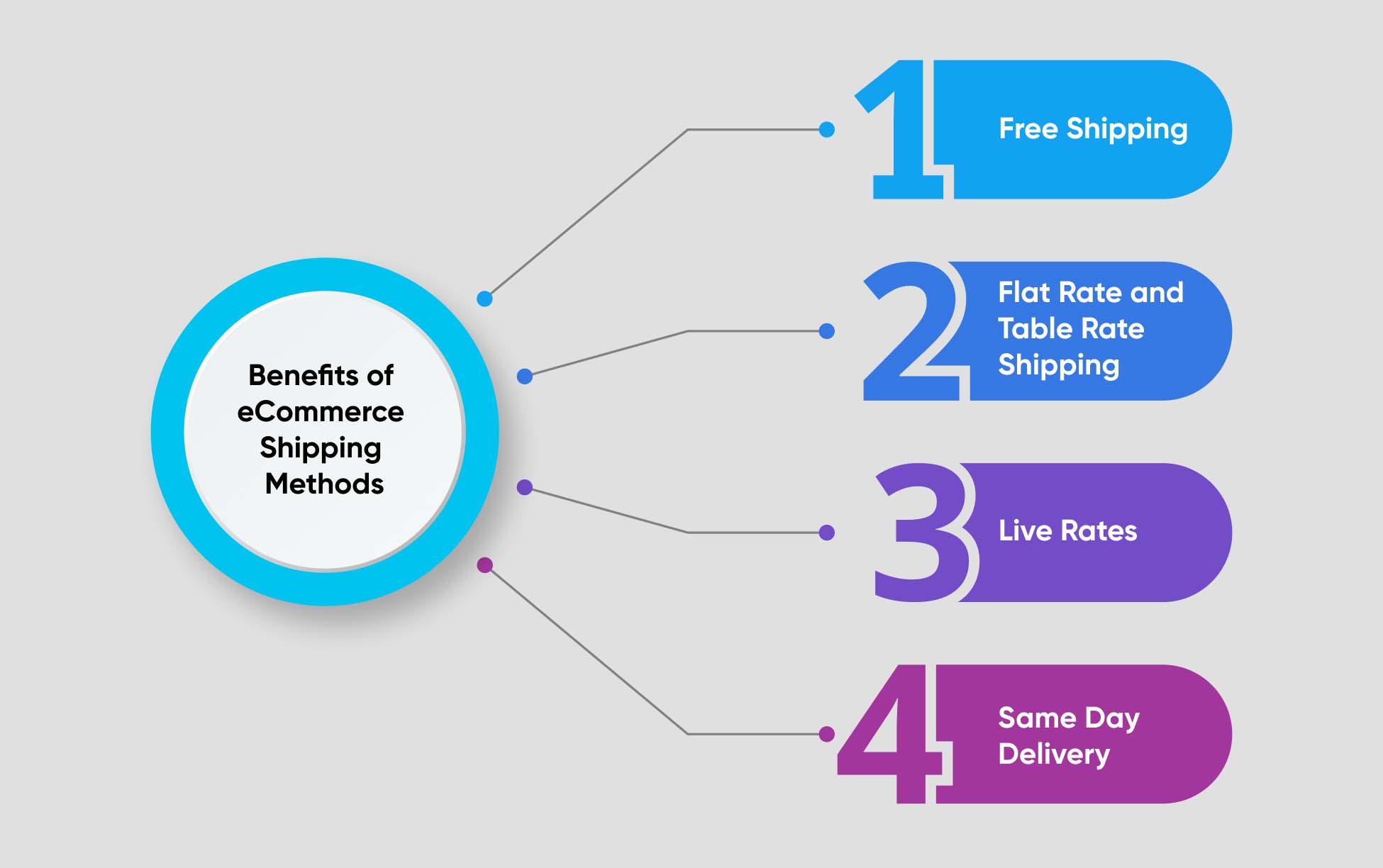
Free shipping remains the strongest conversion tool in ecommerce. However, for a growing store, offering "free shipping on everything" can quickly erode margins. The best practice is to implement threshold-based free shipping. By setting a minimum order value (e.g., "Free Shipping on orders over $75"), you incentivize customers to add more items to their cart, effectively increasing your AOV to cover the shipping cost. In 2026, data-driven merchants use A/B testing to find the "sweet spot" where the increase in volume outweighs the cost of the shipping subsidy.
Flat Rate Shipping
Flat rate shipping provides predictability for both the merchant and the consumer. It works best when your product line has relatively uniform sizes and weights. To succeed with this model, you must calculate your "blended average" shipping cost. If some orders cost $8 to ship and others cost $12, a $10 flat rate keeps you balanced. For growing stores, this simplifies the checkout experience, which is critical for reducing cart abandonment.
Real-Time Carrier Rates
As stores scale into heavier or more complex product categories, real-time rate calculation becomes essential. Integrating your checkout with carrier APIs (Application Programming Interfaces) allows the system to fetch the exact shipping cost based on the customer’s zip code and the total weight of the items. This protects the merchant from undercharging on long-distance or heavy shipments while providing the customer with various speed options, such as overnight or economy ground.
Leveraging Multi-Carrier Diversification
One of the most dangerous mistakes a growing store can make is relying on a single carrier. In the current 2026 logistics landscape, carrier diversification is a prerequisite for resilience.
Relying solely on a legacy giant like UPS, FedEx, or DHL exposes your business to risks such as strikes, peak-season surcharges, and regional outages. A multi-carrier approach allows you to "rate shop" in real-time. Shipping software can automatically select the cheapest or fastest carrier for every specific parcel.
Furthermore, growing stores should look toward regional carriers. These smaller, localized delivery services often offer lower rates and faster "last-mile" delivery within specific geographic zones. By injecting packages directly into regional hubs, a growing store can often achieve next-day delivery at ground shipping prices, a competitive advantage that was once reserved for enterprise-level retailers.
Mastering Dimensional Weight and Packaging Optimization
In 2026, carriers charge not just for how much a package weighs, but how much space it occupies on a truck. This is known as Dimensional (DIM) Weight. If you ship a small item in a large box, you are paying for the "air" inside that box.
Reducing the DIM Factor
To combat rising shipping costs, growing stores must audit their packaging. This involves:
- Right-sizing: Maintaining a library of box sizes that closely match your most common order combinations.
- Custom Poly Mailers: For non-fragile items like apparel, poly mailers are far more cost-effective than boxes because they have no DIM weight and take up minimal space.
- Automated Box Selection: Advanced shipping software can now suggest the optimal box size for an order before the packer even picks the items from the shelf.
Sustainable Packaging as a Brand Requirement
By 2026, consumers expect eco-friendly packaging. Transitioning to compostable mailers, recycled cardboard, and plastic-free dunnage (void fill) is no longer just a "green" initiative—it is a brand requirement for growth. Sustainable packaging often weighs less than traditional materials, which can marginally reduce shipping costs while significantly improving brand loyalty.
Transitioning to Advanced Fulfillment Models
As order volume exceeds 500 to 1,000 shipments per month, the physical act of packing boxes becomes a distraction from marketing and product development. Growing stores must decide between scaling in-house fulfillment or partnering with a Third-Party Logistics (3PL) provider.
| Fulfillment Aspect | In-House Scaling | 3PL Partnership |
|---|---|---|
| Control | Total control over the "unboxing" experience. | Limited to the 3PL's standard operating procedures. |
| Cost Structure | High fixed costs (warehouse rent, labor, equipment). | Variable costs (pay-per-pick, storage fees). |
| Scalability | Difficult to scale quickly during peak seasons. | Seamlessly handles spikes in order volume. |
| Shipping Rates | Limited to the store's negotiated rates. | Access to the 3PL's deep volume discounts. |
| Technology | Requires custom WMS integration. | Usually provides a turn-key tech stack. |
For most stores in a growth phase, a hybrid model is often the most effective. This involves keeping high-touch or custom-kitted items in-house while moving high-velocity, standard items to a 3PL with multiple distribution centers. By 2026, "distributed inventory"—splitting stock across several warehouses—is the standard method for reducing shipping zones and ensuring 2-day delivery across the country.
Implementing Shipping Automation and Technology
Manual data entry is the enemy of growth. A growing store must implement a tech stack that automates the transition from "Order Placed" to "Label Printed."
Integration with Order Management Systems (OMS)
Your shipping software must be the "source of truth" that connects your storefront (Shopify, Magento, WooCommerce) with your carriers. Automation rules should be set up to handle repetitive tasks. For example, a rule can be created to: "If the order weight is under 15oz, always use USPS Ground Advantage; if over 15oz, rate-shop between UPS Ground and FedEx Home Delivery."
Batch Processing and Thermal Printing
Scaling requires moving from printing one label at a time to batch processing. This allows a warehouse team to print 100 labels at once, organized by "pick path" to minimize walking time in the warehouse. Additionally, switching from inkjet/laser printers to industrial-grade thermal printers is a small but vital investment that eliminates the cost of ink and speeds up the labeling process significantly.
International Shipping and Global Growth
Growing stores eventually look beyond domestic borders. In 2026, international shipping is no longer a luxury but a standard growth engine. However, it requires a "Landed Cost" strategy.
The biggest hurdle in international shipping is "hidden fees" at the border. The best practice is to use DDP (Delivered Duty Paid) rather than DDU (Delivered Duty Unpaid). With DDP, the taxes and duties are calculated at checkout and paid by the customer upfront. This ensures the package is not held at customs and that the customer isn't surprised by a bill from the carrier before they can receive their goods. Providing this level of transparency is essential for maintaining a high Net Promoter Score (NPS) in international markets.
Managing the Reverse Logistics Loop (Returns)
Shipping isn't over when the package is delivered. A growing store must have a robust returns process. In 2026, "return-less refunds" are becoming common for low-cost items where the shipping cost exceeds the item's value. For everything else, a branded returns portal is necessary. This allows customers to generate their own return labels, which reduces the burden on customer service teams and provides the merchant with data on why items are being returned, allowing for better inventory decisions in the future.
Frequently Asked Questions
How can I reduce my shipping costs without sacrificing speed?
The most effective way is to utilize rate-shopping automation and regional carriers. By comparing rates in real-time for every package, you ensure you aren't overpaying for a specific zone. Additionally, optimizing your packaging to avoid Dimensional Weight surcharges can reduce costs by 15-30% without changing your delivery speed.
When is the right time to move to a 3PL?
Typically, the "inflection point" occurs when the founder or core team is spending more than 20% of their time on physical fulfillment rather than growth-oriented tasks. Numerically, this is often between 500 and 1,000 orders per month, where the cost of a 3PL's "pick and pack" fee becomes cheaper than the combined cost of warehouse rent and labor.
Is free shipping still necessary in 2026?
Yes, but it must be strategic. Consumers in 2026 are accustomed to free shipping, but they also understand the environmental and economic costs. Using a shipping threshold (e.g., Free over $100) is the best practice because it protects your margins while still providing the psychological "win" the customer wants during checkout.
How do I handle customs and duties for international customers?
Always aim for Delivered Duty Paid (DDP). Use a shipping platform that integrates with a global "Landed Cost" calculator. This ensures that the customer pays all necessary fees at the time of purchase, preventing the package from being abandoned at customs and ensuring a smoother delivery experience.
What is the most important shipping metric to track?
While many focus on "Shipping Cost per Order," the more critical metric for a growing store is "Transit Time vs. Cost." You need to know if paying an extra $1.00 to shave off one day of delivery time leads to higher customer lifetime value (LTV). Monitoring your "On-Time Delivery Rate" is also vital for maintaining standing on marketplaces like Amazon or Google Shopping.
Practical Recommendation for Growing Stores
For stores looking to scale in 2026, the first action should be a comprehensive shipping audit. Analyze your last three months of shipping data to identify your most frequent shipping zones and the average "air volume" in your packaging. If more than 60% of your shipments are going to a specific coast, consider moving a portion of your inventory to a warehouse in that region. Immediately implement multi-carrier software if you are currently using a single carrier’s proprietary portal. This simple shift provides the data and flexibility needed to scale from hundreds of orders to thousands without a proportional increase in overhead.
Image Gallery