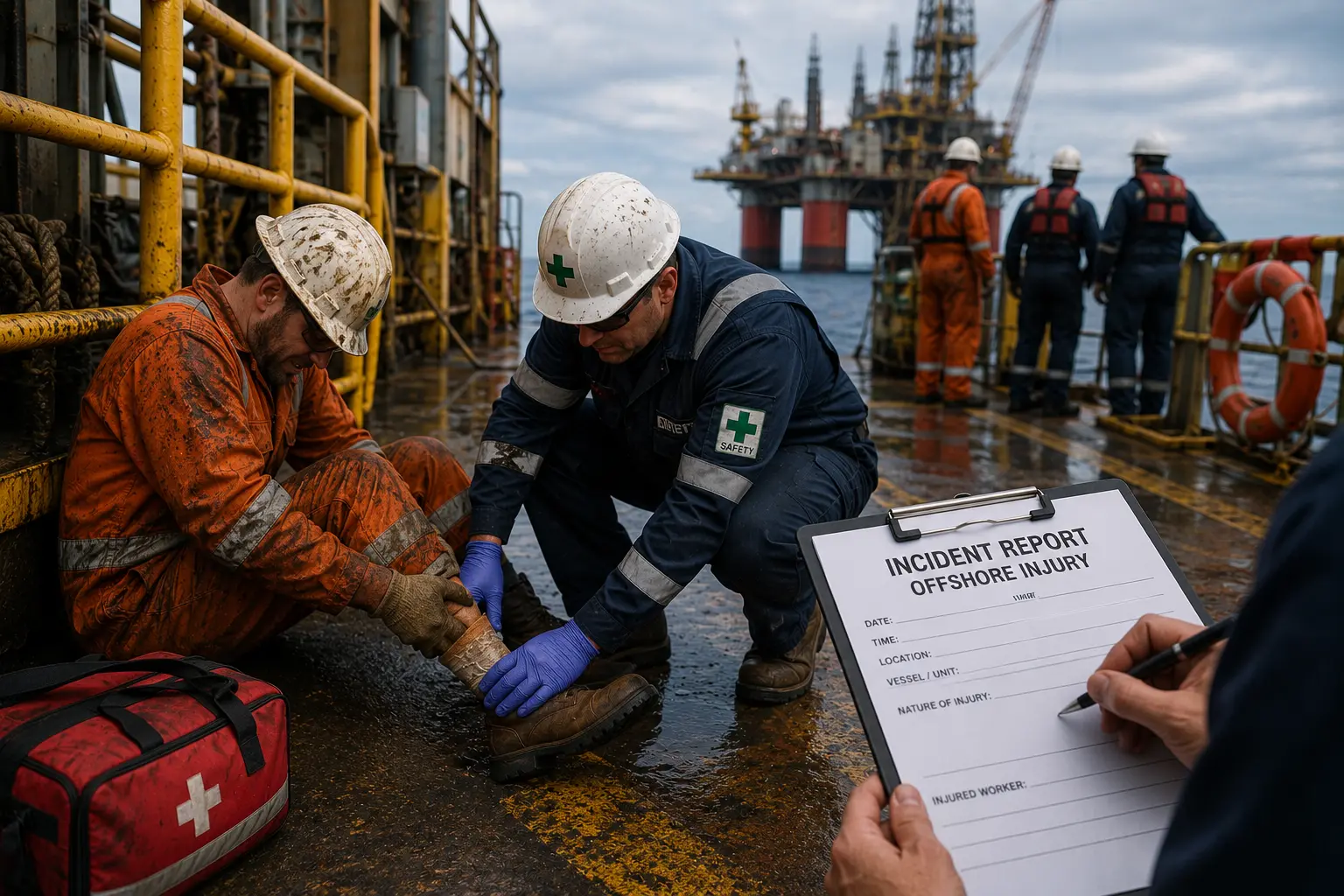
Navigating Jones Act Workers Compensation vs. State Compensation
Navigating the legal differences between Jones Act remedies and standard state workers' compensation systems requires understanding maritime status, employer negligence, and the geographical limits of navigable waters. While state work...
Navigating the legal differences between Jones Act remedies and standard state workers' compensation systems requires understanding maritime status, employer negligence, and the geographical limits of navigable waters. While state workers' compensation operates as a no-fault system for land-based employees, the Jones Act functions as a fault-based personal injury tort system tailored specifically for qualifying maritime workers, offering potentially higher financial recoveries but carrying stricter evidentiary burdens.
Contents
Understanding the Foundations of Maritime vs. Land-Based Injury Law
To grasp the distinction between Jones Act remedies and state compensation frameworks, one must first understand the historical and jurisdictional division of labor law in the United States. Land-based employment relationships are governed by state-level statutes that balance the needs of workers and employers through administrative agencies. Conversely, maritime commerce and admiralty law fall under federal jurisdiction, shaped by constitutional provisions and federal statutes designed to protect seamen facing the unique perils of the sea.
State compensation programs are built on a social compact. Injured workers receive medical care and partial wage replacement regardless of who caused the accident, while employers are shielded from unpredictable tort lawsuits and jury verdicts. This system operates administratively through state boards, avoiding the courtroom process entirely for the vast majority of routine claims.
Maritime law rejects this uniform land-based approach for qualifying crew members. Because maritime work involves unpredictable conditions, isolation, and high risks of catastrophic injury or death, federal lawmakers created distinct statutory protections. Rather than a no-fault administrative grant, the Jones Act (46 U.S.C. § 30104) preserves a seaman's right to sue their employer directly in court for negligence, introducing concepts of fault, comparative negligence, and jury trials that have no direct equivalent in standard state workers' compensation frameworks.
Key Differences Between Jones Act and State Workers' Compensation
Comparing Jones Act claims to state compensation models reveals fundamental contrasts in eligibility, fault requirements, available damages, and procedural pathways. These differences dictate how injured employees pursue financial recovery and how employers manage workplace safety risks.
Fault and Liability Standards
The most critical divergence between the two systems lies in the burden of proof regarding fault:
- State Workers' Compensation: Operates strictly on a no-fault basis. An employee only needs to prove that the injury arose out of and in the course of employment. Contributory negligence by the worker generally does not bar recovery.
- The Jones Act: Requires the injured seaman to prove that the employer, shipowner, or fellow crew members were negligent. However, the legal standard of causation in Jones Act cases is feather-light (often referred to as the "featherweight" or "Sermons" standard); the employer's negligence only needs to have played any part, even the slightest, in producing the injury.
Scope of Available Damages
Financial recovery limits vary drastically between the two administrative and judicial models:
- State Workers' Compensation: Typically covers reasonable and necessary medical treatments, a percentage of lost wages (subject to statutory caps), and permanent disability benefits. It explicitly excludes non-economic damages such as pain and suffering, loss of consortium, or punitive damages.
- The Jones Act: Permits recovery for past and future lost wages, medical expenses, and crucially, non-economic damages including physical pain, mental anguish, and disfigurement. Seamen may also seek damages under the doctrine of unseaworthiness if the vessel, its equipment, or its crew was not reasonably fit for its intended use.
Administrative vs. Judicial Resolution
- State Compensation: Resolved through administrative law judges, state boards, or insurance adjusters without a jury.
- Jones Act: Litigated in federal or state court, with either party maintaining the right to a trial by jury, allowing for full presentation of evidence before a panel of peers.
| Feature | State Workers' Compensation | The Jones Act |
|---|---|---|
| Governing Authority | State administrative agencies and statutes | Federal admiralty law (46 U.S.C. § 30104) |
| Target Beneficiaries | Land-based and traditional shore-side employees | Qualifying "seamen" spending substantial time on vessels |
| Fault Requirement | No-fault (negligence is irrelevant) | Fault-based (requires proof of employer negligence) |
| Causation Standard | Direct proximate cause of employment duties | Featherweight causation (any contributing fault) |
| Available Damages | Medical bills, capped wage replacement, vocational rehabilitation | Medical care, uncapped lost wages, pain and suffering, unseaworthiness claims |
| Dispute Resolution | Administrative hearings and board reviews | Jury trials in federal or state court |
Eligibility and Defining the "Seaman" Status Under the Jones Act
Not every person who works on or near the water qualifies for Jones Act protection. Misclassifying an employee can lead to jurisdictional challenges where a worker files under the Jones Act only to find they belong under state workers' compensation or the federal Longshore and Harbor Workers' Compensation Act (LHWCA).
The United States Supreme Court established a definitive test for seaman status in Chandris, Inc. vs. Latsis and In RE Endeavor. To qualify as a Jones Act seaman, an employee must satisfy a two-pronged threshold:
- Contribution to Vessel Mission: The worker's duties must contribute to the function of a vessel or to the accomplishment of its mission. This includes deckhands, engineers, captains, mates, and even service personnel like cooks or cruise staff assigned to a vessel in navigation.
- Connection to a Vessel in Navigation: The worker must have a connection to a vessel in navigation (or an identifiable fleet of vessels) that is substantial in terms of both duration and nature. Courts generally apply the "30-percent rule" as a guideline: a worker must spend approximately 30 percent or more of their working time in the service of a vessel to meet the substantial connection requirement.
Workers who do not meet this definition—such as longshoremen, shipbuilders, harbor construction workers, and repair personnel who work on ships while they are docked—are typically excluded from the Jones Act. Instead, they fall under state workers' compensation or the LHWCA, which provides specialized federal no-fault coverage for maritime workers who are not seamen.
Maintenance and Cure: A Unique Maritime Right
In addition to negligence lawsuits under the Jones Act, injured seamen possess an ancient maritime right known as maintenance and cure. This protection has no direct counterpart in standard state workers' compensation systems and applies automatically regardless of who was at fault for the injury or illness.
- Maintenance: A daily allowance provided to the injured seaman to cover basic living expenses, such as food and lodging, while they are recuperating ashore and unable to work. Maintenance is owed until the worker reaches "maximum medical improvement" (MMI).
- Cure: The shipowner's obligation to pay for all necessary medical, surgical, and hospital expenses arising from the injury or illness until the seaman reaches MMI. This includes doctor visits, physical therapy, diagnostic testing, and prescription medications.
Employers who arbitrarily, callously, or unreasonably deny or delay maintenance and cure payments can be held liable for punitive damages and the seaman’s attorney fees under maritime bad faith principles. This distinct layer of protection provides an immediate financial safety net that differentiates maritime law from land-based workers' compensation schemes.
Choosing the Right Path and Avoiding Misclassification
Determining whether an injury falls under state compensation or the Jones Act requires immediate legal analysis after an accident. Because maritime employers and insurance carriers often attempt to classify injured workers as land-based employees to limit financial exposure, workers must document their daily routines, vessel assignments, and employment duties meticulously.
Filing a claim under the wrong statutory framework can result in severe delays, dismissed lawsuits, or missed statutes of limitations. For instance, the Jones Act carries a three-year statute of limitations from the date of injury, whereas state workers' compensation claims often require formal notice to the employer within days and formal filings within one to two years.
Maritime workers should report injuries in writing immediately, request copies of all accident reports, seek independent medical evaluation when necessary, and avoid signing premature liability releases or accepting light-duty assignments without understanding their legal rights. Because maritime injury law involves complex jurisdictional hurdles, consulting an experienced maritime attorney is essential for securing appropriate compensation.
Disclaimer: This article provides general educational information regarding maritime law and workers' compensation frameworks. It does not constitute formal legal advice. Injured workers should consult a qualified maritime attorney to discuss the specific facts of their case.
Image Gallery