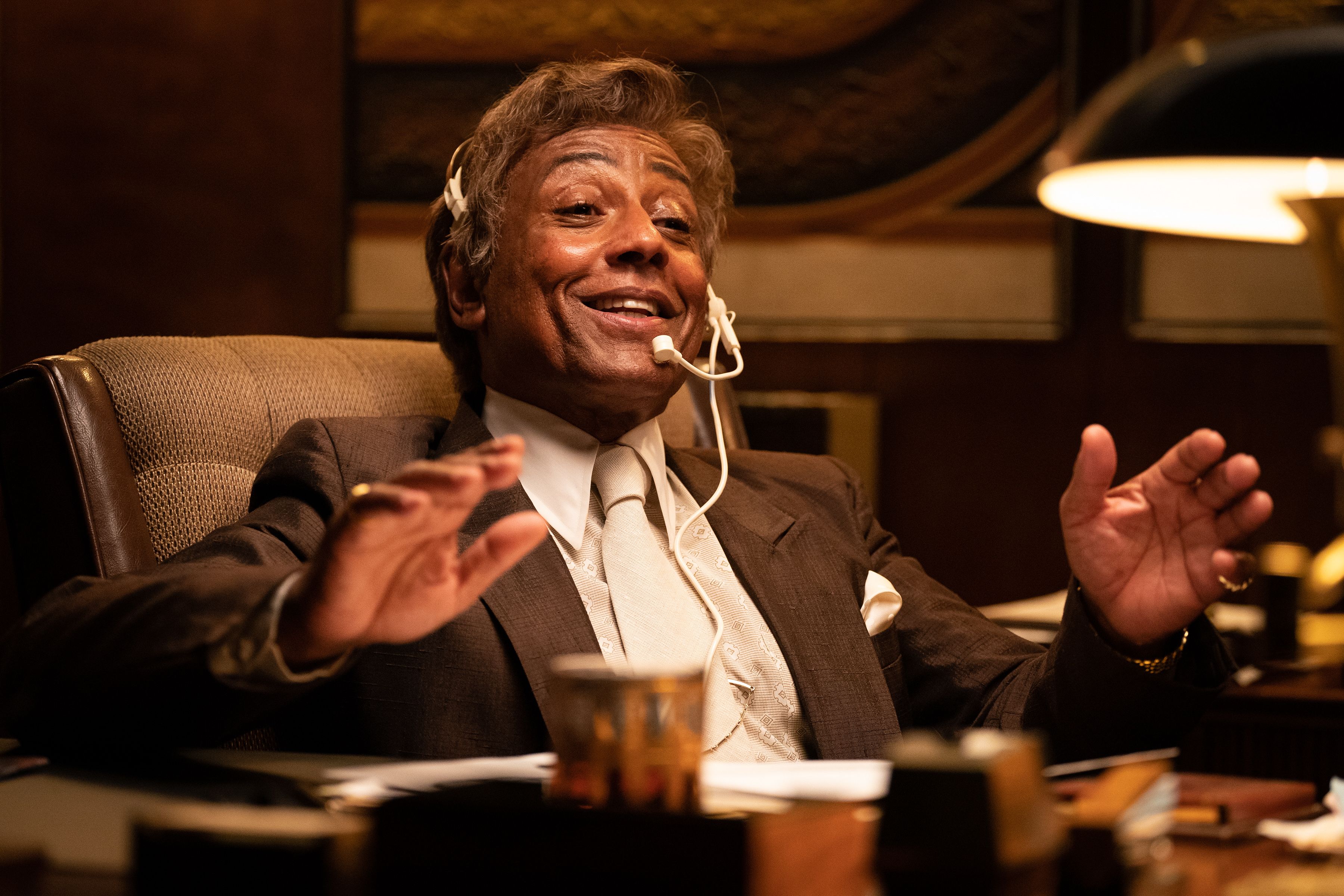
Giancarlo Esposito in Film and Television: A Definitive Career Overview
Giancarlo Esposito is a legendary American actor and director whose career in film and television spans over five decades. Best known for his iconic portrayal of Gustavo Fring in Breaking Bad, he has specialized in complex, high-stakes...
Giancarlo Esposito is a legendary American actor and director whose career in film and television spans over five decades. Best known for his iconic portrayal of Gustavo Fring in Breaking Bad, he has specialized in complex, high-stakes antagonists across major franchises like The Mandalorian, The Boys, and the Marvel Cinematic Universe.
Contents
From his early days on Broadway to becoming the preeminent face of modern cinematic villainy, Esposito’s trajectory is a masterclass in longevity and character depth. As of 2026, his influence extends beyond acting into producing and directing, maintaining a prolific output that bridges the gap between prestige television and blockbuster cinema.
The Foundations of a Prolific Career
Giancarlo Esposito’s journey did not begin with the calculating villains he is known for today. Born in Copenhagen to an Italian stage technician father and an African-American opera singer mother, Esposito was raised in a household where the arts were a primary language. He made his Broadway debut at the age of eight in the musical Maggie Flynn (1968), a start that instilled in him a rigorous discipline and a deep understanding of performance mechanics.
Throughout the 1970s and early 1980s, Esposito honed his craft in various guest spots and minor film roles. One of his first significant cinematic appearances was in the 1981 film Taps, where he appeared alongside then-up-and-comers Sean Penn and Tom Cruise. During this period, he was often cast in energetic, high-octane roles that showcased a kinetic energy far removed from the "chilling stillness" that would later define his most famous characters. This foundational period was essential for developing his versatility, allowing him to navigate the complexities of identity and race in an industry that was only beginning to expand its casting horizons.
The Spike Lee Collaborations and the 1990s
The 1980s and 1990s marked a pivotal era for Esposito, largely defined by his collaboration with filmmaker Spike Lee. These roles established him as a formidable presence in independent cinema and provided him with a platform to explore social and political themes.
In Do the Right Thing (1989), Esposito played Buggin' Out, a character who serves as the film's emotional catalyst. His performance was marked by a frantic, righteous indignation that stands as a stark contrast to his later stoic roles. This partnership continued through several landmark films:
- School Daze (1988): Where he played Julian "Big Brother Almighty" Eaves, exploring the internal hierarchies of HBCU life.
- Mo' Better Blues (1990): Showcasing his ability to fit into stylized, musical narratives.
- Malcolm X (1992): Where he portrayed Thomas Hayer, one of the men involved in the assassination of Malcolm X.
Beyond his work with Lee, the 1990s saw Esposito appearing in seminal films like The Usual Suspects (1995) as Jack Baer and Ali (2001) as Cassius Marcellus Clay Sr. These roles demonstrated his "chameleon" quality—the ability to blend into an ensemble while providing the necessary narrative weight to every scene.
The Gustavo Fring Phenomenon
While Esposito was a respected character actor for decades, his career reached a new stratosphere in 2009 with the introduction of Gustavo Fring in AMC’s Breaking Bad. This role didn't just provide him with a popular character; it redefined the archetype of the television antagonist.
Fring, the proprietor of Los Pollos Hermanos and a meth kingpin, was written with a level of meticulousness that Esposito amplified through his performance. He famously utilized "the stillness"—a technique where he would limit unnecessary movement and use his gaze to convey a sense of absolute control and hidden menace. This "hidden in plain sight" philosophy became the hallmark of the show’s high-stakes tension.
His return to the character in the prequel series Better Call Saul allowed Esposito to deconstruct Fring further, showing the character’s evolution from a vengeance-driven operative to the clinical mastermind seen in Breaking Bad. This decade-long commitment to a single character cemented his status as a titan of the "Golden Age of Television."
Dominating the Modern Franchise Landscape
Following the success of Breaking Bad, Esposito became the industry’s first choice for characters who represent systemic or corporate power. His ability to project authority and intellectual superiority made him a natural fit for the "franchise era" of the 2010s and 2020s.
Moff Gideon in The Mandalorian
In the Disney+ series The Mandalorian, Esposito portrayed Moff Gideon, a remnant leader of the Galactic Empire. Gideon was more than a mere placeholder villain; he represented the ideological ghost of the Empire, obsessed with "order" and scientific advancement at any cost. Esposito famously insisted on doing his own stunts and wielding the Darksaber, bringing a physical gravitas to the Star Wars universe.
Stan Edgar in The Boys
In Amazon Prime’s The Boys, Esposito took on the role of Stan Edgar, the CEO of Vought International. Unlike the flamboyant supes of the show, Edgar's power was purely administrative and psychological. Esposito’s performance allowed a mortal man to stand toe-to-toe with the god-like Homelander, proving that true power in the modern world is often found in the boardroom rather than on the battlefield.
Entering the Marvel Cinematic Universe
By 2025 and 2026, Esposito finally made his long-awaited entry into the Marvel Cinematic Universe (MCU) as Seth Voelker, also known as Sidewinder, the leader of the Serpent Society in Captain America: Brave New World. This role allowed him to blend his penchant for leadership with a more grounded, mercenary edge, further diversifying his portfolio of antagonists.
Analysis of the Esposito Acting Methodology
Giancarlo Esposito’s success is often attributed to his specific technical approach to acting. He frequently speaks about the "space between the words," emphasizing that what a character does not say is often more important than the dialogue itself.
- Vocal Control: Esposito uses a distinct, measured cadence. He often lowers his pitch and slows his tempo to force the audience (and other characters) to lean in, creating a natural sense of dominance.
- Economic Movement: He avoids "fidgeting." In high-pressure scenes, he maintains a rigid posture that suggests a character who has calculated every possible outcome.
- The "Mask" Technique: Many of his characters wear a professional mask (a restaurateur, a CEO, a military officer). The drama in an Esposito performance often comes from the subtle cracks in that mask, where the underlying ruthlessness or trauma briefly surfaces.
Key Career Milestones: A Comparative View
The following table highlights the diversity of Esposito's most impactful roles across different eras and mediums.
| Project Title | Character Name | Medium | Defining Characteristic |
|---|---|---|---|
| Do the Right Thing | Buggin' Out | Film | High-energy, vocal social advocate. |
| The Usual Suspects | Jack Baer | Film | Professional, no-nonsense FBI agent. |
| Breaking Bad | Gustavo Fring | Television | Calculated, polite, and lethally efficient. |
| The Mandalorian | Moff Gideon | Television | Authoritarian, obsessed with legacy and power. |
| The Boys | Stan Edgar | Television | Corporate coldness; unimpressed by power. |
| Far Cry 6 | Anton Castillo | Video Game | Dictatorial, charismatic, and paternalistic. |
| Parish | Gracian "Gray" Parish | Television | Vulnerable, driven by family and survival. |
Current Projects and 2026 Outlook
As of 2026, Giancarlo Esposito remains one of the busiest actors in Hollywood. His transition into leading man territory with the AMC series Parish showed a different side of his range—a man driven by desperation rather than a desire for power. Furthermore, his involvement in Francis Ford Coppola's Megalopolis (released in late 2024 with continued cultural impact through 2026) reaffirmed his commitment to "art-house" cinema even while maintaining a presence in mainstream blockbusters.
He is also increasingly active behind the camera. Having directed films like Gospel Hill (2008) and The Show (2017), Esposito has expressed a continued interest in producing projects that highlight diverse voices and complex moral dilemmas. His production company, Birdcatcher Films, is currently developing several limited series aimed at exploring historical African-American figures, leveraging his industry clout to bring overlooked narratives to the screen.
FAQ
What is Giancarlo Esposito’s ethnic background?
Giancarlo Esposito is of biracial heritage. His father, Giovanni Esposito, was an Italian stagehand and carpenter from Naples, and his mother, Elizabeth Foster, was an African-American opera singer from Alabama. This unique upbringing has allowed him to portray a wide array of ethnicities and cultural backgrounds throughout his career.
Did Giancarlo Esposito voice a character in a video game?
Yes, he famously provided the voice and motion-capture performance for the primary antagonist, Anton Castillo, in the 2021 video game Far Cry 6. His performance as the dictator of the fictional nation of Yara was praised for bringing cinematic-level acting to the gaming medium.
Has Giancarlo Esposito won an Emmy for his role as Gus Fring?
Despite being nominated multiple times for Outstanding Supporting Actor in a Drama Series for both Breaking Bad and Better Call Saul, Esposito did not win an Emmy for the role. However, he did win a Critics' Choice Television Award for the role in 2012, and his performance is widely considered one of the greatest in television history.
What is the "Esposito Stare"?
The "Esposito Stare" refers to the actor's ability to remain completely motionless while maintaining intense, unwavering eye contact. He used this effectively in Breaking Bad to intimidate other characters without raising his voice, creating a sense of psychological dread.
What are some of his recent roles in 2025-2026?
His most notable recent roles include his appearance in the Marvel Cinematic Universe film Captain America: Brave New World and his ongoing work in television series like The Gentlemen (on Netflix) and the second season of Parish.
Final Recommendation for Fans and Students
For those looking to truly understand the depth of Giancarlo Esposito’s work, it is recommended to watch his early collaborations with Spike Lee (specifically Do the Right Thing) alongside his mid-career peak in Breaking Bad. Observing the transition from the high-energy volatility of his youth to the disciplined, surgical precision of his later years provides a complete picture of an actor who has mastered the evolution of his own instrument. For aspiring actors, his interviews regarding "the stillness" and his preparation for Gus Fring serve as essential technical resources for character development.
Image Gallery