The Evolution and Impact of Jim Carrey’s Donald Trump Cartoons
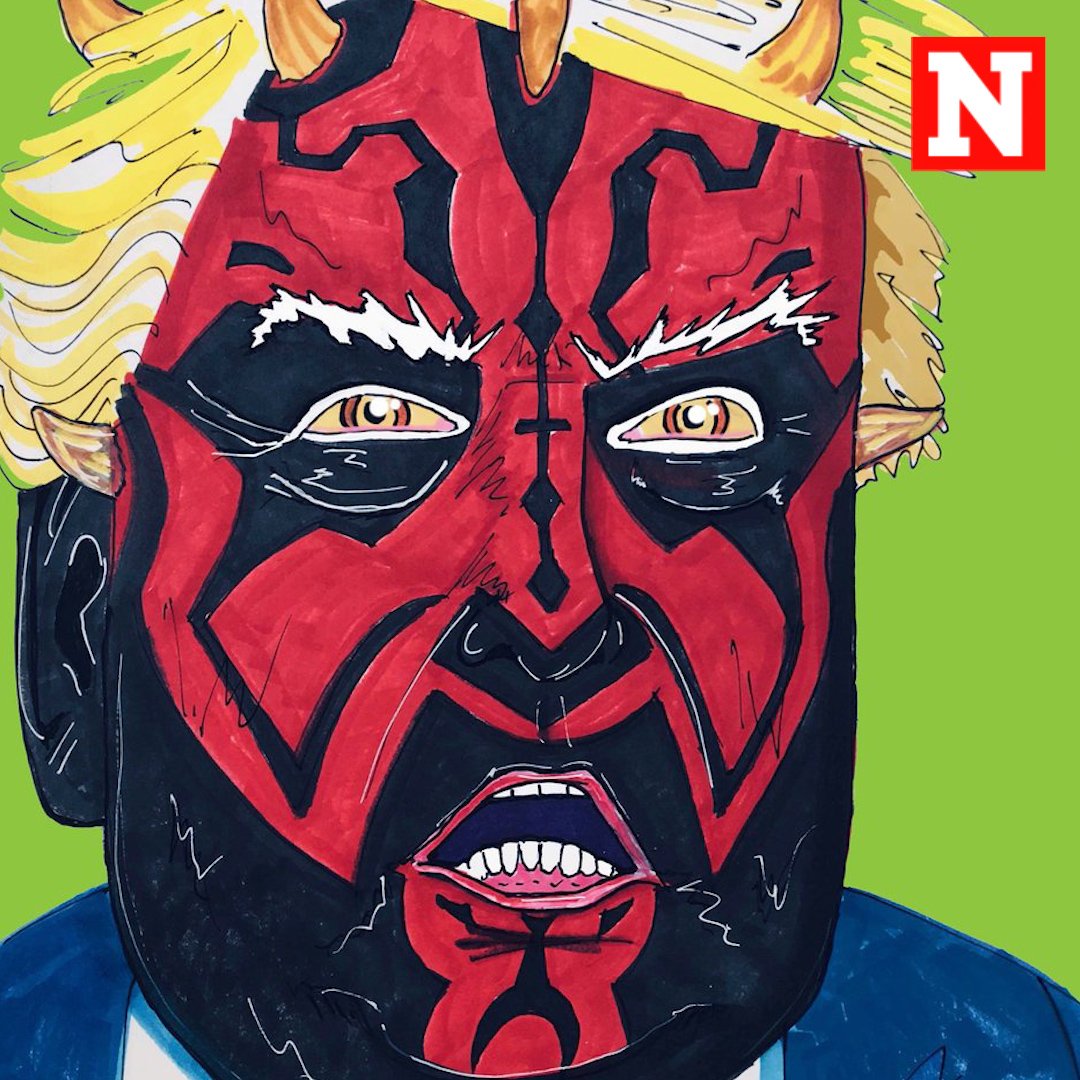
Jim Carrey’s Trump cartoons are a series of visceral, politically charged digital paintings created primarily between 2017 and 2020. Using social media as his primary gallery, Carrey utilized these caricatures to critique the Trump adm...
Jim Carrey’s Trump cartoons are a series of visceral, politically charged digital paintings created primarily between 2017 and 2020. Using social media as his primary gallery, Carrey utilized these caricatures to critique the Trump administration, culminating in a physical exhibition titled "Indignations." Today, they serve as a significant historical archive of celebrity-led digital activism.
Contents
The Creative Genesis: From Screen to Canvas
While the world knows Jim Carrey as a legendary comedic actor and Golden Globe winner, his roots in visual art precede his fame in Hollywood. Carrey has practiced sketching and painting since childhood, often using it as a private outlet for emotional processing. However, the political climate following the 2016 U.S. Presidential Election transformed his private hobby into a public-facing weapon of satire.
Starting in late 2017, Carrey began posting daily or weekly paintings on his Twitter account. These were not traditional editorial cartoons found in the pages of the New York Times or The New Yorker. Instead, they were raw, impressionistic, and often grotesque depictions of political figures. Carrey’s transition from "America’s Funnyman" to a biting political satirist was a shock to some, but for the artist, it was a necessary psychological response. He frequently described the process as a way to "stay sane" amid a news cycle he found distressing. By 2026, these works are viewed through the lens of a specific era in American history where the lines between entertainment, art, and politics became permanently blurred.
Analyzing the Aesthetic: The "Indignations" Style
Carrey’s style in this series is characterized by high-contrast colors, distorted anatomical features, and a sense of urgent, almost frantic energy. Most of the works were created digitally, reportedly using an iPad and an Apple Pencil. This medium allowed Carrey to respond to breaking news stories in near real-time, often posting a completed cartoon within hours of a major political event.
Technical Elements of the Cartoons
- Expressionistic Distortion: Unlike traditional caricaturists who exaggerate one or two features, Carrey often distorted the entire facial structure to convey an emotional truth rather than a physical likeness.
- Vibrant, Aggressive Palettes: He frequently used neon yellows, bruised purples, and deep reds to create a sense of discomfort or alarm.
- Symbolic Layering: Many cartoons featured secondary symbols, such as Russian flags, MAGA hats depicted as symbols of decay, or references to classic cinema (like The Wizard of Oz or The Shining).
The technical depth of Carrey’s art lies in its ability to balance crude simplicity with sophisticated social commentary. While some critics dismissed the work as "celebrity venting," others noted his effective use of composition to draw the viewer’s eye toward specific hypocrisies or scandals.
Major Themes and Controversial Figures
While Donald Trump was the central protagonist (or antagonist) of Carrey’s work, the actor’s pen spared few members of the administration or the broader political ecosystem. His work formed a "rogue’s gallery" of the late 2010s.
The Portrayal of Donald Trump
In Carrey’s eyes, Trump was rarely depicted as a leader, but rather as an all-consuming force of nature or a disintegrating figure. He often painted the former President with an over-exaggerated pout, messy orange skin tones, and eyes that reflected a lack of empathy. Some of the most famous pieces depicted Trump as a "Wicked Witch" or a gluttonous figure consuming the pillars of democracy.
Cabinet Members and Legislative Allies
Carrey expanded his scope to include figures like Mitch McConnell, whom he often depicted with reptilian or aquatic features, and Sarah Huckabee Sanders. One of his most controversial pieces involved a portrait of Sanders that many critics on the right deemed "sexist" or "cruel." Carrey defended the piece as a reflection of the subject's "internal character" rather than a commentary on her physical appearance, sparking a nationwide debate on the limits of political satire.
International Relations
A recurring theme in the collection was the influence of foreign powers on American policy. Carrey frequently included Vladimir Putin in his sketches, often showing him in positions of dominance over American officials. These pieces highlighted the artist’s concerns regarding the 2016 election interference and the subsequent investigations.
The "Indignations" Gallery Exhibition
By 2018, the volume and cultural impact of Carrey's social media posts caught the attention of the traditional art world. In October of that year, the Maccarone Gallery in Los Angeles hosted an exhibition titled "Indignations." This was a pivotal moment for Carrey, as it validated his work as fine art rather than mere "Twitter rants."
The exhibition featured dozens of original pieces, allowing the public to see the digital works printed on a large scale. The physical presentation added a layer of permanence to the fleeting nature of social media art. Critics noted that seeing the images together created a dizzying, claustrophobic timeline of the Trump presidency. For Carrey, the gallery show was a way to "put a period on the end of a sentence" for that specific chapter of his artistic life. It also allowed him to engage with the art community in person, explaining that his goal was not to spread hate, but to provide a "cathartic scream" for those who felt unrepresented by the government.
Historical Comparison of Key Carrey Cartoons
The following table highlights some of the most impactful pieces from Carrey's political collection, many of which were showcased at the Maccarone Gallery.
| Title / Subject | Primary Entity | Original Date (Approx) | Political Context / Theme |
|---|---|---|---|
| "The Wicked Witch of the West Wing" | Donald Trump | March 2018 | Reference to The Wizard of Oz, highlighting the administration's internal chaos. |
| "The Un-Christian" | Sarah Huckabee Sanders | March 2018 | A critique of the White House Press Secretary's defense of administration policies. |
| "The Great Dictator" | Donald Trump / Kim Jong-un | June 2018 | Commentary on the Singapore Summit and nuclear negotiations. |
| "Putin’s Puppet" | Trump & Putin | July 2018 | Response to the Helsinki Summit and allegations of Russian influence. |
| "The Grim Reaper" | Mitch McConnell | 2019-2020 | Criticism of the Senate's refusal to bring certain bills to a vote. |
| "The Final Departure" | Donald Trump | January 2021 | A minimalist piece showing a character leaving the stage, marking the end of the series. |
The Role of Social Media as a Political Tool
One of the most significant aspects of Jim Carrey’s Trump cartoons was his choice of distribution. By using Twitter (now X), Carrey bypassed the traditional gatekeepers of political media. He did not need an editor’s approval or a publisher’s contract. This direct-to-consumer model allowed him to maintain total creative control and respond to events with a speed that traditional media could not match.
This approach, however, came with its own set of challenges. The comment sections of his posts became digital battlegrounds. Supporters praised him for using his platform to speak truth to power, while detractors accused him of suffering from "Trump Derangement Syndrome" or alienating half of his fan base. Carrey remained largely indifferent to the backlash, often stating that he was not looking for fans, but rather looking to express an "honest reaction" to what he perceived as a crisis in leadership.
Why the Series Ended: The 2021 Pivot
As the 2020 election concluded and the transition of power occurred in early 2021, Carrey announced a "cleaning of the slate." In February 2021, he posted a final cartoon and a message to his followers explaining that he was stepping away from political caricature.
Carrey explained that for four years, he had been "holding a heavy weight" and that the political climate had become too "vitriolic" even for his satire. He expressed a desire to return to more spiritual, abstract, and light-hearted subject matter. This pivot was essential for his mental well-being and allowed him to transition back into other creative endeavors, including his 2020 semi-autobiographical novel, Memoirs and Misinformation. In 2026, we see that this retirement from political cartooning was largely permanent, though he occasionally returns to social commentary when he feels a particular moral imperative.
FAQs about Jim Carrey's Trump Cartoons
Are Jim Carrey's cartoons available for purchase?
While the original digital files were primarily shared for free on social media, some physical prints and original works were sold through the Maccarone Gallery during the "Indignations" exhibition. Currently, most of these works exist in private collections or are viewable via online archives. Carrey has not typically marketed these as a primary source of income, viewing them more as a public service or personal expression.
What tools did Jim Carrey use to draw his cartoons?
Carrey primarily used an iPad Pro equipped with an Apple Pencil. He favored apps like Procreate or Adobe Fresco, which allowed him to simulate different brush textures, such as oils and charcoals, digitally. This setup enabled his "guerrilla" style of art, as he could draw from film sets, hotel rooms, or his home studio.
Did any of the politicians respond to his cartoons?
While Donald Trump himself rarely addressed the cartoons directly by name (favoring broader critiques of "Hollywood elites"), several administration officials and media personalities on the right frequently criticized Carrey’s work. Figures like Sean Hannity and members of the Sanders family publicly condemned specific pieces, which often only served to increase the viral reach of the artwork.
Where can I see a full archive of these cartoons?
There is no single official website that hosts every single cartoon, but many are still accessible via Jim Carrey’s official X (formerly Twitter) history. Additionally, several art news outlets and digital archives have curated "best of" galleries that document the progression of the series from 2017 to 2021.
Did Jim Carrey attend art school?
Carrey is largely self-taught. While he did not attend a formal fine arts academy, he has spent decades studying art history and practicing various techniques. His work is often categorized as Outsider Art or Social Realism, characterized by its lack of formal restraint and its focus on raw human emotion.
Final Recommendation for Art and Politics Enthusiasts
For those interested in the intersection of celebrity and political protest, Jim Carrey’s Trump cartoons remain an essential case study. If you are looking to explore this further, it is recommended to view the works in chronological order alongside a timeline of 2017–2021 news events. This context provides a deeper understanding of the specific "indignations" Carrey was responding to. For artists, Carrey’s work serves as a reminder that the most important tool is not the brush or the tablet, but the willingness to express a definitive—and sometimes uncomfortable—perspective.
Image Gallery