What Changed in the Case of Lesandro Feliz: Appeals, Resentencing, and Policy Impact
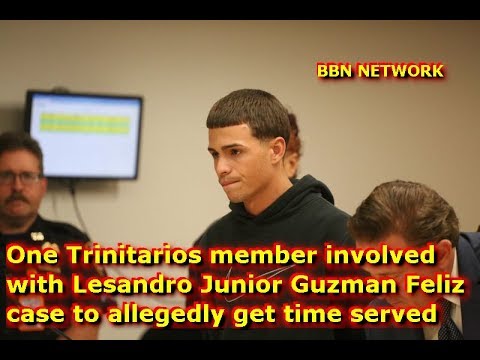
Following the June 2018 murder of 15-year-old Lesandro "Junior" Guzman-Feliz in the Bronx, public outrage sparked extensive criminal prosecutions, state appellate rulings, and legislative initiatives. Major post-trial changes include t...
Following the June 2018 murder of 15-year-old Lesandro "Junior" Guzman-Feliz in the Bronx, public outrage sparked extensive criminal prosecutions, state appellate rulings, and legislative initiatives. Major post-trial changes include the late-2022 appellate vacatur of first-degree murder convictions for four primary defendants, subsequent 2023 resentencing proceedings, and lasting reforms to New York bodega safety protocols and community programs.
Contents
The 2018 Incident and Initial Legal Prosecutions
On June 20, 2018, 15-year-old Lesandro "Junior" Guzman-Feliz was dragged out of a bodega in the Belmont neighborhood of the Bronx and killed by members of the Los Trinitarios gang. The attack was a case of mistaken identity; gang members mistakenly targeted Guzman-Feliz believing he belonged to a rival faction ("Sunset") responsible for a prior assault. Video surveillance capturing the assault outside the Cruz and Chiky Grocery went viral under the social media movement #JusticeForJunior, intensifying national scrutiny on gang violence and emergency response protocols in local businesses.
Law enforcement ultimately arrested 14 individuals affiliated with the Los Sures set of the Trinitarios gang. The Bronx District Attorney’s Office divided the prosecution into distinct trials based on culpability, leadership roles, and direct physical involvement.
In June 2019, the first trial concluded for five primary defendants accused of directly assaulting Guzman-Feliz with machetes and knives:
- Jonaiki Martinez Estrella
- Antonio Rodriguez Hernandez Santiago
- Manuel Rivera
- Elvin Garcia
- Jose Muniz
All five were initially convicted in Bronx Supreme Court of First-Degree Murder, Second-Degree Murder, Gang Assault, and Conspiracy. In October 2019, trial judges handed down severe sentences. Estrella, identified as the individual who inflicted the fatal neck wound, received life imprisonment without the possibility of parole. Santiago, Garcia, and Muniz received sentences of 25 years to life, while Rivera—who was 16 years old at the time of the crime—was sentenced to 23 years to life.
A secondary group of defendants, including gang leaders Diego Suero and Frederick Then, faced separate trial proceedings and plea agreements throughout 2022 for ordering and coordinating the attack.
The 2022 Appellate Court Rulings: Modifying Murder Charges
The most significant legal shift in the case occurred in November 2022, when the New York Supreme Court, Appellate Division, First Department, issued a major ruling on the appeals filed by the original five convicted defendants (People v. Estrella et al.).
The appellate court examined whether the evidence presented at trial met the strict statutory requirements for Murder in the First Degree under New York State law. Under New York Penal Law § 125.27(1)(a)(x), a conviction for first-degree murder based on torture requires proof beyond a reasonable doubt that the defendant intended to inflict severe physical pain or torture upon the victim prior to death, separate from the intent to cause death itself.
| Category | Statutory Requirement |
|---|---|
| First-Degree Murder (Penal Law § 125.27) | Requires proof of specific intent to inflict torture or prolonged pain before causing death. |
| Second-Degree Murder (Penal Law § 125.25) | Requires proof of intent to cause death, without the statutory requirement of deliberate, prolonged torture. |
The appellate court determined the following:
- Vacatur of First-Degree Convictions for Four Defendants: The panel ruled that while the attack was horrific, the state failed to prove that Antonio Rodriguez Hernandez Santiago, Elvin Garcia, Manuel Rivera, and Jose Muniz acted with a distinct, premeditated intent to inflict torture as defined by statute. Consequently, their First-Degree Murder convictions were vacated.
- Upheld Second-Degree Murder Charges: The court affirmed all Second-Degree Murder, Gang Assault, and Conspiracy convictions for Santiago, Garcia, Rivera, and Muniz, recognizing that the evidence overwhelmingly established their intent to cause Guzman-Feliz's death.
- Estrella's First-Degree Conviction Upheld: The appellate court maintained Jonaiki Martinez Estrella’s First-Degree Murder conviction, citing his specific actions in inflicting the fatal blow and the nature of his direct assault.
Resentencing Proceedings and Sentence Adjustments
Following the 2022 appellate decision, the case returned to the Bronx Supreme Court in 2023 for formal resentencing of the four affected defendants. Because their most severe charge (First-Degree Murder) had been dismissed, judges re-evaluated their prison terms based on their remaining Second-Degree Murder convictions.
- Manuel Rivera: Because Rivera was a juvenile (16 years old) at the time of the offense in June 2018, his sentence saw the most substantial adjustment. In January 2023, his sentence was modified from 23 years to life down to 15 years to life. Under New York juvenile sentencing guidelines, the minimum legal term for second-degree murder committed by an juvenile offender is 15 years.
- Jose Muniz, Elvin Garcia, and Antonio Rodriguez Hernandez Santiago: These defendants were resentenced in early 2023 to terms ranging from 20 years to life to 25 years to life for their Second-Degree Murder convictions, adjusting the formal statutory framework while keeping substantial prison terms intact.
Meanwhile, leadership figures tried separately retained their sentences. Diego Suero and Frederick Then were sentenced in late 2022 to 25 years to life and 20 years to life, respectively, for their roles in directing the mob from a nearby location.
Summary of Main Defendants: Original vs. Post-Appeal Status
The table below outlines the judicial progression for key defendants in the Lesandro Guzman-Feliz case, reflecting changes resulting from the 2022 appellate decisions and 2023 resentencing hearings.
| Defendant | Original 2019 Verdict | 2022 Appellate Action | Final Post-Resentencing Status |
|---|---|---|---|
| Jonaiki Martinez Estrella | 1st-Degree Murder, 2nd-Degree Murder | Conviction Upheld | Life Without Parole |
| Jose Muniz | 1st-Degree Murder, 2nd-Degree Murder | 1st-Degree Vacated; 2nd-Degree Affirmed | 25 Years to Life |
| Elvin Garcia | 1st-Degree Murder, 2nd-Degree Murder | 1st-Degree Vacated; 2nd-Degree Affirmed | 25 Years to Life |
| Antonio Rodriguez Hernandez Santiago | 1st-Degree Murder, 2nd-Degree Murder | 1st-Degree Vacated; 2nd-Degree Affirmed | 25 Years to Life |
| Manuel Rivera | 1st-Degree Murder, 2nd-Degree Murder | 1st-Degree Vacated; 2nd-Degree Affirmed | 15 Years to Life (Juvenile status applied) |
| Diego Suero (Gang Leader) | Tried separately (2nd-Degree Murder) | Appeal process separate | 25 Years to Life |
| Frederick Then (Gang Leader) | Tried separately (2nd-Degree Murder) | Appeal process separate | 20 Years to Life |
Legislative and Bodega Security Initiatives
Beyond courtroom decisions, the case altered municipal and state legislative discussions regarding small business security and emergency bystander responsibilities in New York.
"Junior's Law" Proposals
Following the tragedy, local lawmakers introduced state legislation collectively referred to as Junior's Law. The proposals focused on three policy shifts:
- Safe Haven Provisions for Small Businesses: Creating legal incentives and guidelines for commercial establishments, such as bodegas and grocery stores, to act as safe havens for minors fleeing violence.
- Panic Button and Communications Infrastructure: Mandating or subsidizing panic buttons connected directly to 911 dispatch centers inside late-night retail establishments.
- First Aid and Duty-to-Assist Mandates: Proposing legal obligations for commercial operators to contact emergency services immediately when a violent crime occurs on or directly adjacent to their premises.
While elements of Junior's Law faced legislative debate over small business liability and enforcement, the advocacy led directly to state-funded security grants.
The New York City Bodega Security Program
In response to community pressure, New York City and small business associations launched enhanced security initiatives:
- Bodega Surveillance Camera Integration: The city established matching grants for small business owners to install high-definition security cameras integrated with local NYPD precinct monitoring options.
- Silent Alarm Grant Systems: Programs were introduced through the New York State Division of Criminal Justice Services to help finance emergency call systems in high-crime commercial corridors.
- Small Business Emergency Training: The United Bodegas of America (UBA) instituted voluntary safety workshops for store clerks, emphasizing active shooter protocols, store lock-down measures, and rapid 911 reporting techniques.
Community Programs and Institutional Legacy
Lesandro Guzman-Feliz had been an active member of the NYPD Law Enforcement Explorers program, a youth initiative organized by the New York City Police Department to mentor teenagers interested in law enforcement careers. His death catalyzed dedicated organizational changes within municipal and non-profit institutions.
| Initiative | Description |
|---|---|
| NYPD Explorers Program Expansion | Increased funding and recruitment for youth mentorship programs throughout New York City. |
| Bathgate Avenue Street Renaming | Intersection of E. 183rd St and Bathgate Ave co-named "Lesandro 'Junior' Guzman-Feliz Way" |
| Scholarship Grants | Establishment of Bronx youth academic funds by the Police Athletic League (PAL). |
- Expansion of the NYPD Explorers Program: The NYPD created the Lesandro Guzman-Feliz Scholarship Fund, providing academic assistance to high school seniors enrolled in the Explorers program who demonstrate commitment to community service.
- Infrastructure and Commemoration: In 2019, the intersection of Bathgate Avenue and East 183rd Street—near the site of the attack—was officially co-named Lesandro "Junior" Guzman-Feliz Way. Additionally, a local Bronx park and community center underwent upgrades funded by municipal allocations dedicated to youth violence prevention.
- Police Athletic League (PAL) Initiatives: The PAL expanded its summer day camp programs and public safety workshops in the South Bronx to provide structured alternatives to gang involvement for at-risk youth.
Legal and Operational Guidance for Business Owners
The legal aftermath of the Guzman-Feliz case highlights key operational considerations for small business owners, property managers, and community operators regarding premises liability and emergency management.
- Establish Emergency Protocols: Business owners should create clear, written instructions for employees on when and how to secure entrance doors during violent disputes occurring outside the store.
- Upgrade Video Surveillance Equipment: High-resolution digital video recorder (DVR) systems with cloud backup are vital not only for crime deterrence but also for providing definitive court evidence. Ensure camera angles cover store entrances, checkout counters, and immediate sidewalk areas.
- Maintain Direct Emergency Call Systems: Install dedicated landlines or silent panic buttons near cash registers. Staff must be trained to dial 911 immediately upon witnessing violent threats, rather than waiting for events to escalate.
- Understand Premises Liability Risks: Under civil law, property owners have a duty to take reasonable security measures to protect patrons from foreseeable third-party criminal acts. Consulting with legal counsel on regional premises liability standards helps mitigate civil exposure while ensuring customer safety.
Disclaimer: Legal standards and statutory rules vary by jurisdiction. Business owners and community members seeking legal advice regarding premises liability, bystander laws, or emergency protocols should consult a qualified legal professional.
Frequently Asked Questions
Why were the first-degree murder convictions overturned for four defendants?
The New York Supreme Court Appellate Division ruled that the prosecution did not prove beyond a reasonable doubt that four of the defendants (Santiago, Garcia, Rivera, and Muniz) specifically intended to inflict deliberate prolonged torture prior to death, which is a required statutory element for First-Degree Murder under New York Penal Law § 125.27. However, the court affirmed their Second-Degree Murder convictions.
Was Jonaiki Martinez Estrella's sentence changed on appeal?
No. Jonaiki Martinez Estrella’s conviction for First-Degree Murder was upheld by the appellate court because evidence demonstrated he delivered the fatal neck blow with a knife. He continues to serve his original sentence of life imprisonment without the possibility of parole.
How did Manuel Rivera’s sentence change in 2023?
Manuel Rivera's sentence was reduced from 23 years to life down to 15 years to life. Because his first-degree murder charge was vacated and he was 16 years old at the time of the crime in 2018, he was resentenced under New York’s juvenile offender guidelines for second-degree murder, which carry a minimum 15-year term before parole eligibility.
What is "Junior's Law" and did it become state law?
"Junior's Law" refers to a series of proposed New York legislative bills named in honor of Lesandro Guzman-Feliz. The proposals aimed to mandate panic buttons, require emergency calls by merchants during violent crimes, and establish safe havens in small businesses. While the omnibus bill faced legislative adjustments, key elements inspired state funding for bodega security camera programs and merchant safety initiatives.
How many people were convicted in connection with the murder?
A total of 14 defendants affiliated with the Los Sures clique of the Trinitarios gang were prosecuted. Five were convicted in the primary 2019 trial, while nine others faced trials or accepted plea deals in 2020 through 2022 for roles ranging from murder and manslaughter to conspiracy and gang assault.
Recommended Next Steps and Resources
For those monitoring criminal justice developments, appellate decisions, or community safety measures in New York State, the following official resources provide ongoing information:
- Review Appellate Opinions: Access official court rulings and legal motions directly through the New York State Unified Court System.
- Access Victims' Rights Information: The New York State Office of Victim Services provides assistance, legal rights information, and support resources for families impacted by violent crime.
- Community Safety & Youth Programs: Learn more about youth mentorship and gang prevention opportunities via the NYPD Law Enforcement Explorers platform.
EDITORIAL CATEGORY METADATA:
Image Gallery