Why Dynabeads His-Tag Magnetic Beads Win for Protein Purification
Dynabeads His-Tag magnetic beads are widely recognized in molecular biology for their capacity to streamline the purification of polyhistidine-tagged (His-tagged) proteins through a precise, highly efficient magnetic separation process...
Dynabeads His-Tag magnetic beads are widely recognized in molecular biology for their capacity to streamline the purification of polyhistidine-tagged (His-tagged) proteins through a precise, highly efficient magnetic separation process. By providing a clean, reproducible, and scalable method that minimizes non-specific binding and simplifies complex workflows, these beads effectively reduce the time and technical burden associated with traditional column-based chromatography.
Contents
The Mechanics of Magnetic Protein Purification
Protein purification, specifically the isolation of recombinant proteins, is a foundational task in structural biology, diagnostics, and therapeutic development. The histidine tag—a sequence of six or more histidine residues—is the most common affinity tag used in research due to its small size and low immunogenicity. Dynabeads His-Tag magnetic beads utilize a cobalt-based chelate chemistry to capture these tags.
Unlike traditional agarose-based resins, which rely on gravity flow or high-pressure chromatography columns, magnetic beads offer a solid-phase extraction method governed by the movement of beads through a liquid phase using a magnetic rack. When the beads are introduced to a crude lysate, the cobalt-chelated surface binds the His-tagged proteins. The magnetic rack pulls the beads to the wall of the tube, allowing for the rapid aspiration of unwanted debris, non-binders, and contaminants.
Advantages Over Traditional Chromatographic Methods
The superiority of Dynabeads in this niche is largely attributed to the physical characteristics of the beads themselves. They are monodisperse, spherical superparamagnetic particles. This structural uniformity ensures consistent surface area availability and predictable reaction kinetics.
Kinetic Advantages
In column chromatography, molecules must navigate the tortuous paths within a packed resin bed, often leading to slow diffusion and pressure buildup. Dynabeads, conversely, remain in suspension during the incubation phase, providing a high surface-area-to-volume ratio that allows for rapid, effective binding of the target protein. This significantly reduces the incubation time required to achieve high yields.
Purity and Reduced Non-Specific Binding
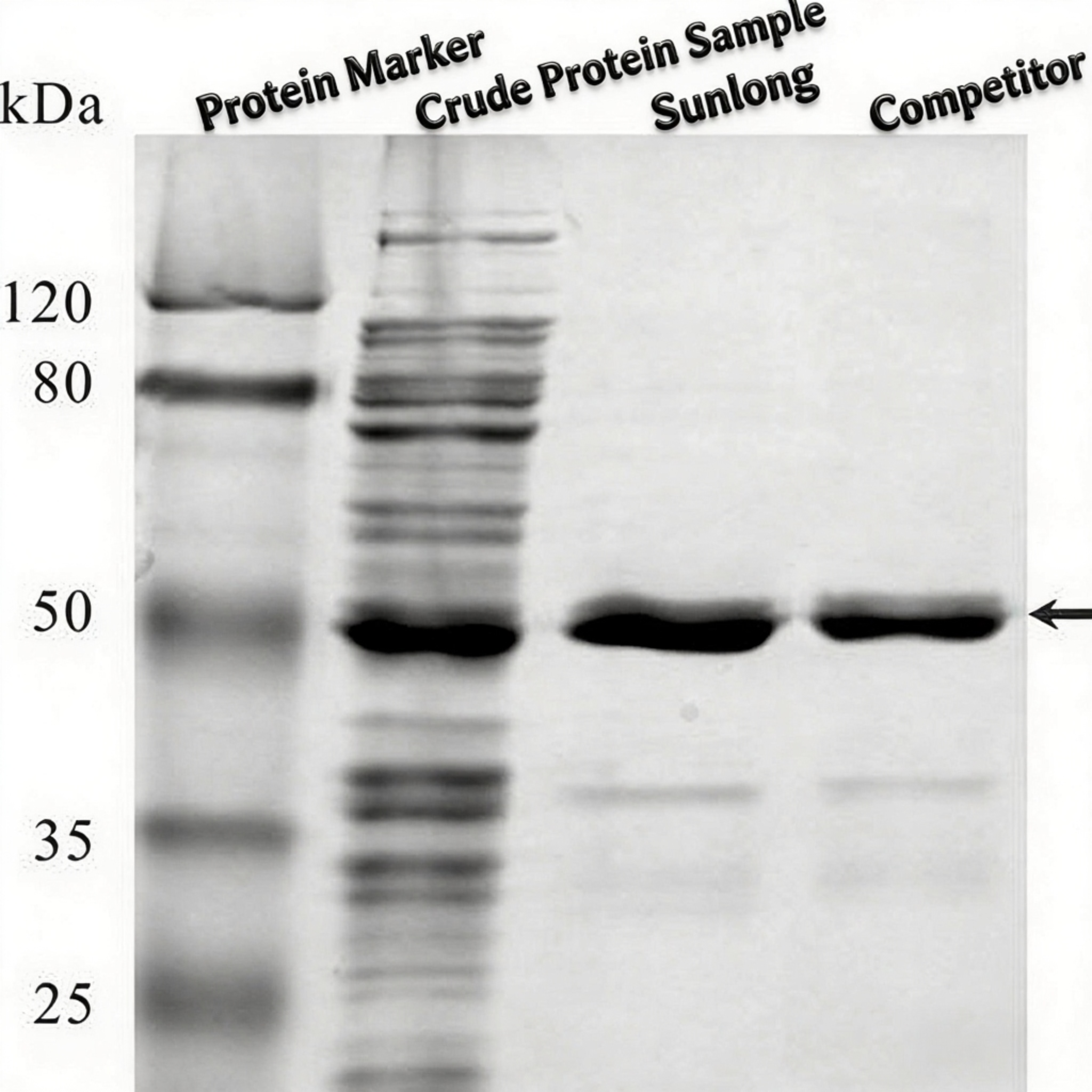
A common challenge in His-tag purification is the presence of host-cell proteins (HCPs) that may bind to the metal ions, contaminating the final elution. The specific cobalt-chelate chemistry employed by Dynabeads His-Tag is optimized to favor the higher affinity of the polyhistidine tag while discouraging the interaction with lower-affinity background proteins. The ability to perform thorough, repetitive wash steps in a simple microcentrifuge tube format further ensures the purity of the final product.
Operational Workflow and Implementation
Implementing Dynabeads into a laboratory workflow is straightforward, but success depends on following standardized protocols to maintain protein stability and yield.
- Preparation and Equilibrations: Before introducing the lysate, the beads must be equilibrated in a binding buffer. This typically involves a pH-balanced solution with imidazole at a low concentration (often 5-10 mM) to suppress background binding.
- Incubation: Lysates are incubated with the beads. Because the beads are in suspension, constant gentle agitation is recommended to ensure even contact.
- Washing: This is the most critical step for purity. By repeatedly placing the tube on the magnetic stand and replacing the supernatant with fresh wash buffer, researchers can strip away weakly bound impurities.
- Elution: Finally, the target protein is recovered by using a high concentration of imidazole (typically 300 mM). Because the beads provide a concentrated magnetic pellet, elution volumes can be kept small, resulting in a highly concentrated protein sample.
Comparison of Purification Technologies
| Feature | Dynabeads (Magnetic Beads) | Agarose-based Resins |
|---|---|---|
| Separation Method | Magnetic rack | Gravity flow/FPLC column |
| Throughput | High (Multi-well plates) | Low (Serial columns) |
| Scalability | Easy (from µL to mL) | Moderate (needs specialized hardware) |
| Pressure Requirements | None | High (for FPLC systems) |
| Particle Uniformity | Excellent (Monodisperse) | Variable (Porous matrix) |
Troubleshooting Common Purification Issues
Even with an optimized system, challenges such as low yield or protein aggregation can occur.
- Low Yield: Often caused by incomplete cell lysis or improper pH in the binding buffer. If the His-tag is buried within the folded protein, consider using a denaturing buffer containing urea or guanidine-HCl, as Dynabeads are compatible with a wide range of harsh chemical conditions.
- High Background: If non-specific proteins remain, increase the concentration of imidazole in the wash buffer slightly. Ensure that all buffers are freshly prepared, as imidazole can degrade over time at improper pH levels, losing its ability to suppress non-specific binding.
- Protein Aggregation: If the target protein aggregates, it may be necessary to include mild detergents or stabilizers, such as glycerol, in the elution buffer to keep the protein in a soluble state post-purification.
Frequently Asked Questions
Can Dynabeads be used for automated protein purification?
Yes. Because the beads are managed by magnets, they are highly compatible with liquid-handling robotic systems. Researchers can program automated washing and elution cycles, significantly increasing throughput for high-volume screening or multi-sample workflows.
Are these beads compatible with denaturing conditions?
Yes. Dynabeads His-Tag beads are chemically robust. They can be used in the presence of 8M urea or 6M guanidine-HCl, which is essential for purifying proteins that are otherwise insoluble or reside in inclusion bodies.
What is the advantage of Cobalt over Nickel?
Cobalt generally offers higher selectivity for His-tagged proteins compared to Nickel. While Nickel may have a higher total binding capacity, it is more prone to binding "sticky" host-cell proteins. Cobalt provides a cleaner profile, which is often more valuable in downstream applications like protein crystallography or functional assays.
How are the beads stored?
The beads are typically supplied in a buffer containing a preservative like sodium azide. It is crucial to store them according to the manufacturer’s instructions—usually refrigerated at 2°C to 8°C—to maintain the integrity of the surface chelation chemistry.
Can the beads be reused?
While it is technically possible to regenerate affinity resins, it is rarely recommended for Dynabeads in the context of analytical protein purification. To ensure the highest level of purity and avoid carry-over or cross-contamination, using fresh beads for every experiment is the standard practice.
Practical Next Actions
To successfully integrate Dynabeads His-Tag beads into your current workflow, begin by assessing your target protein's solubility and the expected volume of your expression culture. If you are currently struggling with slow flow rates or inconsistent yields on traditional columns, perform a side-by-side pilot scale-down experiment with these magnetic beads. By transitioning to a magnetic separation system, you will likely realize significant time savings and a more reproducible purification process, allowing you to focus your efforts on the downstream functional characterization of your proteins rather than the maintenance of chromatography hardware.
Image Gallery