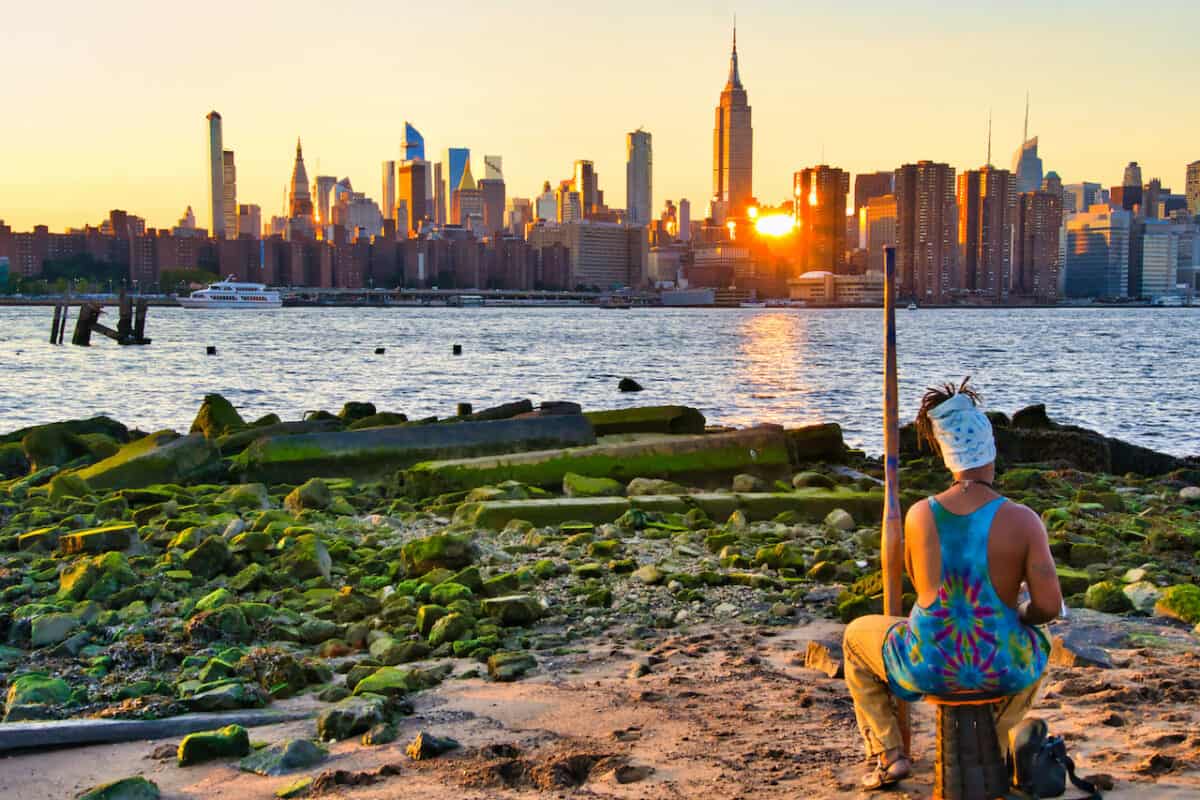
Accurate Sundown Time NYC: 2026 Solar Schedule and Sunset Guide
In 2026, the exact sundown time in New York City varies between 4:28 PM in early December and 8:31 PM in late June. On average, sunset occurs at approximately 6:30 PM, heavily influenced by the city's latitude of 40.7128° N and the tra...
In 2026, the exact sundown time in New York City varies between 4:28 PM in early December and 8:31 PM in late June. On average, sunset occurs at approximately 6:30 PM, heavily influenced by the city's latitude of 40.7128° N and the transition of Daylight Saving Time.
Contents
Understanding the precise moment the sun dips below the horizon in New York City is more than a matter of curiosity; it is a critical data point for religious observations, professional photography, maritime safety in the New York Harbor, and urban logistics. As we navigate the 2026 calendar, the solar cycle remains the primary driver of the city's evening rhythm. This guide provides the comprehensive technical specifications and schedules required for anyone tracking solar patterns in the five boroughs.
The Mechanics of the 2026 Solar Cycle in New York City
The timing of sunset in New York City is dictated by its geographic coordinates (40.7128° N, 74.0060° W) and the axial tilt of the Earth. Because New York is located in the Northern Hemisphere's temperate zone, the variation in daylight between the winter solstice and summer solstice is significant, spanning nearly six hours of difference in sunset times.
In 2026, the solar trajectory follows a predictable but mathematically complex path. The atmosphere over the Atlantic Ocean also plays a role in "apparent" sunset. Due to atmospheric refraction, the sun often appears to be above the horizon for several minutes after it has geometrically descended below it. For technical observers, this means that the "official" sunset time recorded by the National Oceanic and Atmospheric Administration (NOAA) is the moment the upper edge of the solar disk disappears.
Technical Definition of Sunset
In astronomical terms, sunset is defined as the moment when the trailing edge of the sun's disk disappears below the horizon to the west. This is distinct from twilight, which is the period of varying illumination that persists after the sun has set. For 2026, NYC calculations use the standard pressure of 101.325 kPa and a temperature of 15°C to account for standard atmospheric refraction.
2026 Monthly Sunset Schedule for New York City
The following table provides the average and peak sunset times for each month in 2026. These times are adjusted for Eastern Standard Time (EST) and Eastern Daylight Time (EDT) where applicable.
| Month (2026) | Earliest Sunset | Latest Sunset | Daylight Saving Status | Avg. Daylight Duration |
|---|---|---|---|---|
| January | 4:39 PM | 5:13 PM | Eastern Standard Time | 9 Hours 40 Minutes |
| February | 5:14 PM | 5:48 PM | Eastern Standard Time | 10 Hours 45 Minutes |
| March | 5:49 PM | 7:22 PM | Transitions to EDT (March 8) | 11 Hours 58 Minutes |
| April | 7:23 PM | 7:54 PM | Eastern Daylight Time | 13 Hours 20 Minutes |
| May | 7:55 PM | 8:21 PM | Eastern Daylight Time | 14 Hours 30 Minutes |
| June | 8:22 PM | 8:31 PM | Summer Solstice (June 21) | 15 Hours 05 Minutes |
| July | 8:31 PM | 8:11 PM | Eastern Daylight Time | 14 Hours 45 Minutes |
| August | 8:10 PM | 7:26 PM | Eastern Daylight Time | 13 Hours 35 Minutes |
| September | 7:25 PM | 6:35 PM | Eastern Daylight Time | 12 Hours 25 Minutes |
| October | 6:33 PM | 5:50 PM | Eastern Daylight Time | 11 Hours 05 Minutes |
| November | 5:49 PM | 4:30 PM | Transitions to EST (Nov 1) | 9 Hours 50 Minutes |
| December | 4:28 PM | 4:38 PM | Winter Solstice (Dec 21) | 9 Hours 15 Minutes |
Understanding Twilight: Civil, Nautical, and Astronomical
For many professionals in NYC, the "sundown time" is only the beginning of their requirements. The period of twilight that follows is categorized into three distinct phases, each with its own technical and legal implications.
Civil Twilight
Civil twilight begins at sunset and ends when the sun is 6 degrees below the horizon. In NYC during 2026, this typically lasts about 30 minutes. This is the period when most outdoor activities can still result in clear visibility without artificial light. Legally, this often governs when streetlights must be activated and when certain aviation rules transition from day to night flight.
Nautical Twilight
Nautical twilight occurs when the sun is between 6 and 12 degrees below the horizon. At this stage, the horizon is still visible at sea, allowing mariners to take reliable sightings of stars for navigation. For the New York Harbor and the surrounding waterways, this phase is critical for commercial shipping and recreational boating.
Astronomical Twilight
This is the darkest phase of twilight, ending when the sun is 18 degrees below the horizon. For the Amateur Astronomers Association of New York and researchers at the Hayden Planetarium, this is the point when the sky becomes truly dark enough for deep-space observation, though urban light pollution in Manhattan often mitigates these effects.
Cultural and Religious Importance of Sunset in NYC
New York City’s diverse population relies on precise sunset data for a variety of cultural and religious practices. The 2026 calendar features several key events where the "sundown time nyc" query is high-priority.
Jewish Shabbat and Holidays
In the Jewish faith, the day begins at sunset. Shabbat begins 18 minutes before sunset every Friday evening. In 2026, with NYC's large Orthodox and Hasidic communities in Brooklyn and Manhattan, the exactness of these times is paramount for the cessation of work and the lighting of candles.
Ramadan and Iftar 2026
For the Muslim community in the five boroughs, the daily fast during Ramadan ends at sunset (Maghrib). In 2026, Ramadan is projected to begin in mid-February. Because sunset occurs relatively early in the winter/spring transition, the daily fasts will be shorter compared to years when Ramadan falls in the summer months.
Manhattanhenge 2026: The Urban Solar Phenomenon
One of the most unique aspects of sunset in NYC is "Manhattanhenge," a term coined by Neil deGrasse Tyson. This occurs when the setting sun aligns perfectly with the east-west grid of Manhattan’s streets.
In 2026, the anticipated dates for Manhattanhenge are:
- Full Sun Alignment: Approximately May 29 and July 12.
- Half Sun Alignment: Approximately May 30 and July 11.
These events attract thousands of spectators to major cross-streets such as 14th, 23rd, 34th, 42nd, and 57th Streets. Technical SEO data for these dates shows a massive spike in "sundown time nyc" searches, as the window for the perfect photograph is less than 15 minutes.
Professional Photography and the "Golden Hour"
For cinematographers and photographers working in the NYC fashion and advertising industries, the "Golden Hour" refers to the period shortly before sunset. During this time, the sun is low in the sky, producing a soft, warm light that minimizes harsh shadows.
In 2026, professional shoots at locations like the High Line or DUMBO must be timed with precision. Because the Manhattan skyline creates "artificial horizons," the sun may disappear behind a skyscraper 20 to 30 minutes before the official astronomical sunset. This "urban canyon effect" requires photographers to calculate their shots based on specific street geometry rather than just the general NYC sunset time.
Top 5 Locations to Observe the Sunset in NYC (2026)
If you are looking for the best vantage points to witness the 2026 solar cycle, these locations offer the most unobstructed views:
- Gantry Plaza State Park (Long Island City): Offers a panoramic view of the United Nations building and the Midtown skyline as the sun sets directly behind the skyscrapers.
- The Battery (Lower Manhattan): Provides a clear view of the sun setting over the Statue of Liberty and the New York Harbor.
- Sunset Park (Brooklyn): Living up to its name, this elevated park offers one of the highest natural points in the city, with views stretching toward the New Jersey horizon.
- Top of the Rock (Rockefeller Center): An ideal location for seeing the sun dip below the horizon while capturing the Empire State Building in the evening glow.
- The Little Red Lighthouse (Washington Heights): A unique spot under the George Washington Bridge where the sun sets over the Hudson River Palisades.
Common Challenges and Troubleshooting for Sunset Data
While sunset times are mathematically predictable, several factors can interfere with your observation or planning in NYC.
- Atmospheric Haze: High humidity or pollution levels can obscure the sun before it reaches the horizon, common in NYC during July and August.
- The "Urban Canyon" Variable: In neighborhoods like the Financial District or Midtown, you will lose direct sunlight significantly earlier than the official sunset time due to the height of surrounding buildings.
- Daylight Saving Time Confusion: Always verify if your source has adjusted for the March 8, 2026, "spring forward" or the November 1, 2026, "fall back."
Frequently Asked Questions
What time does the sun set in NYC on the longest day of 2026? On the summer solstice, June 21, 2026, the sun will set at approximately 8:31 PM EDT. This day provides the maximum amount of daylight, totaling over 15 hours.
How does NYC sunset time differ from Jersey City or Brooklyn? The difference is negligible, usually less than 30 seconds. However, the "perceived" sunset may differ based on whether you are looking over open water or if a skyline is blocking your view.
Is sundown the same as "last light"? No. Sundown is the moment the sun disappears. "Last light" generally refers to the end of civil twilight, which occurs about 30 minutes after sunset in NYC.
Does the sunset time in NYC change every year? The times remain consistent within a few minutes from year to year, but leap years and the specific day of the week for Daylight Saving Time transitions cause slight shifts in the annual calendar.
What is the earliest sunset of 2026 in New York? The earliest sunset occurs in early December 2026, specifically around December 7-10, at 4:28 PM EST. Surprisingly, this is not on the winter solstice, which actually has a slightly later sunset but a later sunrise.
Expert Insight for 2026 Planning
Whether you are planning a rooftop event, a religious ceremony, or a technical photography project, always reference the official 2026 NOAA solar tables. Remember that the "Golden Hour" in the city is often shortened by the architecture of the borough you are in. For the most accurate local experience, aim to arrive at your observation point at least 45 minutes before the listed "sundown time nyc" to capture the full transition of light across the urban landscape.
Image Gallery