What Environment Means in Science: A Comprehensive Definition and Analysis
In science, an environment refers to the sum of all external conditions, influences, and forces that surround and affect a specific system, organism, or object. It encompasses both biotic (living) components, such as plants and bacteri...
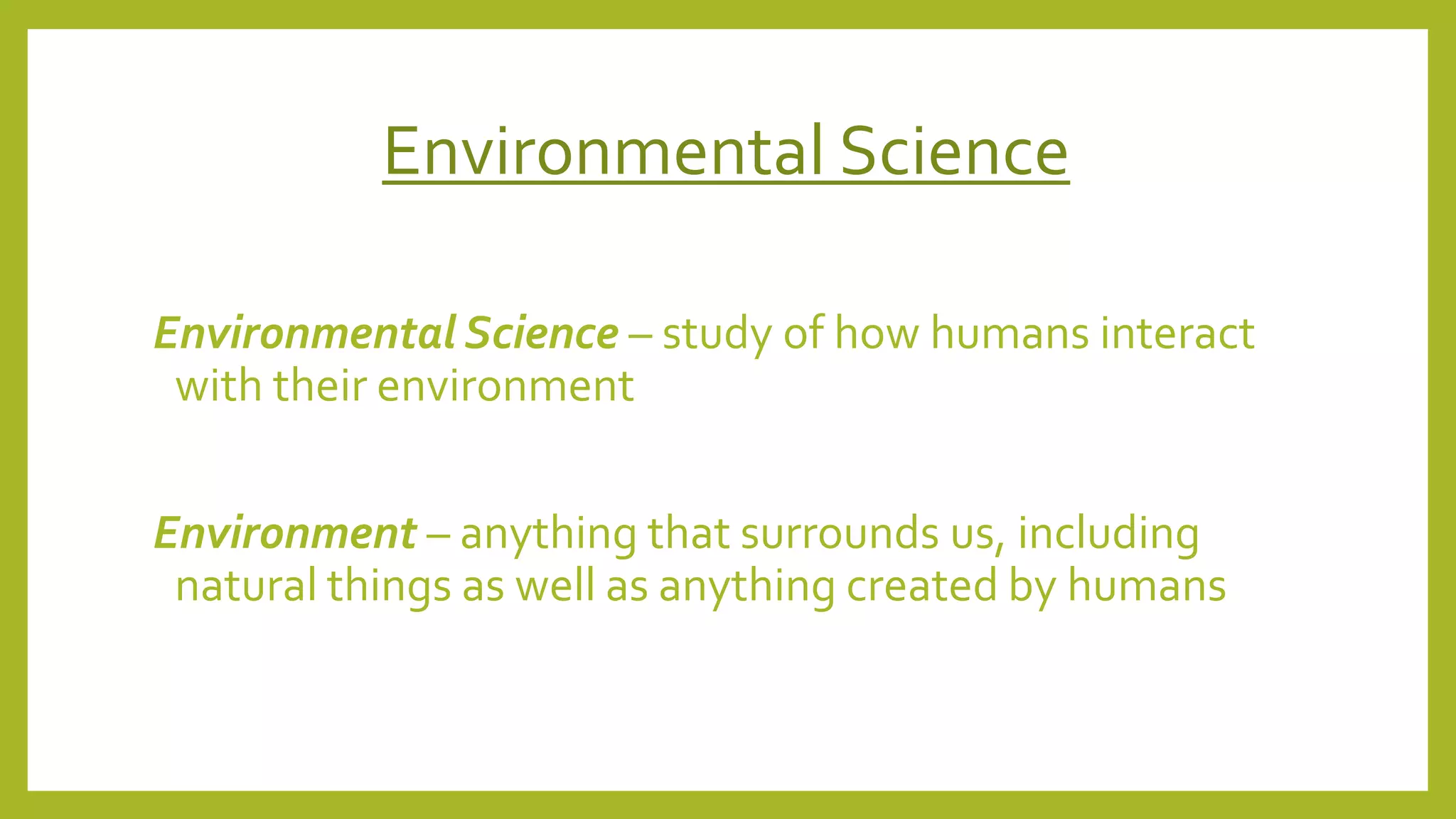
In science, an environment refers to the sum of all external conditions, influences, and forces that surround and affect a specific system, organism, or object. It encompasses both biotic (living) components, such as plants and bacteria, and abiotic (non-living) components, including temperature, chemical compositions, and physical boundaries.
Contents
The term "environment" is frequently used in everyday conversation to describe the natural world or "nature." However, in a scientific context, the definition is significantly more precise and varies slightly depending on the specific discipline. Whether a scientist is studying a single cell, a chemical reaction in a beaker, or a distant galaxy, the environment represents everything outside the "system" being studied that can influence its behavior, development, or survival.
The Dual Components of a Scientific Environment
To understand any scientific environment, researchers categorize its contents into two primary groups: biotic and abiotic factors. These factors do not exist in isolation; they interact continuously to create the complex conditions observed in the field or laboratory.
Abiotic Factors: The Physical and Chemical Foundation
Abiotic factors are the non-living chemical and physical parts of the environment that affect living organisms and the functioning of ecosystems. These serve as the "constraints" within which biological or chemical processes must operate. Key abiotic factors include:
- Climatic Factors: Sunlight, temperature, precipitation, and humidity. These determine the metabolic rates of organisms and the speed of chemical reactions.
- Edaphic Factors: These relate specifically to soil, including soil pH, mineral content, and structure. In geology and botany, the edaphic environment is a primary driver of species distribution.
- Physical Forces: Gravity, pressure (atmospheric or hydrostatic), and wind or water currents. For example, in marine science, the high-pressure environment of the benthic zone dictates the physiological adaptations of deep-sea creatures.
Biotic Factors: The Living Influence
Biotic factors include all living entities within an environment and the interactions between them. This includes members of the same species (intraspecific) and different species (interspecific). Scientists analyze these interactions through several lenses:
- Trophic Relationships: How energy moves through an environment via predation, herbivory, and decomposition.
- Symbiosis: Mutualistic, commensal, or parasitic relationships where the environment for one organism is literally another organism.
- Competition: The struggle for limited resources like space, nutrients, or light.
Disciplinary Interpretations of "Environment"
While the broad definition remains consistent, various scientific fields focus on different aspects of the environment to suit their specific research goals.
1. Ecology and Biology
In biology, the environment is the habitat and the surrounding ecosystem. It is the context for natural selection. Evolution is essentially the story of how organisms adapt to their environment over generations. A critical concept here is the ecological niche, which is not just the physical space an organism occupies (its "address"), but its functional role and the specific environmental variables it requires to survive.
2. Chemistry and Biochemistry
For a chemist, the environment often refers to the medium in which a reaction occurs. This could be a solvent (like water or ethanol), the surface of a catalyst, or the gas-phase surroundings in a vacuum chamber. The chemical environment dictates reaction rates, yields, and molecular stability. In biochemistry, the "microenvironment" of a protein—the specific pH and ion concentration surrounding an enzyme's active site—is what allows life-sustaining reactions to occur at lower temperatures than they would in a non-biological setting.
3. Physics and Thermodynamics
In physics, the environment (often called the "surroundings") is everything that is not the system under study. The boundary between the system and the environment is crucial for calculating energy transfer.
- Open Systems: Can exchange both matter and energy with their environment.
- Closed Systems: Can exchange energy, but not matter.
- Isolated Systems: Do not exchange matter or energy (a theoretical ideal). The laws of thermodynamics describe how heat and work are exchanged between a system and its environment, often leading to an increase in the entropy of the environment.
4. Genetics: The "Nurture" Component
In genetics and epigenetics, the environment refers to external factors that influence gene expression. While an organism’s DNA (genotype) provides a blueprint, the environment determines the phenotype (the actual expressed traits). For example, the temperature of the environment during incubation determines the sex of certain reptiles, such as sea turtles. This highlights that the environment is a dynamic participant in the development of life, not just a passive backdrop.
Scale in Scientific Environments: Micro to Macro
A common mistake is assuming that an environment must be a large, outdoor space. In science, environments are defined by their scale relative to the subject.
The Microenvironment
A microenvironment consists of the immediate, small-scale surroundings of an object. For a cancer cell, the microenvironment includes the neighboring cells, the extracellular matrix, and the local signaling molecules. For a seedling, the microenvironment might be the few cubic centimeters of soil and air immediately surrounding its roots and first leaves. Small changes in a microenvironment—such as a slight drop in oxygen levels (hypoxia)—can trigger massive physiological changes that are not reflected in the broader macroenvironment.
The Macroenvironment
The macroenvironment refers to the larger regional or global conditions. This includes the climate of a biome (like a desert or rainforest) or the overall conditions of the Earth’s atmosphere. Scientists often study how changes in the macroenvironment (such as global shifts in CO2 levels) eventually trickle down to affect specific microenvironments.
| Level of Environment | Description | Example |
|---|---|---|
| Intracellular | The environment inside a cell membrane. | Cytoplasm, organelles, and pH levels within a cell. |
| Microenvironment | The immediate surroundings of a specific organism or system. | The rhizosphere (soil surrounding plant roots). |
| Habitat | The specific physical area where a species lives. | A coral reef or a specific forest stand. |
| Ecosystem | A community of living organisms interacting with their physical environment. | The Amazon Basin or the Serengeti Plains. |
| Biosphere | The global sum of all ecosystems on Earth. | The thin layer of Earth where life exists. |
The Concept of Environmental Homeostasis
In many scientific studies, the interaction between an organism and its environment is defined by homeostasis. This is the process by which a system regulates its internal environment to maintain a stable, constant condition.
For instance, endothermic (warm-blooded) animals must maintain a constant internal body temperature regardless of the external environmental temperature. When the environment becomes too cold, the organism uses energy to generate heat. This relationship demonstrates that the "scientific environment" is often something an organism must actively resist or balance against to maintain life.
Human Impact and the "Built Environment"
As of 2026, scientific research increasingly focuses on the anthropogenic or built environment. This refers to man-made surroundings that provide the setting for human activity, ranging in scale from personal shelter to neighborhoods and large-scale civic surroundings.
In the context of environmental science, the built environment is studied for its impact on natural cycles. Urban heat islands (where cities are significantly warmer than surrounding rural areas due to human activity) are a prime example of how human structures create a new, distinct scientific environment. Researchers use sensor networks and AI modeling to understand how these built environments interact with local wildlife and weather patterns.
Measuring and Quantifying the Environment
Science relies on empirical data, meaning the environment must be measurable. Scientists use specific parameters to "define" an environment in a research paper:
- Chemical Concentration: Parts per million (ppm) of gases or solutes.
- Energy Flux: The amount of solar radiation or heat moving through a space.
- Trophic Complexity: The number of links in a food web.
- Spatial Heterogeneity: How much the environment varies from one point to another.
By quantifying these variables, scientists can replicate experiments. If a chemist says a reaction was performed in a "controlled environment," they mean the temperature, pressure, and chemical purity were held constant to ensure the results were not due to outside interference.
Common Misconceptions
One frequent confusion is the difference between "environment" and "ecology." While related, they are not synonymous. Environment is the state of the surroundings (the "what"), while Ecology is the study of the relationships between organisms and that environment (the "how" and "why").
Another misconception is that the environment is static. In reality, environments are in a constant state of flux. The "Great Oxidation Event" billions of years ago is a classic example where biological activity (photosynthesis by cyanobacteria) fundamentally changed the Earth's chemical environment, shifting it from an anaerobic to an aerobic state. This reminds us that the environment is both a shaper of life and something that is shaped by life.
Summary of Next Actions for Students and Researchers
Understanding the scientific environment is the first step in any rigorous investigation. To apply this concept effectively:
- Define the System Boundaries: Clearly state where the "system" ends and the "environment" begins in your study.
- Identify Critical Variables: Determine which abiotic factors (e.g., temperature, salinity) are most likely to influence your results.
- Consider Scale: Decide if you are investigating a microenvironment or a macroenvironment, as the rules of interaction can change with scale.
- Monitor Transitions: Use modern tools like National Oceanic and Atmospheric Administration (NOAA) data or NASA Earth Observations to track how environmental baselines are shifting in 2026.
Frequently Asked Questions
What is the difference between an internal and external environment in science?
The external environment includes everything outside an organism (air, water, light), while the internal environment refers to the conditions inside the organism's body (extracellular fluid, blood plasma). Maintaining the internal environment despite changes in the external environment is the core of homeostasis.
Is the environment the same as a habitat?
No. A habitat is the specific place where an organism lives, while the environment is a broader term that includes all the conditions (physical, chemical, biological) affecting that organism, regardless of where it is located. A habitat is a type of environment, but not all environments are habitats.
Why do scientists use "controlled environments"?
Controlled environments, such as laboratory incubators or growth chambers, allow scientists to isolate a single variable. By keeping the rest of the environment constant, they can be certain that any changes observed in the subject are caused by the one variable they intentionally changed.
Can the environment change an organism's DNA?
The environment generally does not change the DNA sequence itself (unless through mutation via radiation or chemicals), but it can change epigenetic markers. These markers act like switches that turn genes on or off, meaning the environment can change how a body "reads" its genetic code.
How does the environment relate to the laws of thermodynamics?
In thermodynamics, the environment is the "reservoir" with which a system exchanges energy. The second law of thermodynamics suggests that in any energy exchange, some energy is lost to the environment as heat, increasing the total disorder (entropy) of the universe.
What are anthropogenic environmental factors?
Anthropogenic factors are environmental influences caused by human activity. Examples include the release of greenhouse gases, deforestation, urban development, and the introduction of invasive species. These factors have become a primary focus of environmental science in the 21st century.
Image Gallery