Comprehensive Guide to Understanding Accounts Payable Construction Processes
Construction accounts payable (AP) is the specialized financial function of managing a construction firm’s outgoing cash flow to subcontractors, suppliers, and vendors. Unlike standard business AP, it requires rigorous project-level co...
Construction accounts payable (AP) is the specialized financial function of managing a construction firm’s outgoing cash flow to subcontractors, suppliers, and vendors. Unlike standard business AP, it requires rigorous project-level cost tracking, strict compliance with lien laws, and the management of retainage to ensure project completion and legal protection. In 2026, these processes are increasingly automated, yet they remain anchored in fundamental risk management and contractual obligations.
Contents
The Distinct Nature of Construction Accounts Payable
At its core, accounts payable in the construction industry is significantly more complex than in retail or service sectors. In a typical corporate environment, AP involves a simple "three-way match" between a purchase order, a packing slip, and an invoice. In construction, the process must account for long-term project lifecycles, fluctuating material costs, and a multi-tiered hierarchy of labor.
The primary differentiator is job costing. Every dollar that leaves the accounting department must be assigned to a specific project, a specific cost code (such as "03 30 00 Cast-in-Place Concrete"), and often a specific phase of the work. This granularity allows project managers to compare actual expenditures against the original estimate in real-time. Without accurate construction AP processes, a firm cannot determine if a project is profitable until long after the ribbon-cutting ceremony.
Furthermore, construction AP serves as a primary risk management tool. Because of mechanic’s lien laws, a general contractor (GC) or property owner could be held liable for a subcontractor's unpaid bills, even if the GC has already paid that subcontractor. Therefore, the AP process is not just about moving money; it is about collecting legal proof—via lien waivers—that the money reached its final intended destination.
Critical Components of the Construction AP Workflow
To understand how money moves through a construction firm, one must look at the specific documents and "compliance gates" that define the industry. In 2026, while many of these documents are digital and managed via blockchain or integrated ERP systems, their legal and operational functions remain unchanged.
1. Subcontracts and Purchase Orders
The process begins before an invoice ever arrives. A subcontract agreement or a purchase order (PO) sets the financial boundaries for the work. These documents specify the "not-to-exceed" amounts and the required insurance coverages. In a robust AP process, the accounting system will automatically flag any invoice that exceeds the remaining balance on a subcontract, preventing overpayment.
2. Pay Applications and AIA Documents
Subcontractors rarely send a simple invoice. Instead, they submit a Pay Application (often using American Institute of Architects forms G702 and G703). These documents provide a detailed breakdown of the "Schedule of Values," showing exactly what percentage of each task has been completed to date.
The G702 serves as the summary and sworn statement, while the G703 provides the line-item detail. Reviewing these requires a collaborative effort between the AP clerk, who checks the math and compliance, and the Project Manager (PM), who verifies that the work described on the paper actually exists on the job site.
3. Retainage Management
Retainage (or retention) is a portion of the agreed-upon contract price (usually 5% or 10%) that is deliberately withheld until the project reaches "substantial completion" or until specific milestones are met.
Managing retainage is an accounting hurdle. The AP department must track these "withheld" funds as a liability on the balance sheet while ensuring they are not accidentally paid out during regular progress billing cycles. In 2026, most construction accounting software automatically calculates retainage, but the manual verification of "release of retention" remains a high-stakes task at the end of a project.
4. Compliance and Insurance Verification
A construction firm cannot safely issue a check if the recipient’s Certificate of Insurance (COI) has expired. If a subcontractor is injured on-site and their workers' compensation insurance has lapsed, the financial liability can cascade up to the general contractor. Modern AP processes involve "compliance holds," where the system automatically blocks payment generation if a vendor’s insurance, trade license, or safety certification is out of date.
The Step-by-Step Construction AP Cycle
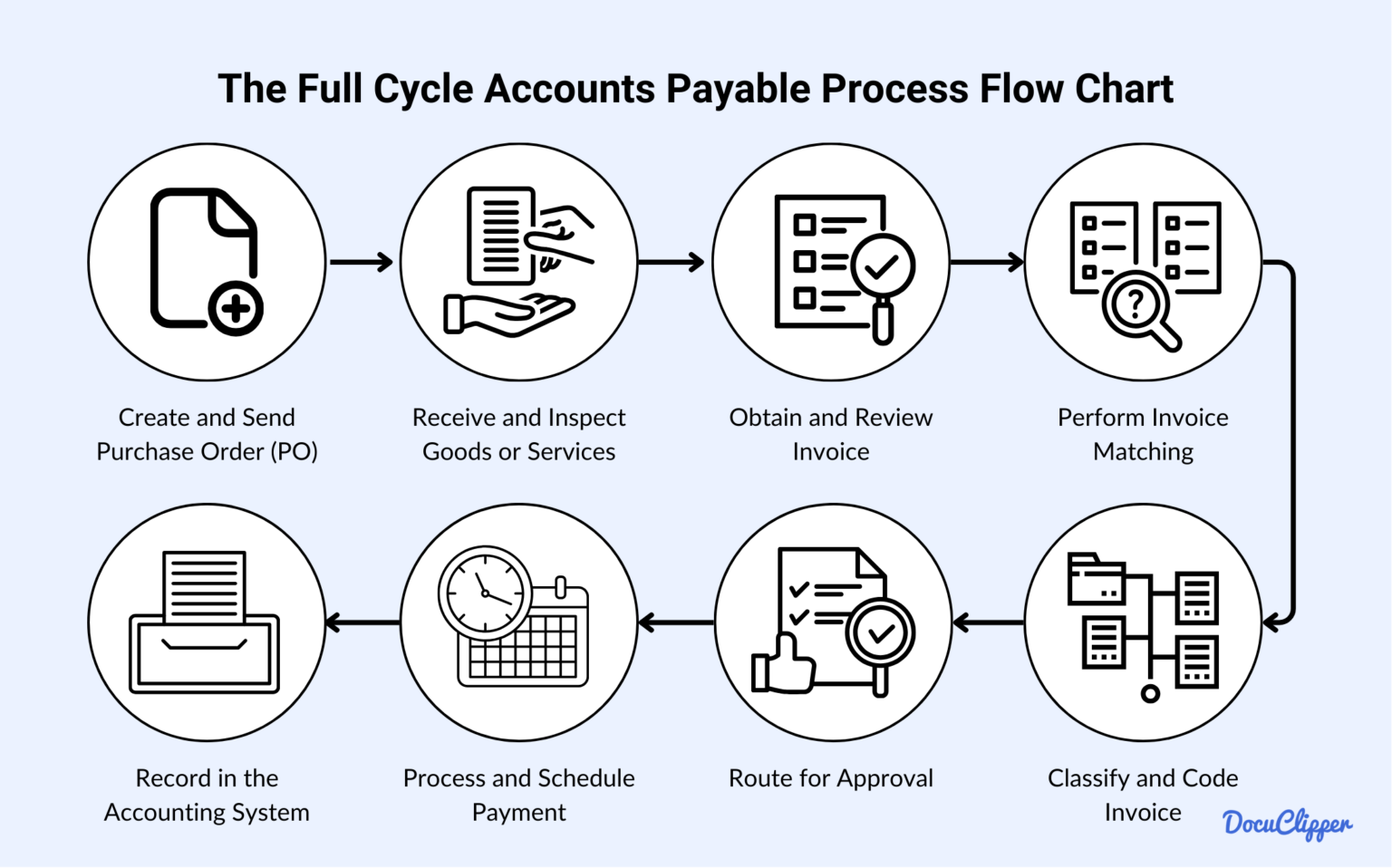
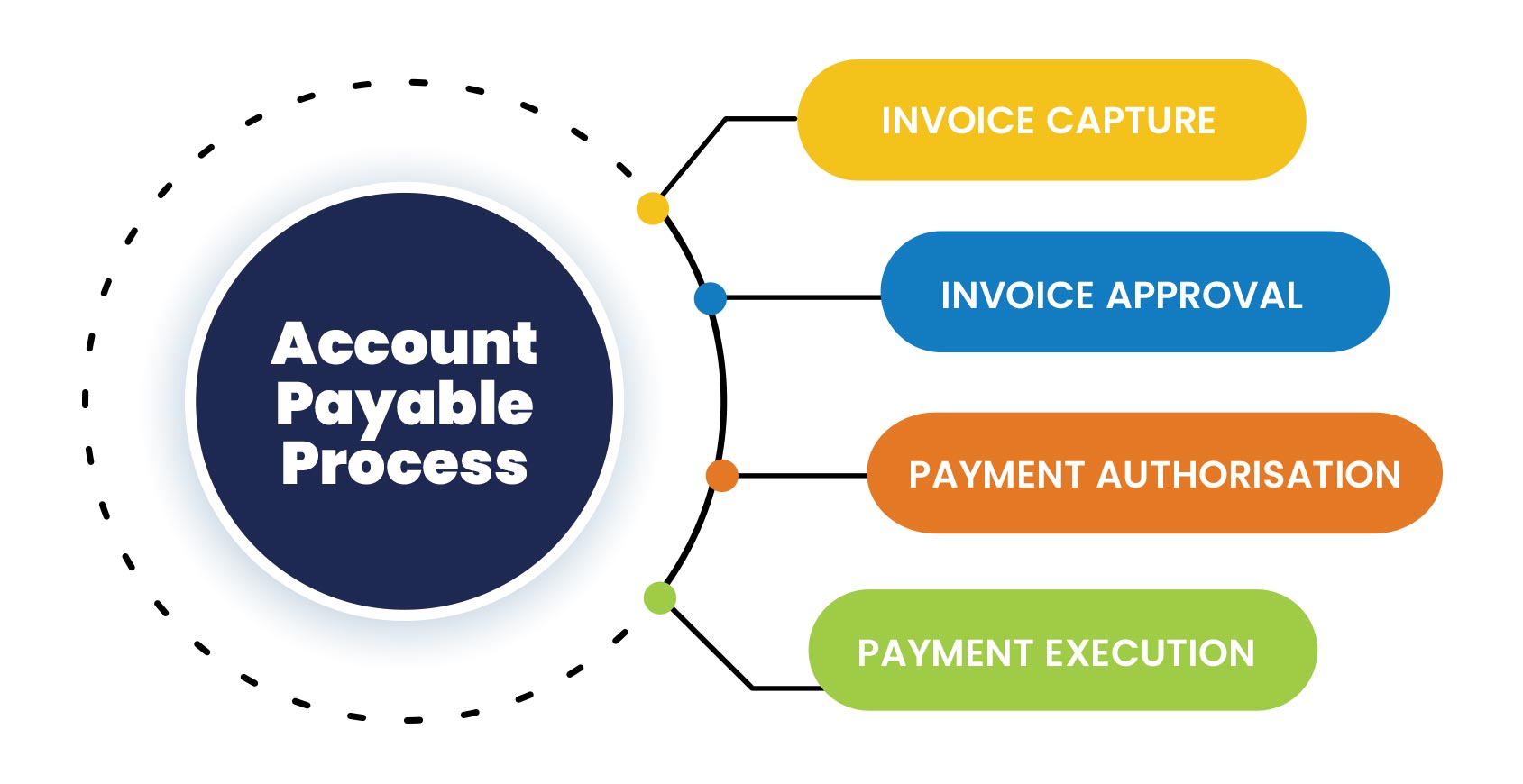
The following sequence outlines the standard progression of a construction invoice from receipt to reconciliation.
- Invoice/Pay App Receipt: The vendor submits their request for payment. In 2026, this is typically done through a subcontractor portal that uses Optical Character Recognition (OCR) to extract data directly into the ERP.
- Compliance Audit: The system or an AP specialist verifies that the vendor has a valid COI on file and that a signed contract exists.
- Project Manager Review: The PM reviews the invoice against the physical progress of the job. They may "redline" the invoice, approving only 80% of the requested amount if they believe the work is not as far along as claimed.
- Job Cost Coding: The invoice is matched to specific cost codes. This ensures that the budget for "Electrical" isn't being depleted by "Plumbing" expenses.
- Lien Waiver Collection: This is perhaps the most critical step. The GC provides a "Conditional Lien Waiver" to the sub. Once the sub signs it, the GC issues the check. Upon receiving the funds, the sub provides an "Unconditional Lien Waiver."
- Payment Disbursement: Payments are made via ACH, wire transfer, or specialized construction payment platforms that tie the release of funds directly to the digital signature of lien waivers.
- Data Reconciliation: The payment is recorded in the general ledger, and the project’s "committed cost" reports are updated to reflect the transition from an obligation to an actual expense.
Comparing Construction Billing Methods
The complexity of the AP process often depends on the type of contract governing the project.
| Billing Method | AP Complexity | Primary Verification Focus | Risk Level |
|---|---|---|---|
| Lump Sum | Low | Percentage of total completion. | Low (Fixed price) |
| Cost-Plus | High | Every single receipt, payroll record, and invoice. | High (Requires audit) |
| Time & Materials | Medium | Labor hours and material markups. | Medium (Scope creep) |
| Unit Price | Medium | Measurement of quantities (e.g., cubic yards of dirt). | Low (Calculated) |
The Role of Lien Waivers in Risk Mitigation
Lien waivers are the "receipts" of the construction world. There are four primary types that an AP department must manage:
- Conditional Progress: Valid only when the specific progress payment is actually received.
- Unconditional Progress: Confirms that a specific progress payment has been received and the right to lien for that amount is waived.
- Conditional Final: Valid once the final project payment is received.
- Unconditional Final: The ultimate "all-clear," meaning the vendor has been paid in full and can no longer file a lien against the property.
Failure to track these documents can lead to "double payment" scenarios, where a general contractor pays a sub, the sub fails to pay their supplier, and the supplier files a lien against the owner, forcing the GC to pay the supplier directly to clear the title.
Common Challenges and Troubleshooting in 2026
Despite advances in technology, construction AP processes frequently encounter bottlenecks.
Discrepancies in Field Reports: If a subcontractor claims they installed 50 windows but the PM's field report only shows 40, the AP process halts. Resolving this requires clear communication channels between the field and the office. In 2026, many firms use drone-based site surveys to automatically verify quantities, which significantly speeds up AP approval.
Pay-When-Paid Clauses: Many construction contracts contain "pay-when-paid" or "pay-if-paid" clauses. This means the GC is not obligated to pay the subcontractor until the owner pays the GC. This creates an AP headache, as invoices may sit in "approved but unpaid" status for weeks. AP departments must carefully track these timing differences to avoid violating prompt payment statutes, which vary by jurisdiction.
Overbilling: Subcontractors often attempt to "front-load" their billing—requesting more money early in the project to help with cash flow. AP specialists must be vigilant to ensure that the cumulative amount paid does not exceed the value of work performed, especially when considering the "cost to complete" the remaining project.
FAQ: Construction Accounts Payable
What is the purpose of retainage in construction AP?
Retainage serves as a financial incentive for subcontractors to complete the final "punch list" items of a project. By withholding a small percentage (usually 5-10%), the general contractor ensures they have leverage to compel the subcontractor to fix minor defects or complete final documentation at the end of the job.
Why do construction companies use AIA billing forms?
AIA G702 and G703 forms provide a standardized, industry-accepted format that ensures all necessary information is included for progress payments. They help eliminate ambiguity by requiring a breakdown of the original contract sum, changes, retainage, and the specific balance to finish.
How does "job costing" differ from regular accounting?
Regular accounting tracks expenses by category (e.g., rent, utilities). Job costing tracks expenses by project and specific activity (e.g., Site Work on Project X). This allows construction firms to see exactly where they are making or losing money on a per-project basis.
What happens if a lien waiver is not collected?
If a payment is made without a lien waiver, the payer remains at risk. If the party receiving the money fails to pay their own laborers or material suppliers, those lower-tier parties can file a mechanic’s lien against the property, potentially forcing the owner or GC to pay for the same work twice.
How has automation changed construction AP by 2026?
By 2026, automation has moved beyond simple data entry. AI-driven systems now cross-reference invoices against 3D Building Information Models (BIM) to verify work completion. Automated compliance engines also monitor subcontractor insurance certificates and licenses in real-time, instantly freezing payments the moment a document expires.
Strategic Recommendations for AP Optimization
To maintain a healthy construction accounts payable process, firms should prioritize three areas:
- Centralize Compliance: Do not allow the field staff to manage insurance certificates or lien waivers. These should be centralized within the AP department to ensure consistent legal protection.
- Integrate Field and Office: Use a unified platform where project managers can approve invoices from their mobile devices while on-site. This reduces the "approval lag" that often leads to late fees or strained vendor relationships.
- Audit the "Cost to Complete": Regularly compare the total unpaid balance of a subcontract against the actual remaining work. If the remaining work costs more than the remaining contract balance, you are "overbilled" and must halt payments immediately to avoid financial loss.
Effective construction AP is a balance of financial precision and legal vigilance. By mastering these processes, a firm ensures that its projects remain solvent, its legal risks are mitigated, and its relationships with subcontractors—the lifeblood of the industry—remain strong.
Image Gallery