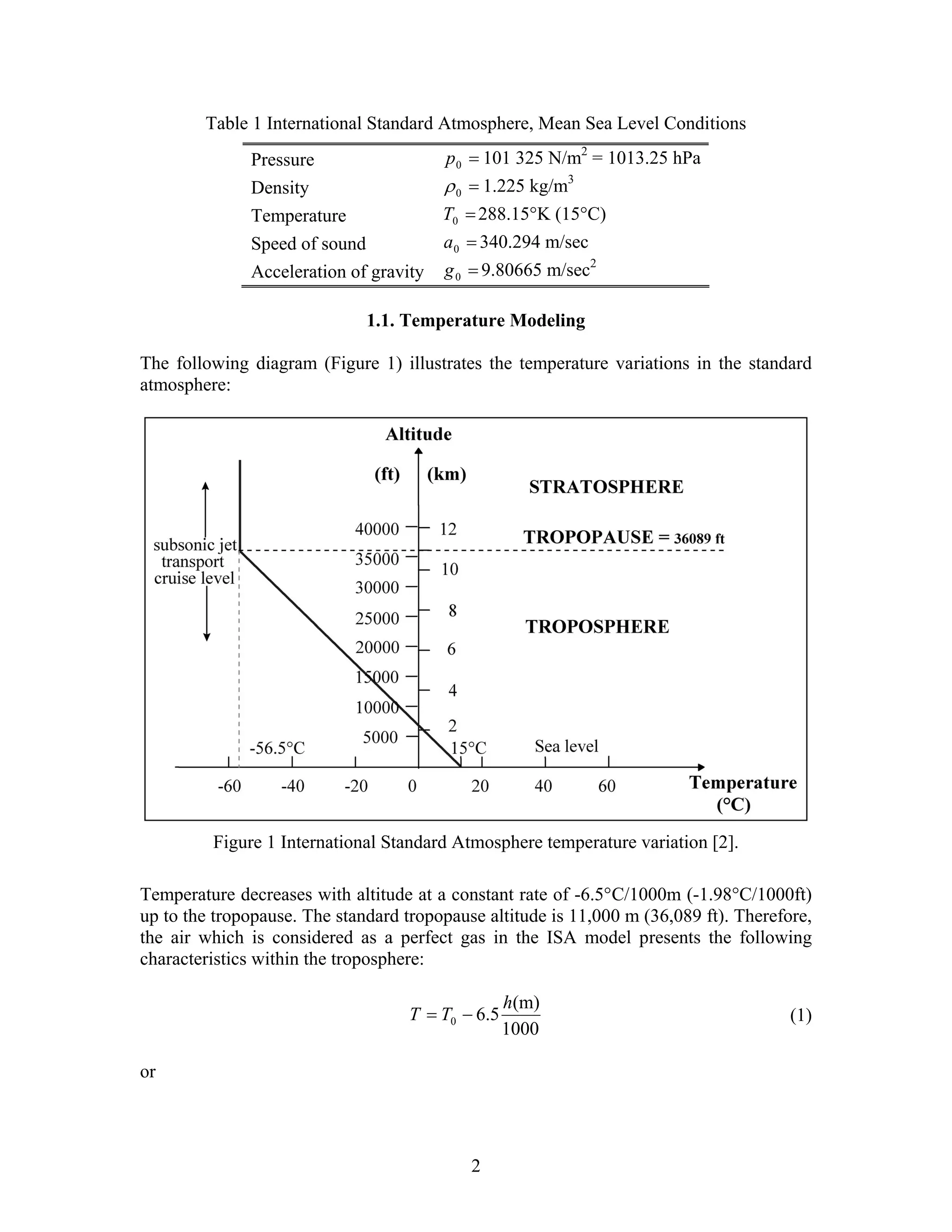
Understanding the 9.80665 m/s² Standard Gravity
The value 9.80665 m/s² is the internationally agreed-upon constant for standard acceleration due to gravity. Defined by the 3rd General Conference on Weights and Measures (CGPM) in 1901, it provides a universal baseline for converting...
The value 9.80665 m/s² is the internationally agreed-upon constant for standard acceleration due to gravity. Defined by the 3rd General Conference on Weights and Measures (CGPM) in 1901, it provides a universal baseline for converting mass to weight and is used globally in engineering, physics, and metrology.
Contents
The Origin and Definition of Standard Gravity
The specific value of 9.80665 m/s² did not occur by accident or through a single measurement of the Earth’s surface. Instead, it was a deliberate legislative decision intended to end confusion in international trade and scientific research. Before 1901, "gravity" was a localized concept; a kilogram of mass would weigh slightly different amounts in London, Paris, or Tokyo due to the Earth's irregular shape and rotation.
The International Bureau of Weights and Measures (BIPM) recognized that for the "kilogram-force" (a unit of force used extensively at the time) to have a consistent meaning, a fixed value for gravity had to be established. The value chosen, 9.80665 m/s², was based on measurements taken at the Pavillon de Breteuil in Sèvres, France, adjusted to represent 45° latitude at sea level.
While we now know that gravity varies significantly across the globe, this "standard" remains the anchor for the International System of Units (SI). In 2026, as we continue to push the boundaries of precision in aerospace and quantum metrology, this century-old constant remains the fundamental bridge between the concepts of mass and weight.
The Mathematical Role of Standard Gravity
In physics, the standard acceleration due to gravity, often denoted as $g_n$ or $g_0$, is a nominal value. It is used in the calculation of various physical units and constants. One of the most critical applications is the definition of the Newton (N), the SI unit of force.
Under Newton’s Second Law ($F = ma$), force is the product of mass and acceleration. To ensure that 1 kilogram of mass exerts a predictable amount of force under "standard" conditions, $g_n$ is applied. This is particularly vital in the following areas:
- Weight-to-Mass Conversion: $W = m \times g_n$. Without a standard $g$, the weight of an object would be a moving target depending on the laboratory's altitude or latitude.
- Pressure and Stress: The Pascal (Pa) is defined as one Newton per square meter. Many pressure gauges are calibrated using deadweight testers, which rely entirely on the local acceleration of gravity being corrected back to the 9.80665 m/s² standard.
- Aeronautical Engineering: Performance metrics for aircraft and rockets, such as specific impulse, are often expressed in seconds. This calculation requires dividing thrust by the weight of the propellant at standard gravity ($g_n$).
Why Gravity Isn't the Same Everywhere
While 9.80665 m/s² is the "standard," it is rarely the actual acceleration measured by a gravimeter at any specific point on Earth. Several physical factors cause local gravity ($g$) to deviate from the standard value.
Latitude and the Centrifugal Effect
The Earth is not a perfect sphere; it is an oblate spheroid, bulging at the equator and flattened at the poles. Because of this, someone standing at the North Pole is closer to the Earth's center of mass than someone standing on the equator. Furthermore, the Earth's rotation creates a centrifugal force that acts in opposition to gravity. This force is strongest at the equator and zero at the poles. Consequently, gravity is approximately 9.780 m/s² at the equator and 9.832 m/s² at the poles.
Altitude (The Inverse Square Law)
Gravity follows the inverse square law, meaning the further you are from the Earth’s center, the weaker the pull. As you move higher into the atmosphere or onto a mountain plateau, the acceleration due to gravity decreases. For every meter of increase in elevation, gravity decreases by approximately $3 \times 10^{-6}$ m/s².
Local Geology and Topography
The density of the Earth's crust is not uniform. Large underground deposits of heavy metals or dense volcanic rock can create "gravity anomalies," where the pull is slightly stronger than the surrounding area. Conversely, sedimentary basins or large underground caverns can result in lower local gravity readings.
Comparing Standard Gravity to Real-World Locations
The following table illustrates how the standard value of 9.80665 m/s² compares to the actual measured gravity at various locations around the world. These variations highlight why the "standard" is a mathematical necessity for consistency.
| Location | Latitude | Altitude (m) | Local Gravity (m/s²) | Difference from Standard (%) |
|---|---|---|---|---|
| Standard Gravity | 45° (Nominal) | 0 | 9.80665 | 0.00% |
| Equator (Sea Level) | 0° | 0 | 9.7803 | -0.27% |
| North Pole | 90° N | 0 | 9.8322 | +0.26% |
| Summit of Mt. Everest | 27.9° N | 8,848 | 9.7639 | -0.44% |
| New York City | 40.7° N | 10 | 9.8020 | -0.05% |
| Mexico City | 19.4° N | 2,240 | 9.7793 | -0.28% |
Standard Gravity in Modern Engineering (2026)
In 2026, the importance of 9.80665 m/s² has shifted from simple weighing to high-precision engineering. For example, in the calibration of sensors for autonomous vehicles and drones, accelerometers must be "zeroed" against a known constant. If a drone's software assumes the standard $g_n$ while operating in a high-altitude city like La Paz, Bolivia, its flight control algorithms might experience minor but critical errors in lift-to-weight calculations.
In the field of metrology, the 2019 redefinition of the SI base units linked the kilogram to the Planck constant via the Kibble balance. This device measures the amount of electric current needed to produce a force that exactly counteracts the weight of a mass. To perform this measurement accurately, scientists must know the local acceleration of gravity at the site of the experiment with extreme precision—often down to eight or nine decimal places. They then use the standard gravity value to normalize these results for international use.
Technical Misconceptions: G vs. g
A common error in both academic and professional settings is the confusion between the universal gravitational constant (G) and standard acceleration due to gravity (g).
- Big G ($6.674 \times 10^{-11} \text{ m}^3\text{kg}^{-1}\text{s}^{-2}$): This is a fundamental constant of the universe. It describes the strength of the gravitational force between any two masses anywhere in space.
- Little g (9.80665 m/s²): This is a specific property of the Earth (or a standard approximation of it). It is derived from the Earth's mass ($M$) and radius ($r$) using the formula $g = GM/r^2$.
While $G$ is believed to be the same in every galaxy, $g$ is unique to Earth. On Mars, standard gravity is roughly 3.71 m/s², and on the Moon, it is 1.62 m/s². However, even when calculating Martian physics, engineers often use the Earth’s $g_n$ as a reference unit (e.g., expressing Martian gravity as "0.38 g").
Practical Requirements for High-Precision Calibration
For laboratories and industries requiring high precision, relying on the 9.80665 m/s² figure is often insufficient. If you are calibrating a high-end analytical balance or a precision pressure transducer, you must account for "Local Gravity Correction."
To obtain the local gravity value, professionals typically follow these steps:
- Direct Measurement: Using an absolute gravimeter, which measures the time a mass takes to fall in a vacuum using laser interferometry.
- Geodetic Models: Using the International Gravity Formula or models provided by the National Geodetic Survey. These models factor in latitude, longitude, and elevation to estimate $g$ within a few parts per million.
- WGS84: The World Geodetic System 1984 provides a standard mathematical model of the Earth, which is used by GPS systems to provide gravity estimates based on the user's current coordinates.
Frequently Asked Questions
Why was 9.80665 chosen instead of a round number like 9.81?
The value was chosen to match the gravity measured at 45° latitude at sea level, which was historically considered the "average" gravity of the Earth. The five decimal places ensure that when force-based units are converted to mass-based units, the precision is high enough for scientific and industrial trade. 9.81 is a common schoolroom approximation, but it lacks the precision required for professional engineering.
Does standard gravity change over time?
The definition of standard gravity (9.80665 m/s²) is a fixed constant and does not change. However, the Earth's actual gravity is subject to very minute changes due to mass redistribution (such as the melting of glaciers or tectonic shifts). These changes are monitored by missions like GRACE-FO but do not affect the official standard used in unit definitions.
How does standard gravity affect my daily life?
Every time you use a scale that has been calibrated for trade, or every time a commercial aircraft calculates its takeoff weight, standard gravity is involved. It ensures that a "pound" or "kilogram" of product contains the same amount of matter regardless of where it was packaged or where it is being sold.
Is standard gravity used in space?
Yes, but as a unit of measurement rather than a local force. When we say a pilot is experiencing "5 g's" during a maneuver, we mean they are experiencing an acceleration five times the standard gravity of 9.80665 m/s².
Final Recommendation for Engineers and Educators
When working on projects where precision is paramount—such as aerospace design, high-precision weighing, or fluid dynamics—always distinguish between the standard value (9.80665 m/s²) and the local measured value. Use the standard value for theoretical calculations and unit conversions, but always seek a local gravity reading from a geodetic database or a calibrated gravimeter when performing physical experiments or sensor calibrations. For most general engineering tasks in 2026, the standard value remains the definitive reference for maintaining consistency across international borders.
Image Gallery