Cleaning Carpet Without a Shampooer: Practical Methods, Safe Solutions, and Step-by-Step Techniques
Cleaning carpet without a shampooer requires targeted spot-cleaning solutions, mechanical agitation, and thorough extraction methods to remove embedded dirt and stains without soaking the carpet backing. By utilizing household agents l...
Cleaning carpet without a shampooer requires targeted spot-cleaning solutions, mechanical agitation, and thorough extraction methods to remove embedded dirt and stains without soaking the carpet backing. By utilizing household agents like baking soda, dish soap, and white vinegar alongside effective blotting techniques, you can refresh high-traffic areas and lift stubborn spots manually.
Contents
Maintaining a clean carpet is essential for indoor air quality and the longevity of your flooring, but owning or renting an electric carpet shampooer is not always practical. Whether you are dealing with a sudden spill, preparing a room for guests, or simply trying to avoid hauling heavy equipment, learning how to clean carpet without a shampooer is a valuable skill. Professional carpet technicians often rely on targeted manual techniques for delicate fibers or localized spots where heavy water machinery would cause damage.
Understanding the fundamentals of manual carpet care ensures that you can lift dirt, neutralize odors, and eliminate stains safely. This guide outlines the prerequisites, preparation steps, chemical formulations, and extraction methods required to revitalize your carpets using everyday household items and standard cleaning tools.
Understanding Carpet Fibers and Preparation Prerequisites
Before applying any cleaning solution, you must identify your carpet's fiber type and prepare the area to prevent permanent damage or dye bleeding. Not all carpets react the same way to moisture, heat, and chemical agents.
Identifying Carpet Fiber Types
Carpets are generally constructed from synthetic or natural fibers. Synthetic fibers—such as nylon, polyester, olefin, and triexta—are resilient, moisture-resistant, and less prone to shrinking. They tolerate a wider range of cleaning solutions. Natural fibers, including wool, sisal, jute, and silk, require much more care. Wool, for example, is sensitive to high alkalinity and harsh bleaching agents, which can dissolve the protein structures of the fiber or cause severe discoloration.
Pre-Inspection and Dry Soil Removal
The single most important step in carpet maintenance is removing dry particulate soil before introducing any liquids. When dry dirt mixes with water, it transforms into mud, which settles deeper into the primary and secondary backings of the carpet.
- Clear the floor of all furniture, toys, and small objects.
- Vacuum the carpet thoroughly using a high-efficiency vacuum cleaner with a rotating brush roll (for synthetics) or suction-only mode (for delicate natural wool).
- Vacuum in a crisscross pattern—first north-to-south, then east-to-west—to capture deeply embedded grit, pet hair, and dander.
Essential Tools and Formulations for Manual Carpet Cleaning
You do not need specialized machinery to break down oily residues and organic stains. A well-formulated DIY cleaning solution relies on gentle surfactants, mild acids, and natural deodorizers.
Common Household Cleaning Agents
- Dish Soap: Acts as a mild surfactant to cut through grease and oily footprints. Only a few drops are needed; excess soap leaves a sticky residue that attracts fresh dirt.
- White Vinegar: A mild acetic acid that neutralizes alkaline residues, cuts mineral deposits, and acts as a natural deodorizer.
- Baking Soda (Sodium Bicarbonate): An alkaline powder that absorbs foul odors and provides mild, non-scratch abrasive action during agitation.
- Hydrogen Peroxide (3%): An oxidizing agent effective on organic stains like blood or wine. Always test for colorfastness first.
Spot-Cleaning and Surface-Cleaning Solution Recipe
For general surface refreshing or localized scrubbing, combine the following ingredients in a clean bucket or spray bottle:
- 2 cups of warm (not hot) water
- 1 tablespoon of clear liquid dish soap
- 1 tablespoon of white vinegar
Note: Avoid hot water, especially on protein-based stains like pet accidents or food spills, as heat can permanently cook the stain into the fiber.
Step-by-Step Guide to Cleaning Carpet Without a Shampooer
Executing a manual carpet cleaning routine requires patience and controlled moisture application. Over-wetting the carpet can lead to mold growth in the padding beneath.
[Vacuum Thoroughly] ➔ [Spot Test Solution] ➔ [Apply Solution Sparingly] ➔ [Agitate Gently] ➔ [Blot and Extract] ➔ [Dry Rapidly]
Step 1: Perform a Colorfastness Test
Always test your cleaning solution on an inconspicuous corner of the carpet, such as inside a closet or behind a piece of furniture. Apply a few drops of the mixture, press a white microfiber cloth against the spot for 30 seconds, and check for any color transfer or dye bleeding. If color transfers to the cloth, do not proceed with the solution.
Step 2: Apply the Cleaning Solution Sparingly
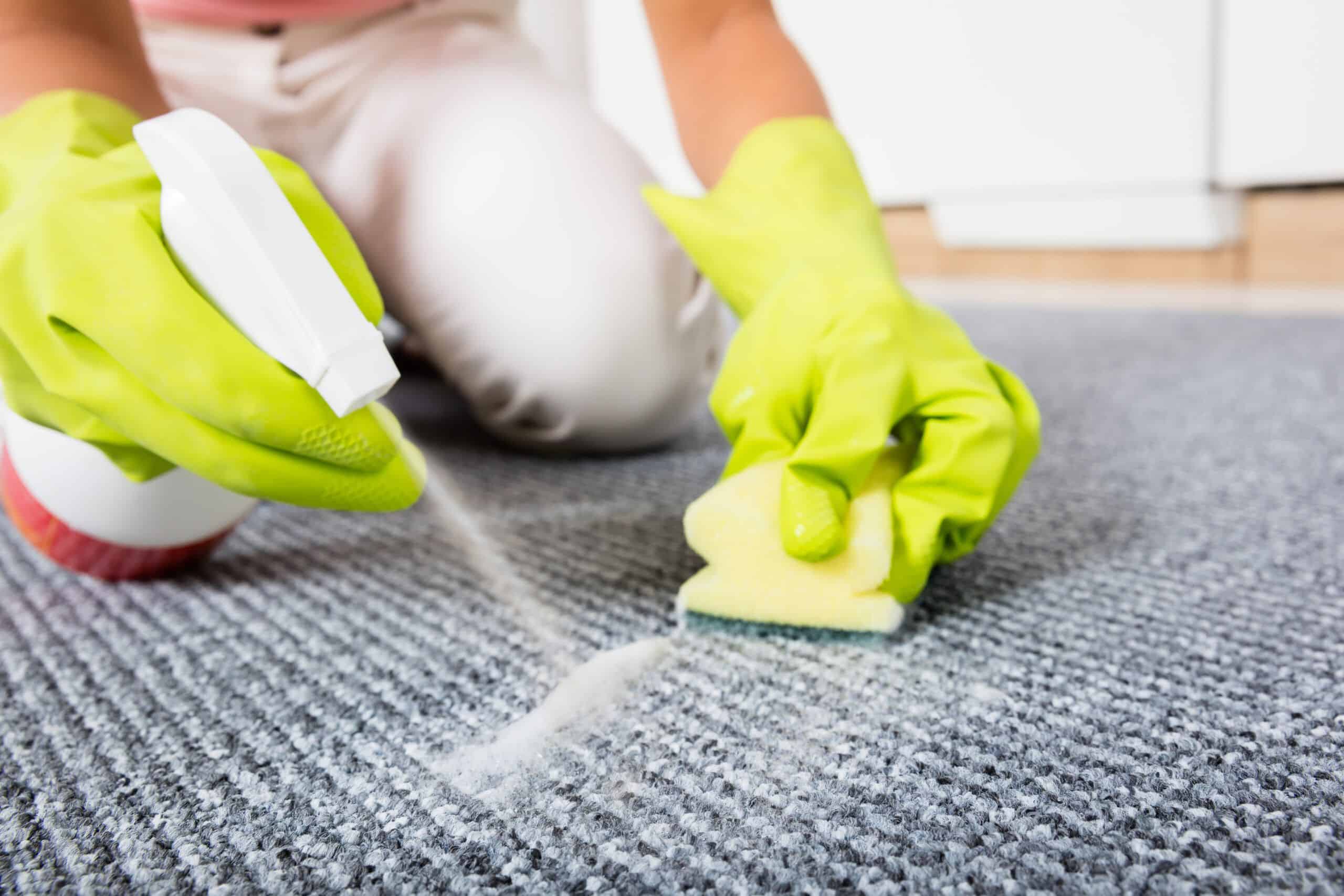
Instead of pouring water directly onto the floor, use a spray bottle to mist the surface lightly. The goal is to dampen the upper pile without soaking the carpet backing or the underpad.
Step 3: Agitate the Fibers
Work the solution into the carpet pile using a soft-bristled brush or a clean white cloth. Move in multiple directions—circular motions followed by straight strokes—to lift trapped soil from the base of the fibers. Do not scrub aggressively, as this can fray synthetic fibers or distort the twist of cut-pile carpets.
Step 4: Extract and Blot Moisture
Press a dry, clean white microfiber cloth or a stack of plain paper towels firmly onto the damp area. Step on the cloth to apply even body weight, forcing the dirty liquid to transfer from the carpet fibers into the absorbent material. Repeat this blotting process with fresh towels until the cloth lifts no more moisture or discoloration.
Step 5: Rinse the Area
Fill a separate spray bottle with plain, lukewarm water. Mist the cleaned section lightly to remove any remaining soap residue, then blot thoroughly with dry towels. Soap residue left behind will act as a dirt magnet, causing the cleaned area to resoil rapidly.
Comparison of Manual Carpet Cleaning Methods
Different cleaning challenges require different approaches. The table below outlines various manual cleaning methods, their best use cases, and key operational considerations.
| Method | Primary Ingredients / Tools | Best Used For | Pros | Cons / Limitations |
|---|---|---|---|---|
| Dry Baking Soda Treatment | Baking Soda, Soft Brush, Vacuum | General deodorizing and light surface oils | Chemical-free, safe for all fibers, zero drying time | Ineffective against deep mud, sticky spills, or heavy stains |
| Dish Soap & Vinegar Spot Clean | Warm water, dish soap, white vinegar, microfiber cloths | High-traffic lanes, footprints, general spots | Inexpensive, uses common household items, cuts grease | Requires careful rinsing to avoid sticky residue buildup |
| Hydrogen Peroxide Spot Lift | 3% hydrogen peroxide, mild dish soap | Organic stains (blood, coffee, wine) | Breaks down biological pigments effectively | Risk of bleaching or lightening dark carpet dyes |
| Ice Cube Dent Removal | Ice cubes, spoon, fork or towel | Flattened furniture dents | Restores crushed pile without chemicals | Takes several hours for ice to melt and fibers to rebound |
Deep Deodorizing with Baking Soda
Carpets frequently trap household odors from cooking, pets, and everyday foot traffic. If your carpet does not require extensive liquid washing, a dry baking soda treatment can neutralize smells effectively.
- Ensure the Carpet is Dry: Vacuum the area thoroughly to remove loose debris.
- Distribute Baking Soda: Sprinkle a generous, even layer of baking soda across the entire carpet surface or focus on problem zones. You can mix a few drops of essential oil into the baking soda beforehand if you prefer a scented finish, though unscented is safer for allergy sufferers.
- Work into the Pile: Use a soft-bristled broom or brush to gently sweep the powder down into the base of the carpet fibers.
- Dwell Time: Allow the baking soda to sit undisturbed for at least 30 to 60 minutes. For severe pet odors, leave it overnight.
- Vacuum Extraction: Vacuum the area thoroughly using multiple passes to collect all the powder. Empty your vacuum bag or canister once finished, as fine baking soda can clog filters quickly.
Drying Techniques and Preventing Mold
When cleaning carpet without a shampooer, managing moisture is critical. Excess water trapped beneath the carpet can cause unpleasant mildew odors, delamination of the backing, and structural damage to subfloors.
Accelerated Drying Strategies
- Cross-Ventilation: Open windows and exterior doors on opposite sides of the room to encourage cross-breezes, provided the outdoor humidity is low.
- Electric Fans: Position floor fans, box fans, or oscillating pedestal fans so they blow directly across the surface of the damp carpet.
- Air Conditioning and Dehumidifiers: Turn on your home’s air conditioning system or place a portable dehumidifier in the room to pull moisture out of the indoor air rapidly.
Frequently Asked Questions
Can I use laundry detergent instead of dish soap to clean my carpet manually?
No, standard laundry detergents are formulated with optical brighteners and heavy surfactants designed for washing machines, and they are extremely difficult to rinse out by hand. Residual laundry detergent leaves a sticky film that attracts dirt rapidly, making carpets look soiled again within days. Stick to a few drops of clear dish soap or a dedicated carpet spot cleaner.
How do I get rid of pet urine odors without a shampooer?
Blot up as much liquid as possible with dry paper towels. Mix equal parts white vinegar and warm water in a spray bottle, mist the affected area, and blot with a clean cloth to neutralize uric acid salts. Once dry, sprinkle baking soda over the spot, let it sit for two hours, and vacuum thoroughly. For older stains, an enzymatic cleaner formulated specifically for pet urine is required to break down proteins completely.
Is it safe to use vinegar on wool carpets?
Diluted white vinegar is generally safe for wool when used briefly and rinsed promptly, as wool naturally prefers slightly acidic environments. However, avoid soaking wool carpets or using high heat, which can cause the fibers to shrink or weaken. Always test a hidden section first.
How long does a manually cleaned carpet take to air dry?
Without professional extraction machinery, a hand-cleaned carpet typically takes between 4 to 12 hours to dry completely, depending on ambient humidity, airflow, and how much moisture was applied during the cleaning and rinsing steps. Using fans and dehumidifiers will significantly shorten this timeframe.
Conclusion and Next Actions
Cleaning carpet without a shampooer is entirely achievable with careful preparation, appropriate household solutions, and disciplined moisture control. By prioritizing dry vacuuming, applying gentle surfactants sparingly, rinsing soap residues completely, and maximizing airflow during the drying phase, you can maintain fresh, clean carpets without investing in heavy rental equipment. For persistent stains, delicate antique rugs, or wall-to-wall flooding issues, consult a certified professional carpet cleaning service to prevent irreversible damage.
Image Gallery