Investigating the Legend of the Morgue Employee Cremated by Accident
The widely circulated story of a morgue employee who was cremated by accident is a documented internet hoax originating from a satirical website. There is no factual evidence or official record supporting the claim that a worker named...
The widely circulated story of a morgue employee who was cremated by accident is a documented internet hoax originating from a satirical website. There is no factual evidence or official record supporting the claim that a worker named Henri Paul Johnson, or any other individual, was mistakenly cremated while napping at a funeral home or morgue.
Contents
For years, a specific narrative has haunted the corners of social media and tabloid-style news feeds: the tragic and bizarre tale of a morgue employee who decided to take a nap on a gurney, only to be mistaken for a corpse and sent into a cremation chamber by a coworker. As we navigate the information landscape of 2026, this story remains a primary example of how sensationalized satire can be mistaken for breaking news. To understand the reality behind this claim, one must look at the specific origins of the report, the procedural safeguards within the funeral industry, and the mechanics of digital misinformation.
The Origins of the Henri Paul Johnson Hoax
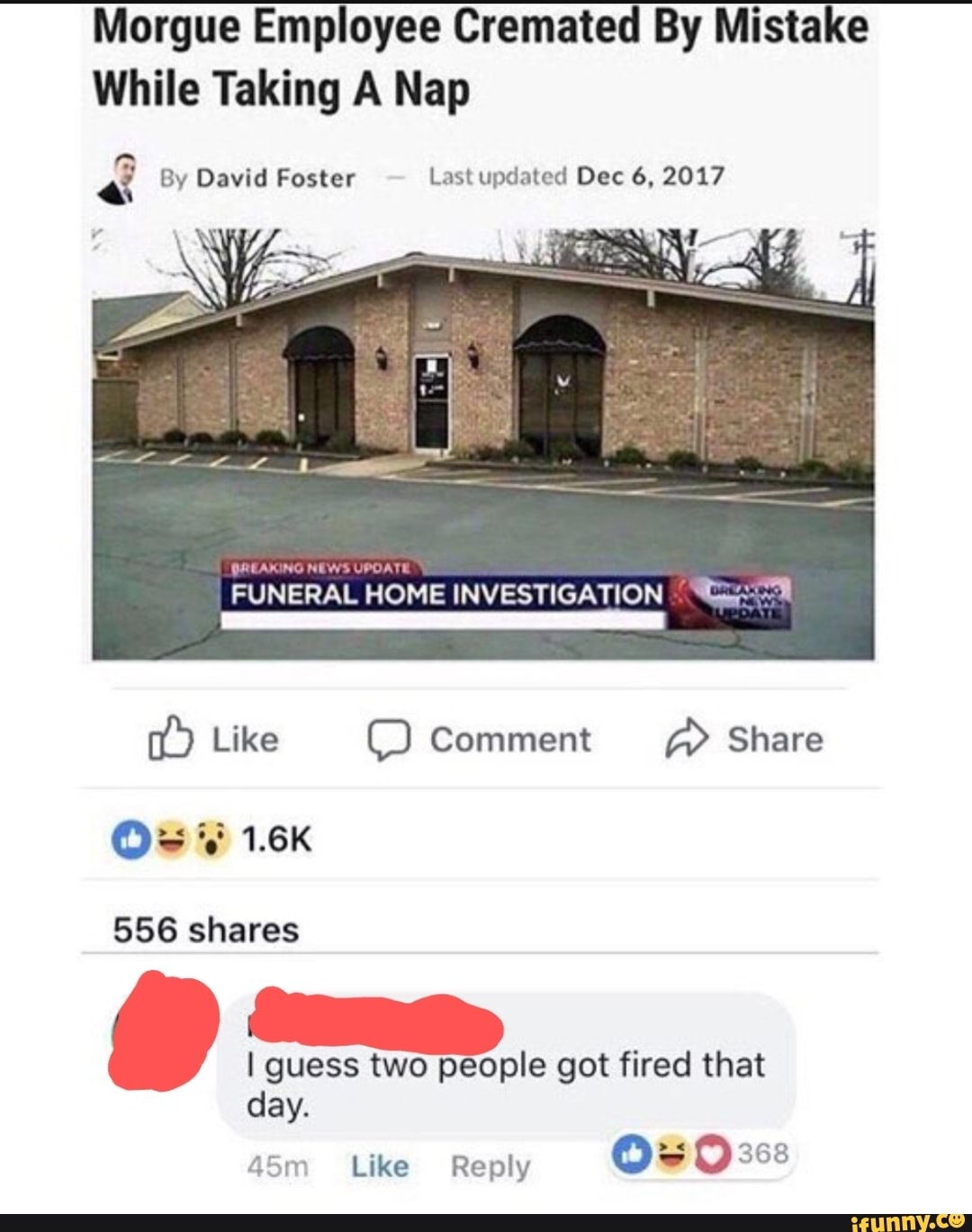
The specific story identifying the victim as "Henri Paul Johnson" first appeared in March 2017. It was published by a website called World News Daily Report (WNDR). The article claimed that the incident occurred in Beaumont, Texas, at a facility where Johnson had allegedly worked for many years. According to the fabricated report, Johnson had been working a long shift and decided to lie down on a gurney for a short nap. A coworker, supposedly a new trainee, did not check for vital signs or identification tags and proceeded to move the gurney into the crematorium.
The story was designed to trigger an emotional response—a mix of horror, irony, and disbelief. It included fabricated quotes from a "coworker" and a "police spokesperson" to lend an air of legitimacy to the narrative. However, World News Daily Report is a well-known satirical site that carries a clear disclaimer stating that its content is fictional and intended for entertainment purposes only. Despite this, the article was shared hundreds of thousands of times, often by users who stripped away the context of the source website, leading many to believe it was a factual report from a local news outlet.
Dissecting the Procedural Impossibilities
To understand why this story is a physical and procedural impossibility, one must look at the stringent regulations governing morgues and crematories. In the United States, including Texas, the funeral industry is heavily regulated by state boards and federal agencies like the Occupational Safety and Health Administration (OSHA).
Identification and Documentation Protocols
In a real-world morgue setting, a body is never processed for cremation without multiple layers of identification. Every decedent is fitted with at least one, and often two, identification tags (commonly known as "toe tags") immediately upon arrival. Before a body is moved to a cremation chamber, a technician must verify the identity against a "Cremation Authorization Form," which is signed by the next of kin or a legal representative.
The Physical Nature of the Cremation Process
The "accidental cremation" story suggests a level of silence and ease that does not exist in reality. Modern cremation chambers, often called retorts, involve a significant amount of preparation. The machinery is loud, and the process of opening the heavy, insulated doors and activating the burners is a deliberate, multi-step action. It is virtually impossible for a sleeping human being to remain asleep through the noise of the machinery, the physical movement of the gurney into the retort, or the initial heat exposure.
Furthermore, cremation typically occurs within a combustible casket or a specialized cardboard "alternative container." Bodies are not simply rolled into the furnace on metal gurneys, as the metal would not be consumed by the fire and would damage the equipment. The satirical story ignores these technical realities of the trade.
Fact-Checking the Entities and Locations
When the story first broke, local authorities in Beaumont, Texas, were inundated with inquiries. The Beaumont Police Department and the local medical examiner’s office have clarified on multiple occasions that no such incident occurred within their jurisdiction.
A search of historical employment records and death certificates in Jefferson County, Texas, reveals no individual named Henri Paul Johnson who died under these circumstances. Additionally, there is no funeral home or morgue in the region that has a record of such a catastrophic safety failure. OSHA, which tracks workplace fatalities and major industrial accidents, has no filing related to a "morgue employee cremation."
The lack of any primary source—such as a police report, an obituary, or a court filing for wrongful death—confirms that the narrative exists solely within the realm of digital fiction.
The Persistence of Misinformation in 2026
Even in 2026, the "morgue employee cremated" story continues to resurface. This persistence is due to a phenomenon known as "zombie news," where a debunked story is repackaged by low-quality content aggregators or shared by social media users who do not verify dates or sources.
Several factors contribute to why this specific story remains "sticky" in the public consciousness:
- The "Gallows Humor" Factor: The story appeals to a dark sense of irony regarding workplace accidents.
- Visual Elements: The original satirical article used a stock photo of a man that many users associated with the fictional Henri Paul Johnson, giving a "face" to the tragedy.
- Confirmation Bias: Individuals who are already skeptical of institutional safety or who enjoy "weird news" are more likely to share the story without skepticism.
Standard Operating Procedures (SOPs) in Modern Crematories
To illustrate the gap between the hoax and reality, the following table compares the claims made in the satirical story with the standard operating procedures (SOPs) required by the Cremation Association of North America (CANA) and state regulatory bodies.
| Feature | Satirical Story Claim | Real-World Standard Protocol |
|---|---|---|
| Identification | No tags checked; worker napping on gurney. | Minimum of two ID tags; mandatory ID verification against paperwork. |
| Personnel | A single "new trainee" acting alone. | Multi-person verification; licensed crematory operators required. |
| Pre-Cremation | Immediate insertion of gurney into heat. | Body placed in combustible container; pacemaker/device removal. |
| Documentation | No mention of legal permits. | Burial Transit Permit and Cremation Authorization required by law. |
| Sensory Reality | Victim remains asleep during the process. | High-decibel machinery and heat make remaining asleep impossible. |
| Legal Oversight | No investigation or OSHA involvement mentioned. | Mandatory reporting of any workplace injury or death to state/federal agencies. |
Why Satire Is Often Mistaken for News
The "morgue employee" hoax highlights a broader issue in digital literacy: the blurring of lines between satire and "fake news." Satire, like that produced by The Onion or World News Daily Report, uses exaggeration to poke fun at societal tropes. However, when satire is stripped of its original branding and shared as a screenshot or a headline, it loses its intent and becomes misinformation.
In many cases, websites like WNDR use "clickbait" headlines that mimic the style of legitimate breaking news alerts. By the time a reader realizes the story is too bizarre to be true, they may have already shared it, contributing to the viral spread. In 2026, AI-driven content scrapers often pick up these old satirical stories and republish them on "news" blogs, further obscuring the fictional origin of the content.
Frequently Asked Questions
Is Henri Paul Johnson a real person?
No, Henri Paul Johnson is a fictional character created for a satirical article by World News Daily Report. No employee by that name has ever been reported as a victim of an accidental cremation in any official capacity.
Has anyone ever been accidentally cremated?
While there have been rare, tragic instances of the "wrong body" being cremated due to administrative errors or misidentification of remains, there is no documented case in modern history of a living person (employee or otherwise) being accidentally cremated in a professional morgue or funeral home setting.
How can I tell if a "weird news" story is satire?
Check the "About Us" or "Disclaimer" section of the website. Sites like World News Daily Report explicitly state they are satirical. Additionally, search for the story on reputable fact-checking sites like Snopes or check for coverage from major, verified news organizations like the Associated Press or Reuters. If only one obscure website is reporting a major "tragedy," it is likely false.
What are the legal consequences of such an accident?
If a living person were mistakenly cremated, it would result in immediate criminal charges (likely manslaughter or negligent homicide), the permanent revocation of the facility's license, massive civil lawsuits, and an exhaustive investigation by OSHA and state funeral boards. The absence of such legal records for the "Henri Paul Johnson" case is proof of its fictional nature.
Why does this story keep appearing in 2026?
Social media algorithms often prioritize high-engagement, "shocking" content. Because the story of the cremated morgue employee is so sensational, it continues to generate clicks and shares, leading algorithms to resurface it periodically despite it being debunked years ago.
Practical Recommendation for Content Consumers
When encountering sensational stories involving workplace accidents or bizarre deaths, always verify the source before sharing. In the case of the "morgue employee cremated by accident," the story is a complete fabrication. For those interested in real-world mortuary science or crematory safety, consult the Cremation Association of North America (CANA) or the National Funeral Directors Association (NFDA) for information on the rigorous safety standards and ethical guidelines that prevent such accidents from occurring in the real world.
Image Gallery