Best Practices for Trailer Tire Rotation and Maintenance
Trailer tire rotation is a critical maintenance task that helps extend the lifespan of your tires by ensuring they wear evenly across all wheel positions. Because trailers lack steering mechanisms and often carry unbalanced loads, tire...
Trailer tire rotation is a critical maintenance task that helps extend the lifespan of your tires by ensuring they wear evenly across all wheel positions. Because trailers lack steering mechanisms and often carry unbalanced loads, tires frequently suffer from uneven tread wear patterns, sidewall fatigue, and heat-induced degradation. Rotating them regularly distributes this stress, preventing premature failure, improving road safety, and optimizing your long-term maintenance costs.
Contents
Understanding the Necessity of Trailer Tire Rotation
Most drivers are conditioned to rotate the tires on their passenger vehicles every 5,000 to 8,000 miles to compensate for front-wheel steering and drive-train friction. Trailer tires operate under different physical constraints. Unlike a motorized vehicle, trailer tires are essentially passive rolling elements. They are subject to side-load stresses during cornering, fluctuating weight distribution, and varying road surfaces.
Because trailers do not have an engine to drive the wheels or a steering rack to guide them, many owners mistakenly believe that rotation is unnecessary. In reality, the absence of these components makes tires more susceptible to "scrubbing"—a condition where tires are dragged sideways during tight turns, particularly on multi-axle trailers. Over time, this creates irregular wear patterns that, if left unaddressed, can lead to belt separation or catastrophic blowout on the highway. Regular rotation acts as a preventative measure to equalize these structural stresses.
Determining the Optimal Rotation Schedule
There is no "one-size-fits-all" mileage interval for trailer tires. The rotation frequency should be dictated by the intensity of use rather than just the odometer. A trailer used for long-haul interstate transport will experience different wear characteristics than a utility trailer used for short-trip construction hauling.
As a general guideline for the 2026 operating season, implement these scheduling rules:
- High-Frequency Use (Commercial/Long-Haul): Rotate tires every 5,000 to 7,000 miles. At this frequency, you should also inspect the wheel bearings and check for proper torque on lug nuts.
- Occasional Use (Recreational/Camping): Rotate tires once per season or every 3,000 miles. Since these trailers often sit stationary for months, rotation helps prevent flat-spotting—a condition where the tire carcass deforms due to prolonged weight concentration on a single footprint.
- Heavy Loading: If your trailer is consistently loaded near its Gross Vehicle Weight Rating (GVWR), rotate tires more frequently. Heavy loads increase internal tire temperature and pressure, accelerating rubber oxidation.
The Mechanics of Proper Rotation Patterns
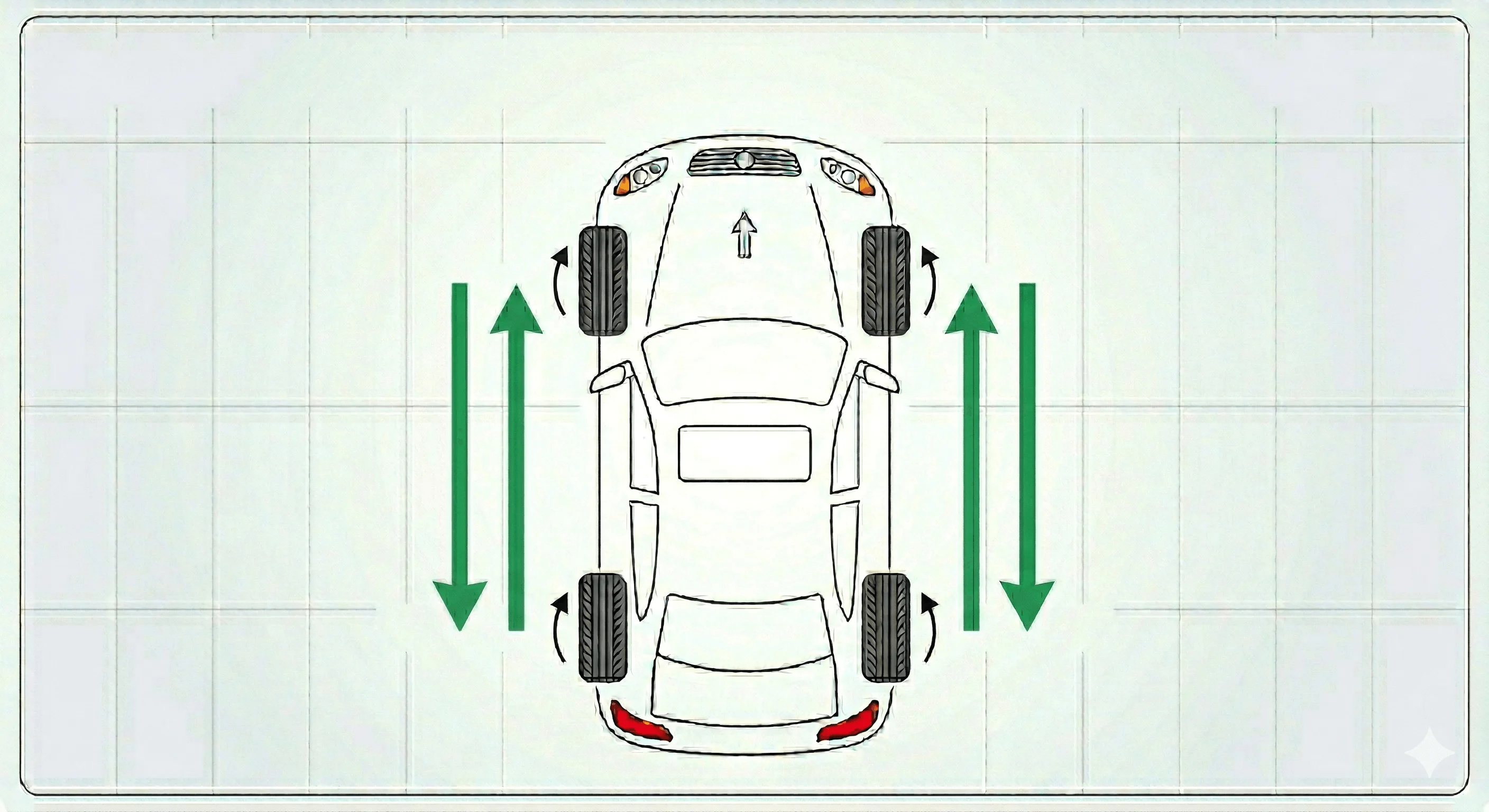
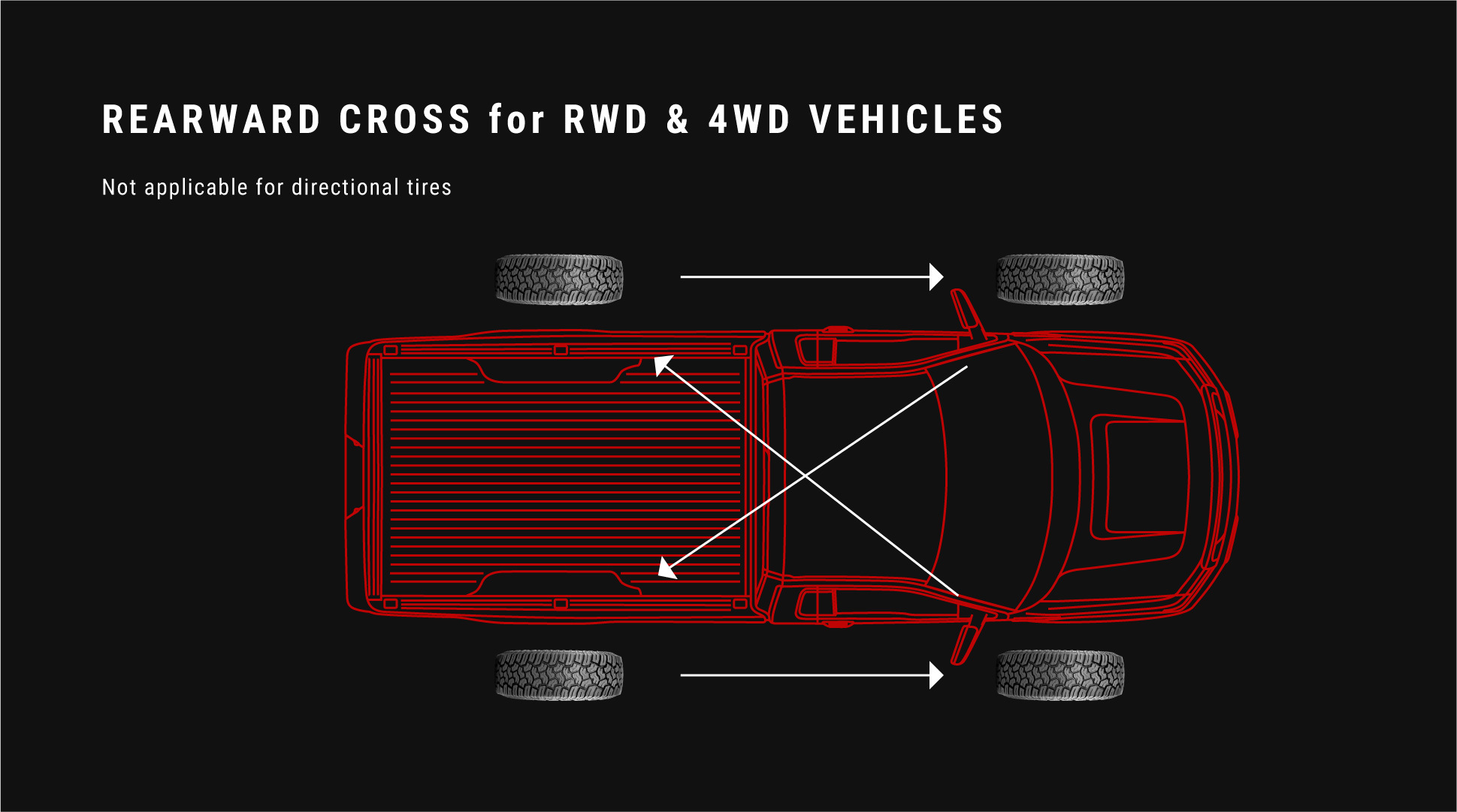
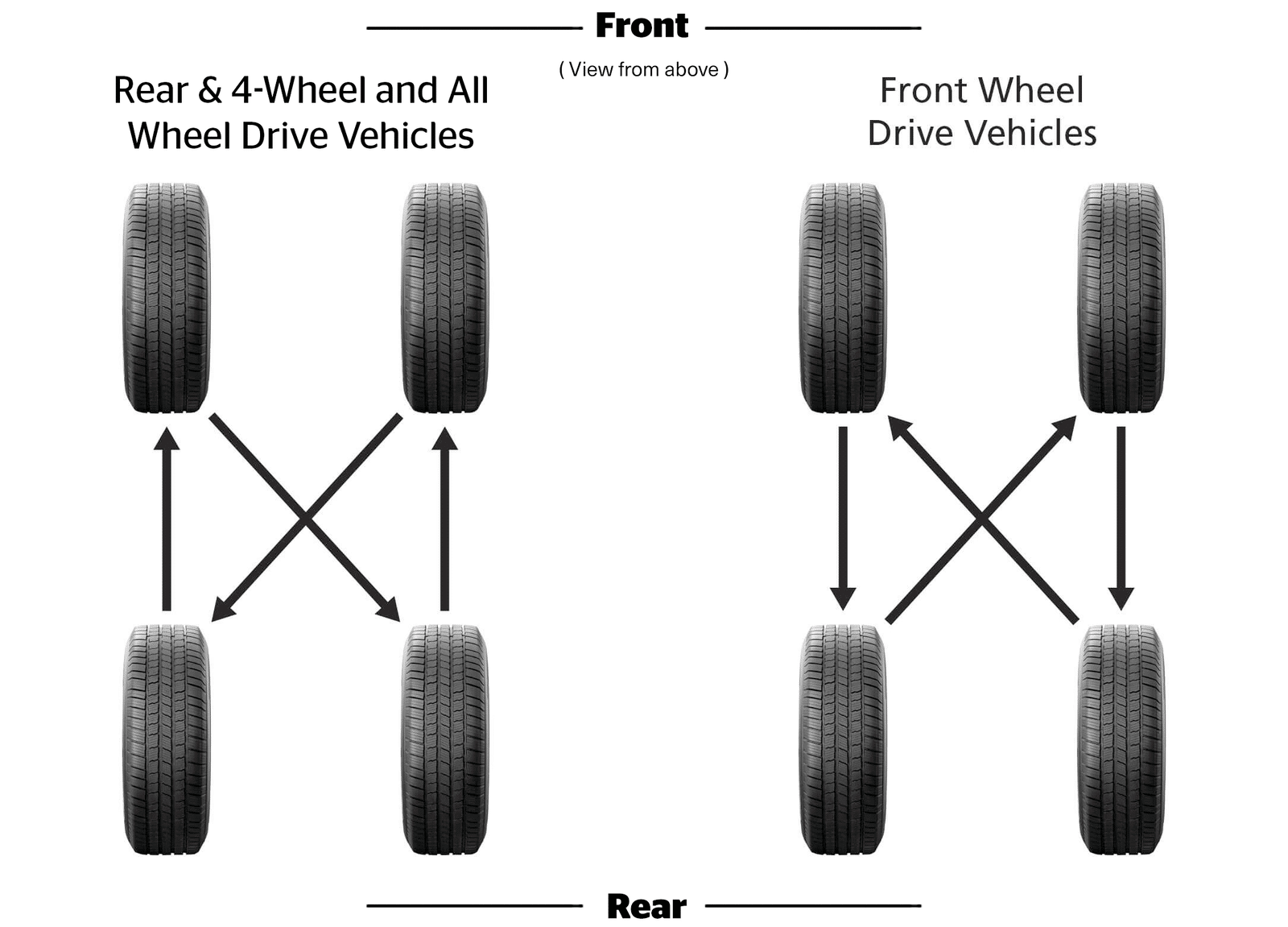
The rotation pattern for a trailer depends on the configuration of the axles and the type of tires being used. Radial tires, which are the industry standard for modern trailers, should generally remain on the same side of the vehicle to prevent potential tread separation, especially if they have been in service for a significant duration.
Multi-Axle Trailers (Tandem or Triple Axle)
The most common practice for tandem-axle trailers is a simple front-to-back swap on the same side. This keeps the tire rotating in the same direction, which is vital for maintaining the structural integrity of radial steel belts.
Single-Axle Trailers
On a single-axle trailer, true "rotation" in the traditional sense is difficult. However, you can dismount the tires from the rims and flip them if the tread wear is significantly more pronounced on the inner edge compared to the outer edge. This is common when trailers have slight axle misalignment or excessive negative camber.
| Trailer Configuration | Recommended Rotation Strategy | Frequency Recommendation |
|---|---|---|
| Tandem-Axle (Radial) | Front to rear (same side only) | Every 5,000 miles |
| Single-Axle (Radial) | Dismount and flip on rim if uneven | Based on tread inspection |
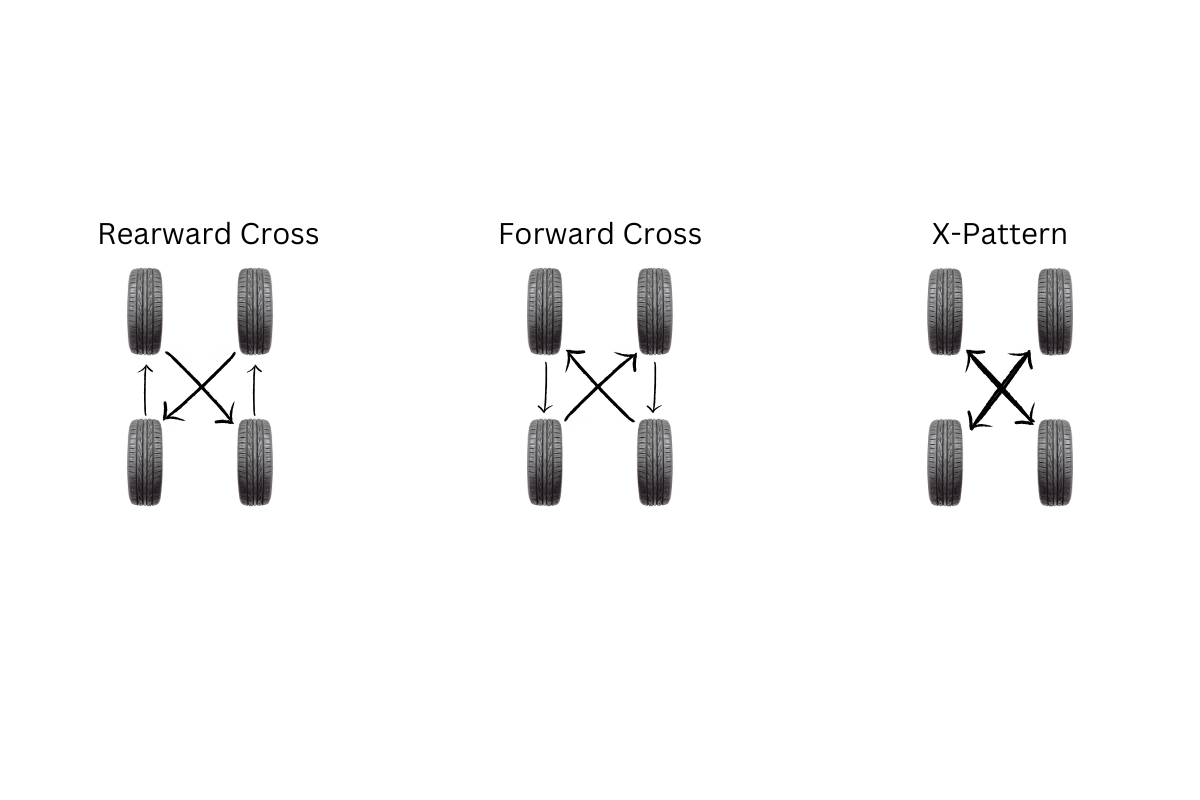
| Bias-Ply Tires | Cross-pattern (if allowed by manufacturer) | Every 3,000 miles |
| Specialty/Commercial | Align with fleet maintenance logs | Every 6 months or 5k miles |
Essential Inspection During Rotation
Rotating your tires provides the perfect opportunity to perform a comprehensive "health check" on your trailer's rolling gear. Do not simply move the tires and move on; use the time the trailer is jacked up to inspect the following components:
- Tread Depth: Measure the tread depth across three points—inner, center, and outer. If the difference between these measurements exceeds 2/32 of an inch, it often indicates an axle alignment issue rather than a tire issue.
- Sidewall Condition: Look for "dry rot" (weather checking). Small cracks in the sidewall are common in older tires and indicate that the rubber compounds are losing their elasticity. If you see deep cracks, the tire should be replaced regardless of tread depth.
- Wheel Bearings: While the wheel is off, check for play in the hub. If you feel any "wobble," your bearings may need to be repacked with grease or replaced.
- Lug Nut Torque: Always verify the lug nut torque specifications provided by the trailer manufacturer using a calibrated torque wrench. Improperly torqued nuts are a leading cause of wheel stud shearing.
Addressing Common Myths and Misconceptions
One persistent myth is that trailer tires do not need to be replaced until the tread is gone. In reality, trailer tires (often stamped with "ST" for Special Trailer) are designed for higher load capacity and stiffness, not long-distance highway mileage. Most experts suggest replacing trailer tires every 5 to 7 years, regardless of how much tread remains, because the rubber compounds degrade chemically over time.
Another misconception is that it is acceptable to mix tire sizes or types on the same axle. Never do this. Mixing bias-ply and radial tires, or mixing tires of different diameters, creates an uneven weight distribution that can cause one tire to carry more load than the other, leading to rapid overheating and eventual failure.
Safety Precautions and Legal Considerations
When performing a trailer tire rotation, safety must be the priority. Trailers are frequently heavier than the average passenger vehicle, and their center of gravity can be deceptive.
- Stable Surface: Always perform this work on a flat, level, concrete surface. Never attempt to lift a trailer on grass, gravel, or an incline.
- Proper Jacking Points: Consult your trailer owner’s manual for the approved jacking points. Using the axle tubes or the frame in the wrong location can bend the axle or damage the chassis.
- Jack Stands: Never rely solely on a hydraulic jack to hold the weight of a trailer while you are working near it. Always use industrial-rated jack stands placed on the main frame rails.
- Wheel Chocks: Ensure both sides of the tires that are remaining on the ground are securely chocked.
Disclaimer: This information is provided for general guidance. Always refer to your specific trailer manufacturer’s service manual for technical specifications, as individual trailer designs may have unique axle requirements or proprietary service intervals.
Frequently Asked Questions
Does a trailer with a single axle benefit from tire rotation? A single-axle trailer has limited rotation options. Since you cannot move tires from one axle to another, rotation usually involves dismounting and flipping the tire on the rim to address uneven wear, provided the tire is not directional.
Can I rotate my trailer tires at the same time as my truck tires? Yes, but they should remain separate sets. Do not move trailer tires to your tow vehicle or vice versa. Trailer tires (ST) are built for different load and handling characteristics than light truck (LT) tires.
What is the "ST" designation on my trailer tires? "ST" stands for Special Trailer. These tires are designed with stiffer sidewalls to handle the swaying forces of a towed vehicle and are rated for higher load capacities than standard automotive tires.
How do I know if my trailer axle is misaligned? If your tires show rapid or "feathered" wear on one side of the tread while the other side remains smooth, it is a strong indicator of axle misalignment or a bent axle. Rotation will not fix this; you must have the axle serviced or replaced.
Should I balance my trailer tires? While often overlooked, balancing trailer tires reduces vibration, which protects the trailer's frame, cabinets, and electronics from loosening over time. It is highly recommended to balance tires whenever they are rotated.
Next Action: Establish Your Service Log
Begin by inspecting your current tread wear to establish a baseline. If you identify irregular patterns, visit a professional alignment shop before your next trip. If the tires are in good condition, mark your calendar for a rotation interval based on your annual mileage estimates for 2026. Keep a simple logbook inside the trailer's storage area to track dates, mileage, and torque values; this record is invaluable for maintaining the resale value of your trailer and ensuring long-term peace of mind on the road.
Image Gallery