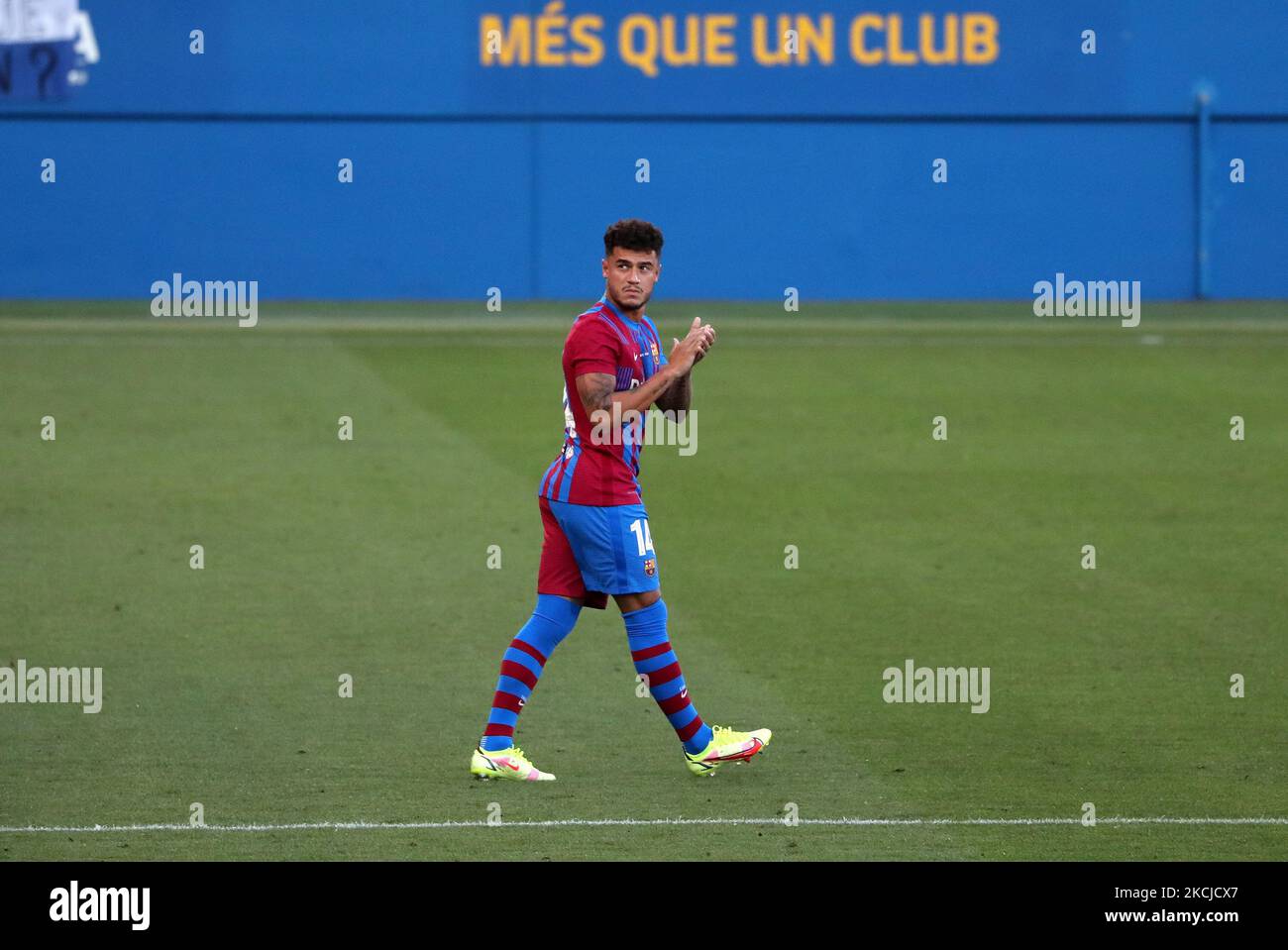
The Transfer of Philippe Coutinho: Decoding Barcelona's Financial Commitment
FC Barcelona acquired Philippe Coutinho from Liverpool FC in January 2018 for a base transfer fee of €120 million, supplemented by €40 million in performance-related add-ons. This deal, totaling a potential €160 million, stands as one...
FC Barcelona acquired Philippe Coutinho from Liverpool FC in January 2018 for a base transfer fee of €120 million, supplemented by €40 million in performance-related add-ons. This deal, totaling a potential €160 million, stands as one of the most significant and debated financial investments in football history, fundamentally altering the club’s fiscal strategy and squad development for years thereafter.
Contents
The Financial Structure of the Transfer
The transfer of Philippe Coutinho was structured as a multi-part deal designed to satisfy Liverpool's valuation of the Brazilian playmaker while managing Barcelona's immediate cash flow. The €120 million guaranteed fee was paid in installments, a standard practice in elite football that allows buying clubs to amortize costs over the duration of a player's contract.
The additional €40 million was tied to specific performance milestones. These clauses were categorized into three primary types: appearances, qualification for the UEFA Champions League, and individual/team honors. Specifically, the agreement included payments triggered by Coutinho reaching 25, 50, and 100 appearances for the club, as well as installments related to Barcelona progressing to the knockout stages of the Champions League. By the time Coutinho departed the club permanently, most of these objectives had been reached, bringing the total cost near the maximum agreed-upon ceiling.
Contextualizing the Market at the Time
To understand the magnitude of the €160 million figure, one must look at the climate of the 2017-2018 European football transfer market. Just months earlier, Paris Saint-Germain had activated Neymar Jr.’s release clause of €222 million, triggering a massive inflation in player valuations across Europe. Barcelona, having received a record-breaking windfall, was under immense pressure from fans and stakeholders to reinvest the funds into a world-class replacement.
Coutinho was identified as the primary target due to his proven success in the Premier League and his technical compatibility with Barcelona’s traditional possession-based style. At the time of the transfer, he was viewed as a generational talent capable of anchoring the midfield and attack for the next decade. The urgency caused by the mid-season departure of Neymar likely contributed to the premium price paid by the Catalan board.
Breakdown of Cost Components
The following table outlines the components of the transfer agreement between FC Barcelona and Liverpool FC.
| Payment Component | Amount (EUR) | Status |
|---|---|---|
| Guaranteed Base Fee | €120,000,000 | Paid |
| Appearance-Based Add-ons | €20,000,000 | Reached |
| Performance/Team Success Add-ons | €20,000,000 | Partially Reached |
| Total Potential Cost | €160,000,000 | Substantially Realized |
Amortization and Impact on Financial Fair Play
In professional football, the "cost" of a player is not merely the transfer fee but the accounting amortization. When Barcelona signed Coutinho on a five-year contract, the €120 million base fee was divided by five, resulting in a €24 million annual charge against the club's financial statements for transfer amortization, excluding his substantial wages.
When add-ons were triggered, the amortized cost increased proportionally. This structure placed a heavy burden on the club's wage-to-revenue ratio. Because Coutinho arrived on a high-value salary, the cumulative financial impact—salary plus annual transfer amortization—created significant pressure on Barcelona’s ability to adhere to La Liga's strict economic control rules. This became particularly acute during the subsequent financial crisis exacerbated by the global pandemic.
Evolution of Expectations versus Performance
The success of a transfer is often measured by its "value for money" relative to performance on the pitch. Coutinho’s tenure at Camp Nou was characterized by initial tactical struggles. Designed to operate as an interior midfielder, he was often deployed as a wide forward to accommodate other established stars. This tactical mismatch hindered his ability to exert the same influence he displayed at Liverpool.
While he scored several important goals, including a famous brace against his future parent club, Bayern Munich, during the 2019-2020 Champions League season, the return on investment failed to meet the expectations associated with one of the most expensive transfers in history. The disconnect between his market valuation and his output led to a depreciation of his book value, which eventually necessitated his loan to Bayern Munich and his eventual permanent move to Aston Villa.
Legacy and Lessons for Club Management
The Coutinho transfer serves as a primary case study for modern football directors regarding the risks of overspending on marquee signings during periods of market volatility. It highlighted the dangers of:
- Strategic Mismatch: Buying players based on reputation rather than a defined, long-term tactical fit within the existing coaching system.
- Financial Over-extension: Using inflated revenue from player sales to commit to future installments that restrict budget flexibility in subsequent seasons.
- Valuation Inflation: Succumbing to the "Neymar effect," where the price of a target is dictated by the selling club’s leverage rather than the player's objective market value.
Frequently Asked Questions
Did Liverpool receive the full €160 million for Coutinho? While the deal reached the potential value of €160 million, the final amount received by Liverpool depended on the specific activation of all performance clauses over the years. Given that most milestones were met during his active period with the club, the vast majority of the sum was indeed transferred to Liverpool.
How did the Coutinho transfer affect Barcelona’s wage bill? The transfer significantly inflated the club’s wage structure. Beyond the transfer fee, Coutinho’s contract was one of the highest at the club. This created a benchmark for other players' salary negotiations, ultimately contributing to the severe financial distress the club faced in the early 2020s.
Is Philippe Coutinho still under contract with Barcelona? No. Philippe Coutinho left FC Barcelona permanently following a successful loan period at Aston Villa. His exit was a key component of the club's efforts to reduce its overall wage expenditure and comply with league-mandated financial fair play regulations.
Were there cheaper alternatives considered by Barcelona? Media reports at the time suggested that Barcelona monitored several other midfielders, but the board remained fixated on Coutinho due to his specific profile and his perceived suitability for the "Barça DNA." This fixation is frequently cited as a reason why the club did not pursue lower-cost, high-value alternatives in the same window.
What is the "Neymar effect" in the context of this transfer? The Neymar effect refers to the market distortion caused by Paris Saint-Germain’s record-breaking payment for Neymar in 2017. Because clubs across Europe knew Barcelona had substantial liquid funds, selling clubs increased their asking prices for potential targets, knowing the Catalan side was under pressure to find a successor.
Recommendation for Further Research
For those interested in the granular accounting of professional football, it is recommended to review the official "FC Barcelona Annual Financial Reports" published on their investor relations portal. These documents provide audited figures regarding amortization schedules, player acquisition costs, and the club’s historical adherence to financial sustainability guidelines. Understanding these primary records offers a clearer picture of how individual transfers impact institutional fiscal health over the long term.
Image Gallery