Understanding the Types of Power of Attorney in Maryland: A 2026 Legal Guide
In Maryland, a power of attorney (POA) is a legal document that grants an individual, known as the agent or attorney-in-fact, the authority to act on behalf of another person, the principal. Maryland law categorizes these documents bas...
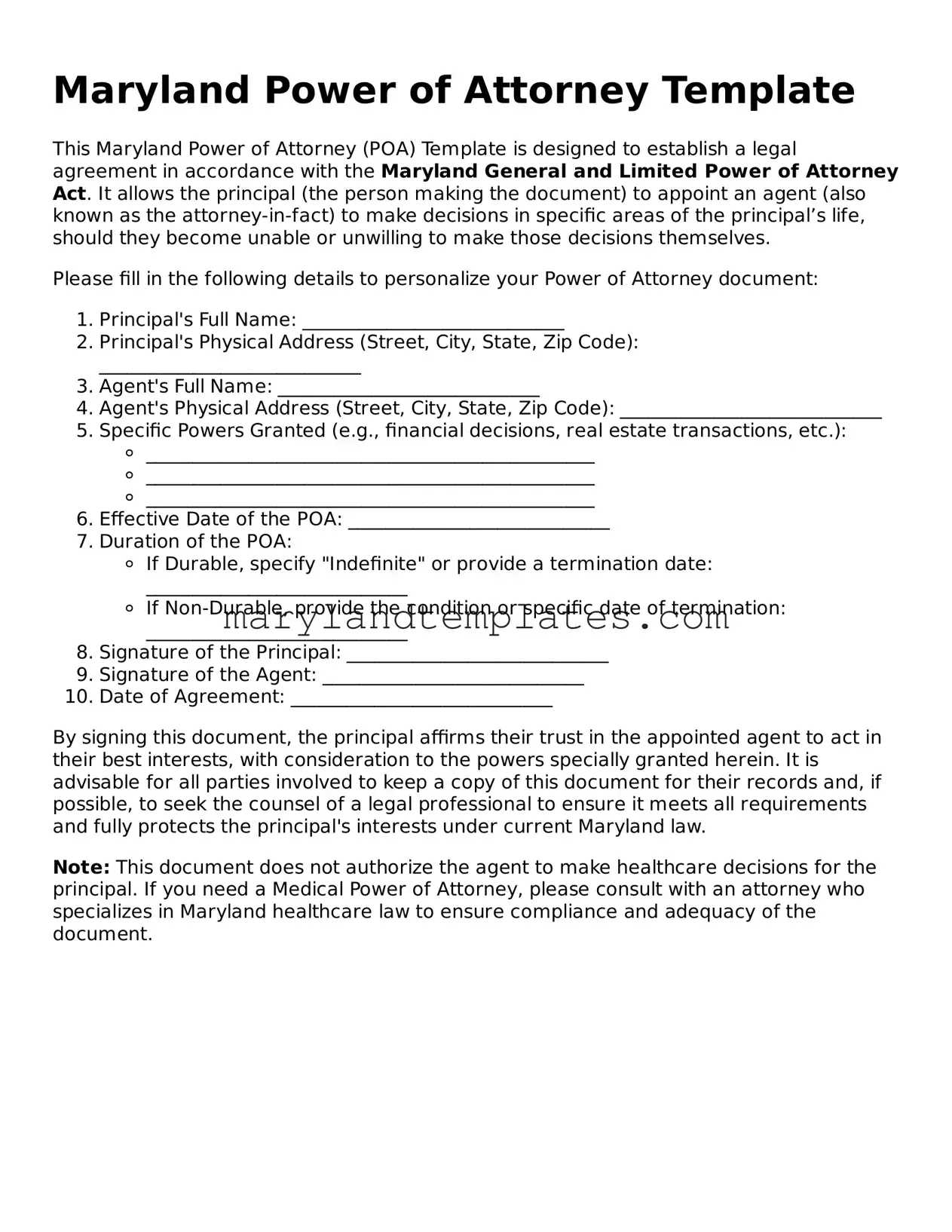
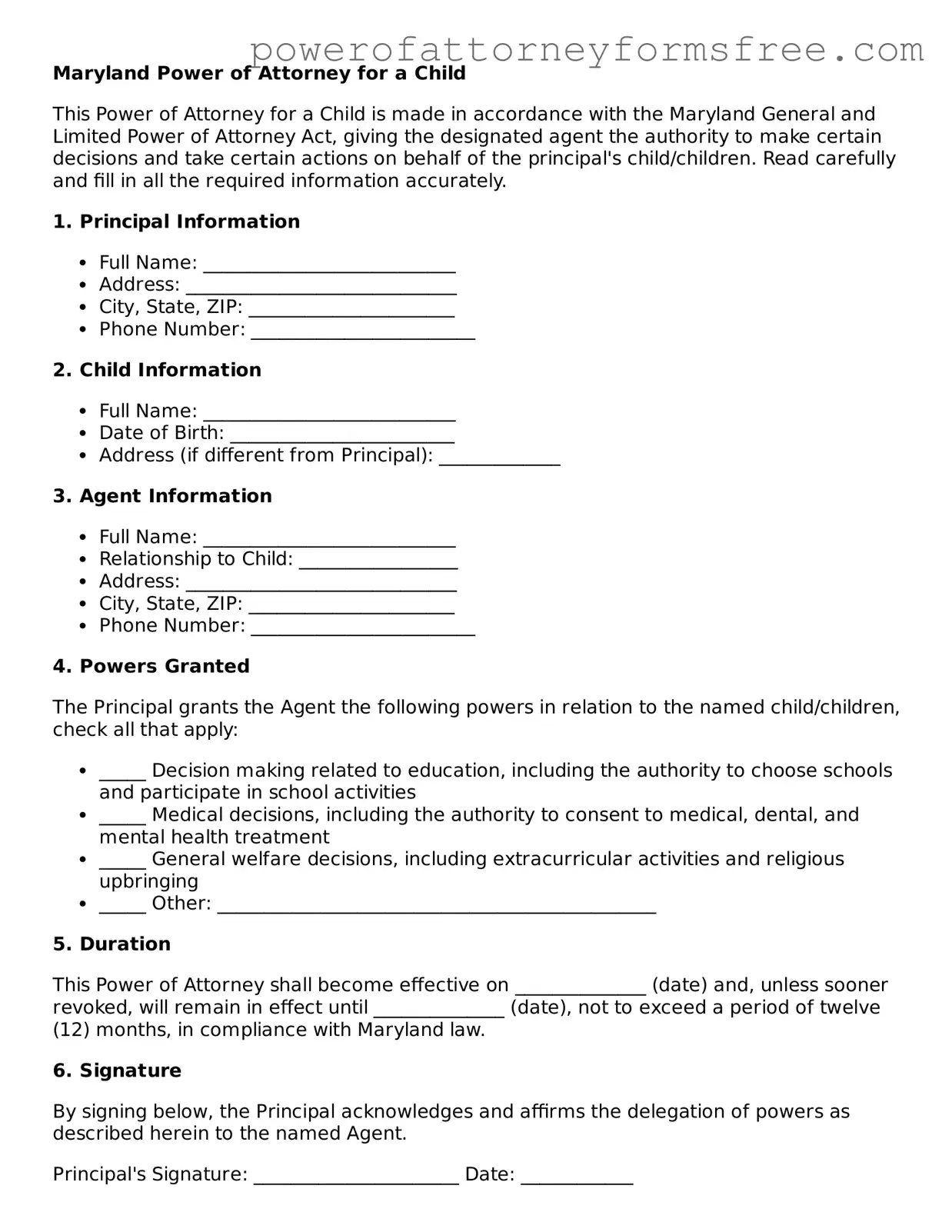
In Maryland, a power of attorney (POA) is a legal document that grants an individual, known as the agent or attorney-in-fact, the authority to act on behalf of another person, the principal. Maryland law categorizes these documents based on the scope, duration, and specific triggers of the authority granted, ensuring that your financial, medical, and personal affairs remain managed according to your wishes should you become incapacitated or unavailable.
Contents
The Legal Framework Governing Maryland Power of Attorney
Maryland law underwent significant modernization with the adoption of the Maryland Power of Attorney Act. Under current 2026 regulations, a power of attorney document must be signed by the principal, acknowledged before a notary public, and, in many cases, witnessed by two disinterested individuals to be considered valid and durable.
The fundamental purpose of these documents is to establish a fiduciary relationship. The agent is legally obligated to act in the best interest of the principal, maintain accurate records, and adhere to the instructions specifically outlined within the document. Failure to do so can result in legal action, including the potential for the agent to be held liable for damages to the principal’s estate.
Primary Types of Power of Attorney Available in Maryland
Depending on your estate planning objectives, you may require one or more specific types of power of attorney. Distinguishing between these is essential for ensuring that your agent has the necessary permissions to handle your affairs without overstepping legal boundaries.
Financial Power of Attorney
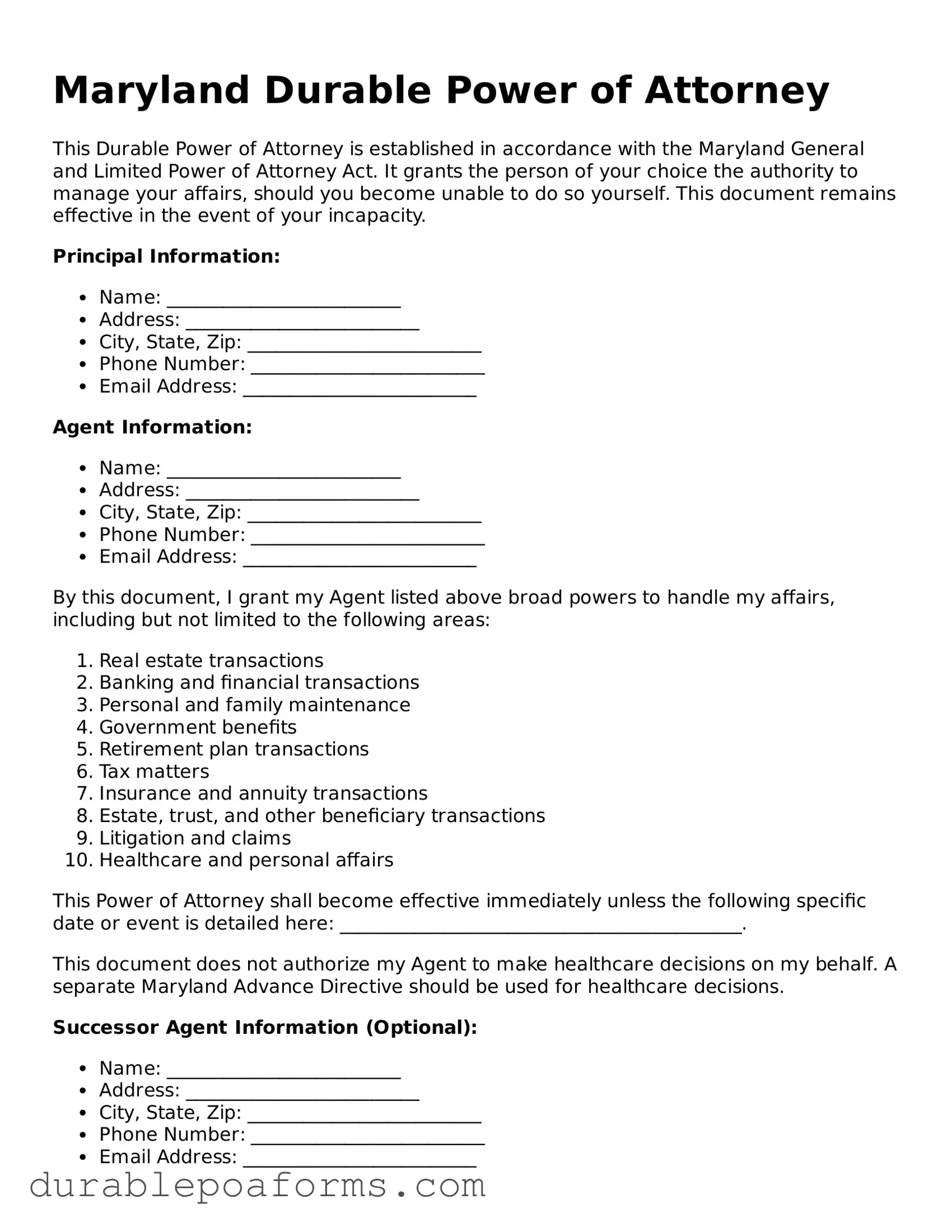
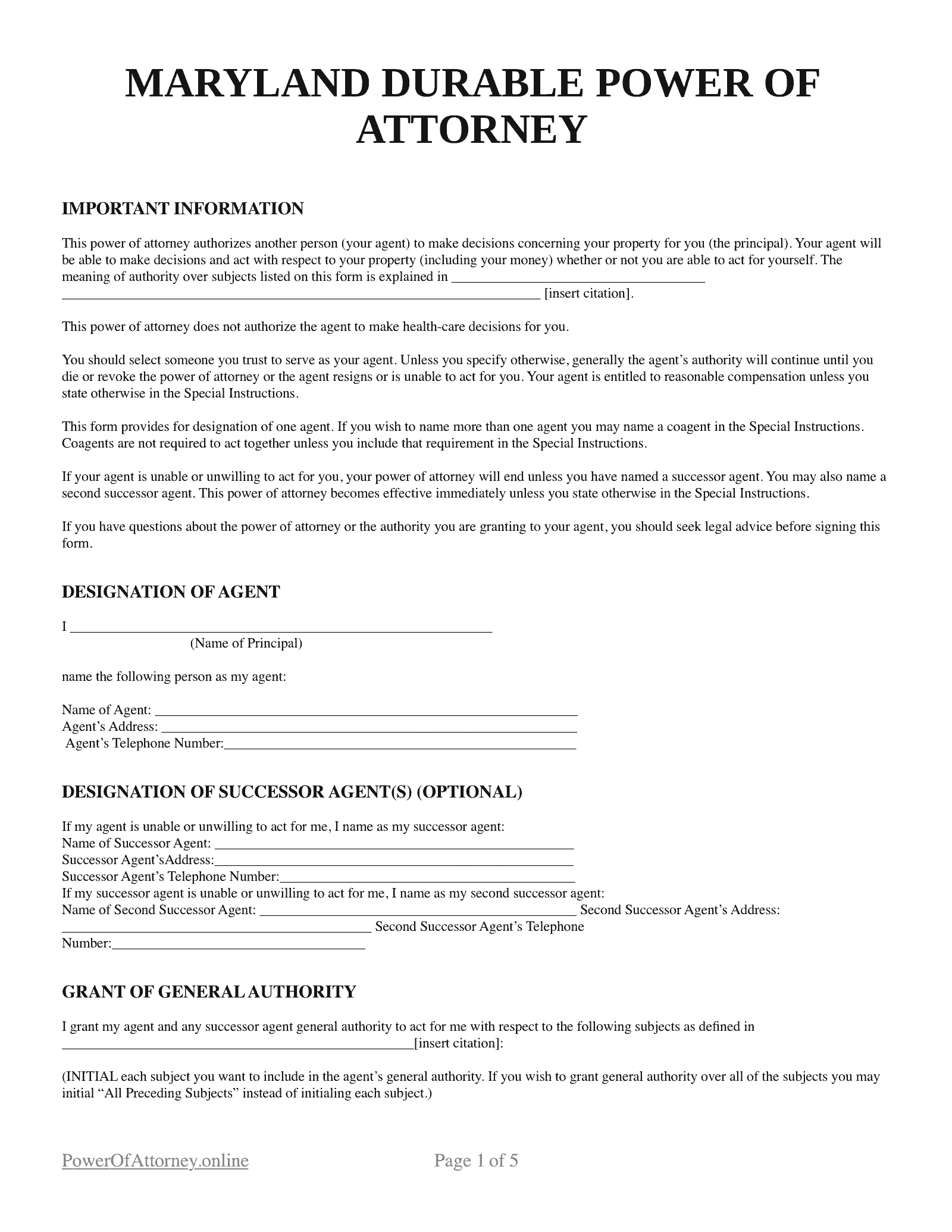
A financial power of attorney allows an agent to manage the principal’s monetary affairs. This can include banking transactions, real estate management, tax filing, and investment oversight. In Maryland, it is common practice to use a "durable" financial power of attorney, meaning the authority remains effective even if the principal becomes mentally or physically incapacitated.
Advance Directive (Medical Power of Attorney)
Maryland law combines the concepts of a living will and a medical power of attorney into a single legal instrument known as an Advance Directive. This document allows you to designate a healthcare agent to make medical decisions if you are unable to communicate your own preferences. You may also specify end-of-life care directives, such as the use of artificial nutrition or hydration.
Limited or Special Power of Attorney
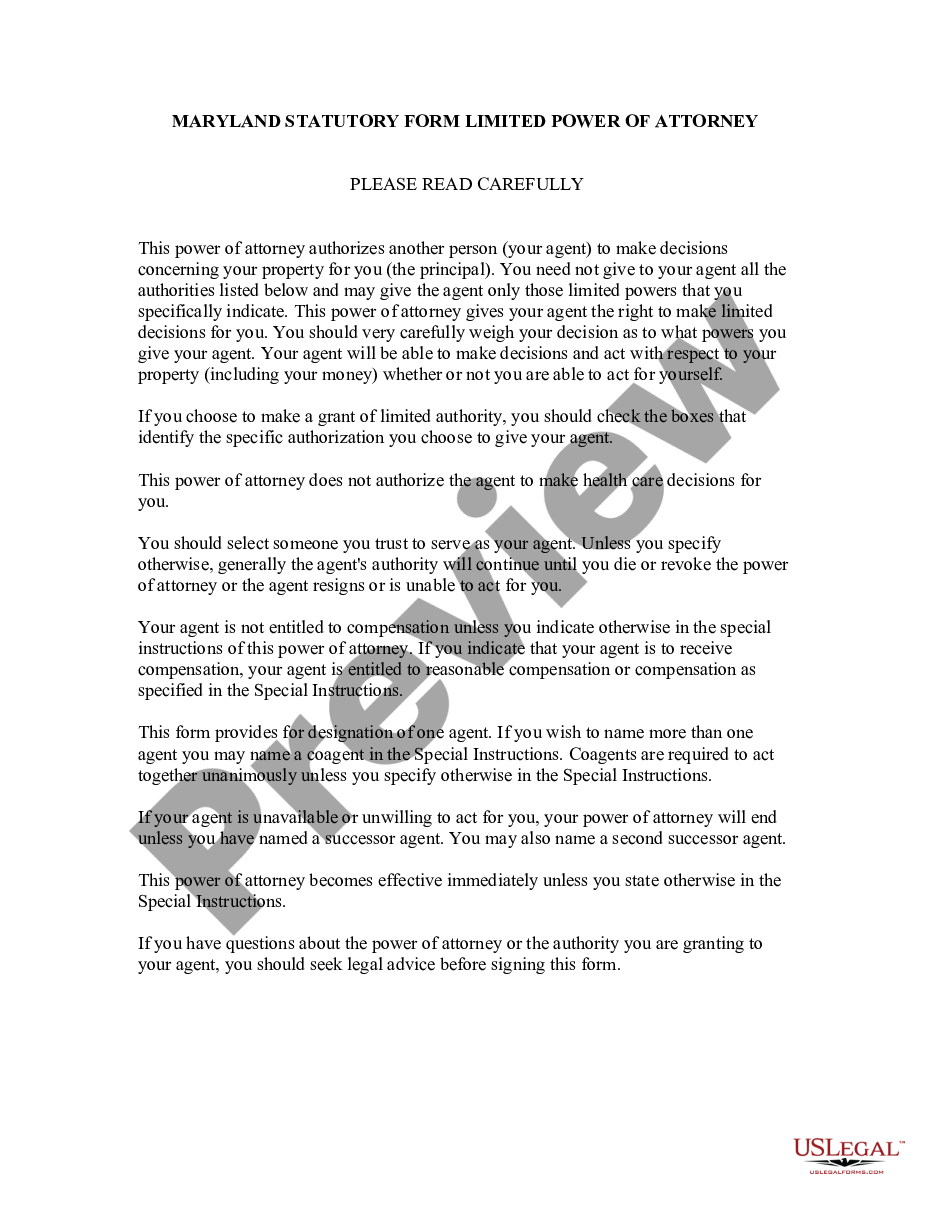
This document grants an agent authority to perform only specific, enumerated tasks. For example, a principal might grant a limited power of attorney to a relative to sell a specific piece of real estate or to manage a singular bank account for a defined period. Once the task is completed or the timeframe expires, the authority of the agent ceases.
General Power of Attorney
A general power of attorney provides the agent with broad authority to act on all financial and legal matters. While powerful, this type of document is often discouraged for long-term planning because it generally terminates if the principal becomes incapacitated, unless specifically drafted as a durable power of attorney.
Comparison Table of Maryland Power of Attorney Types
| POA Type | Primary Scope | Durable by Default? | Typical Use Case |
|---|---|---|---|
| Financial POA | Banking, Real Estate, Taxes | Yes (if specified) | Long-term asset management |
| Advance Directive | Medical Decisions | Yes | Healthcare and end-of-life wishes |
| Limited POA | Specific Task Only | Varies | One-time property sale or transaction |
| General POA | Broad Legal/Financial | No | Temporary delegation of authority |
Durable vs. Non-Durable: Understanding the Distinction
The term "durable" is perhaps the most critical legal distinction in Maryland estate law. A non-durable power of attorney becomes void if the principal loses mental capacity due to illness, injury, or dementia. In contrast, a durable power of attorney is specifically designed to remain in effect during the principal's period of incapacity.
For most residents planning for 2026 and beyond, a durable power of attorney is the preferred choice for estate planning. It prevents the need for a court-ordered guardianship, which is a significantly more expensive, time-consuming, and public process for the principal’s family members.
Selecting and Empowering Your Agent
The individual you select as your agent holds significant responsibility. Under Maryland law, you should choose someone who is trustworthy, organized, and capable of handling complex financial or medical tasks.
Important Considerations for Agent Selection
Fiduciary Duty Your agent is legally required to act solely for your benefit. They must avoid self-dealing and conflicts of interest.
Willingness to Act Ensure that your chosen agent is willing to take on the responsibility. Discuss the implications of the role with them before finalizing the documentation.
Successor Agents Always name a successor agent in your document. If your primary agent is unavailable or unable to serve, the successor will step in, preventing a gap in your decision-making coverage.
Procedural Requirements for Execution
To ensure your power of attorney is enforceable in Maryland courts or by financial institutions, you must adhere to strict procedural requirements. As of 2026, the document must be in writing. While Maryland does not strictly require an attorney to draft the document, it is highly recommended to ensure compliance with current statutory language.
- Drafting: Clearly define the powers granted. Do not use overly broad language if you intend to limit the agent's actions.
- Notarization: You must sign the document in the presence of a notary public.
- Witnessing: Maryland law requires two witnesses to observe the signing of the document. These witnesses should not be named as agents in the document.
- Recording: While not always required for general financial matters, if the power of attorney relates to real estate transactions, it may need to be recorded in the land records of the county where the property is located.
Frequently Asked Questions
Can I change or revoke my power of attorney? Yes, as long as you maintain legal capacity, you can revoke a power of attorney at any time by creating a new document or providing written notice of revocation to your agent and relevant third parties.
What happens if I do not have a power of attorney and become incapacitated? If you lack a power of attorney and lose the ability to manage your affairs, your family will likely need to petition the local Circuit Court to appoint a legal guardian. This process is public and often requires ongoing judicial oversight of your finances.
Do banks have to accept my power of attorney? While Maryland law provides protection for third parties who accept valid powers of attorney, some financial institutions have their own internal forms or policies. It is often beneficial to provide your bank with a copy of your POA for review while you are still capable of addressing their specific requirements.
Does a medical power of attorney give the agent power over my money? No. In Maryland, an Advance Directive (medical) and a financial power of attorney are separate documents. An agent appointed for medical decisions cannot access your bank accounts unless they are also named in a separate financial POA.
Can I have more than one agent? Yes, you may appoint co-agents. However, you must specify whether they must act together or if they have the authority to act independently. Independent authority is usually more convenient, as it prevents gridlock if one agent is unavailable.
Practical Steps to Finalize Your Planning
Securing your future in 2026 begins with proper documentation. Do not leave your affairs to chance. Review your current financial and medical needs, select individuals who reflect your values and trust, and work with a qualified professional to ensure your power of attorney documents are correctly drafted, witnessed, and stored in a secure location. Regularly update these documents to reflect changes in your life, such as relocation, marriage, or the unavailability of a previously named agent.
Image Gallery