Why Kentucky Fried Chicken Changed Its Name to KFC
In 1991, Kentucky Fried Chicken officially shortened its name to KFC primarily to distance itself from the unhealthy connotations of the word "fried," expand its menu beyond traditional fried chicken, modernize its global brand image,...
In 1991, Kentucky Fried Chicken officially shortened its name to KFC primarily to distance itself from the unhealthy connotations of the word "fried," expand its menu beyond traditional fried chicken, modernize its global brand image, and avoid paying new trademark licensing fees imposed by the Commonwealth of Kentucky on its state name.
Contents
The Strategic Shift Behind the 1991 Rebranding
In February 1991, one of the world's most recognizable fast-food chains announced a dramatic transformation of its corporate brand identity. Kentucky Fried Chicken, founded by Colonel Harland Sanders and popularized across the globe over the preceding four decades, officially adopted the shortened, three-letter acronym KFC.
While the change seemed sudden to everyday consumers, it was the result of a deliberate, multi-faceted strategy engineered by parent company PepsiCo (which acquired the chain in 1986). The decision sat at the intersection of consumer psychology, dietary trends, corporate legal disputes, and international expansion goals.
- Primary Rebranding Drivers (1991)
- Health Perceptions
- Eliminated "Fried"
- Negative Stigma
- Legal & Trademarks
- Kentucky Royalty Dispute (1990)
- Menu Diversification
- Beyond Fried Birds
- Grill/Roast Options
- Global Modernity
- Snappier Identity
- Global Signage
- Health Perceptions
1. Health Consciousness and the Stigma of the Word "Fried"
The late 1980s and early 1990s marked a dramatic shift in consumer awareness regarding diet, cardiovascular health, and nutrition in North America and Western Europe. Health organizations, public health officials, and mainstream media increasingly warned consumers against high-fat diets, saturated fats, and fried foods.
For a restaurant chain with the word "Fried" prominently displayed on every store sign, bucket, paper cup, and television advertisement, this cultural shift posed a direct commercial threat. Consumer research conducted by PepsiCo in the late 1980s indicated that the word "fried" was becoming a psychological deterrent for health-conscious diners, particularly families seeking quick weeknight meals.
By shortening the name to KFC, the corporate team accomplished several perceptual goals:
- Mitigated Instant Negative Associations: Dropping "Fried" removed the immediate visual cue that triggered concerns over calories, cholesterol, and heavy oils.
- Neutralized Brand Perception: An initialized acronym allowed the company to maintain its existing brand equity while reducing direct friction with modern nutritional advice.
- Created Psychological Distance: While customers still knew what the restaurant served, the abstract abbreviation "KFC" softened the perceived health trade-offs of eating fast food.
2. The Commonwealth of Kentucky Trademark Dispute
While consumer health perception was a dominant public-facing motivation, a major legal and financial catalyst accelerated the name change in 1990.
In an effort to generate state revenue and reduce government debt, the Commonwealth of Kentucky officially trademarked the state name "Kentucky" in 1990. Under the new intellectual property guidelines established by the state, any commercial entity using the word "Kentucky" for commercial, out-of-state branding would be required to pay licensing fees and royalties to the state treasury.
| The Commonwealth of Kentucky Trademark Issue |
|---|
| • 1990: State of Kentucky trademarks its name to raise state revenues. |
| • Demanded commercial licensing fees from out-of-state entities using "Kentucky". |
| • PepsiCo/KFC refused to pay perpetual royalties on global brand identity. |
| • Result: KFC accelerated its transition to an initialized trademark worldwide. |
PepsiCo executives firmly declined to pay recurring royalty fees to the state for a brand name the restaurant chain had built and promoted internationally for decades. Rather than engage in prolonged litigation or submit to ongoing financial payments to state authorities for packaging, menus, and global signage, the corporation decided to remove the word "Kentucky" entirely from its primary commercial identity.
This trademark impasse was a crucial business reason why the transition to KFC occurred when it did. The legal friction made an immediate, worldwide transition to the shortened trademark far more cost-effective over the long term.
3. Menu Diversification Beyond Traditional Fried Chicken
By the early 1990s, the fast-food landscape was growing increasingly competitive. Rival chains were expanding their product lines, and consumer preferences were rapidly diversifying. Being tightly constrained to traditional deep-fried, bone-in chicken limited the brand's ability to market new, healthier cooking methods and alternative product lines.
The company planned to introduce a broader variety of menu items, including:
- Skinless and Non-Fried Chicken Options: Testing rotisserie, oven-roasted, and grilled chicken offerings to capture health-minded consumers.
- Expanded Sandwiches and Wraps: Developing portable food items tailored to lunch rushes and on-the-go dining.
- Varied Side Items: Shifting focus toward complete family meal replacement solutions rather than simple buckets of fried chicken.
Retaining "Fried Chicken" as the literal descriptor in the company name created a marketing bottleneck. If the chain launched a line of roasted or grilled chicken products under the banner of "Kentucky Fried Chicken," the product identity was inherently contradictory. Transitioning to KFC provided a flexible, category-neutral foundation that supported menu innovation without confusing customers.
4. Brand Modernization and Global Expansion
During the late 20th century, corporate America experienced a broader branding trend where legacy enterprise names were shortened to snappier, punchier acronyms. Major institutions across various sectors embraced initialisms to streamline their global marketing efforts:
- Minnesota Mining and Manufacturing became 3M
- American Telephone and Telegraph became AT&T
- General Electric frequently relied on GE
- Interactive Data Corporation became IDC
For KFC, the acronym offered distinct operational and marketing advantages, particularly in non-English speaking international markets. "KFC" was easier to pronounce, remember, and translate across diverse languages and cultures in Asia, Europe, and Latin America, where the full English phrase "Kentucky Fried Chicken" was often cumbersome.
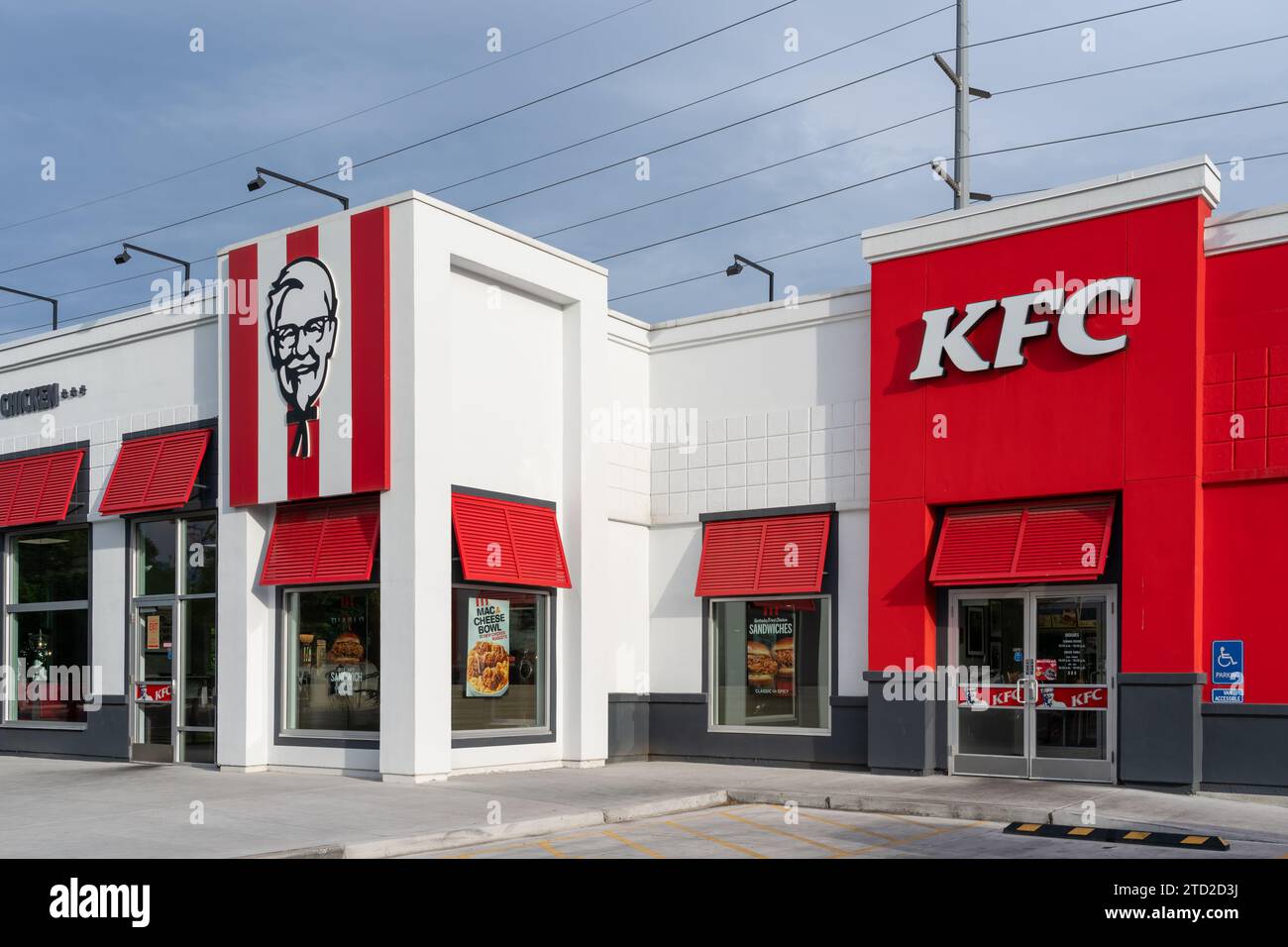
Furthermore, three-letter acronyms fit far better on modern neon storefront signage, drive-thru order boards, packaging designs, and rising digital advertising formats. Consumers in everyday conversation had already naturally referred to the chain as "KFC" for decades; the company simply formalized what its customer base was already doing.
Debunking the Urban Legends: What Didn't Cause the Name Change
Over the decades, several persistent urban legends and conspiracy theories emerged to explain the name change. These myths circulated widely via email chain letters in the late 1990s and later spread across social media platforms.
- Fact Check: Common Name-Change Myths
- FALSE: "Mutant / Non-Chicken Organisms"
- Claimed birds were genetically altered and could not legally be called "chicken".
- Fact: USDA/FDA rigorously verify poultry; KFC uses standard farm-raised chickens.
- FALSE: "FDA Name Enforcement"
- Alleged federal regulators banned the company from using "chicken".
- Fact: KFC serves 100% real poultry subject to federal inspections.
- FALSE: "Mutant / Non-Chicken Organisms"
The "Mutant Chicken" Hoax
The most famous urban legend claimed that the company changed its name because it was using genetically modified, multi-limbed, or featherless organisms that could not legally be categorized as "chicken" under federal law.
The Fact: This claim is completely false. KFC uses standard, real chicken supplied by standard poultry farms, governed by the USDA and strict agricultural regulations. The United States Department of Agriculture (USDA) enforces strict standards regarding meat labeling, and KFC products have always met the legal definition of poultry.
The FDA Forced Name Change Myth
A related strain of the rumor suggested that the Food and Drug Administration (FDA) or federal trade regulators forced the chain to drop "chicken" from its name due to ingredient fillers or chemical processing.
The Fact: Regulatory bodies never took action or issued mandates against KFC regarding its use of the word "chicken." The company initiated the name change entirely on its own strategic volition for branding, marketing, legal, and operational reasons.
Historical Comparison: Before and After the Rebranding
To understand the scope of the 1991 transformation, it helps to examine how key operational and branding factors evolved before and after the shift to KFC:
| Branding Attribute | Pre-1991 (Kentucky Fried Chicken) | Post-1991 (KFC Identity Era) |
|---|---|---|
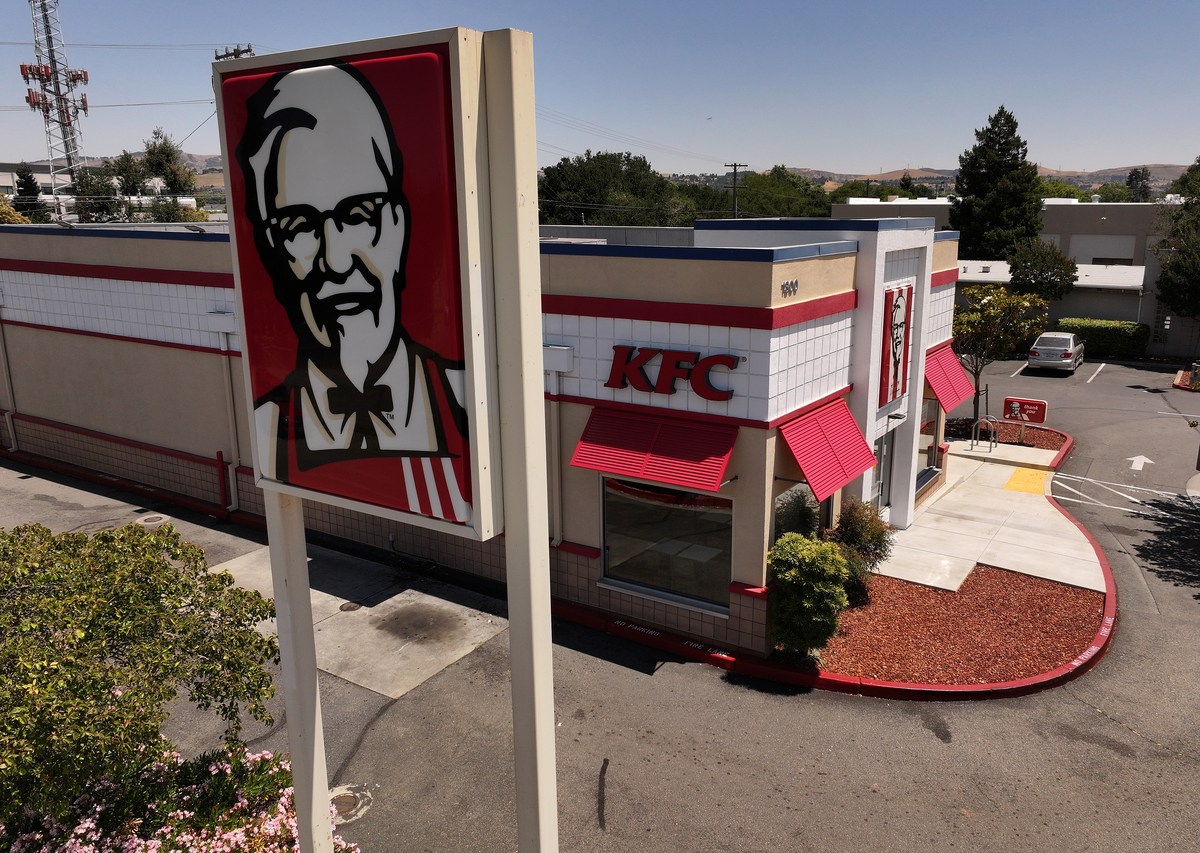
| Primary Logo Focus | Full text name with Colonel Sanders portrait | Bold 3-letter "KFC" acronym with streamlined portrait |
| Primary Health Perception | Associated heavily with high calories, fat, and deep frying | Neutralized descriptor allowing broader health positioning |
| Menu Scope | Bone-in deep-fried chicken, biscuits, and traditional sides | Broader menu including grilled chicken, tenders, wraps, and bowls |
| State Trademark Status | Unrestricted original trademark use | Avoided direct state royalty payments to Kentucky |
| Global Signage | Long text string; language conversion challenges in foreign markets | Universal three-letter brand recognizable across foreign markets |
| Consumer Colloquialism | Formally full name; informally called KFC by consumers | Formalized the popular everyday acronym across all channels |
The Legacy and Aftermath: The Modern Identity Era
The transition to KFC proved to be a major success, facilitating massive global growth throughout the 1990s and 2000s, particularly in international markets like China, where KFC became one of the largest and most profitable fast-food chains in the nation.
Resolution with the Commonwealth of Kentucky
In November 2006, after 15 years of legal detachment, Yum! Brands (the parent company spun off from PepsiCo in 1997) reached a confidential settlement agreement with the Commonwealth of Kentucky. The state agreed to terms that allowed the chain to restore the full name "Kentucky Fried Chicken" to selected packaging, historical imagery, and promotional campaigns without paying punitive ongoing royalties.
Following the 2006 settlement, the company reintroduced retro packaging featuring the classic "Kentucky Fried Chicken" lettering alongside the primary KFC logo. This dual approach allowed the brand to evoke nostalgia and emphasize its authentic heritage while preserving the efficiency and modern power of the KFC acronym.
Timeline of Brand Evolution:
- 1952: Original franchising begins under "Kentucky Fried Chicken"
- 1986: PepsiCo acquires Kentucky Fried Chicken
- 1990: Commonwealth of Kentucky trademarks state name for commercial revenue
- 1991: Official global rebrand to "KFC" (dropping "Fried")
- 1997: Tricon Global Restaurants (later Yum! Brands) spun off from PepsiCo
- 2006: Legal agreement reached with Commonwealth of Kentucky
- Present: Dual brand strategy: Global "KFC" acronym with selective classic heritage use
Frequently Asked Questions
When did Kentucky Fried Chicken officially change its name to KFC?
The official global rebranding occurred in February 1991, when parent company PepsiCo announced that all packaging, restaurant signage, and advertising campaigns would transition to the shortened three-letter acronym KFC.
Did KFC change its name because of a legal dispute with Kentucky?
Yes, the legal dispute was a key catalyst. In 1990, the Commonwealth of Kentucky trademarked its state name to raise tax revenue, demanding royalty payments from out-of-state businesses using the word "Kentucky." PepsiCo chose to rebrand to KFC rather than pay ongoing state licensing fees for its global corporate logo and packaging.
Was KFC forced to drop the word "chicken" by the government?
No. The rumor that federal agencies or the FDA forced the name change because the company was not using "real chicken" is an urban legend. KFC has always used real, farm-raised poultry subject to standard USDA agricultural inspections.
Is the full name "Kentucky Fried Chicken" ever used today?
Yes. Following a legal settlement with the Commonwealth of Kentucky in November 2006, KFC re-obtained the rights to use the full name on select packaging, store graphics, historical advertising, and promotional materials. However, "KFC" remains the primary corporate master brand.
Did dropping "fried" from the name help sales?
The rebranding contributed to massive global expansion throughout the 1990s and 2000s. It enabled the chain to market non-fried items (such as grilled chicken and wraps) more effectively and streamlined signage and advertising across international markets.
Key Takeaway for Business and Marketing Analysis
The transition from Kentucky Fried Chicken to KFC remains a classic business case study in corporate identity management. When faced with shifting health trends, a legal trademark tax dispute, and the operational demands of international expansion, the company did not abandon its heritage. Instead, it adopted an acronym that consumers were already using, neutralizing brand liability while creating a scalable foundation for global growth.
For corporate strategists and marketers, the KFC transition illustrates how a company can modernize its brand image and overcome regulatory or perceptual hurdles without losing the underlying brand equity established over decades of operation.
Image Gallery