How to Choose the Right Medicare Part B Medigap Plan for 2026
To choose the right Medigap plan for Medicare Part B in 2026, you must evaluate your financial preference for higher monthly premiums versus unpredictable out-of-pocket costs. Most beneficiaries select Plan G for comprehensive coverage...
To choose the right Medigap plan for Medicare Part B in 2026, you must evaluate your financial preference for higher monthly premiums versus unpredictable out-of-pocket costs. Most beneficiaries select Plan G for comprehensive coverage or Plan N for lower premiums with small copayments, ensuring the 20% Part B coinsurance is covered.
Contents
Medicare Part B provides essential coverage for outpatient services, including doctor visits, preventive care, and durable medical equipment. However, it rarely covers the full cost of care. For most services, Part B pays 80%, leaving you responsible for the remaining 20% coinsurance, plus an annual deductible. Medicare Supplement Insurance, commonly known as Medigap, is designed specifically to fill these "gaps." Because there are several standardized plans available, the selection process requires a deep understanding of your health needs, budget, and the specific pricing structures used by insurance carriers.
The Relationship Between Medicare Part B and Medigap
Medicare Part B is the portion of Original Medicare that handles "medical" insurance as opposed to "hospital" insurance (Part A). While Part B is robust, it lacks an annual out-of-pocket maximum. This means a significant medical event, such as ongoing chemotherapy or major outpatient surgery, could result in thousands of dollars in coinsurance costs.
Medigap plans are private insurance policies that work alongside Original Medicare. To buy a Medigap plan, you must already be enrolled in both Medicare Part A and Part B. Once you have a Medigap policy, Medicare pays its share of the "Medicare-approved amount" for covered health costs, and then your Medigap policy pays its share. In 2026, the primary reason for selecting a Medigap plan remains the protection against the 20% coinsurance that can otherwise lead to financial instability.
Note: This article provides general information for educational purposes and does not constitute legal, financial, or medical advice. Medicare regulations can vary by state, and individual circumstances should be discussed with a licensed insurance professional or a State Health Insurance Assistance Program (SHIP) counselor.
Standardization of Medigap Plans
The most important concept to understand when choosing a plan is that Medigap is standardized by the federal government. This means that a Plan G offered by Company A provides the exact same core benefits as a Plan G offered by Company B. The only differences between plans of the same letter are the monthly premium, the company’s reputation, and the quality of their customer service.
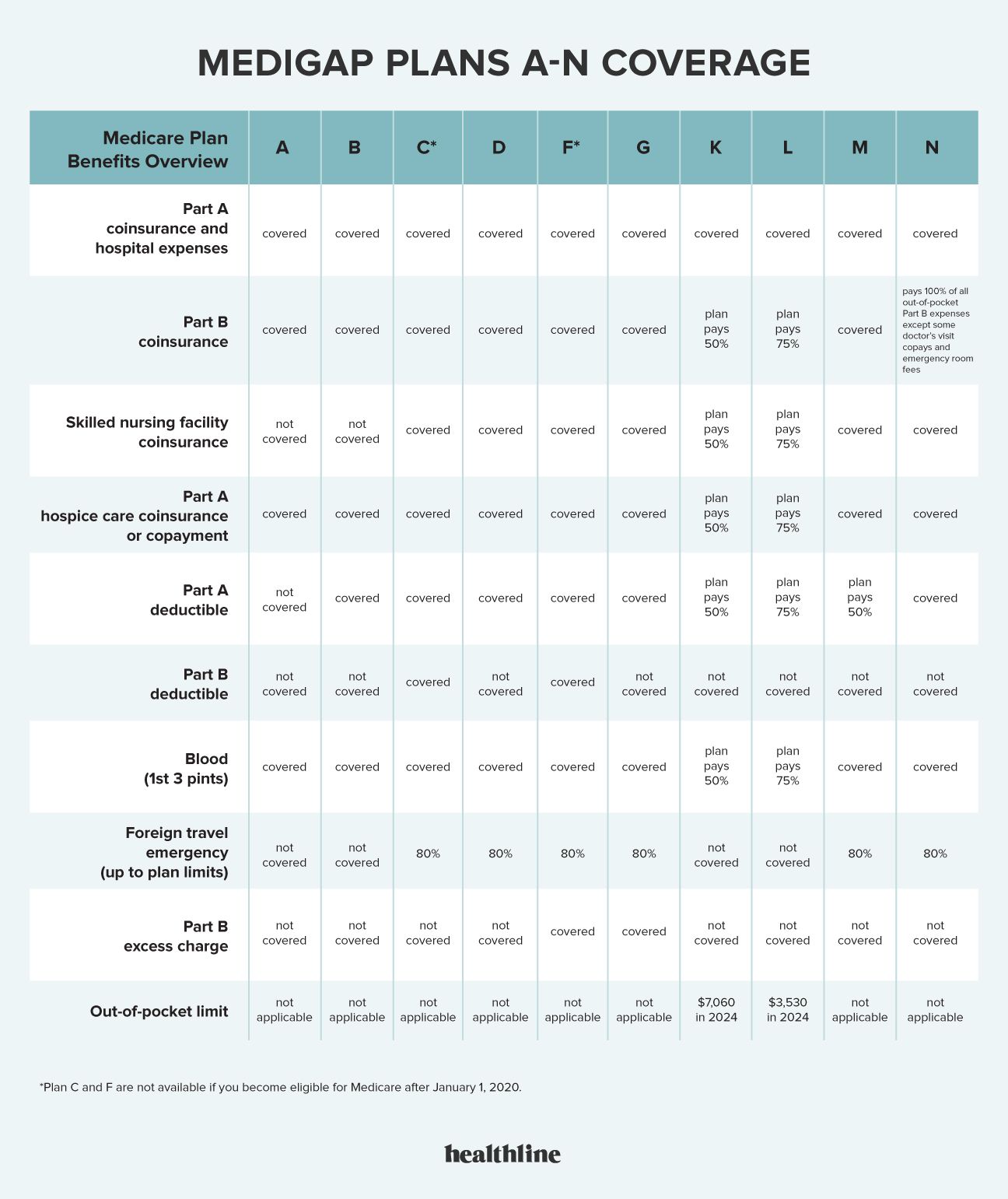
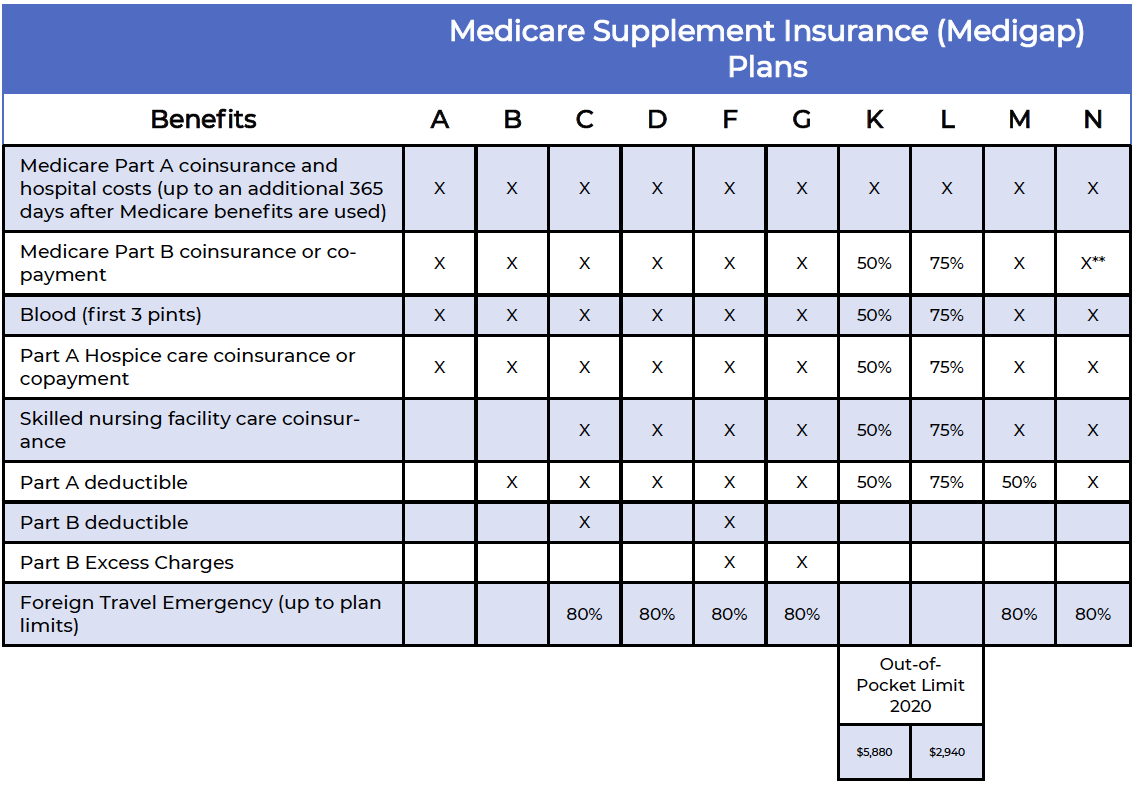
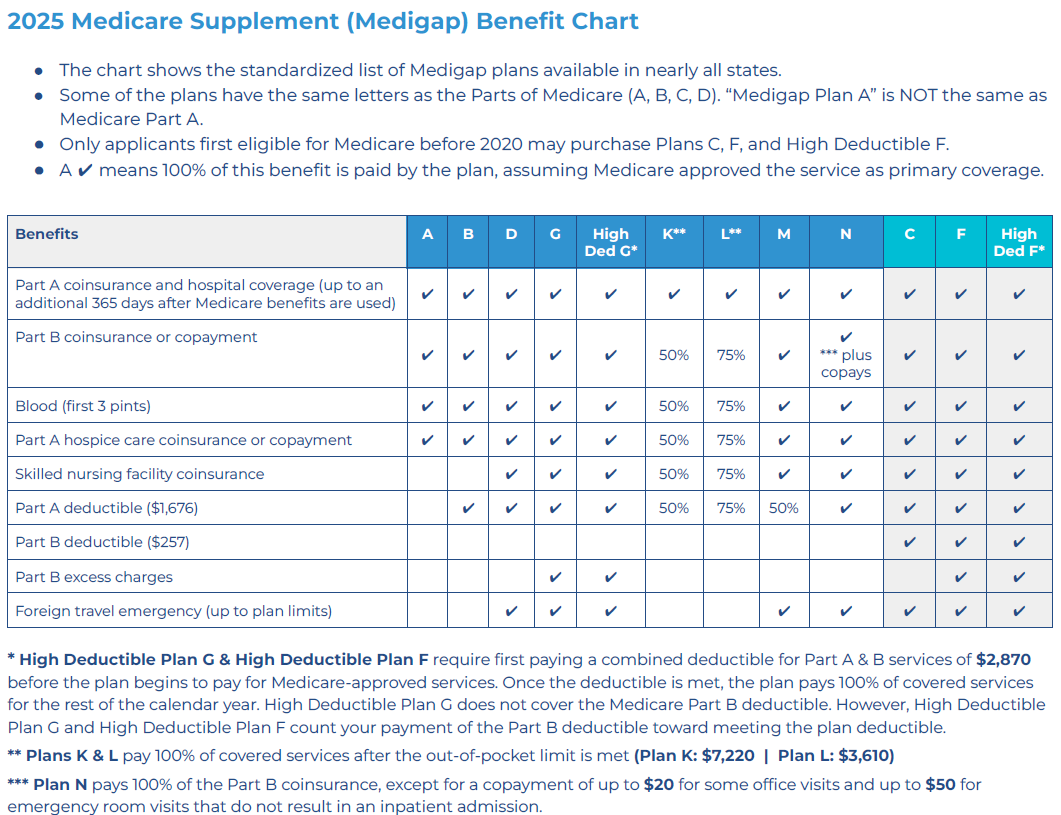
There are currently 10 standardized Medigap plans available in most states: A, B, C, D, F, G, K, L, M, and N. However, not all plans are available to all beneficiaries. As of January 1, 2020, Medigap plans that cover the Part B deductible (Plans C and F) are only available to those who were eligible for Medicare before that date. If you became eligible for Medicare in 2020 or later, your primary choices for comprehensive coverage in 2026 will be Plan G and Plan N.
Understanding Plan G: The Current "Gold Standard"
Plan G has become the most popular choice for new Medicare enrollees because it offers the highest level of coverage currently available to new beneficiaries. After you pay the annual Medicare Part B deductible ($257 in 2025, subject to annual adjustments by CMS), Plan G covers 100% of all remaining Medicare-covered costs.
The primary advantage of Plan G is predictability. Aside from the Part B deductible, you will have no out-of-pocket costs for Medicare-covered services for the rest of the year. This includes Part B "excess charges," which occur if a provider does not accept "Medicare assignment" and charges more than the Medicare-approved amount.
Understanding Plan N: The Cost-Effective Alternative
Plan N is often the best choice for those who are healthy and want a lower monthly premium. It covers the same 20% Part B coinsurance that Plan G covers, but with a few key differences:
- Copayments: You may be required to pay a copayment of up to $20 for some office visits and up to $50 for emergency room visits that do not result in inpatient admission.
- Excess Charges: Plan N does not cover Part B excess charges. While these are rare—as most doctors accept Medicare assignment—they can occur in certain states or with certain specialists.
- Lower Premiums: Because of these cost-sharing features, the monthly premium for Plan N is typically significantly lower than Plan G.
Comparing the Most Popular Medigap Plans in 2026
The following table compares the most common choices for beneficiaries looking to supplement their Medicare Part B coverage.
| Benefit Feature | Medigap Plan G | Medigap Plan N | High-Deductible Plan G |
|---|---|---|---|
| Part B Coinsurance | 100% Covered | 100% Covered* | 100% Covered after Deductible |
| Part B Excess Charges | 100% Covered | Not Covered | 100% Covered after Deductible |
| Part B Deductible | Not Covered | Not Covered | Not Covered |
| Part A Deductible | 100% Covered | 100% Covered | 100% Covered after Deductible |
| Monthly Premium | Moderate to High | Moderate | Low |
| Out-of-Pocket Risk | Lowest (Only Part B Deductible) | Low (Copays + Excess Charges) | Highest (Plan Deductible) |
*Plan N requires up to a $20 copay for office visits and $50 for ER visits.
How Insurance Companies Price Medigap Policies
While the benefits of Plan G or Plan N are the same across all companies, the way those companies price their policies can vary wildly. Understanding these pricing structures is vital for long-term financial planning, as a plan that is cheap at age 65 might become unaffordable by age 80.
1. Community-Rated (No Age-Rated)
In this model, everyone in a specific geographic area pays the same monthly premium, regardless of their age. While premiums may increase due to inflation or other factors, they do not increase specifically because you are getting older. These are often the most stable plans over time.
2. Issue-Age-Rated
The premium is based on the age you are when you first buy (the "issue age") the policy. Premiums are lower for people who buy at younger ages and will not increase specifically because of your age as you grow older. This provides a level of cost predictability over the lifespan of the policy.
3. Attained-Age-Rated
This is the most common pricing structure. The premium is based on your current age (the age you have "attained"), meaning the premium automatically increases as you get older. While these plans often start with the lowest premiums, they can eventually become the most expensive options for seniors in their late 70s or 80s.
The Importance of the Medigap Open Enrollment Period
Choosing the right plan is only half the battle; the other half is timing. Your Medigap Open Enrollment Period is a one-time, six-month window that begins the first day of the month you are both 65 or older and enrolled in Medicare Part B.
During this period, you have a "guaranteed issue right." This means an insurance company cannot:
- Refuse to sell you any Medigap policy it offers.
- Place conditions on your policy, such as excluding pre-existing conditions.
- Charge you more for a policy because of past or present health problems.
If you miss this window and try to apply for a Medigap plan later, you will likely have to undergo medical underwriting. The insurance company can review your medical history and may deny you coverage or charge you a significantly higher rate based on your health status. This makes the initial choice of Plan G or Plan N particularly critical, as it may be the plan you keep for the rest of your life.
Evaluating Insurance Carriers Beyond the Premium
Since the benefits of "Plan G" are identical regardless of the carrier, how do you choose between Company A and Company B? You should look at three primary factors:
- Financial Strength Ratings: Look for companies with high ratings from agencies like A.M. Best or S&P Global. A financially stable company is less likely to implement drastic rate hikes or exit the market entirely.
- Rate Increase History: Some companies offer "teaser rates" that are very low for the first year but increase substantially every year thereafter. Research the carrier's history of rate increases over the last five to ten years in your state.
- Household Discounts: Many carriers offer a discount (often 5% to 12%) if two people in the same household are enrolled in a policy from the same company. If you have a spouse or partner, this can change which company is the most cost-effective.
Common Mistakes When Choosing a Medigap Plan
Many beneficiaries fall into traps that can lead to higher costs or gaps in coverage. Avoid these common errors:
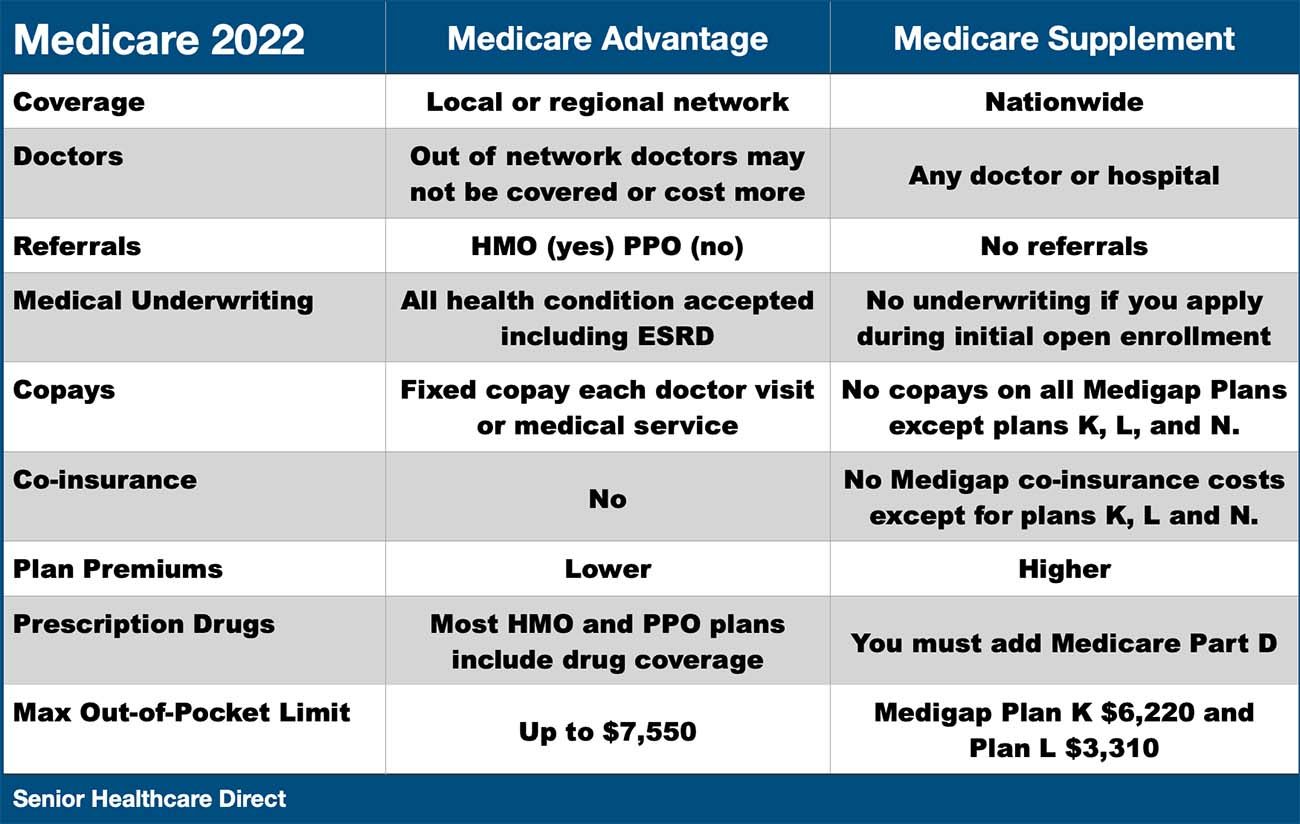
- Confusing Medigap with Medicare Advantage: Medicare Advantage (Part C) is an alternative to Original Medicare, while Medigap is a supplement. You cannot have both. If you choose Medicare Advantage, you will have a network of doctors and different out-of-pocket costs, whereas Medigap allows you to see any doctor in the U.S. that accepts Medicare.
- Ignoring Part B Excess Charges: If you live in a state that allows excess charges and you frequently see specialists, Plan N might end up costing you more in the long run than Plan G.
- Shopping Solely on Price: The cheapest premium today might be the most expensive in five years if the company uses attained-age pricing or has a history of high rate increases.
Frequently Asked Questions
Does Medigap Plan G cover the Part B deductible in 2026?
No. Federal law prohibits Medigap plans from covering the Part B deductible for anyone who became eligible for Medicare after January 1, 2020. You must pay the annual Part B deductible out-of-pocket before Plan G begins to cover its portion of the costs.
Can I change my Medigap plan later if I find a better deal?
In most states, you can apply to change your plan at any time, but you will typically be subject to medical underwriting. Unless you live in a state with "Birthday Rules" or other specific protections (like New York, Connecticut, or Massachusetts), a new insurance company can deny you coverage based on your health history once your initial Open Enrollment Period has passed.
Do Medigap plans cover prescription drugs?
No. Medigap policies sold today do not include prescription drug coverage. To get coverage for your medications, you must enroll in a separate Medicare Part D prescription drug plan.
Is there a difference between Plan G and High-Deductible Plan G?
Yes. High-Deductible Plan G offers the same coverage as standard Plan G, but only after you have paid a high annual deductible (determined by the IRS and CMS each year). In exchange for this higher risk, the monthly premiums for High-Deductible Plan G are significantly lower, often making it an attractive option for those who rarely visit the doctor but want protection against catastrophic costs.
What happens if my doctor doesn't accept Medicare?
If a provider has "opted out" of Medicare entirely, neither Medicare nor your Medigap plan will pay for the services. You would be responsible for 100% of the cost. Always verify that your providers accept Medicare before receiving treatment.
Final Recommendation for Selection
To finalize your decision, first confirm your eligibility dates. If you are new to Medicare in 2026, focus your comparison on Plan G and Plan N. Request quotes for both plans from at least three different high-rated insurance carriers. If the premium difference between Plan G and Plan N is less than $20–$30 per month, the added security and lack of copayments in Plan G often provide the best value. However, if you are comfortable managing small copays and the premium savings are substantial, Plan N is an excellent way to maintain high-quality coverage while reducing fixed monthly expenses. Always review the pricing structure (Attained-Age vs. Issue-Age) to ensure the plan remains affordable as you age.
Image Gallery