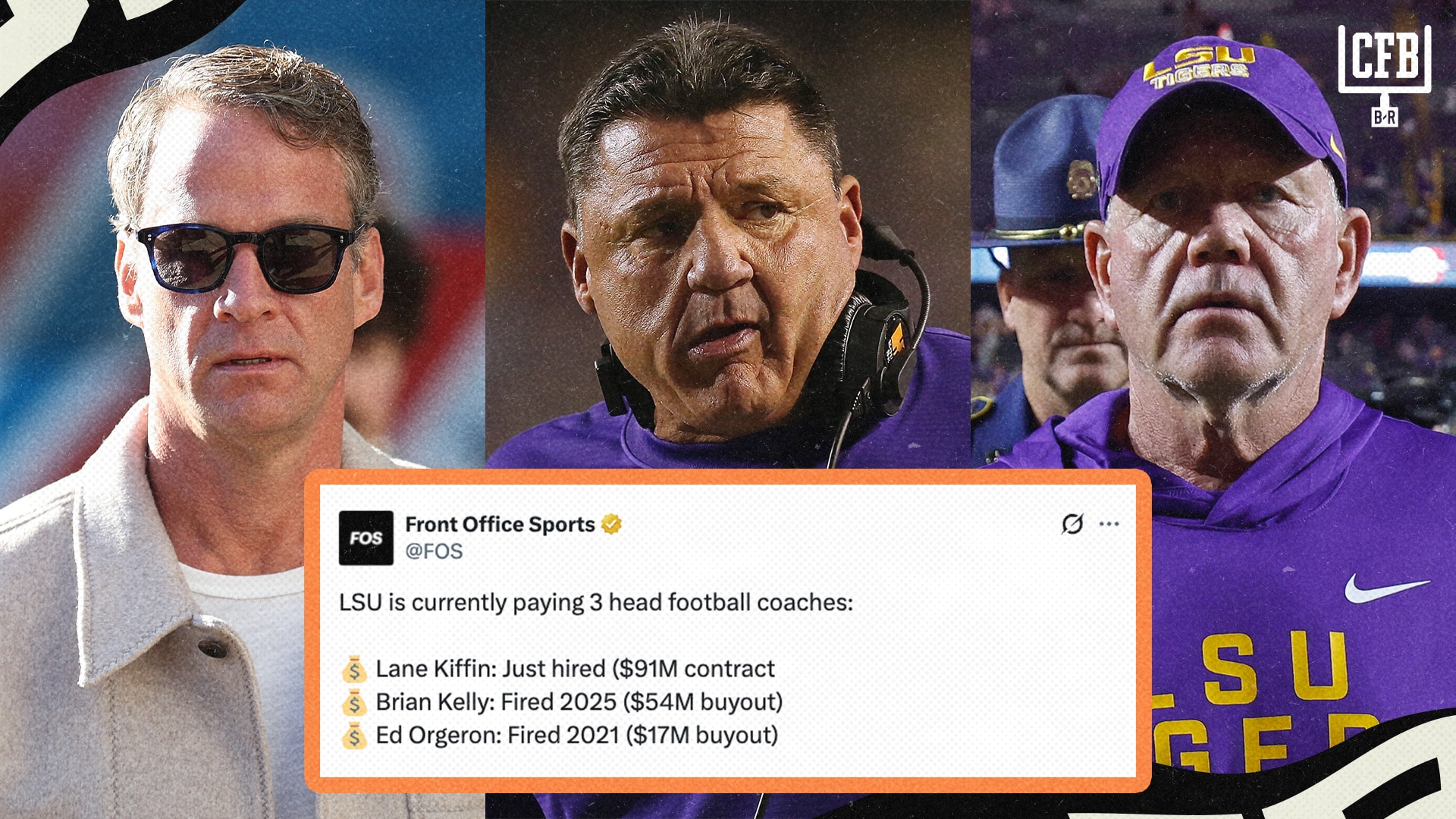
LSU’s Financial Obligations to Ed Orgeron: Is the University Still Paying the Former Coach in 2026?
As of 2026, Louisiana State University (LSU) has officially fulfilled its financial obligations to former head football coach Ed Orgeron. The university completed the final installment of his $16.9 million buyout in late 2025, marking...
As of 2026, Louisiana State University (LSU) has officially fulfilled its financial obligations to former head football coach Ed Orgeron. The university completed the final installment of his $16.9 million buyout in late 2025, marking the end of a multi-year payment schedule established during his departure in October 2021.
Contents
The departure of Ed Orgeron from LSU remains one of the most expensive and high-profile coaching transitions in the history of the Southeastern Conference (SEC). While the university moved on to the Brian Kelly era years ago, the financial shadow of the 2019 National Championship remained on the school's balance sheet for nearly half a decade. To understand why these payments lasted until 2025 and how the university managed this massive overhead, one must look at the specific terms of the separation agreement and the fiscal structure of LSU’s athletic department.
The Structure of the $16.9 Million Separation Agreement
When LSU and Ed Orgeron reached a "mutual" agreement to part ways on October 17, 2021, the university was bound by a contract extension Orgeron had signed following the historic 2019 undefeated season. That extension, worth roughly $42 million over six years, included significant protections for the coach in the event of a termination without cause.
To avoid a protracted legal battle or a "for cause" firing that might have damaged the university's reputation or recruiting efforts, LSU Athletics agreed to pay Orgeron the full remaining value of his guaranteed salary, which totaled approximately $16,949,000. However, the university did not pay this amount in a single lump sum. Instead, they negotiated an 18-installment payment plan.
Why 18 Installments?
The decision to spread the $16.9 million over 18 installments was a strategic move by the LSU Athletic Department to preserve cash flow. By distributing the debt across several fiscal years, the university was able to balance its budget while simultaneously funding the record-breaking contract of its next coach, Brian Kelly.
These installments were scheduled to begin in December 2021 and conclude in the final quarter of 2025. This structure ensured that while Coach Orgeron was no longer roaming the sidelines in Death Valley, he remained one of the highest-paid individuals on the university's payroll for four consecutive years post-employment.
Breaking Down the Payment Timeline
The payment schedule was designed to front-load a portion of the buyout while maintaining a steady stream of income for Orgeron through 2025. According to the separation agreement, the first payment was a significant sum, intended to settle immediate obligations, followed by periodic disbursements.
| Payment Period | Estimated Amount | Status as of 2026 |
|---|---|---|
| Initial Payment (Dec 2021) | $5,680,000 | Completed |
| 2022 Installments | ~$2,800,000 | Completed |
| 2023 Installments | ~$2,800,000 | Completed |
| 2024 Installments | ~$2,800,000 | Completed |
| Final Installments (2025) | ~$2,869,000 | Completed |
| Total Buyout | $16,949,000 | Fully Extinguished |
Note: Figures are rounded and based on the reported 18-installment schedule outlined in the 2021 separation agreement.
As the table illustrates, the 2025 calendar year was the final chapter of this financial saga. For the 2026 fiscal year, LSU Athletics has finally cleared this "dead money" from its books, allowing the university more flexibility in its NIL (Name, Image, and Likeness) initiatives and facility upgrades.
The Role of the Tiger Athletic Foundation (TAF)
A common question among fans and taxpayers is whether public funds or tuition dollars were used to pay Ed Orgeron’s buyout. In the case of LSU, the answer is a definitive no. LSU Athletics is a self-sustaining entity, and the majority of high-level coaching buyouts are funded through the Tiger Athletic Foundation (TAF).
The TAF is a private non-profit corporation that serves as the primary fundraising arm for LSU sports. By using private donations and athletic department revenue—primarily from television contracts, ticket sales, and sponsorships—the university was able to honor the Orgeron contract without diverting funds from the academic side of the institution. This distinction is crucial for maintaining public support, especially when the figures involved exceed the annual budgets of many academic departments.
Comparing the Orgeron Buyout to Modern SEC Standards
In the context of 2026, the $16.9 million paid to Ed Orgeron actually appears somewhat modest compared to the market shifts seen in the mid-2020s. While it was a staggering figure at the time, the landscape of college football coaching contracts has since seen an explosion in guaranteed money.
For instance, the buyout landscape was forever altered by Texas A&M’s decision to move on from Jimbo Fisher in 2023, which triggered a buyout in excess of $75 million. Compared to such astronomical figures, LSU’s $16.9 million settlement was a manageable, albeit significant, expense.
LSU’s strategy was focused on "mitigation of risk." By reaching a settlement rather than a "for cause" termination, they ensured that Orgeron would not seek employment elsewhere to offset the debt—a common clause in coaching contracts known as the "duty to mitigate." In Orgeron’s case, the agreement specifically stated that his buyout was not subject to mitigation, meaning he could receive the full $16.9 million even if he took another coaching job or a media position.
The 2019 Legacy and the "Price of a Ring"
The primary reason LSU was in a position to owe Orgeron nearly $17 million was the unprecedented success of the 2019 season. Led by Joe Burrow, the Tigers produced what many consider the greatest single season in college football history. This success gave Orgeron immense leverage, leading to the massive contract extension in early 2020.
However, the rapid decline of the program in 2020 and 2021—characterized by coaching staff turnover, defensive struggles, and off-field controversies—forced the university's hand. The "price of the ring" was essentially the $16.9 million buyout paid out over the subsequent four years. For most LSU fans, the championship trophy in the building made the five-year payment plan a bitter but acceptable pill to swallow.
Frequently Asked Questions
Is Ed Orgeron currently coaching in 2026?
As of 2026, Ed Orgeron has remained largely out of the coaching spotlight, though he has made various appearances as a consultant and media personality. Because his LSU buyout was not subject to mitigation, he was under no financial pressure to seek a new head coaching position to replace his lost income.
Did LSU have to pay Brian Kelly's buyout and Orgeron's simultaneously?
No. While LSU was paying Ed Orgeron's buyout from 2021 to 2025, Brian Kelly was (and is) an active employee. LSU was paying Kelly’s salary and Orgeron’s buyout concurrently, but a "buyout" for Kelly would only occur if he were terminated. This meant LSU’s "dead money" (Orgeron) and "active money" (Kelly) were both major line items on the budget for several years.
What happens to the money now that the buyout is finished?
With the completion of the payments in late 2025, LSU Athletics reclaims approximately $2.8 million in annual cash flow. In the 2026 sports environment, this capital is likely being redirected toward NIL collectives and infrastructure to remain competitive in the expanded 16-team (or larger) SEC.
Could LSU have fired Orgeron for cause to avoid the buyout?
While there were various reports of off-field issues, LSU's leadership determined that a "for cause" firing would lead to a lengthy and expensive legal battle. Firing a coach "for cause" usually requires proof of a material breach of contract. By choosing a mutual separation, LSU ensured a cleaner transition to the next coaching staff, despite the high price tag.
How much did Ed Orgeron earn in total from LSU?
Between his base salary, bonuses for the 2019 National Championship, and the $16.9 million buyout, it is estimated that Orgeron earned in excess of $45 million during his tenure and subsequent separation from the university.
Final Status in 2026
The conclusion of the Ed Orgeron buyout marks the end of a specific era in LSU financial history. While the university is no longer making payments to the coach who delivered the 2019 title, the lessons learned from that contract extension continue to influence how the university structures its current agreements.
LSU fans can now look at the department's balance sheet and see a "clean" slate regarding previous coaching regimes. The university has successfully navigated a period of intense financial transition, balancing the high cost of a championship-winning coach's departure with the even higher cost of maintaining a top-tier program in the modern era of college athletics.
Image Gallery