AMD Ryzen 5 PRO 2400G Overview: Specifications, Enterprise Features, and 2026 Relevance
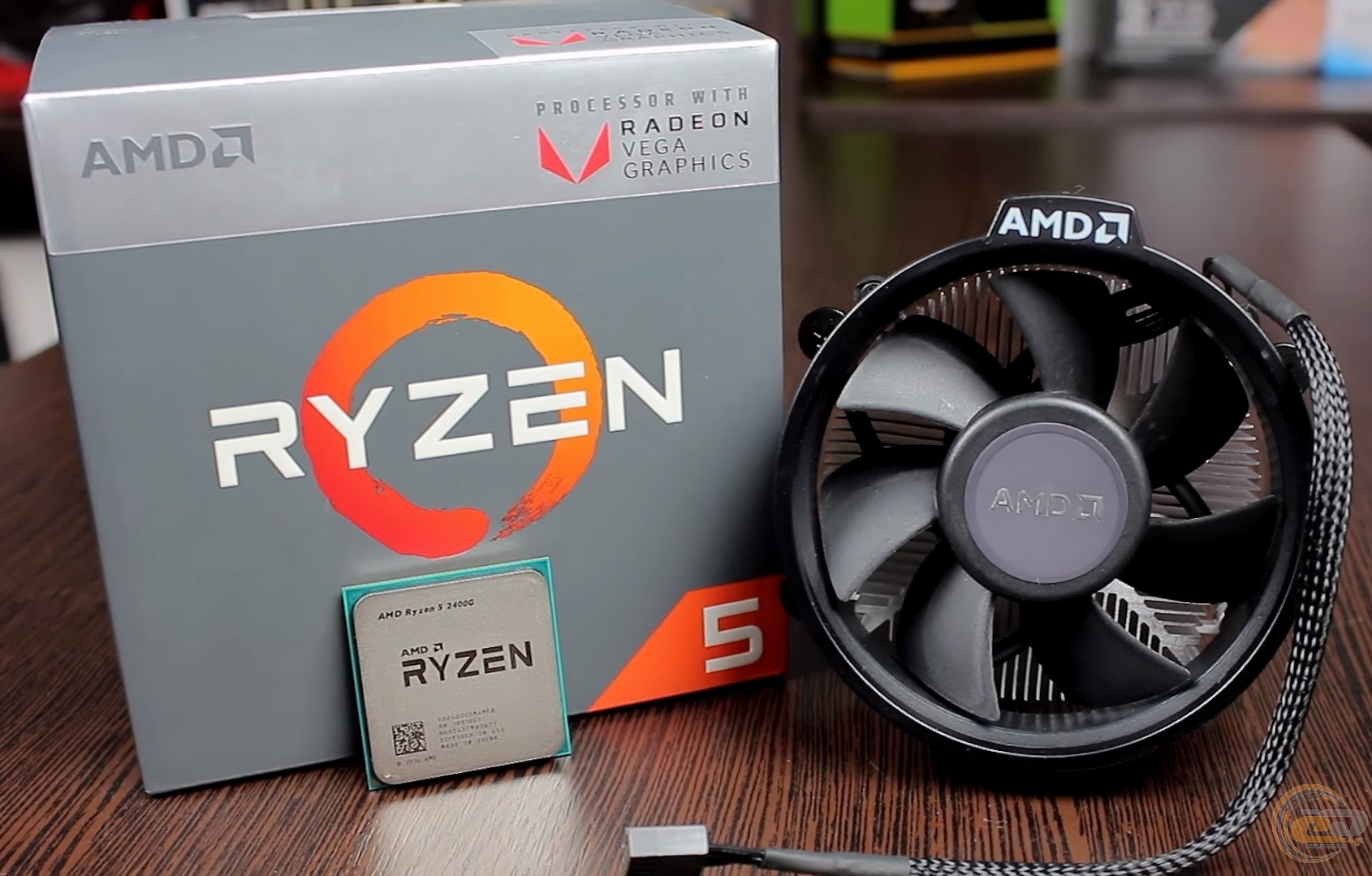
The AMD Ryzen 5 PRO 2400G is a professional-grade Accelerated Processing Unit (APU) that combines four Zen-architecture processor cores with powerful integrated Radeon RX Vega 11 graphics. Originally designed for enterprise environment...
The AMD Ryzen 5 PRO 2400G is a professional-grade Accelerated Processing Unit (APU) that combines four Zen-architecture processor cores with powerful integrated Radeon RX Vega 11 graphics. Originally designed for enterprise environments, it provides a balance of compute power and graphical efficiency, making it an ideal choice for high-density office workstations and secure corporate fleets.
Contents
Understanding the Raven Ridge Architecture
The Ryzen 5 PRO 2400G belongs to the "Raven Ridge" family, a pivotal release in AMD’s history that marked the successful integration of their high-performance Zen CPU cores with the GCN (Graphics Core Next) 5.0 architecture found in Vega GPUs. Unlike traditional CPUs that require a discrete graphics card to output a signal, the 2400G is an APU, meaning the "G" suffix denotes integrated graphics capabilities.
Built on GlobalFoundries' 14nm FinFET manufacturing process, the Ryzen 5 PRO 2400G features 4 cores and 8 threads. The inclusion of SMT (Simultaneous Multithreading) allows the processor to handle complex multitasking scenarios far better than the entry-level Ryzen 3 counterparts. While modern 2026 processors have moved to much smaller nanometer nodes, the 14nm Zen architecture remains a benchmark for reliability and thermal stability in the refurbished and long-term deployment markets.
The architectural layout of the 2400G is unique because it utilizes a single CCX (Core Complex) design. In many other early Ryzen chips, cores were split across two complexes, which could introduce latency when cores needed to communicate. By keeping all four cores on a single CCX, the 2400G minimizes internal latency, which is particularly beneficial for the integrated Vega 11 GPU that shares the system's memory bandwidth.
Technical Specifications and Performance Metrics
To evaluate the Ryzen 5 PRO 2400G, one must look at the intersection of its clock speeds, cache hierarchy, and power envelope. For a 65W TDP (Thermal Design Power) chip, it punches significantly above its weight class in office productivity tasks.
Core Clocks and Cache
The processor operates at a base clock frequency of 3.6 GHz, with the ability to boost up to 3.9 GHz under single-threaded loads. This ensures that "snappy" performance is maintained during standard web browsing, spreadsheet manipulation, and database entries. It features 2MB of L2 cache and 4MB of L3 cache. While 4MB of L3 cache might seem small compared to the "X" branded desktop CPUs of its era, this reduction was necessary to make physical room on the silicon die for the massive Vega 11 graphics engine.
Memory Support and Bandwidth
The Ryzen 5 PRO 2400G supports DDR4 memory with official speeds up to 2933 MHz. However, because the integrated GPU uses system RAM as its "Video RAM" (VRAM), memory speed is the single most important factor for performance. In professional environments, utilizing dual-channel memory configurations is mandatory to avoid "bottlenecking" the Vega 11 graphics. Single-channel memory can reduce the graphical output by as much as 40%, a common mistake in budget-constrained corporate builds.
| Feature | Specification |
|---|---|
| Cores / Threads | 4 Cores / 8 Threads |
| Base Clock | 3.6 GHz |
| Max Boost Clock | 3.9 GHz |
| L3 Cache | 4 MB |
| Integrated Graphics | Radeon RX Vega 11 |
| Graphics Frequency | 1250 MHz |
| TDP | 65W (Configurable 45W-65W) |
| Socket | AM4 |
| Platform Support | Windows 10 / 11, RHEL, Ubuntu |
The "PRO" Advantage: Enterprise-Grade Security
The primary differentiator between the standard Ryzen 5 2400G and the Ryzen 5 PRO 2400G is the suite of AMD PRO technologies. These features are not geared toward gamers or home users but are critical for IT administrators managing hundreds or thousands of machines.
AMD GuardMI Technology
The Ryzen 5 PRO series features GuardMI technology, which provides power-on-to-power-off protection. This includes a co-processor known as the AMD Secure Processor, which handles hardware-validated boot processes. It ensures that the firmware has not been tampered with before the operating system even begins to load.
Transparent SMB Encryption (TSME)
One of the most valuable features for financial and medical institutions is Transparent SMB Encryption. This hardware-based memory encryption protects against physical cold-boot attacks. If a malicious actor were to physically remove the RAM from a running or recently powered-off machine, the data would be encrypted and unreadable. This occurs at the hardware level with negligible impact on system performance.
DASH Manageability
For remote management, the PRO 2400G supports open-standard DASH (Desktop and mobile Architecture for System Hardware) management. This allows IT departments to perform remote updates, troubleshooting, and inventory management, regardless of whether the operating system is currently running. This is AMD’s direct competitor to Intel’s vPro technology.
Integrated Radeon RX Vega 11 Graphics
At the time of its release and through its mid-life cycle, the Radeon RX Vega 11 was the most powerful integrated graphics solution in the world. Even as we look at the hardware landscape in 2026, the Vega 11 remains capable of handling modern office workloads, including multi-monitor 4K setups and light video editing.
The Vega 11 features 11 Graphics Compute Units and a frequency of 1250 MHz. In practical terms, this allows the APU to handle:
- 4K Content Consumption: Smooth playback of HEVC and VP9 codecs for high-definition streaming.
- Creative Tasks: Basic rendering in Adobe Photoshop or Premiere Pro, aided by OpenCL acceleration.
- Legacy Gaming: While not a gaming chip, it can run older titles or modern eSports titles (like League of Legends or CS:GO) at 1080p with respectable frame rates.
For professional users, the main benefit of Vega 11 is the elimination of the discrete GPU. This reduces the total cost of ownership (TCO), lowers the failure points in a system, and allows for the use of ultra-small form factor (USFF) chassis that lack PCIe expansion slots.
Platform Compatibility: The AM4 Ecosystem
The Ryzen 5 PRO 2400G utilizes the venerable AM4 socket. In 2026, the AM4 platform is recognized as one of the most successful and longest-lived motherboard sockets in computing history. This longevity provides several advantages for the 2400G:
- Motherboard Variety: The 2400G is compatible with a wide range of chipsets, including B350, B450, X370, and X470. Many A520 and B550 boards also support it, though users must verify BIOS (AGESA) compatibility.
- Ease of Repair: Because so many AM4 motherboards were produced, sourcing replacement parts for a 2400G-based system in 2026 is inexpensive and straightforward.
- Upgrade Path: For organizations that started with the 2400G, the AM4 socket allows for a leap to much newer processors (like the Ryzen 5000 series) without changing the entire infrastructure, provided the "PRO" management features are matched by the new CPU.
The 2026 Perspective: Is it Still Viable?
As of 2026, the Ryzen 5 PRO 2400G has transitioned into a "legacy workhorse" role. It is no longer a flagship product, but it occupies a vital niche in the secondary and refurbished markets.
Best Use Cases in 2026
- Thin Clients and POS Systems: Its 65W TDP can be configured down to 45W, making it suitable for fanless or near-silent operation in point-of-sale terminals.
- Home Labs and Home Assistant: The 4-core/8-thread configuration is ideal for running multiple Docker containers or a Home Assistant instance.
- Budget Office Refurbishments: Schools and small businesses can utilize refurbished 2400G systems to provide a Windows 11-compatible experience (thanks to the integrated fTPM 2.0) at a fraction of the cost of new hardware.
- Media Servers: The Vega 11 engine still handles hardware transcoding for media apps like Plex or Jellyfin quite efficiently.
Limitations to Consider
While the 2400G is capable, it does lack support for PCIe 4.0, sticking to the older PCIe 3.0 standard. For standard office work, this is irrelevant. However, for users hoping to pair it with ultra-fast NVMe Gen4 SSDs, the drive will be limited to Gen3 speeds (approximately 3,500 MB/s). Additionally, because it is a first-generation Zen product, it does not support some of the instructions found in Zen 3 or Zen 4, which might be required by very specific, high-end 2026 software suites.
Installation and Thermal Management
When deploying or maintaining a Ryzen 5 PRO 2400G, thermal management is straightforward but essential. The chip was originally bundled with the AMD Wraith Stealth cooler. For standard office use, this cooler is sufficient. However, in dusty industrial environments or cramped enclosures, the 2400G can reach temperatures of 80°C+ under heavy load.
The integrated heat spreader (IHS) of the 2400G is joined to the silicon with high-quality thermal paste rather than solder. While this was a point of contention for overclockers, for the "PRO" user, it means the chip is very durable. In 2026, if you are reviving an old 2400G system, it is highly recommended to repaste the processor with a modern non-conductive compound like Arctic MX-6 to ensure optimal heat transfer.
Summary of Comparisons: 2400G vs. 2400GE
In the professional market, you will often see the Ryzen 5 PRO 2400GE. The "E" stands for Efficiency.
- 2400G: 65W TDP, 3.6 GHz base. Designed for standard desktops.
- 2400GE: 35W TDP, 3.2 GHz base. Designed for "Tiny" or "Micro" PCs (like the Lenovo ThinkCentre Tiny or HP EliteDesk Mini). The 2400GE is the better choice for environments where heat and power consumption are the primary constraints, whereas the standard 2400G offers better sustained performance for multi-threaded applications.
Frequently Asked Questions
Does the Ryzen 5 PRO 2400G support Windows 11?
Yes, the Ryzen 5 PRO 2400G is on the official Microsoft compatibility list for Windows 11. It includes a built-in firmware TPM (fTPM 2.0) and meets the necessary architectural requirements for secure boot and virtualization-based security (VBS), which are standard in Windows 11.
Can I use this processor for gaming?
While the Ryzen 5 PRO 2400G is an enterprise chip, its Vega 11 graphics are surprisingly capable. It can play older titles like Skyrim, Dota 2, or Rocket League at 1080p with medium settings. For modern AAA titles released closer to 2026, it will likely struggle even at 720p low settings.
What is the difference between Ryzen 5 2400G and Ryzen 5 PRO 2400G?
The performance (clock speeds and graphics) is identical. However, the PRO version includes enterprise-grade features like full memory encryption (TSME), DASH manageability, and a longer planned availability window from AMD to help businesses maintain a consistent hardware fleet.
What is the best RAM for this APU?
For optimal performance, use a dual-channel kit (two sticks of RAM) rather than a single stick. Aim for DDR4-2933 or DDR4-3200 speeds. Because the graphics engine shares this memory, faster RAM directly translates to higher graphical frame rates and smoother system responsiveness.
Is the 2400G a good choice for a NAS or home server?
It is an excellent choice for a NAS (Network Attached Storage) or a home server. With 8 threads, it can handle file sharing, backup routines, and media transcoding simultaneously. Its idle power consumption is relatively low, which is a key consideration for 24/7 operation.
Final Recommendations
The AMD Ryzen 5 PRO 2400G remains a testament to the longevity of the Zen architecture. For IT managers or budget-conscious builders in 2026, it offers a secure, stable, and surprisingly capable platform. While it has been surpassed by many generations of newer tech, its ability to handle modern operating systems and essential productivity tasks without the need for a discrete GPU makes it a highly cost-effective solution for professional environments. If you are looking for a reliable office workhorse or a foundation for a small-scale server, the 2400G continues to be a viable and respected option in the hardware ecosystem.
Image Gallery