Understanding What Constitutes Having an Affair and Its Relational Impact
Having an affair involves a breach of trust, commitment, or established boundaries within a committed romantic relationship, typically characterized by emotional or sexual intimacy with someone outside that primary partnership. This be...
Having an affair involves a breach of trust, commitment, or established boundaries within a committed romantic relationship, typically characterized by emotional or sexual intimacy with someone outside that primary partnership. This behavior often violates the explicit or implicit rules of exclusivity agreed upon by partners, leading to significant psychological, emotional, and structural fallout within the relationship.
Contents
To truly understand what it means to have an affair, one must look beyond a simple definition. Infidelity is a complex psychological and sociological phenomenon that affects millions of couples across diverse cultures and backgrounds. Whether dealing with a relationship crisis or seeking clinical insight, comprehending the mechanics, variations, and consequences of infidelity helps clarify why it occurs and how individuals and couples navigate the aftermath.
Defining Infidelity: Emotional Versus Physical Boundaries
The core of any discussion about affairs centers on boundaries. In monogamous relationships, these boundaries typically restrict romantic, sexual, and deep emotional attachments to the primary partner. When those boundaries are crossed, an affair takes place. However, society increasingly recognizes that infidelity is not exclusively physical.
Physical Infidelity
Physical infidelity involves sexual contact, ranging from kissing and heavy petting to sexual intercourse, with someone outside the primary relationship. This form of betrayal is often the most straightforward to identify because it breaches concrete physical boundaries. For many, physical involvement represents a direct violation of bodily exclusivity, triggering acute feelings of betrayal, jealousy, and distress.
Emotional Infidelity
Emotional infidelity is more nuanced. It occurs when a person directs their primary emotional energy, intimacy, and vulnerability toward an outside person rather than their partner. Indicators of emotional infidelity often include:
- Sharing deeply personal secrets, fears, or dreams with an outsider before sharing them with a partner.
- Developing a romantic attraction or feeling a strong sense of "falling in love" with someone else.
- Concealing the nature or frequency of communications (such as texts, late-night phone calls, or social media messaging) from the primary partner.
- Comparing the primary partner unfavorably to the outside individual.
While no physical contact may have occurred, emotional affairs can be just as devastating to a relationship as physical ones, because they erode the foundation of emotional safety and trust.
Common Types of Affairs and Their Characteristics
Affairs manifest in various forms, each carrying distinct dynamics, motivations, and impacts. Mental health professionals and researchers generally categorize infidelity into several distinct archetypes.
| Type of Affair | Primary Characteristic | Typical Motivation |
|---|---|---|
| One-Night Stand | Spontaneous, isolated physical encounter | Opportunity, intoxication, poor impulse control |
| Romantic Involvement | Ongoing emotional and physical relationship | Seeking love, validation, or escaping marital boredom |
| Emotional Affair | Deep psychological attachment without physical contact | Loneliness, feeling misunderstood, unmet intimacy needs |
| Cyber/Online Affair | Virtual intimacy via chat, video, or social media | Anonymity, dopamine seeking, low real-world risk |
| Compulsive/Serial Affair | Repeated, cyclical patterns of infidelity | Underlying psychological issues, attachment disorders |
The One-Night Stand and Situational Encounters
These are usually unplanned, isolated incidents often fueled by alcohol, high-stress environments, travel, or sudden opportunities. While some partners choose to work through a single, isolated incident, others view it as an absolute dealbreaker due to the breach of sexual health safety and commitment.
The Long-Term Secondary Relationship
Unlike spontaneous encounters, a long-term affair involves planning, deception, and the allocation of significant emotional and time resources over months or years. These affairs often mimic the structure of a primary relationship, complete with shared routines, affection, and emotional dependency.
Digital and Online Infidelity
The proliferation of smartphones, dating apps, and social media platforms has given rise to cyber affairs. This category includes exchanging explicit photos, engaging in virtual sex, or maintaining secret emotional connections online. Because these interactions can happen constantly within the home, they introduce a pervasive sense of surveillance and hidden dual lives.
Psychological and Relational Motivations
Understanding what drives someone to have an affair requires examining underlying human needs and relational vulnerabilities. Infidelity is rarely a random occurrence; it is usually a symptom of deeper individual or relational dysfunctions.
Unmet Emotional and Physical Needs
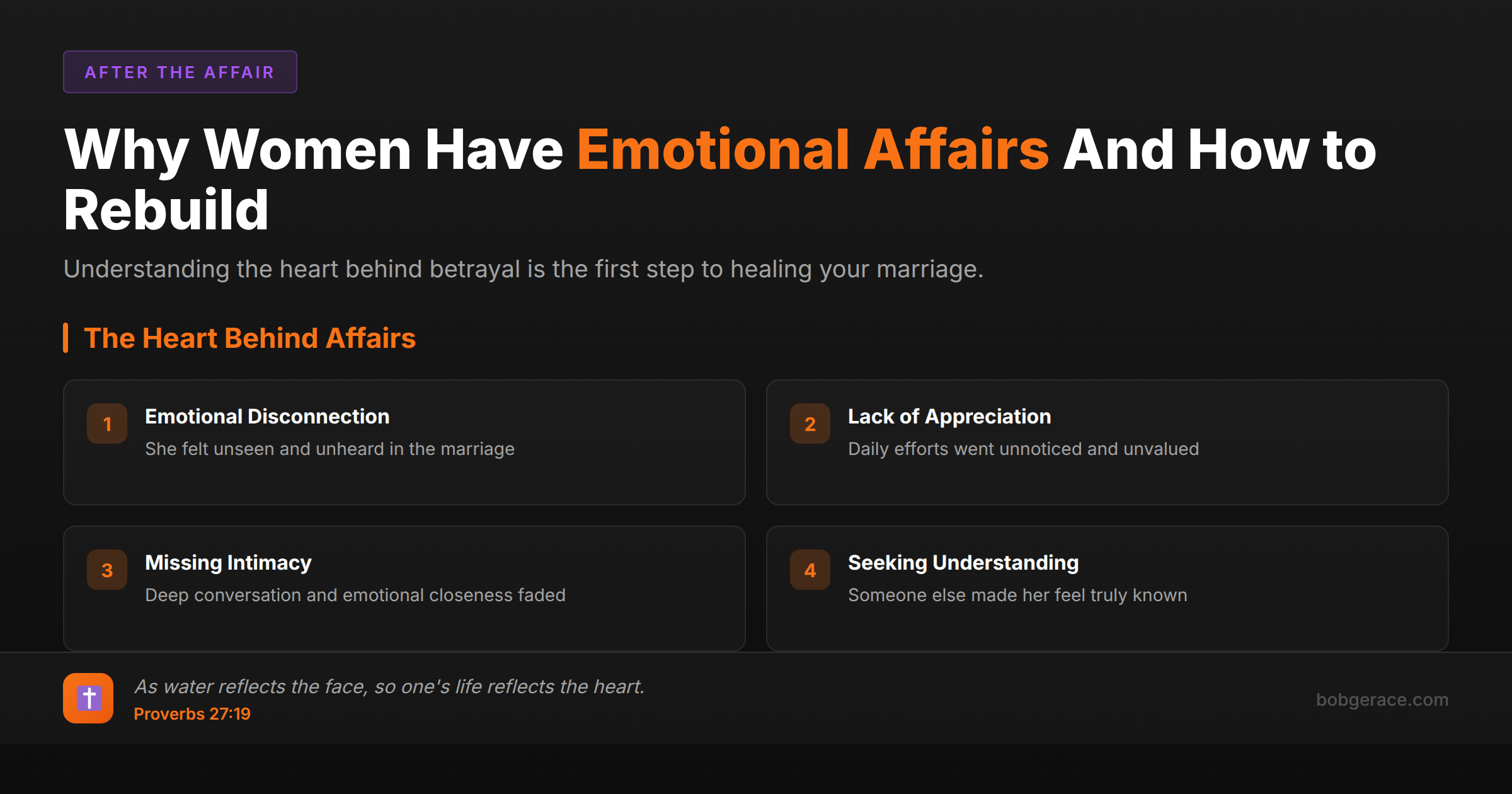
A common catalyst for infidelity is a persistent deficit in the primary relationship. When individuals feel chronically unappreciated, sexually neglected, emotionally disconnected, or unheard, they may become vulnerable to outside attention. The novelty and validation provided by a new person can feel intoxicating compared to the stagnant or strained dynamics at home.
Novelty and the Dopamine Response
Human biology plays a role in infidelity. Long-term relationships naturally shift from the high-dopamine "honeymoon phase" to a calmer, more stable attachment phase. Some individuals struggle with this transition and seek out the intense biochemical rush of excitement, mystery, and infatuation associated with a new partner.
Avoidance of Conflict and Communication Deficits
Many people who have affairs struggle with assertiveness and conflict resolution. Rather than communicating deep-seated unhappiness, addressing intimacy issues, or initiating a difficult conversation about ending the relationship, they seek an external escape. The affair serves as an avoidance mechanism, bypassing the difficult work required to repair or dissolve the primary partnership.
The Impact on Individuals and Partnerships
The discovery or disclosure of an affair typically induces a profound crisis. The psychological impact on the betrayed partner often mirrors symptoms of Post-Traumatic Stress Disorder (PTSD), including intrusive thoughts, hypervigilance, emotional numbness, and acute grief.
Trust, once broken, requires a deliberate, often arduous rebuilding process. The relationship enters a period of severe instability where self-esteem plummets, and both partners face difficult decisions about the future. For the person who strayed, the fallout often involves confronting their own choices, dealing with intense guilt, managing shame, and navigating the potential loss of their family structure.
If children are involved, the ripple effects extend to the broader family unit, altering household stability and requiring careful management to minimize emotional disruption for dependents.
Frequently Asked Questions
Is emotional infidelity considered "cheating"?
Yes. For most people and relationship therapists, emotional infidelity is a profound betrayal. Even without physical touch, sharing exclusive emotional intimacy, secrets, and romantic love with someone else violates the emotional exclusivity expected in a committed partnership.
Why do people in happy relationships still have affairs?
Even in relationships perceived as generally happy, individuals may harbor internal insecurities, a desire for novelty, or unresolved personal issues. External temptations combined with a momentary lapse in boundaries can lead to infidelity, even when the person values their primary partner.
Can a relationship survive an affair?
Yes, many relationships survive infidelity, but recovery is not guaranteed. It requires complete transparency from the unengaged or straying partner, deep remorse, willingness to address underlying issues, and often professional couples therapy to rebuild trust over time.
How long does it take to heal after infidelity?
Healing from betrayal is non-linear and varies significantly by couple. Mental health professionals generally suggest that processing the trauma, rebuilding trust, and establishing a new relational normal can take anywhere from eighteen months to several years.
What is the first step toward recovery after discovering an affair?
The immediate priority is creating emotional and physical safety. This typically involves halting all contact with the affair partner, establishing absolute transparency, and managing acute crisis symptoms before attempting to analyze why the affair occurred.
Next Actions and Professional Guidance
Navigating the reality of an affair—whether experiencing it firsthand, suspecting a partner, or attempting to heal a fractured bond—demands clarity and patience. For individuals struggling with the immediate emotional fallout, seeking individual counseling with a licensed marriage and family therapist (LMFT) specializing in infidelity recovery provides a structured, safe environment to process trauma. For couples committed to exploring reconciliation, evidence-based frameworks like Emotionally Focused Therapy (EFT) offer pathways to reconstruct secure attachment and communication. Always prioritize emotional and physical safety, and consider consulting qualified mental health professionals to guide complex relational transitions.
Image Gallery