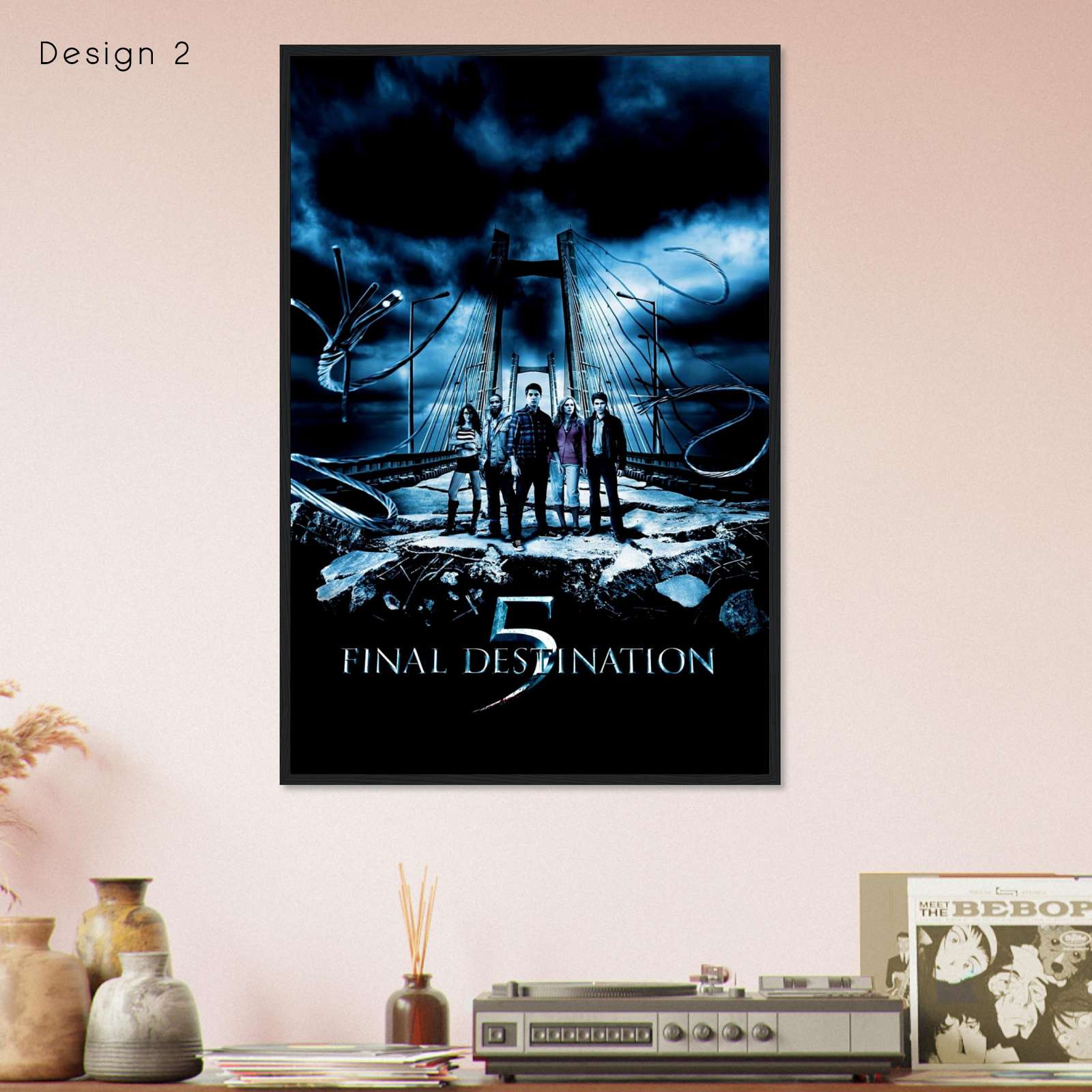
Final Destination 5 Box Office: Financial Analysis and Franchise Impact
Final Destination 5 earned a total of $157,887,642 at the global box office against a production budget of approximately $40 million. While its domestic performance was the lowest in the series at $42.6 million, its massive internation...
Final Destination 5 earned a total of $157,887,642 at the global box office against a production budget of approximately $40 million. While its domestic performance was the lowest in the series at $42.6 million, its massive international appeal—particularly in 3D formats—solidified the film as a major commercial success and a critical high point for the horror franchise.
Contents
The Global Financial Snapshot of Final Destination 5
When analyzing the box office trajectory of Final Destination 5, it is essential to distinguish between its North American reception and its performance in the rest of the world. Released in August 2011, the film faced the difficult task of revitalizing a franchise that many critics believed had peaked with its fourth installment. However, the financial data reveals a nuanced story of a "back-to-basics" approach that resonated deeply with international audiences.
Domestic Performance vs. International Dominance
In the United States and Canada, Final Destination 5 opened to $18 million during its first weekend. While this was a respectable start, it represented a significant drop from the $27.4 million opening of its predecessor, The Final Destination (2009). The domestic total eventually settled at $42,587,642, which accounted for only 27% of its total global earnings.
The real story of the film’s financial health lies in the international markets. Overseas, the film grossed $115,300,000, representing 73% of the total revenue. This was a clear indicator that the brand’s "Rube Goldberg" style of supernatural horror had become a global export with immense staying power outside of Hollywood. As of 2026, looking back at these numbers, the film remains a textbook example of how international markets can sustain a franchise even when domestic interest begins to plateau.
Comparative Analysis: Final Destination 5 Within the Franchise
To understand the magnitude of the Final Destination 5 box office, one must compare it to the four films that preceded it. Historically, the franchise had been remarkably consistent, but the fifth entry occupied a unique middle ground—it wasn't the highest grossing, but it was arguably the most profitable when considering the ratio of budget to critical reception.
Ranking the Revenue
- The Final Destination (2009): $186.2 million
- Final Destination 5 (2011): $157.9 million
- Final Destination 3 (2006): $118.8 million
- Final Destination (2000): $112.9 million
- Final Destination 2 (2003): $90.9 million
While Final Destination 5 did not surpass the 2009 entry in raw dollars, it is widely considered a superior financial "save" for the series. The 2009 film benefited from the initial novelty of modern 3D technology, which resulted in inflated ticket prices and a "last chance to see it" marketing campaign. By the time the fifth film arrived, the 3D novelty had worn off, yet the movie managed to retain a massive portion of that audience by delivering a higher-quality product.
The ROI Factor: Production Budget and Marketing Spend
With a production budget of $40 million, Final Destination 5 was one of the more expensive entries in the series, primarily due to the complex visual effects required for the suspension bridge opening sequence and the high-fidelity 3D filming process. However, the rule of thumb in Hollywood suggests that a film needs to gross roughly 2.5 times its production budget to break even (accounting for marketing and theater splits).
With a total of $157.9 million, the film grossed 3.9 times its production budget. This margin of profit allowed New Line Cinema and Warner Bros. to view the film as a definitive success, even without breaking domestic records.
The Role of 3D Technology in Revenue Generation
One cannot discuss the box office of Final Destination 5 without addressing the 3D boom of the early 2010s. Following the massive success of Avatar (2009), horror franchises rushed to adopt the format. Unlike many films of that era that used post-conversion (a cheaper process that often looked muddy), Final Destination 5 was shot using native 3D cameras.
This technical decision had a direct impact on the box office:
- Premium Pricing: 3D tickets carried a surcharge of $3 to $5, significantly padding the gross totals.
- International Appeal: In 2011, emerging markets like China, Russia, and Brazil were seeing a surge in 3D-equipped cinema construction. Horror films, which rely heavily on visual thrills rather than dialogue, are ideal candidates for these markets.
- Visual Marketing: The "bridge collapse" sequence was marketed as a must-see theatrical event, discouraging audiences from waiting for the home video release.
Detailed Box Office Breakdown by Region
To provide a clearer picture of where the money came from, the following table breaks down the earnings of Final Destination 5 across key global territories.
| Territory | Total Gross (USD) | Percentage of Total |
|---|---|---|
| United States & Canada | $42,587,642 | 27.0% |
| United Kingdom | $8,295,302 | 5.3% |
| France | $7,700,000 | 4.9% |
| Russia | $6,400,000 | 4.1% |
| Mexico | $5,800,000 | 3.7% |
| Germany | $4,900,000 | 3.1% |
| Other International | $82,204,698 | 51.9% |
| Worldwide Total | $157,887,642 | 100% |
Data sourced from Box Office Mojo and industry reporting archives.
Critical Reception and Its Impact on Long-term Earnings
Typically, horror sequels see a diminishing return both in quality and revenue. Final Destination 5 defied the quality trend, holding a "Fresh" rating on Rotten Tomatoes (63%), which was the highest in the series until the release of the 2025/2026 revival.
This critical goodwill translated into "legs"—a term used to describe a film's ability to stay in theaters for multiple weeks without a massive drop-off in attendance. While the domestic opening was soft, the film didn't collapse in its second or third weekends, as fans recommended the movie's shocking twist ending to their peers. This word-of-mouth was instrumental in ensuring the film crossed the $150 million mark globally.
The "Twist" Factor and Repeat Viewings
The ending of Final Destination 5 is famously linked to the original 2000 film, creating a circular narrative. This narrative choice encouraged fans of the original to revisit the theater or purchase the film later on digital platforms. While repeat viewings are difficult to quantify precisely, the surge in social media discussion at the time suggests that the "twist" gave the film a second life during its theatrical run.
Historical Context and the 2026 Perspective
Looking back from 2026, Final Destination 5 occupies a pivotal place in the timeline of the "Death" franchise. After the film's release in 2011, the series went on a lengthy hiatus. Many analysts pointed to the declining domestic numbers of the fifth film as a sign of brand fatigue. However, in hindsight, the film's massive international success proved that the IP remained globally relevant.
This global financial stability is what eventually paved the way for the development of Final Destination: Bloodlines. The producers recognized that as long as the budget was managed (keeping it in the $30M–$50M range), the international audience would provide a high floor for potential earnings.
Key Factors for 2026 Analysts:
- Inflation Adjustment: In 2026 dollars, the $157.9 million gross would be roughly equivalent to over $215 million, adjusting for theater ticket inflation and currency fluctuations.
- Streaming Value: The film’s box office success was followed by strong performance on streaming platforms (HBO Max/Max and Netflix), where the film's high production value and 3D-optimized cinematography stood out against lower-budget horror offerings.
- Franchise Durability: FD5 proved that a horror series could survive a lackluster fourth entry if the fifth entry focused on quality and "vibe" over gimmicks.
Frequently Asked Questions
Was Final Destination 5 considered a flop?
No, it was a significant financial success. While its $42 million domestic gross was the lowest in the franchise, its $157.9 million worldwide total was nearly four times its production budget. In the film industry, any project that earns triple its budget is generally considered profitable.
Why did Final Destination 5 make less than Final Destination 4?
The fourth film, The Final Destination, was marketed as the "final" chapter and was released at the absolute peak of the 3D craze. This created an artificial sense of urgency and allowed for higher ticket prices. Final Destination 5 had to fight "franchise fatigue" and a more skeptical audience, though it ultimately earned better reviews.
Which country was the most profitable for the film outside the US?
The United Kingdom and France were the leading international markets for Final Destination 5, consistently delivering high attendance numbers. Russia also showed a surprisingly strong appetite for the film, reflecting the growth of the Russian cinema market during that period.
How did the 3D format affect the box office?
The 3D format was crucial. It accounted for a vast majority of the international ticket sales. Because the film was shot specifically for 3D, it avoided the "dimness" issues of other horror movies, making it a preferred choice for IMAX and premium large-format screens.
Is there a Final Destination 6 based on these numbers?
The financial success of the fifth film eventually led to the development of the sixth installment, titled Final Destination: Bloodlines. Although there was a long gap between the films, the profitability of the fifth entry remained the primary justification for the series' continuation in the 2020s.
Final Recommendation for Researchers
For those analyzing the horror genre's financial evolution, Final Destination 5 serves as a case study in globalized revenue. It demonstrates that domestic (US) numbers are no longer the sole arbiter of a franchise's survival. When researching this film, look specifically at the "International to Domestic" ratio—at 73% international, this film was a pioneer in the trend of Hollywood horror relying on global markets for its primary profit margins.
Image Gallery