Understanding the Finance Function in Financial Management
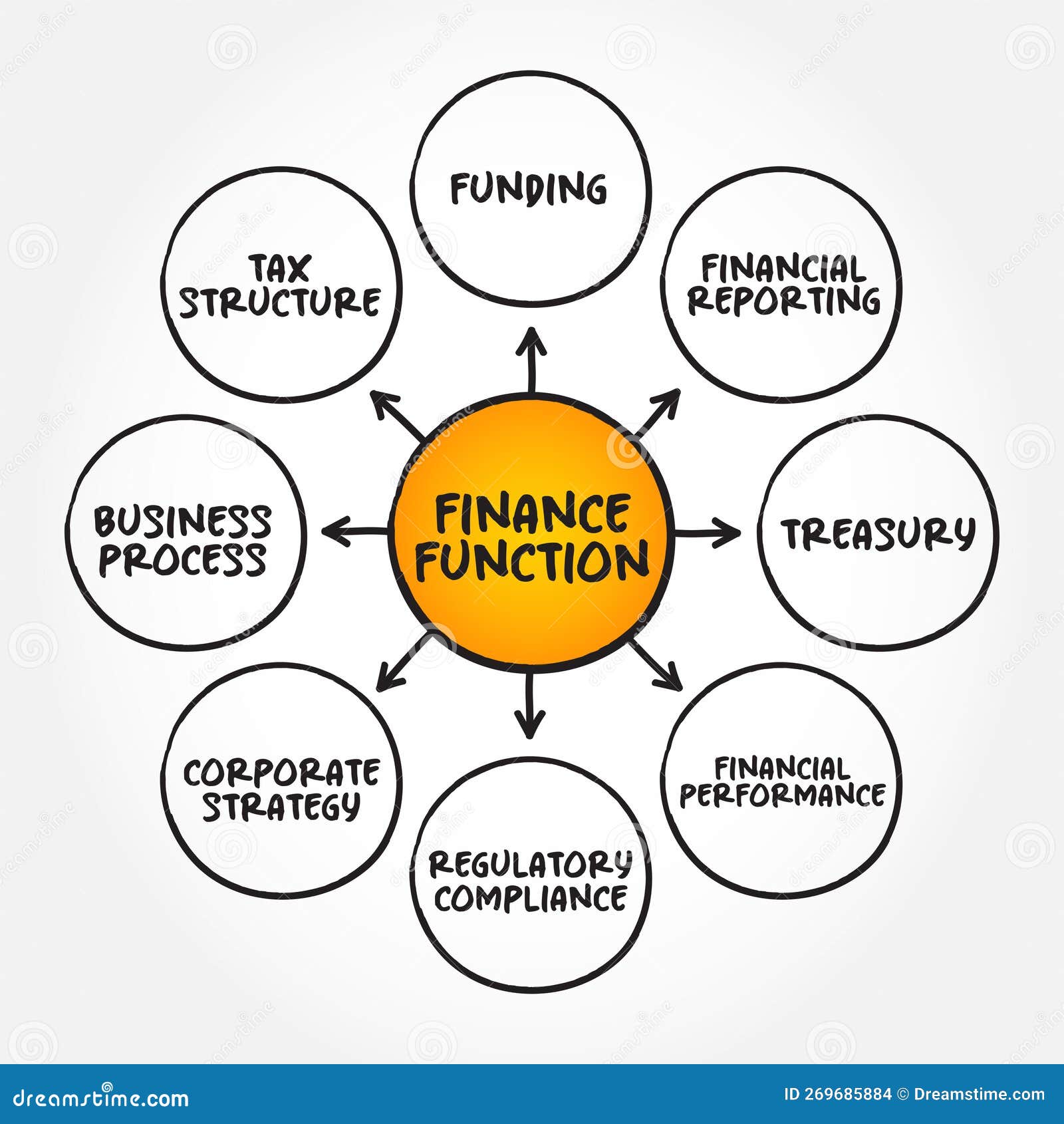
The finance function is the strategic process of sourcing, allocating, and managing capital to maximize a firm's value. It acts as the circulatory system of an organization, ensuring that funds flow efficiently to the areas where they...
The finance function is the strategic process of sourcing, allocating, and managing capital to maximize a firm's value. It acts as the circulatory system of an organization, ensuring that funds flow efficiently to the areas where they can generate the highest risk-adjusted returns while maintaining the liquidity necessary to meet ongoing obligations.
Contents
In the landscape of 2026, the finance function has evolved beyond simple record-keeping into a core strategic pillar. While financial management represents the broader discipline of planning and controlling financial activities, the finance function refers to the specific operational and analytical activities—such as investment, financing, and dividend decisions—that turn financial theories into corporate reality.
The Core Pillars of the Finance Function
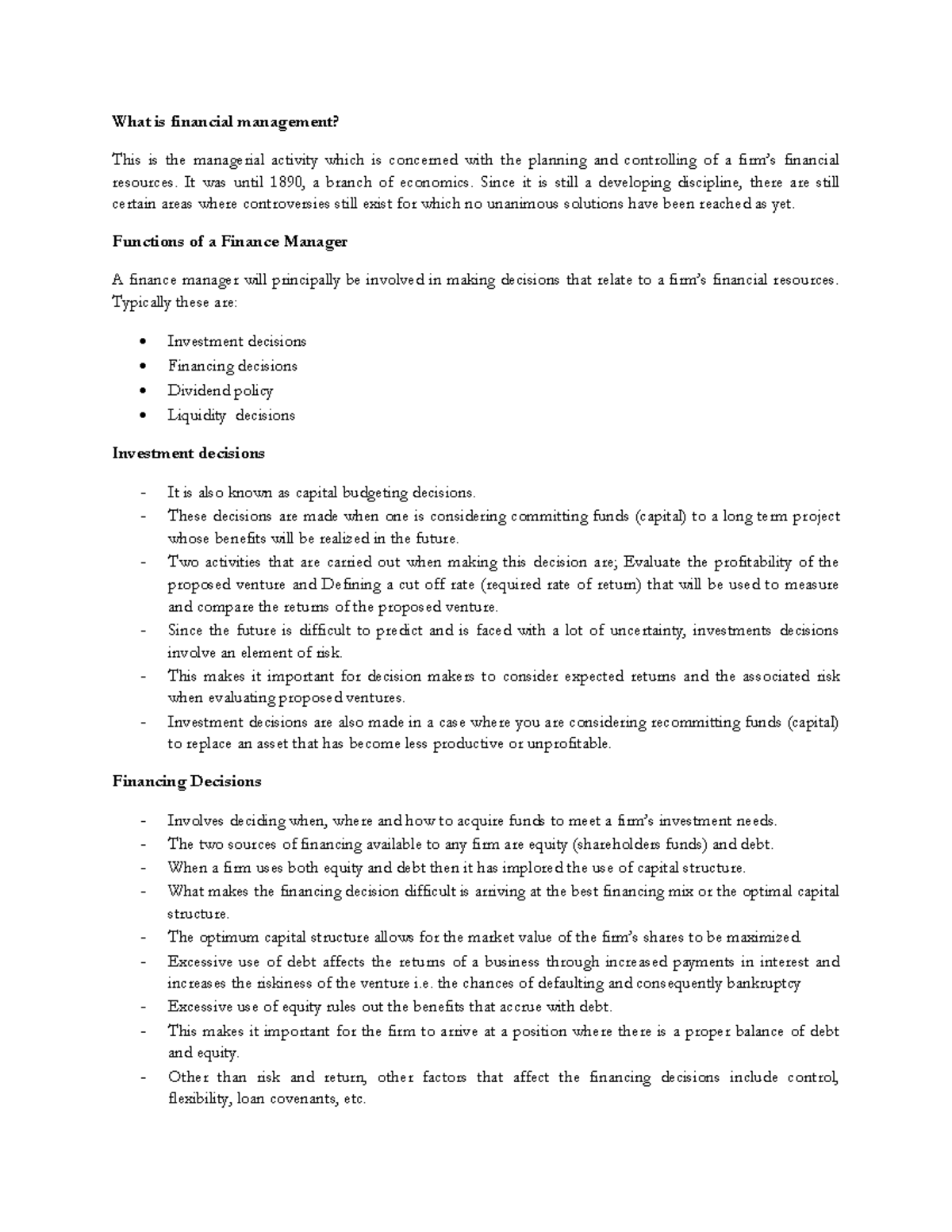
The finance function is traditionally categorized into four primary decision-making areas. Each pillar is interconnected; a change in one inevitably impacts the others, requiring a balanced approach to maintain organizational stability.
1. Investment Decisions (Capital Budgeting)
Investment decisions involve the allocation of capital to long-term assets or projects that are expected to yield benefits over several years. This is arguably the most critical finance function because it determines the future growth trajectory of the company. In 2026, these decisions are heavily influenced by predictive analytics and real-time market data.
Managers must evaluate whether the expected return on a project exceeds the cost of the capital required to fund it. Common tools used in this process include Net Present Value (NPV), Internal Rate of Return (IRR), and Profitability Index. A successful investment decision doesn't just look at raw profit; it accounts for the time value of money and the specific risk profile of the industry.
2. Financing Decisions (Capital Structure)
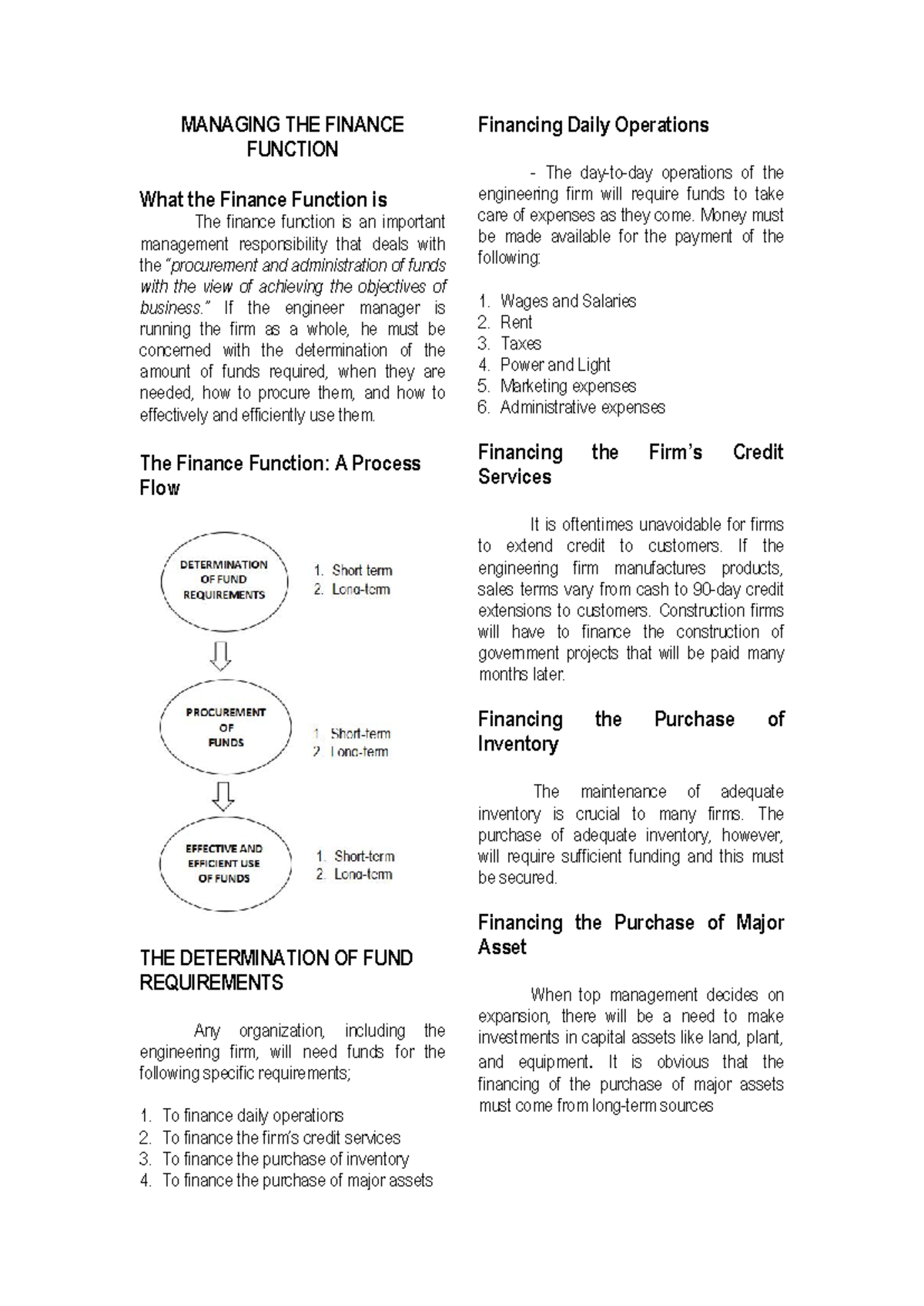
Once an investment is identified, the finance function must determine how to pay for it. Financing decisions focus on the "capital structure"—the specific mix of debt (loans, bonds) and equity (shares, retained earnings) used to fund operations.
The goal is to achieve an "optimal capital structure" that minimizes the Weighted Average Cost of Capital (WACC). Too much debt increases the risk of insolvency through high interest obligations, while too much equity can dilute ownership and often carries a higher opportunity cost. Financial managers must navigate interest rate environments and investor sentiment to strike this balance.
3. Dividend Decisions (Profit Allocation)
Dividend decisions involve determining how much of the company's net profit should be distributed to shareholders and how much should be retained for reinvestment. This is a delicate balancing act. Shareholders often expect regular income, but retaining earnings is often the cheapest way to fund future growth without taking on new debt or diluting shares.
In 2026, companies are increasingly using "residual dividend policies," where dividends are paid only after all profitable investment opportunities have been funded. This ensures that the finance function prioritizes long-term value creation over short-term payouts.
4. Liquidity Decisions (Working Capital Management)
While the first three pillars focus on the long term, liquidity decisions deal with the short term. This involves managing "working capital"—the difference between current assets (cash, inventory, accounts receivable) and current liabilities (accounts payable, short-term debt).
Effective working capital management ensures that a business can pay its bills on time without keeping too much idle cash that could otherwise be invested. It involves optimizing inventory turnover and managing credit terms with both suppliers and customers.
Evolutionary Shift: Traditional vs. Modern Finance Function
The perception of the finance function has shifted dramatically over the last few decades. Understanding this evolution is key to identifying how modern organizations operate.
The Traditional View focused primarily on the "procurement of funds." In this era, the finance manager's role was largely reactive. They were called upon when the company needed more cash, and their job was to find the cheapest source. The emphasis was on legalistic arrangements, accounting compliance, and historical reporting.
The Modern View (current standard in 2026) treats the finance function as an "analytical and strategic" partner. It is no longer just about getting the money; it is about the effective utilization of those funds. Modern finance functions are involved in every department, from marketing budgets to R&D pipelines, ensuring that every dollar spent aligns with the overarching goal of wealth maximization.
Primary Objectives: Profit vs. Wealth Maximization
The finance function operates under two primary schools of thought regarding its ultimate goal. While they may sound similar, their implications for decision-making are vastly different.
- Profit Maximization: This is a short-term objective focused on increasing Earnings Per Share (EPS) within a specific period. Critics argue this approach is flawed because it ignores the "time value of money" and the "risk factor." For example, a project that yields $1 million today is treated the same as one that yields $1 million in five years, which is economically inaccurate.
- Wealth Maximization: This is the modern gold standard. It focuses on maximizing the current market value of the company’s shares. Wealth maximization considers the timing of returns, the risk involved, and the long-term sustainability of the business. By focusing on the Net Present Value of future cash flows, the finance function ensures that the company remains attractive to investors and stable in volatile markets.
Comparing Finance Functions Across Business Scales
The execution of the finance function varies significantly depending on the size and complexity of the organization.
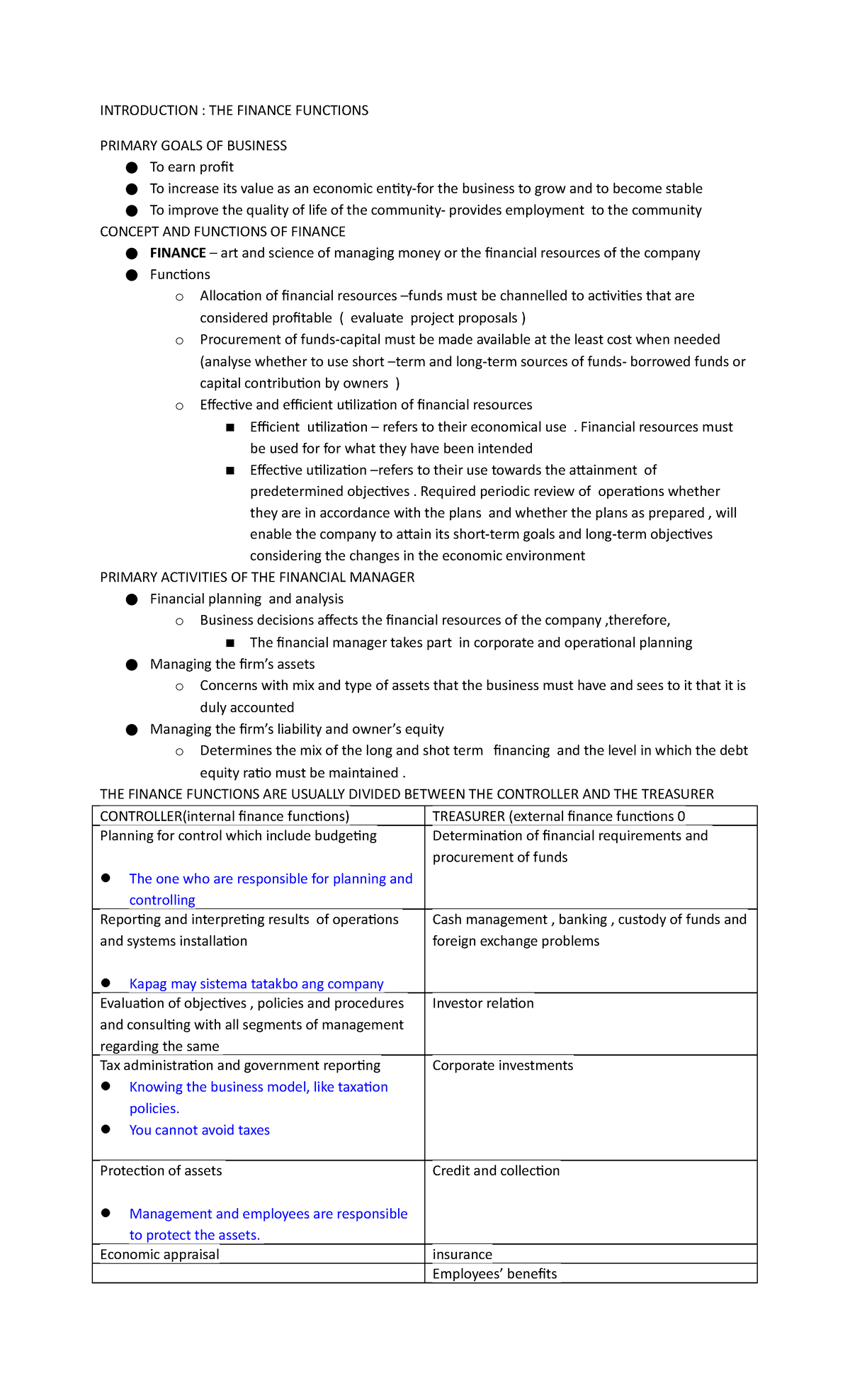
| Feature | Small Business / Startup | Mid-Market Enterprise | Large Multinational Corporation |
|---|---|---|---|
| Primary Focus | Cash flow and survival | Growth and scaling | Risk management and optimization |
| Funding Source | Bootstrapping, Angel investors | Bank loans, Private equity | Public markets (Stocks/Bonds) |
| Decision Maker | Owner or Founder | CFO and Finance Controller | Global Finance Committee / Board |
| Technology | Basic cloud accounting | Integrated ERP systems | AI-driven Treasury Management |
| Complexity | Single currency, local tax | Multi-state, standard compliance | Multi-currency, global tax hedging |
The Role of the Financial Manager in 2026
In 2026, the individual leading the finance function—often the CFO or Finance Director—is expected to be a data scientist as much as a bean counter. Their responsibilities have expanded to include:
- Risk Management: Identifying and mitigating financial risks, including currency fluctuations, interest rate spikes, and commodity price volatility.
- ESG Integration: Evaluating investments not just on financial return, but on Environmental, Social, and Governance (ESG) metrics, which are now legally mandated in many jurisdictions for capital raising.
- Financial Forecasting: Moving away from static annual budgets toward "rolling forecasts" that allow the company to pivot based on real-time economic shifts.
- Strategic Advisory: Providing the CEO and Board with data-backed insights on mergers, acquisitions, and divestitures.
Common Challenges in Finance Function Execution
Executing the finance function is rarely straightforward. Several external and internal factors can complicate the process:
- Information Asymmetry: When managers have more or better information than shareholders, it can lead to "agency problems" where managers make decisions that benefit themselves rather than the owners.
- Market Volatility: Sudden shifts in the global economy can render long-term investment appraisals obsolete overnight.
- Regulatory Compliance: Navigating the complex web of international tax laws and reporting standards (like IFRS or GAAP) requires significant resources.
- Capital Rationing: Often, a company has more profitable projects than it has capital. The finance function must then engage in "capital rationing," which involves choosing the combination of projects that provides the highest total NPV within the budget constraint.
Frequently Asked Questions
What is the difference between the finance function and the accounting function?
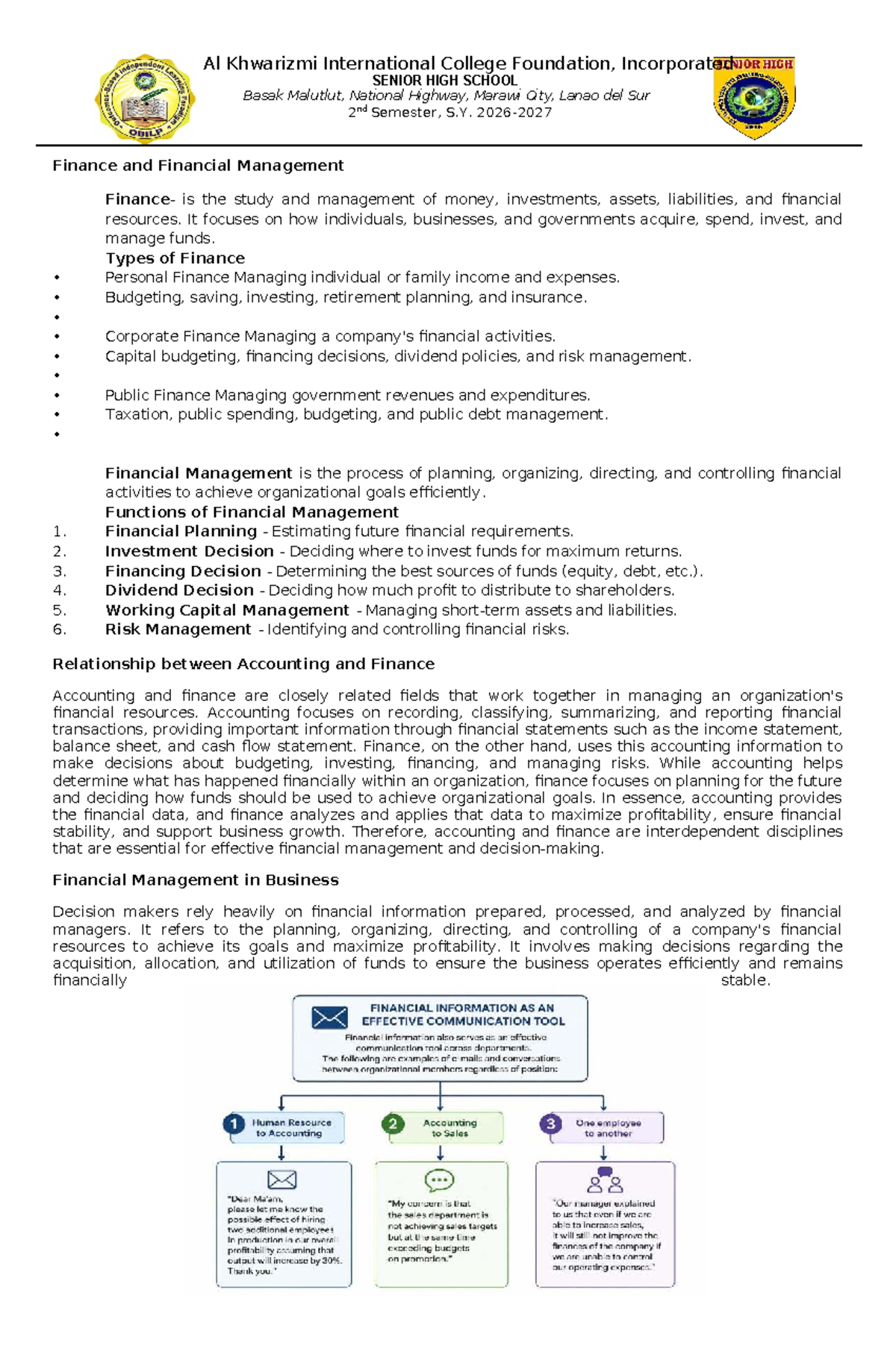
While accounting is focused on the systematic recording of past transactions and the preparation of financial statements, the finance function is forward-looking. Accounting tells you where the money went; the finance function decides where the money should go next to generate future value.
Why is the finance function considered a "circulatory system" for business?
Just as the heart pumps blood to vital organs, the finance function ensures that capital is distributed to various departments (Marketing, Operations, HR). If the flow of capital stops or is misdirected to unproductive areas, the organizational "body" begins to fail, leading to insolvency or bankruptcy.
Can a company have a finance function without a CFO?
Yes, in small businesses, the finance function is often performed by the owner or an external accountant. However, as a business grows, the complexity of investment and financing decisions usually requires a dedicated professional to manage the strategic aspects of capital.
How does the finance function impact daily operations?
It sets the boundaries for operational spending. Through the liquidity function, it ensures there is enough cash to pay employees and suppliers today. Through the investment function, it provides the tools and technology employees need to be productive tomorrow.
What is the "Cost of Capital" in the finance function?
The cost of capital is the minimum rate of return a business must earn on its investments to satisfy its investors (both debt holders and shareholders). It serves as the "hurdle rate" for all major financial decisions; if a project doesn't beat this rate, it is generally rejected.
Next Steps for Improving Your Finance Function
To optimize the finance function within an organization, leadership should move toward a "value-add" model rather than a "cost-center" model. This involves:
- Investing in Real-Time Data: Replace manual spreadsheets with automated financial systems that provide a "single source of truth."
- Aligning Incentives: Ensure that management incentives are tied to wealth maximization (long-term share price) rather than just short-term profit targets.
- Cross-Departmental Collaboration: Encourage the finance team to work closely with operations and marketing to understand the "Why" behind the numbers.
- Continuous Risk Assessment: Regularly stress-test the company's capital structure against potential economic downturns to ensure resilience.
For more detailed regulatory guidelines on financial reporting and capital requirements, practitioners should refer to resources provided by the International Federation of Accountants (IFAC) or the Securities and Exchange Commission (SEC).
Image Gallery