2013 Mazdaspeed 3 Reliability Guide: Common Problems, Engine Longevity, and Buyer’s Checklist
The 2013 Mazdaspeed 3 is generally reliable when properly maintained, capable of reaching 150,000 to 200,000 miles on its original engine. As the final production year of the second generation (BL chassis), the 2013 model benefits from...
The 2013 Mazdaspeed 3 is generally reliable when properly maintained, capable of reaching 150,000 to 200,000 miles on its original engine. As the final production year of the second generation (BL chassis), the 2013 model benefits from factory updates that fixed earlier Variable Valve Timing (VVT) defects, though turbocharger wear, fuel pump limits, and intake valve carbon buildup remain key concern areas.
Contents
2013 Mazdaspeed 3 Reliability Overview: What to Expect
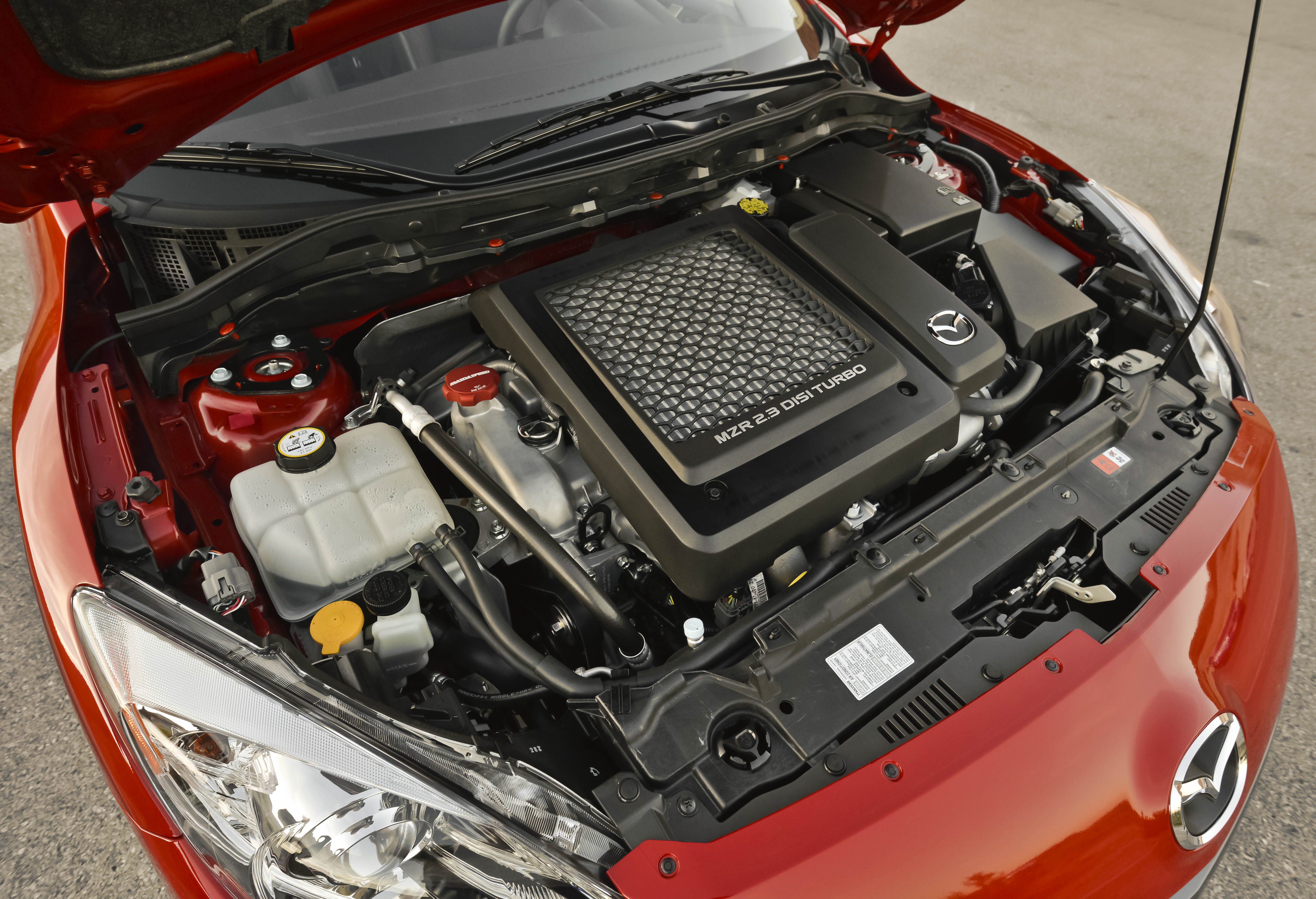
The 2013 Mazdaspeed 3 represents the pinnacle of Mazda’s hot-hatch engineering from the 2000s and 2010s. Powered by the turbocharged 2.3-liter MZR DISI (Direct Injection Spark Ignition) inline-four engine (factory code L3-VDT), the vehicle outputs 263 horsepower and 280 lb-ft of torque strictly through a six-speed manual transmission equipped with a Tochigi Fuji torque-sensing limited-slip differential.
Because 2013 was the final model year for the Mazdaspeed 3, it inherited all minor running revisions introduced during the second-generation production run (2010–2013). Most notably, Mazda revised the VVT actuator design and timing chain assembly late in the 2010 model year, eliminating the severe premature timing chain failures that plagued 2007–2009 (Gen 1) and early 2010 models.
However, evaluated as a high-performance, front-wheel-drive vehicle over a decade after manufacture, overall reliability depends heavily on two factors: prior owner maintenance history and aftermarket modification practices. Stock, unmolested 2013 models with consistent maintenance logs display reasonable mechanical durability. Conversely, vehicles subjected to aggressive aftermarket tuning without supporting hardware upgrades exhibit elevated failure rates.
Engine Durability and Mechanical Weak Points
While the core cast-iron block and forged aluminum pistons of the 2.3L MZR DISI engine are fundamentally robust, several peripheral systems require vigilant monitoring and preventative care.
- MZR 2.3L DISI Core Mechanical Health
- VVT & Timing Chain (Factory updated for 2013; check wear >100k miles)
- Fuel System (HPFP internals limit flow; critical failure point if modified)
- Turbocharger (BorgWarner K04 oil seal leaks causing exhaust smoke)
- Intake Valves (Direct injection causes heavy carbon buildup requiring cleaning)
1. Variable Valve Timing (VVT) and Timing Chain Wear
Earlier iterations of the L3-VDT engine suffered from a defective VVT actuator pin that could sheer off, allowing the timing chain to slacken, strike the valve cover, and occasionally jump teeth—resulting in catastrophic valve-to-piston contact.
For the 2013 model year, Mazda fitted an updated VVT actuator assembly featuring a reinforced locking pin and modified friction washers. While premature failure at low mileage is rare on 2013 models, timing chain stretch can still occur past 100,000 miles due to extended oil drain intervals.
- Symptom: A prominent metallic rattling sound coming from the passenger side of the engine valve cover during cold starts.
- Inspection: Remove the oil filler cap and manually depress the timing chain with a plastic tool while the engine is off. Any noticeable slack indicates a stretched chain or worn hydraulic tensioner.
2. High-Pressure Fuel Pump (HPFP) Limitations
The direct-injection architecture utilizes a camshaft-driven high-pressure mechanical fuel pump mounted on the cylinder head. Stock HPFP internal pistons maintain adequate pressure (around 1,600 to 1,800 PSI under load) for factory boost levels (roughly 15.5 PSI peak).
However, the stock HPFP capacity operates near its maximum limit from the factory. Installing basic bolt-on performance parts—such as an aftermarket intake or downpipe—without upgrading the factory HPFP internals causes severe fuel pressure drops under heavy load. This leads to lean air-fuel ratios, detonation, and severe engine damage commonly referred to by enthusiasts as "Zoom-Zoom-Boom" (ZZB).
- Prevention: Upgrading the factory fuel pump internal piston assembly (such as Autotech or CorkSport HPFP internals) is mandatory before installing any engine performance modifications.
3. BorgWarner K04 Turbocharger Seals
The stock BorgWarner K0422 turbocharger utilizes journal bearings that rely on consistent oil pressure. High heat cycles and extended oil change intervals degrade the internal oil seals.
- Symptom: Persistent blue or grey smoke billows from the tailpipe after idling for 5 to 10 minutes at operating temperature.
- Diagnosis: Excessive shaft play (radial or axial clearance) inside the turbocharger compressor housing. Turbo lifespan typically ranges between 80,000 and 130,000 miles depending on oil quality and cool-down practices.
4. Direct Injection Carbon Buildup
Because direct injectors spray fuel directly into the combustion chamber rather than over the intake valves, there is no gasoline stream to wash away crankcase oil vapor introduced by the Positive Crankcase Ventilation (PCV) system. Over time, baked-on carbon deposits restrict airflow through the cylinder head intake ports.
- Symptom: Rough idling, misfires under light load, degraded throttle response, and decreased fuel economy.
- Remedy: Walnut shell blasting or manual cleaning of the intake ports and valves every 50,000 to 60,000 miles restores lost engine performance and smooths out idle quality.
Drivetrain, Chassis, and Body Durability
Beyond the engine compartment, the 2013 Mazdaspeed 3 features heavy-duty driveline components designed to manage high front-wheel torque, though specific wear patterns affect overall long-term operation.
- Chassis & Driveline Inspection Focus
- G66M-R Transmission (Synchronizer wear on 2nd & 3rd gears)
- Motor Mounts (Rear mount soft from factory; tears under torque load)
- Suspension Bushings (Front control arm bushings wear by 80k miles)
- Chassis Rust (Rear wheel arches, subframes, and underbody seam welds)
Transmission and Limited-Slip Differential
The G66M-R six-speed manual transmission is robust, but aggressive shifting takes a toll on the gear synchronizers.
- Synchro Wear: Second-to-third gear grinding under high-RPM shifting is a common issue caused by worn brass synchro rings.
- Dual-Mass Flywheel: The factory dual-mass flywheel dampens engine vibration effectively but is expensive to replace. When worn, it produces chatter at idle that disappears when the clutch pedal is fully depressed.
Factory Engine Mounts and Wheel Hop
To minimize noise, vibration, and harshness (NVH) for standard commercial buyers, Mazda equipped the vehicle with relatively soft rubber engine mounts. The lower Rear Motor Mount (RMM) is notoriously soft, allowing significant engine movement under hard acceleration.
- Impact: Heavy engine rocking induces violent wheel hop during rapid launches, which places excessive stress on front axle CV joints, intermediate shafts, and power steering mounts.
- Solution: Replacing the factory RMM with an aftermarket polyurethane unit drastically reduces engine pitch and wheel hop, preserving drive axle integrity.
Chassis Rust and Underbody Corrosion
Depending on geographic location and exposure to road salt, second-generation Mazda 3 chassis components suffer from localized rust formation. Key structural areas requiring inspection include:
- Rear wheel arch inner lips (where moisture and dirt settle behind plastic fender linings).
- Rear suspension crossmembers and trailing arms.
- Front subframe mounting points and floor pan seam welds.
2013 Mazdaspeed 3 Reliability Matrix & Common Failures
The following matrix categorizes common failure modes, typical mileage windows, severity levels, and expected repair costs for the 2013 model year.
| Component / System | Failure Mode | Typical Mileage | Failure Severity | Estimated Repair Cost (USD) |
|---|---|---|---|---|
| Intake Valves | Heavy carbon buildup restricting airflow | 50,000 – 70,000 | Moderate (Performance loss) | $400 – $700 (Walnut blast) |
| BorgWarner K04 Turbo | Journal bearing oil seal failure / shaft play | 80,000 – 120,000 | High (Oil consumption / smoke) | $800 – $1,600 (Replacement) |
| Rear Motor Mount (RMM) | Rubber tear / excessive engine movement | 40,000 – 60,000 | Low to Moderate (Axle stress) | $120 – $220 (Aftermarket part) |
| Timing Chain Assembly | Chain stretch / hydraulic tensioner wear | 100,000 – 140,000 | Severe (Risk of engine damage) | $1,100 – $1,800 (Full kit) |
| Factory HPFP Internals | Fuel pressure drop under aftermarket load | N/A (Occurs when modified) | Critical (Engine detonation) | $350 – $450 (Upgraded internals) |
| 2nd/3rd Gear Synchros | Gear grinding under high RPM load | 70,000 – 110,000 | Moderate (Driveability issue) | $1,500 – $2,400 (Transmission rebuild) |
| Front Control Arm Bushings | Fluid leak / rubber tearing | 60,000 – 90,000 | Low (Uneven tire wear) | $350 – $650 (Arm replacement) |
Pre-Purchase Inspection (PPI) Checklist
When evaluating a used 2013 Mazdaspeed 3, follow this systematic diagnostic process before completing a purchase:
Step 1: Check ECU Status & Monitor Calibration
- Connect an OBD-II scanner. Ensure readiness monitors are complete.
- Verify key parameter: HPFP Actual Pressure should reach ~1,600+ PSI under WOT.
Step 2: Inspect Engine Compartment & Timing Assembly
- Remove oil cap when cold; test timing chain tension by hand.
- Inspect valve cover gasket area for active oil leaks.
Step 3: Evaluate Exhaust and Turbocharger Performance
- Start cold engine; let idle for 10 minutes until warm.
- Observe exhaust tips for blue smoke (indicates failing turbo seals).
Step 4: Test Transmission and Synchronizer Operation
- Drive vehicle through all gears at moderate and high RPMs.
- Listen for gear grind in 2nd and 3rd gear shifts; verify clutch pedal engagement height.
Step 5: Verify Vehicle Modifications & Hardware Integrity
- Check for aftermarket intakes or downpipes without upgraded HPFP internals.
- Walk away from un-tuned vehicles running bolt-on modifications without proper ECU calibration.
Verify Fuel Pressure Logs: Using an Cobb Accessport or equivalent OBD-II diagnostic scanner, monitor HPFP Act. Press. (High-Pressure Fuel Pump Actual Pressure). Under full-throttle acceleration (WOT) in third gear, fuel pressure must remain strictly above 1,500 PSI. Values dropping below 1,200 PSI indicate worn pump internals or inadequate fuel delivery, posing an immediate engine damage risk.
Perform a Leakdown and Compression Test: Healthy compression figures for the 2.3L MZR DISI engine typically range between 160 PSI and 185 PSI per cylinder, with no more than a 10% variance between the highest and lowest cylinder. A low reading on a single cylinder (e.g., under 130 PSI) often points to damaged piston ring lands or burnt valves.
Inspect Modification Quality: Be extremely cautious of vehicles with aftermarket cold air intakes, downpipes, or upgraded turbochargers that lack verified ECU tuning or upgraded fuel pump internals. Poorly calibrated aftermarket tunes are the primary cause of engine rod failures on this platform.
Examine Undercarriage and Trailing Arms: Inspect the front lower control arms, inner CV boots, and rear trailing arm bushings for fluid leakage or severe dry rot.
Essential Maintenance Schedule to Maximize Lifespan
Adhering to strict service schedules significantly increases the operational lifespan of the L3-VDT engine and driveline.
- Recommended Maintenance Schedule
- 3,000 – 5,000 Miles: Synthetic Oil & Filter (5W-30 / 5W-40 API SP)
- 15,000 – 20,000 Miles: Spark Plugs (NGK Iridium step-colder if tuned)
- 30,000 – 40,000 Miles: Transmission Fluid Change (75W-90 GL-4 Synthetic)
- 50,000 – 60,000 Miles: Intake Valve Cleaning (Walnut Shell Blasting)
- Engine Oil & Filter: Change engine oil every 3,000 to 5,000 miles using high-quality full synthetic oil (5W-30 or 5W-40 meeting API SP standards to prevent low-speed pre-ignition). Never exceed 5,000 miles between changes.
- Spark Plugs: Replace spark plugs every 15,000 to 20,000 miles. Direct injection and turbocharging degrade plug gaps rapidly. Stock engines perform best on OEM NGK Laser Iridium plugs; modified engines require plugs gapped tighter (typically 0.026–0.028 inches) and one step colder heat range (e.g., NGK LTR7IX-11).
- Transmission Fluid: Flush manual transmission fluid every 30,000 to 40,000 miles using high-grade 75W-90 GL-4 synthetic gear oil (such as Ford XT-M5-QS or Red Line MT-90) to maintain synchronizer protection.
- PCV Valve Replacement: Replace the Positive Crankcase Ventilation valve every 50,000 miles. A stuck PCV valve increases crankcase pressure, accelerating turbo seal failures and oil consumption.
Frequently Asked Questions
Did the 2013 Mazdaspeed 3 fix the VVT timing chain issue?
Yes. Mazda implemented a redesigned VVT actuator, modified friction washers, and an updated timing chain tensioner starting in late 2010. Consequently, the 2013 model year features the updated factory design, making premature VVT failure far less common than on 2007–2009 models. High-mileage units (over 100,000 miles) still require periodic wear inspections.
How long does a 2013 Mazdaspeed 3 engine typically last?
With strict adherence to synthetic oil changes, timely carbon cleaning, and conservative driving, the 2.3L MZR DISI engine routinely lasts 150,000 to 200,000 miles. Neglecting oil levels, skipping spark plug maintenance, or running aggressive ECU tunes on stock fuel pumps can cause engine failure well before 100,000 miles.
Can you safely daily-drive a 2013 Mazdaspeed 3?
Yes, the 2013 Mazdaspeed 3 is a practical daily driver, featuring 25 cubic feet of rear cargo space, standard hatchback utility, and comfortable seats. However, buyers should expect a firm ride setup, noticeable torque steer under hard acceleration, and real-world fuel economy averaging around 20–23 MPG on required premium 91+ octane fuel.
What causes "Zoom-Zoom-Boom" on the Mazdaspeed 3 platform?
"Zoom-Zoom-Boom" is a term used for catastrophic engine failure caused by a broken connecting rod. It is almost always triggered by low-speed pre-ignition (LSPI) or severe engine knock resulting from inadequate fuel flow. Installing breathing modifications (intakes, downpipes) without upgrading the stock High-Pressure Fuel Pump (HPFP) causes lean conditions under boost, leading directly to engine failure.
What are the best reliability modifications for a stock 2013 Mazdaspeed 3?
The top three reliability upgrades for a stock or mild 2013 Mazdaspeed 3 are:
- Upgraded HPFP Internals: Ensures stable high-pressure fuel delivery under all load conditions.
- Aftermarket Rear Motor Mount (RMM): Controls engine movement, saving drive axles and exhaust flex joints from excessive stress.
- Oil Catch Can (OCC): Captures oil vapor from the PCV system before it reaches the intake valves, significantly slowing carbon buildup.
Next Steps for Prospective Owners
If you are planning to purchase or maintain a 2013 Mazdaspeed 3, execute these key actions:
- Locate an Unmodified Baseline Vehicle: Prioritize clean, stock examples with complete maintenance records over pre-modified cars.
- Schedule a Professional PPI: Ensure a qualified technician checks cylinder compression, inspects turbo housing for shaft play, and verifies timing chain tension.
- Budget for Immediate Maintenance: Set aside $1,000 to $1,500 immediately after purchase for essential baseline services, including an upgraded HPFP internal kit, fresh synthetic engine and transmission fluids, new spark plugs, and intake valve walnut blasting.
Image Gallery