Joel Quenneville Salary Overview: Career Earnings and Contract Analysis
Joel Quenneville stands as one of the most financially successful coaches in National Hockey League history, with career earnings estimated to exceed $50 million. His compensation peaked during his tenures with the Chicago Blackhawks a...
Joel Quenneville stands as one of the most financially successful coaches in National Hockey League history, with career earnings estimated to exceed $50 million. His compensation peaked during his tenures with the Chicago Blackhawks and Florida Panthers, where he secured multi-year contracts valued at approximately $6 million annually, setting benchmarks for elite coaching talent.
Contents
The Evolution of Joel Quenneville’s Coaching Compensation
To understand the scope of Joel Quenneville’s salary overview, one must look at the broader economic shift within the NHL coaching market. For decades, NHL head coaches were often compensated at a fraction of the rate of the players they led. However, the mid-2010s saw a massive correction in market value for "proven winners." Quenneville, having secured three Stanley Cup championships with the Chicago Blackhawks, was at the forefront of this financial evolution.
His career earnings are not merely a reflection of his time behind the bench but a testament to his leverage as the second-winningest coach in league history. Throughout his transitions from the St. Louis Blues to the Colorado Avalanche, and eventually to his high-paying roles in Chicago and Florida, his salary mirrored the league's increasing reliance on veteran leadership to drive franchise valuation and on-ice success.
Early Career and the St. Louis Blues Era
Quenneville’s journey into high-stakes coaching began in earnest with the St. Louis Blues in 1996. During this period, head coaching salaries were significantly lower than the modern era, typically ranging from $300,000 to $700,000 for established names. Quenneville’s success in St. Louis, including winning the Jack Adams Award in 2000, allowed him to negotiate his first major seven-figure extensions.
By the time he moved to the Colorado Avalanche in 2005, the salary cap era had begun. While the cap restricted player pay, it indirectly increased the value of an elite coach who could maximize a capped roster. His time in Colorado served as a bridge, maintaining his status as a top-tier earner before his historic run in Chicago.
The Chicago Blackhawks Era: Reaching the $6 Million Mark
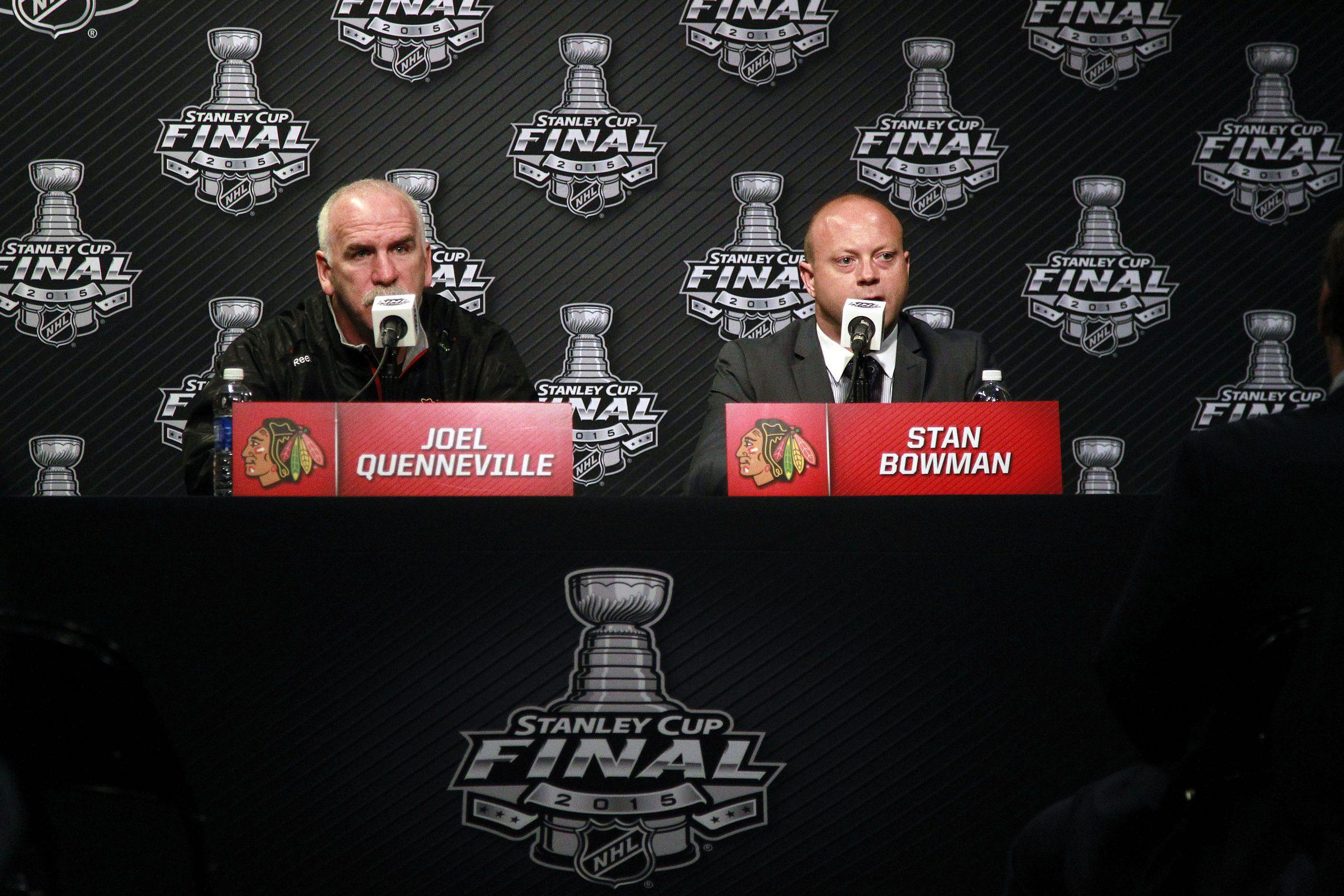
The most significant portion of Quenneville’s wealth was generated during his tenure with the Chicago Blackhawks (2008–2018). After leading the team to Stanley Cup victories in 2010, 2013, and 2015, Quenneville possessed unprecedented bargaining power.
In early 2016, Quenneville signed a three-year contract extension that was reported to be worth $18 million. This deal, which kicked in for the 2017-2018 season, paid him an average annual value (AAV) of $6 million. At the time, this made him one of the two highest-paid coaches in the world, alongside Mike Babcock.
The Significance of the $6 Million Extension
The $6 million salary was a milestone. It signaled that the Blackhawks' ownership viewed Quenneville as an essential "core piece," much like star players Jonathan Toews or Patrick Kane. The contract was structured to reflect his status as a three-time champion, providing him with financial security that few in his profession have ever reached. Even when the Blackhawks terminated his employment in November 2018, the guaranteed nature of NHL coaching contracts ensured that he continued to receive his salary through the 2019-2020 season, or until he signed with another club.
The Florida Panthers Contract: A $31.5 Million Commitment
In April 2019, the Florida Panthers made a massive financial commitment to Quenneville to lead their young roster. The deal was widely reported as a six-year contract worth approximately $31.5 million. This agreement solidified his position at the top of the coaching pay scale, with an AAV of roughly $5.25 million, potentially reaching higher with performance-based incentives.
Contract Breakdown and Structure
The Florida contract was designed to provide long-term stability for a franchise seeking its first sustained period of success. The deal was front-loaded in terms of expectations, tasking Quenneville with transforming the Panthers into a Stanley Cup contender.
| Team | Years | Total Estimated Value | Average Annual Value (AAV) |
|---|---|---|---|
| St. Louis Blues | 1996–2004 | $4.5M - $6M (Cumulative) | ~$650,000 |
| Colorado Avalanche | 2005–2008 | $4M (Estimated) | ~$1.3M |
| Chicago Blackhawks | 2008–2016 | $15M (Cumulative) | ~$1.8M - $2.5M |
| Chicago (Extension) | 2017–2019 | $18M | $6,000,000 |
| Florida Panthers | 2019–2021* | $31.5M (Potential) | $5,250,000 |
*Note: The Florida contract was terminated via resignation in 2021. Actual payout was less than the total potential value.
The Financial Impact of the 2021 Resignation
Joel Quenneville’s resignation from the Florida Panthers in October 2021, following the investigation into the Chicago Blackhawks' 2010 sexual assault scandal, had profound financial implications. Because Quenneville resigned rather than being fired without cause, he effectively walked away from the remainder of his six-year, $31.5 million contract.
Forfeited Earnings
At the time of his resignation, Quenneville was less than three full seasons into his six-year deal. It is estimated that he forfeited between $15 million and $20 million in future guaranteed salary. Unlike a typical firing where a coach might receive a "buyout" or continue to be paid while sitting out, a resignation usually involves a settlement or a complete cessation of payments, depending on the specific language regarding "conduct detrimental to the league" or the team.
In the years following 2021, Quenneville remained out of the league while seeking reinstatement from the NHL Commissioner. From a purely financial perspective, this period represents a significant loss of potential income, as he was previously earning at the top 1% of his profession.
Comparative Market Analysis: Quenneville vs. Peer Coaches
To accurately gauge Quenneville’s salary overview, one must compare his earnings to other elite coaches of his era. For many years, the benchmark was Mike Babcock’s eight-year, $50 million contract with the Toronto Maple Leafs. Quenneville’s $6 million AAV in Chicago placed him in that same elite tier.
Other coaches who have approached or exceeded these numbers include:
- Todd McLellan: Earned roughly $5 million annually with the Los Angeles Kings.
- Jon Cooper: Secured a high-value extension with Tampa Bay following back-to-back championships.
- Darryl Sutter: Command high premiums for his "turnaround" capabilities.
Quenneville’s financial legacy is defined by his ability to command player-level salaries. He was one of the first coaches to break the $5 million barrier, a threshold that has now become the standard for "Platinum Tier" coaches in the NHL as of 2026.
Estimating Joel Quenneville’s Net Worth in 2026
As of 2026, Joel Quenneville’s net worth is estimated to be in the range of $25 million to $35 million. This estimate accounts for his career coaching earnings (pre-tax), his previous career as an NHL defenseman, and typical investment growth, offset by taxes, agent fees, and the loss of his Florida salary.
Revenue Streams and Assets
- NHL Playing Career: Quenneville played over 800 games in the NHL. While salaries in the 1980s were modest, his career earnings as a player provided the foundational capital for his later investments.
- Coaching Contracts: The bulk of his wealth comes from the roughly $40 million in gross coaching salary earned between 2000 and 2021.
- Real Estate: Like many high-net-worth sports figures, Quenneville has held significant real estate assets in Chicago, Florida, and Ontario.
- Pension and Benefits: As a long-tenured player and coach, he is eligible for maximum NHL pension benefits, providing a steady stream of deferred compensation.
Frequently Asked Questions
Was Joel Quenneville’s contract with the Florida Panthers guaranteed?
Most NHL coaching contracts are guaranteed for "firing without cause." However, because Quenneville resigned amid a league-wide controversy and internal investigations, the guarantee was likely nullified or settled for a fraction of the remaining value. In professional sports, a resignation typically allows the team to cease salary payments immediately.
How does Joel Quenneville’s salary compare to current 2026 coaching rates?
In 2026, the highest-paid NHL coaches now earn between $7 million and $8 million per year. While Quenneville’s $6 million peak was record-breaking in 2016, inflation and increased league revenue have pushed the ceiling higher. However, he remains one of the top five all-time earners in the coaching category.
Did Quenneville receive a payout from the Blackhawks after being fired in 2018?
Yes. When the Blackhawks fired Quenneville in November 2018, they were obligated to pay the remainder of his contract, which ran through the 2019-2020 season. The only way a team avoids this is if the coach signs a contract of equal or greater value with a new team, in which case the original team is usually "offset" by the new salary.
What was Joel Quenneville’s salary as a player?
During his playing career (1978–1991), salaries were significantly lower. At his peak as a steady defenseman for the Hartford Whalers and St. Louis Blues, he likely earned between $150,000 and $300,000 per year. While substantial for the time, it represents a small fraction of his coaching income.
Who is the highest-paid NHL coach in history?
Mike Babcock holds the record for the largest total contract ($50 million), but Joel Quenneville is consistently ranked in the top three for cumulative career earnings due to his long tenure and high AAV extensions in Chicago.
Summary of Financial Standing
Joel Quenneville's financial profile is a reflection of a career spent at the absolute pinnacle of professional hockey. While his active earning years were interrupted in 2021, the contracts he negotiated during his time in Chicago and Florida set a new standard for the industry. For those analyzing the business of hockey, Quenneville serves as the primary case study for how championship success translates into executive-level compensation.
If you are looking to understand the current coaching market, Quenneville’s 2016 and 2019 deals remain the primary benchmarks used by agents today to negotiate salaries for veteran, Cup-winning coaches.
Image Gallery