Why Group Term Insurance Often Beats Group Life Insurance for Most Employees
Group term insurance typically beats group life insurance—specifically permanent or universal variations—because it offers significantly higher coverage amounts for a much lower monthly premium. By stripping away complex investment com...
Group term insurance typically beats group life insurance—specifically permanent or universal variations—because it offers significantly higher coverage amounts for a much lower monthly premium. By stripping away complex investment components and cash-value accumulation, group term insurance provides a streamlined, cost-effective safety net that aligns perfectly with the high-liability years of most working professionals.
Contents
In the 2026 landscape of employee benefits, the debate between group term and group permanent (often referred to simply as "group life" in HR packages) has become a focal point for financial wellness. While both products aim to provide a death benefit, their structures, costs, and long-term utility differ radically. For the vast majority of employees, the goal of life insurance is to replace income and cover debts during their most vulnerable years. Group term insurance is purpose-built for this task, whereas permanent group life products often introduce unnecessary complexity and expense.
The Economic Efficiency of Pure Protection
The primary reason group term insurance is the preferred choice for the modern workforce is its economic efficiency. Term insurance is "pure" insurance. It does not attempt to be a savings account, an investment vehicle, or a retirement plan. Because the insurer is only on the hook for a death benefit for a specific period (usually the duration of employment), the premiums are remarkably low.
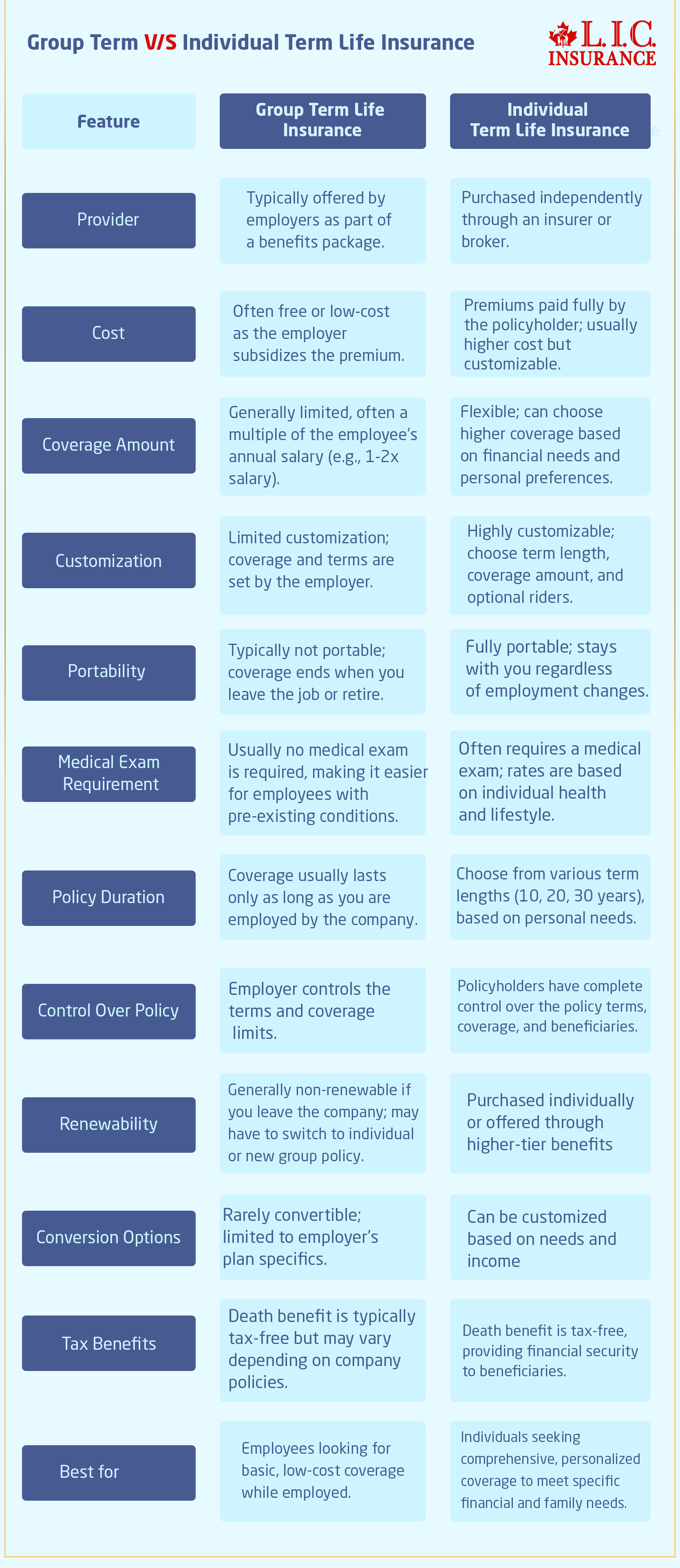
In 2026, corporate benefit structures often provide a "basic" level of group term insurance at no cost to the employee, typically one or two times their annual salary. Employees then have the option to purchase "supplemental" term coverage. Because these policies are group-rated, the insurer spreads the risk across thousands of employees. This collective bargaining power results in rates that are almost always lower than what an individual could find on the private permanent insurance market, especially for those with minor health issues.
Conversely, group permanent life insurance (such as Group Universal Life) bundles a death benefit with a cash-value component. A portion of every premium dollar is diverted into an internal account that grows over time. While this sounds attractive, the administrative fees associated with managing these small, individual investment accounts within a massive corporate plan are often high. Employees frequently find that they are paying three to five times more for the same death benefit just to have a nominal cash-value account that underperforms a standard 401(k) or IRA.
Simplicity and the Elimination of Decision Fatigue
Financial literacy remains a challenge in the 2026 workplace, and group term insurance offers a level of simplicity that permanent policies cannot match. When an employee signs up for group term, they only need to answer two primary questions: "How much coverage do I need?" and "Who are my beneficiaries?"
Group permanent life insurance introduces a thicket of variables. Employees must decide how to allocate their cash value among different investment sub-accounts, monitor the "cost of insurance" (which can rise as they age, eating into the cash value), and understand the tax implications of policy loans or withdrawals.
For most employees, life insurance is a "set it and forget it" component of their financial plan. Group term insurance fits this mindset perfectly. It provides a clear, guaranteed death benefit for a fixed cost that is easily deducted from a paycheck. This simplicity reduces the risk of employees making poor investment choices within their insurance policy—choices that could lead to the policy lapsing just when it is needed most.
Tax Advantages and IRC Section 79 Compliance
The Internal Revenue Code (IRC) provides specific advantages for group term life insurance that are not always as favorable for permanent products. Under Section 79, the first $50,000 of employer-provided group term life insurance is generally tax-free to the employee.
When coverage exceeds $50,000, the "imputed cost" of the excess coverage—calculated using the IRS Premium Table (Table I)—is added to the employee’s taxable income. Even with this tax, the cost of the coverage remains a bargain. In contrast, the tax treatment of group permanent life insurance is far more complex. If an employer contributes to a permanent policy, the entire value of that contribution may be considered taxable income immediately. Furthermore, if the policy is structured poorly, it could be classified as a Modified Endowment Contract (MEC), which strips away many of the tax advantages usually associated with life insurance.
Portability: The "Forever Coverage" Fallacy
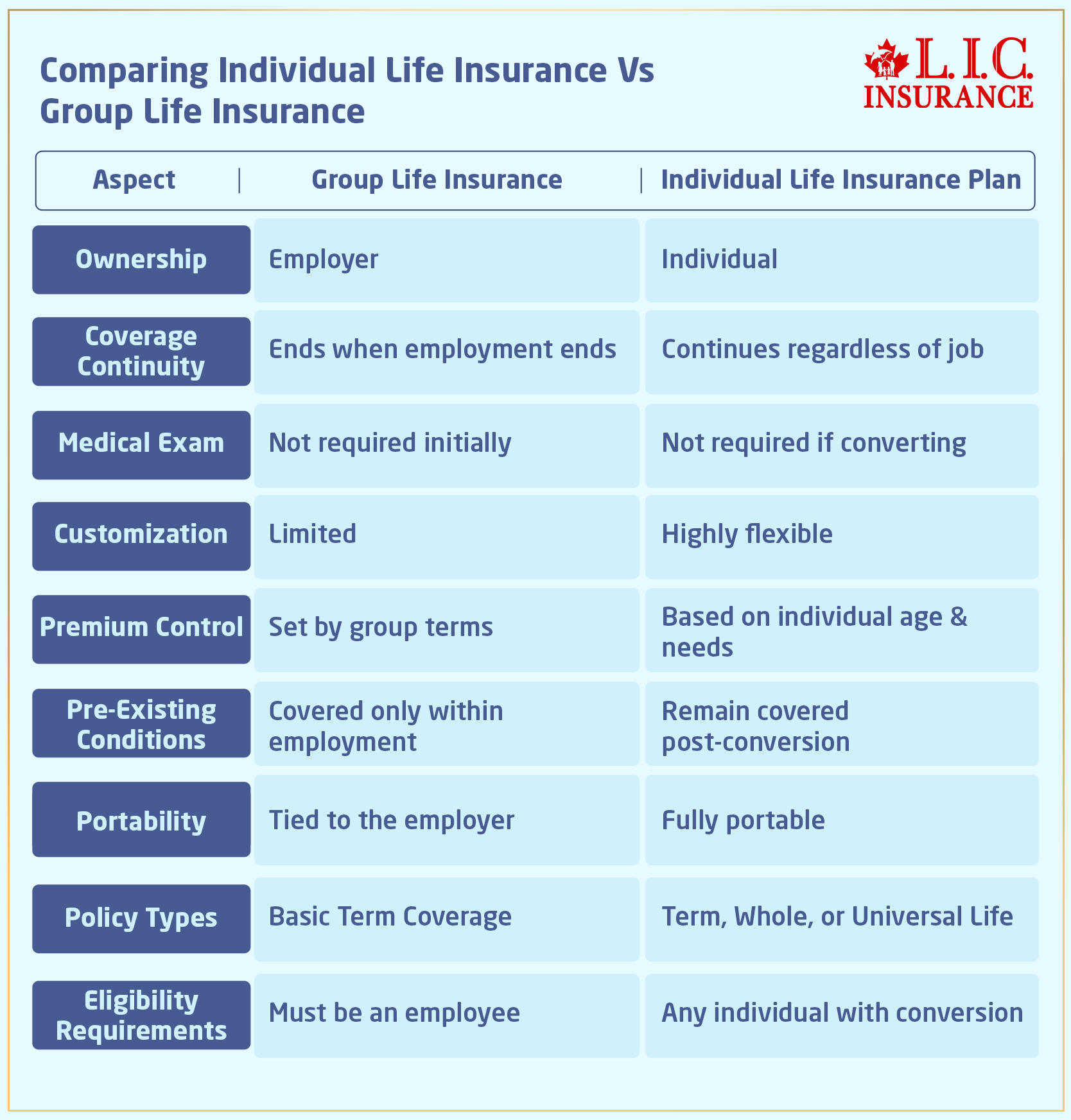
One of the most common arguments in favor of group permanent life insurance is portability—the ability to take the policy with you when you leave the company. Proponents argue that group term insurance is "rented," while group permanent is "owned."
However, in the 2026 job market, where the average tenure at a company is less than five years, the portability of group life insurance is often a trap. While you can "port" or "convert" a group policy, the premiums usually skyrocket once you leave the employer’s group-rated pool. The employee is transitioned to an individual rate class, which is often significantly more expensive than a new term policy they could buy on the open market.
Most employees are better off utilizing the low-cost group term insurance while employed and maintaining a separate, private term policy outside of work. This "laddering" strategy ensures that they are never without coverage during a job transition and that they aren't paying a premium for the "privilege" of porting a policy that will become prohibitively expensive the moment they resign.
Comparison: Group Term vs. Group Permanent Life Insurance
The following table highlights the functional differences that lead most financial advisors to recommend group term for the average employee.
| Feature | Group Term Insurance | Group Permanent (Life/Universal) |
|---|---|---|
| Primary Goal | Pure death benefit / Income replacement | Death benefit + Cash-value accumulation |
| Relative Cost | Very Low (High leverage) | High (3x - 10x higher than term) |
| Complexity | Low (Select amount and beneficiaries) | High (Investment choices, fees, loans) |
| Cash Value | None | Builds over time (often slowly) |
| Underwriting | Guaranteed issue (to a certain limit) | Often requires simplified or full medical |
| Best For | Families with mortgages and children | High-net-worth estate planning |
| Tax Status | Tax-free up to $50,000 | Complex; employer contributions are taxable |
| Portability | Limited (High cost to convert) | Available (But often expensive at individual rates) |
The "Buy Term and Invest the Difference" Strategy
The definitive argument for why group term insurance beats group life insurance is the "Buy Term and Invest the Difference" (BTID) principle. Because group term is so inexpensive, employees can take the money they would have spent on a permanent life insurance premium and invest it into their 401(k), 403(b), or a Health Savings Account (HSA).
In 2026, with the continued evolution of low-cost index funds and automated robo-advisors, the returns an employee can generate in a dedicated investment account almost always outpace the cash-value growth within a group life policy. Furthermore, money in a 401(k) or brokerage account is far more accessible and flexible than cash value locked inside an insurance contract, which may be subject to surrender charges or high-interest policy loans.
For example, if a 35-year-old employee spends $10 a month on supplemental group term for $500,000 in coverage, rather than $150 a month for the same amount of group universal life, they have $140 left over every month. Over a 30-year career, that $140 invested at a 7% annual return would grow to over $160,000. Most group life policies would struggle to reach even half that cash value after accounting for internal insurance costs and administrative fees.
When Group Life Insurance Might Be the Exception
While group term is the winner for the "typical" employee, group permanent life insurance does have a niche. It can be a viable tool for:
- Estate Planning for High Earners: Individuals who have already maxed out all other tax-advantaged accounts and have a specific need for permanent liquidity to pay estate taxes.
- Employees with Severe Health Issues: If an employer offers a "guaranteed issue" permanent policy, it may be the only way a person with a terminal or chronic illness can build up a life insurance policy with a cash-value component.
- The Disciplined Saver Problem: For individuals who find it impossible to save money unless it is automatically deducted and "hidden" within an insurance policy, the forced savings of a permanent plan is better than no savings at all.
Common Pitfalls to Avoid in 2026
Even though group term is generally superior, employees often make critical mistakes when relying on it.
- The "One Size Fits All" Trap: Many employees assume the basic coverage (e.g., 1x salary) provided by their employer is enough. In reality, most families need 7x to 10x their annual income to maintain their standard of living.
- Ignoring Age Bands: Group term rates are usually "age-banded" (e.g., rates increase every five years). Employees should review their payroll deductions every January to ensure the cost hasn't crept up to a point where an individual policy would be cheaper.
- Beneficiary Neglect: A common issue in 2026 is failing to update beneficiaries after a divorce, marriage, or birth. Since group term is so easy to set up, it is often forgotten during major life events.
Frequently Asked Questions
Is group term insurance taxable if my employer pays for it?
Under current 2026 IRS guidelines, the first $50,000 of coverage paid for by your employer is a tax-free benefit. For coverage amounts above $50,000, you will be taxed on the "imputed income" of the premium, which is calculated based on your age. This amount appears on your W-2 but is usually a very small fraction of the actual benefit's value.
Can I keep my group term insurance if I quit my job?
Technically, most plans offer "conversion" or "portability." Conversion allows you to turn the term policy into a permanent one without a medical exam, but the premiums will be based on individual rates, which are significantly higher. Portability allows you to keep the term coverage, but again, the "group rate" usually disappears, making it more expensive than if you had bought an individual policy while healthy.
Does group term insurance require a medical exam?
One of the greatest benefits of group term is that a "Basic" amount is almost always guaranteed issue, meaning no medical questions or exams. "Supplemental" amounts (coverage you pay for) may be guaranteed issue up to a certain limit (e.g., $250,000) during your initial enrollment period. If you try to add coverage later, you may have to fill out a Statement of Health.
What happens to my group term insurance when I retire?
In most cases, group term insurance ends when your employment ends. Some companies offer a small "retiree life insurance" benefit, but it is rarely enough to cover significant needs. This is why it is essential to have a plan for insurance that extends beyond your working years if you still have dependents or debts at that stage.
Why do some people say group term is "wasted money"?
This is a common misconception based on the fact that term insurance has no cash value. However, insurance is a risk-mitigation tool, not an investment. You don't consider your fire insurance "wasted" if your house doesn't burn down; similarly, the "value" of group term is the millions of dollars in protection provided to your family for a nominal monthly fee.
Practical Recommendation
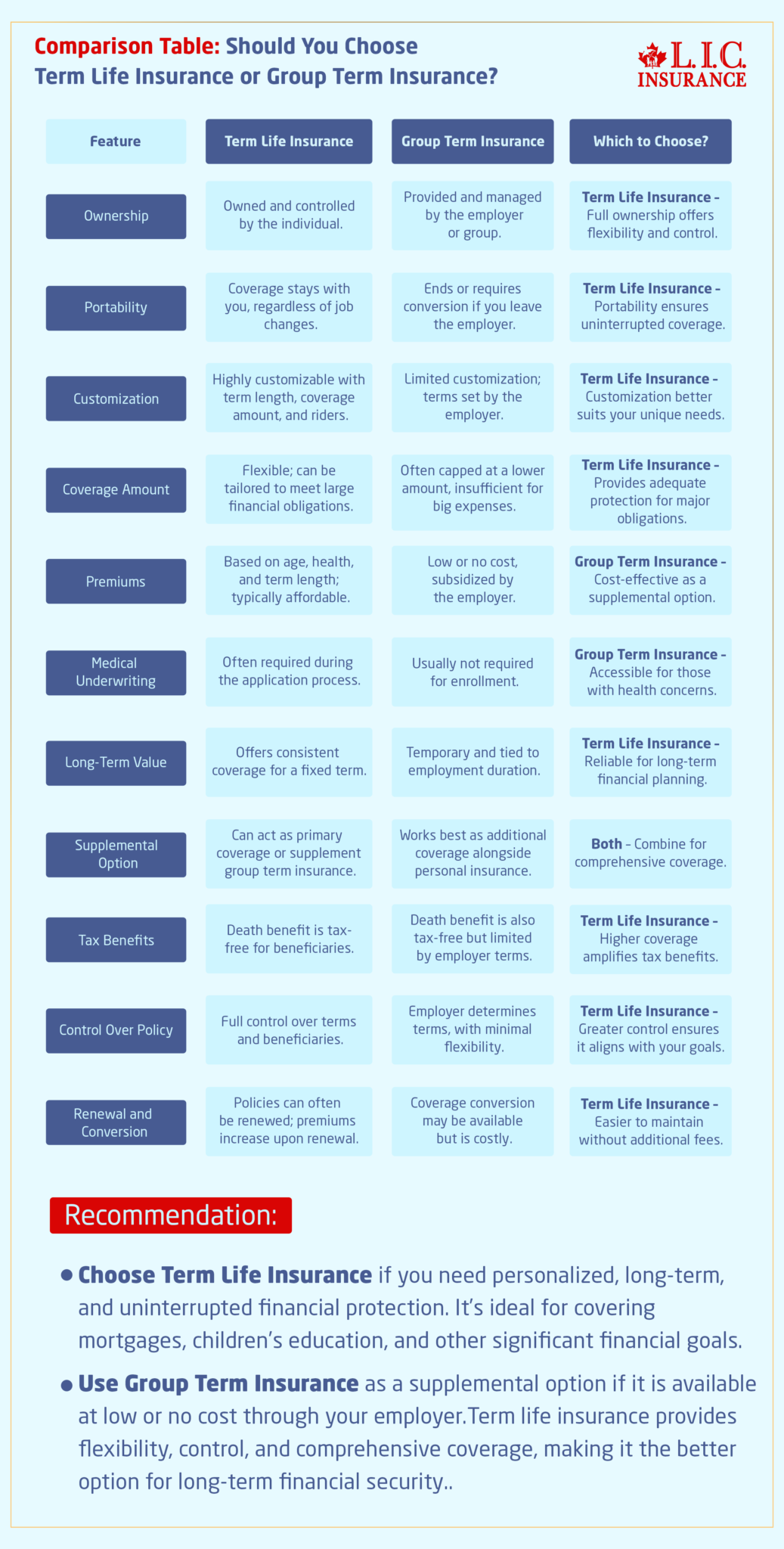
For the vast majority of employees in 2026, the best strategy is to maximize the low-cost group term insurance offered by your employer up to the "guaranteed issue" limit, while simultaneously maintaining a private, individual term life insurance policy outside of work. This approach provides the highest amount of protection at the lowest possible cost, avoids the high fees of permanent group life products, and ensures you remain covered regardless of your employment status. Use the money saved on premiums to fund your 401(k) or HSA, where your wealth can grow more efficiently than it ever would inside an insurance policy.
Image Gallery