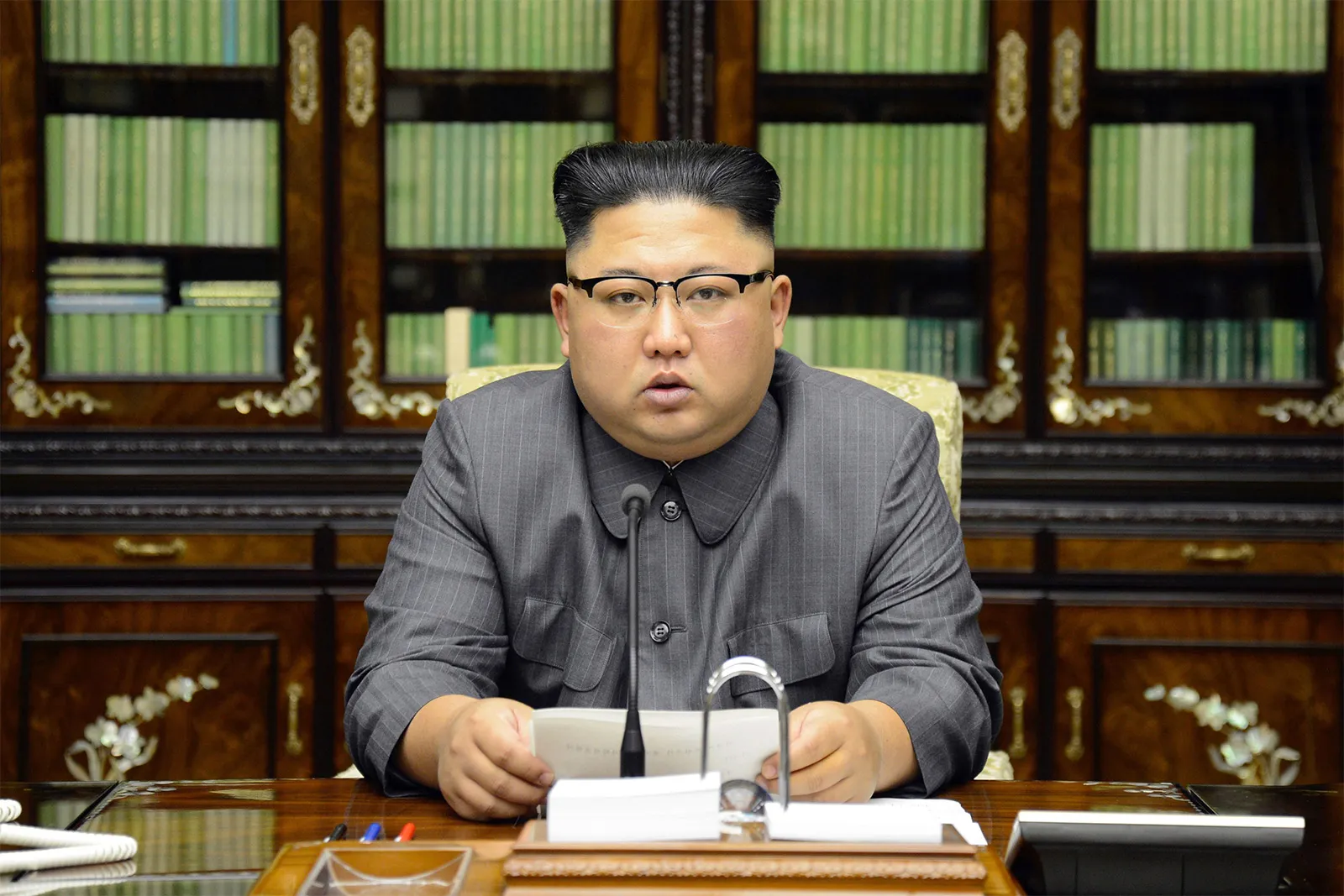
Kim Jong Un's Net Worth Compared With Barron Trump: A Comparative Financial Analysis
Evaluating the financial standing of Kim Jong Un alongside Barron Trump reveals a stark contrast between secretive sovereign wealth, state-controlled assets, and private family inheritances within modern global contexts. Analyzing thes...
Evaluating the financial standing of Kim Jong Un alongside Barron Trump reveals a stark contrast between secretive sovereign wealth, state-controlled assets, and private family inheritances within modern global contexts. Analyzing these distinct financial profiles requires examining how autocratic political power intertwines with state property, contrasted against high-net-worth family trusts and real estate portfolios in the United States.
Contents
The financial evaluation of figures like Kim Jong Un, the Supreme Leader of North Korea, and Barron Trump, the youngest son of U.S. President Donald Trump, involves examining entirely different economic systems, transparency levels, and asset ownership structures. While Kim Jong Un exercises absolute control over a centralized command economy and various slush funds, Barron Trump represents the private generational wealth of a prominent American business and political dynasty. Because North Korea operates under a shroud of extreme state secrecy, figures regarding Kim’s personal fortune are derived from intelligence reports, defector testimonies, and international investigations rather than public tax returns or corporate disclosures. Conversely, the Trump family's financial footprint is documented through decades of public disclosures, real estate valuations, and business filings, though exact allocations to individual family members remain private.
Understanding the Financial Architecture of North Korea's Leadership
To comprehend Kim Jong Un's net worth, one must first understand the unique economic structure of the Democratic People's Republic of Korea (DPRK). In nations governed by absolute authoritarian regimes, the line between personal wealth and state property is intentionally blurred.
Under the ruling Kim dynasty, the Supreme Leader exercises supreme authority over all national assets. External intelligence agencies, including sources from South Korea and the United States, have long estimated that the Kim family commands a personal fortune ranging between $1 billion and $5 billion. However, this figure is fundamentally different from the personal fortunes of Western billionaires or political heirs.
Office 39 and State-Controlled Slush Funds
A critical component of the leadership's financial resources is managed by an enigmatic entity known as Office 39 (or Room 39). Established in the late 1970s under Kim Il Sung, this secretive party organization is tasked with maintaining the ruling family's foreign currency reserves and funding the lavish lifestyles of the elite.
- Revenue Generation: Office 39 oversees various state enterprises, including legal and illicit activities such as gold mining, arms exports, cybercrime, and the manufacture of pharmaceuticals and counterfeit currency.
- Foreign Currency Access: The office maintains bank accounts in foreign jurisdictions, particularly in parts of Asia and Europe, to bypass international sanctions and procure luxury goods, high-end vehicles, and advanced technology for the ruling class.
- Personal Discretion: While these funds are technically state resources, Western intelligence analysts treat them as functionally accessible to Kim Jong Un for political patronage, loyalty reinforcement, and personal expenditures.
Real Estate, Transport, and Luxury Assets
Beyond liquid cash reserves managed through foreign accounts, the Kim family controls a sprawling portfolio of luxury assets within North Korea and abroad.
- Palaces and Residences: Kim Jong Un reportedly maintains over a dozen lavish private residences across North Korea, featuring private beaches, movie theaters, and subterranean bunkers, all maintained at state expense.
- Transportation Fleet: The Supreme Leader’s transport infrastructure includes private armored trains, a fleet of luxury Mercedes-Benz vehicles, private jets, and personal yachts, all procured despite comprehensive United Nations Security Council sanctions restricting luxury goods imports into the country.
Barron Trump and the Foundation of American Generational Wealth
In sharp contrast to the state-administered wealth of North Korea, Barron Trump's financial outlook is rooted in private enterprise, real estate development, and generational family trusts within the United States market economy.
As the son of Donald Trump—a real estate developer and media personality who served as the 45th and 47th President of the United States—and Melania Trump, Barron occupies a position within a prominent American family office structure. While underage minors and young adults in high-net-worth families do not typically possess independent public net worth figures, their financial trajectory is governed by family holding companies, trusts, and inheritance planning.
The Trump Family Business Model
The broader Trump Organization operates as a conglomerate with holdings in residential real estate, commercial office towers, luxury hotels, golf courses, and licensing agreements.
- Asset Valuation: Donald Trump’s net worth has historically fluctuated based on real estate market valuations, golf course revenues, and media ventures, often estimated by financial publications like Forbes and Bloomberg to be in the billions of dollars.
- Trust Structures: Wealth preservation for the next generation in high-net-worth families commonly involves irrevocable trusts, family limited partnerships, and structured estates designed to manage tax liabilities and provide long-term financial security without liquidating core operating assets.
- Educational and Professional Transition: Entering adulthood, members of the Trump family typically integrate into family-managed enterprises, private equity, or specialized professional fields, relying on private capital markets and legal protections established under U.S. corporate law.
| Financial Dimension | Kim Jong Un (Supreme Leader, North Korea) | Barron Trump (Family Successor, United States) |
|---|---|---|
| Economic System | Centrally planned command economy with state monopolies | Free-market capitalist economy with private property rights |
| Asset Ownership | Sovereign state assets blurred with personal control | Private corporate equity, real estate, and family trusts |
| Transparency & Data | Highly classified; estimated via foreign intelligence and defectors | Publicly scrutinized through financial disclosures and media audits |
| Primary Funding Sources | State-managed enterprises, Office 39, foreign currency operations | Real estate holdings, business ventures, and generational inheritance |
| Legal Framework | Absolute authoritarian rule overriding statutory property laws | U.S. constitutional law, private property protections, and trust law |
Comparing Economic Scale and Asset Liquidity
Directly comparing the financial status of an absolute dictator to a presidential family member involves contrasting two entirely incompatible economic paradigms.
Sovereign Power vs. Private Net Worth
From a strictly financial and legal perspective, Western net worth metrics apply to private individuals who hold enforceable property rights, liquid bank accounts, stocks, and real estate titles. Under this standard, Barron Trump's financial standing is tied to the private wealth of his family, protected by U.S. legal frameworks.
Kim Jong Un, meanwhile, does not possess a traditional "net worth" in the capitalist sense. If he were to step down or if the North Korean regime were to fall, those billions in estimated assets would remain tied to the state apparatus, foreign bank freezes, or international asset recovery initiatives. He cannot freely liquidate state infrastructure or military assets on global open markets for personal retirement. Therefore, comparing the two requires distinguishing between political control over state capital and private ownership of market capital.
Access to Luxury and Resource Allocation
Despite the structural differences in how their wealth is legally defined, both individuals enjoy access to elite resources that place them at the absolute apex of their respective societies.
- Kim Jong Un: Exercises absolute command over a nation's labor force and resources, allowing for the direct allocation of state funds to personal luxuries, regardless of domestic economic conditions.
- Barron Trump: Benefits from the liquidity, stability, and international mobility afforded by Western private wealth, real estate equity, and access to elite educational and professional institutions.
Frequently Asked Questions
What is Kim Jong Un's estimated net worth?
Intelligence agencies and financial analysts estimate Kim Jong Un's net worth to be between $1 billion and $5 billion. This figure represents an aggregation of state-controlled slush funds, luxury assets, and foreign currency reserves managed through entities like Office 39 rather than personal bank accounts subject to market audits.
Does Barron Trump have an independent net worth?
Independent financial publications do not publish a verified personal net worth for Barron Trump. As a young adult member of the Trump family, his financial security is tied to family trusts, real estate holdings, and generational wealth accumulated through the Trump Organization, operating under private legal structures.
How are authoritarian leaders' fortunes tracked?
Economists, intelligence agencies, and investigative journalists track authoritarian wealth by monitoring trade data, suspicious financial transactions, shipping registries, defector testimonies, and foreign bank accounts frozen by international economic sanctions.
Can sovereign state assets be classified as personal net worth?
In strict legal terms, sovereign state assets belong to the nation or government, not the individual leader. However, in authoritarian regimes where the executive exercises absolute control over all state industries, analysts frequently group these controlled assets under the leader's effective financial footprint.
Practical Considerations and Next Actions
When analyzing global wealth disparities and political economies, observers must maintain clear distinctions between private capitalist fortunes and state-controlled command economies. For academic researchers, journalists, and financial analysts studying sovereign wealth, relying on verified intelligence reports, official regulatory filings, and peer-reviewed economic studies ensures accurate assessments. Avoid conflating political dominance over national infrastructure with personal wealth ownership, as doing so misrepresents the legal and operational realities of global power structures.
Image Gallery