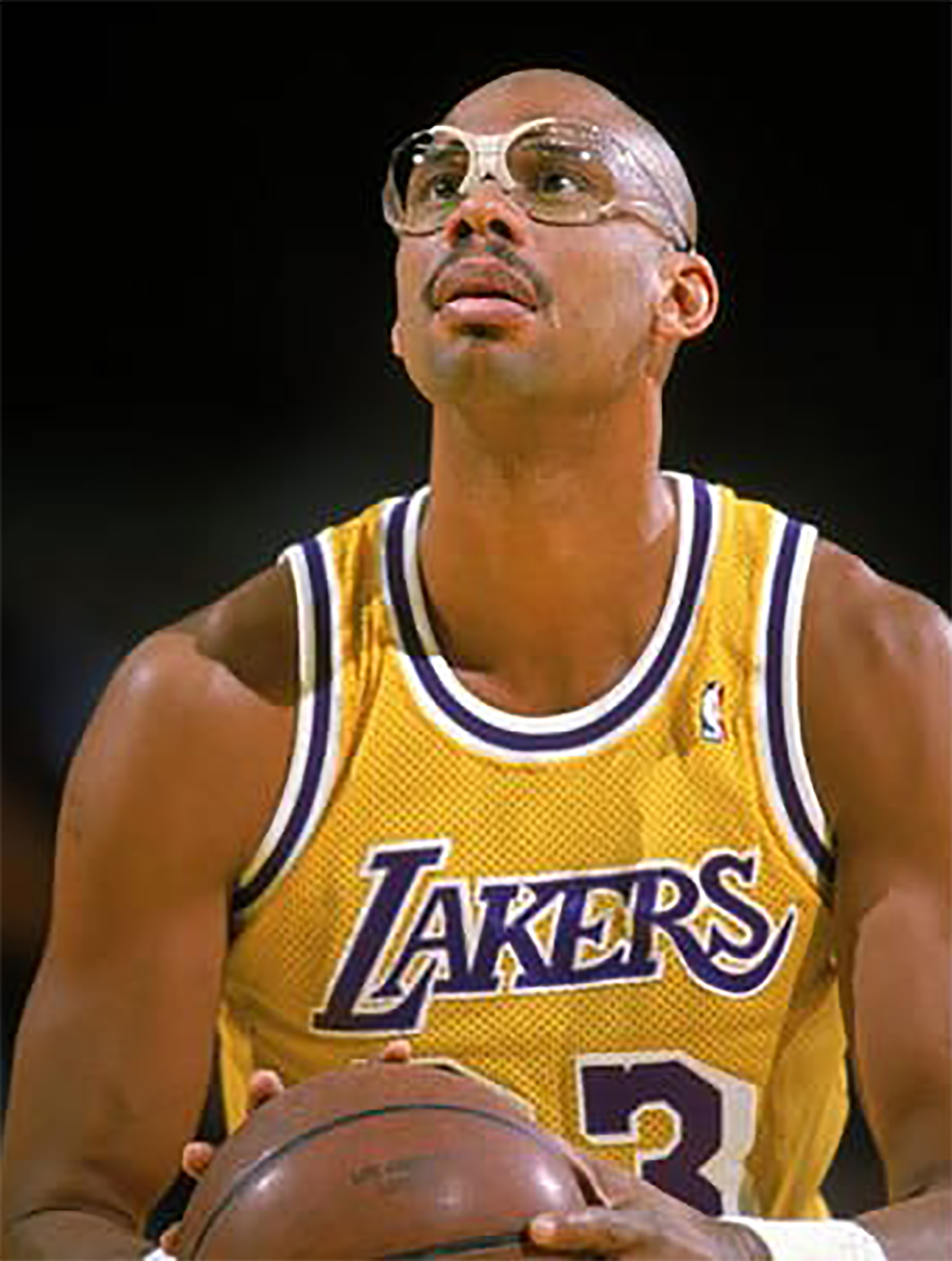
The Formative Years of Kareem Abdul-Jabbar: A Comprehensive Childhood Biography
Kareem Abdul-Jabbar, born Ferdinand Lewis Alcindor Jr., experienced a childhood defined by rapid physical growth, a strict Catholic upbringing in Harlem and Inwood, and an early immersion in the cultural rhythms of Jazz and the Civil R...
Kareem Abdul-Jabbar, born Ferdinand Lewis Alcindor Jr., experienced a childhood defined by rapid physical growth, a strict Catholic upbringing in Harlem and Inwood, and an early immersion in the cultural rhythms of Jazz and the Civil Rights movement. These foundational years in New York City shaped his legendary discipline and social consciousness.
Contents
Before he became the NBA’s all-time leading scorer for nearly four decades and a global icon of civil rights, Kareem Abdul-Jabbar was a young boy navigating the complex social and physical landscape of mid-century New York. To understand the man who would eventually master the skyhook, one must look back at his early life—a period marked by a sense of "otherness" due to his extraordinary height and the dual influences of his parents' disciplined household.
Early Life and Family Heritage in Harlem
Born on April 16, 1947, at Sydenham Hospital in Harlem, Ferdinand Lewis Alcindor Jr. was a physical marvel from the very beginning. Weighing 12 pounds, 11 ounces and measuring 22.5 inches at birth, he was the only child of Cora Lillian, a seamstress, and Ferdinand Lewis Alcindor Sr., a New York City Transit police officer and a classically trained jazz musician.
The Alcindor household was one of high expectations and quiet dignity. His father, a graduate of the Juilliard School, was a man of few words but profound presence. The discipline required to be a transit officer combined with the artistic soul of a trombonist created an environment where Lew (as he was known then) learned the value of precision and practice. While Harlem provided a vibrant cultural backdrop of music and community, the family eventually moved to the Dyckman Street projects in the Inwood neighborhood of Upper Manhattan, which was then a predominantly white, Irish-Catholic area.
This move played a significant role in his early social development. Being the only Black child in many of his immediate circles, and certainly the tallest, Alcindor began to experience a sense of isolation. This solitude, however, fostered a rich inner life and a love for reading and history that would persist throughout his life. As of 2026, historians often point to this period as the origin of his contemplative and often reserved public persona.
The Physical Transformation: Growing Up Tall and Isolated
By the age of nine, Lew Alcindor stood 5 feet, 8 inches tall. By the time he entered the eighth grade, he had surpassed 6 feet. This extraordinary stature was both a gift and a burden. In the 1950s, a child of that height was frequently stared at, mocked, or treated as a spectacle.
The psychological impact of this growth cannot be overstated. Alcindor often felt like an outsider, a feeling compounded by his natural introversion. He found refuge in the classroom and on the basketball court, but the transition was not always seamless. His height made him a natural target for coaches, yet he initially lacked the coordination to match his size.
The struggle to inhabit his body led to a rigorous self-discipline. He didn't just play basketball; he studied it. He recognized early on that his height was an asset only if it was paired with technical mastery. This realization drove him to practice the fundamentals—footwork, positioning, and the soft touch—that would later define his professional career.
Educational Foundations: Holy Trinity and the Parochial System
Alcindor’s education began at Holy Trinity School, a Catholic parochial school. The environment was strict, emphasizing moral rectitude and academic excellence. It was here that he first felt the sting of racial dynamics within a structured institution. Despite being a standout student and athlete, he was often reminded of his status as a minority in a system that did not always value his heritage.
It was during his time at Holy Trinity that he began to refine his basketball skills. Under the guidance of his early mentors, he started to dominate the local Catholic Youth Organization (CYO) leagues. His height was already a legendary topic across the five boroughs, attracting the attention of high school scouts from across the city.
The parochial school system provided the structure that Alcindor’s father valued. It instilled a sense of "playing by the rules," even as the young Lew began to question the fairness of the rules governing American society at large. His academic performance remained high, proving that he was far more than just a "tall kid with a ball."
The Power Memorial Era: The "Tower from Power"
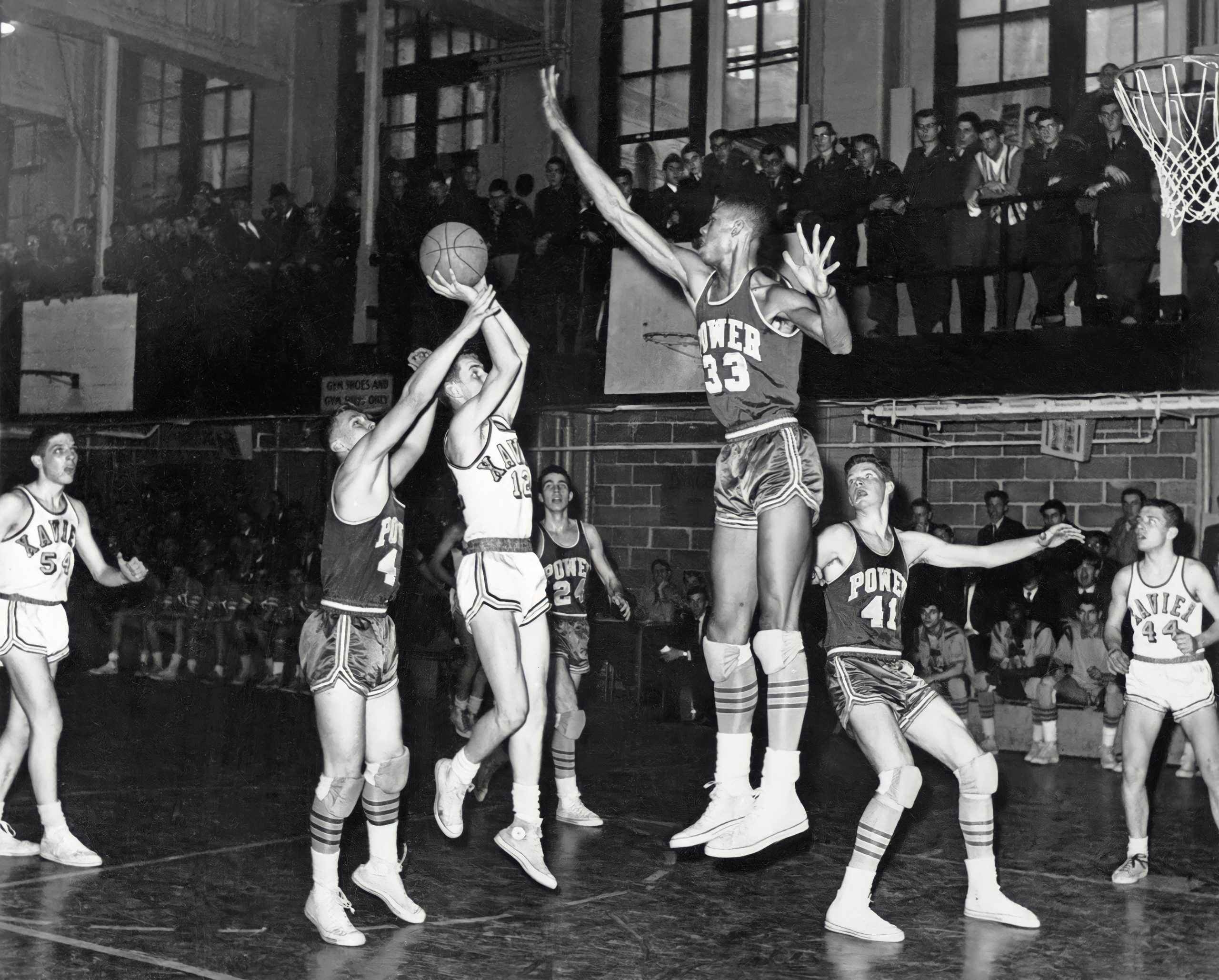
In 1961, Alcindor enrolled at Power Memorial Academy, an all-boys Catholic high school in Manhattan. It was here, under the tutelage of Coach Jack Donohue, that the legend of Lew Alcindor truly took flight. Donohue was a disciplinarian who recognized that Alcindor needed more than just basketball drills; he needed a protector and a mentor who could help him navigate the pressures of burgeoning fame.
During his four years at Power Memorial, Alcindor led the "Pioneers" to an astonishing 71-game winning streak. The team won three consecutive New York City Catholic championships. By his senior year, he was being called the "Tower from Power" and was widely considered the greatest high school basketball player in the history of the sport.
The Development of the Skyhook
While many associate the skyhook with his time at UCLA or the Los Angeles Lakers, the seeds were planted during his childhood and high school years. Because he was so much taller than his peers, the dunk was often seen as "unfair" or "unsportsmanlike" (and was eventually banned in college basketball because of him). To counter this and to ensure he could score against any defense, Alcindor perfected a high-release hook shot that utilized his wingspan. This shot was essentially unblockable, allowing him to dominate without relying solely on brute strength.
Cultural and Social Climate: A Racial Awakening
The late 1950s and early 1960s were a period of intense social upheaval in the United States. For a young Black man growing up in New York City, the Civil Rights movement was not a distant news story; it was a daily reality.
A pivotal moment in Alcindor's childhood occurred in 1964 during the Harlem Riots. Witnessing the tension between his community and the police—a force his own father belonged to—created a profound internal conflict. He began to read the works of James Baldwin and Malcom X, seeking to understand the systemic inequalities he saw around him.
This period marked the beginning of his transition from Ferdinand Lewis Alcindor Jr. to the man who would eventually become Kareem Abdul-Jabbar. He realized that his platform as an athlete gave him a voice, and he felt a growing responsibility to use it. His childhood was the crucible in which his political and social activism was forged.
Key Milestones in Lew Alcindor’s Early Life
The following table summarizes the critical stages of Kareem Abdul-Jabbar's childhood and early adolescence, highlighting the rapid progression of his physical and athletic development.
| Age | Milestone/Event | Context/Detail |
|---|---|---|
| 0 | Birth in Harlem (1947) | Born weighing nearly 13 lbs; parents Cora and Lewis Sr. |
| 9 | Unusual Stature | Reached a height of 5'8", standing head and shoulders above peers. |
| 13 | Enrollment at Power Memorial | Entered high school at 6'8"; began his legendary prep career. |
| 14-17 | The 71-Game Streak | Led Power Memorial to three straight NYC Catholic championships. |
| 17 | Social Awakening | Influenced by the 1964 Harlem Riots; began exploring civil rights literature. |
| 18 | Graduation (1965) | Left NYC as the most recruited high school player in U.S. history. |
The Influence of Jazz and the Arts
Despite his fame as an athlete, Alcindor’s childhood was deeply intertwined with the world of music. His father, Lewis Sr., was often found practicing his trombone or listening to jazz greats like Thelonious Monk and Billy Eckstine. The syncopated rhythms of jazz and the requirement for both individual improvisation and collective harmony heavily influenced how Alcindor viewed basketball.
He often described the flow of a basketball game in musical terms. The discipline required to master an instrument mirrored the discipline he applied to his footwork on the court. This cultural background provided him with a sophistication and a world-view that was often absent in his athletic contemporaries. It also gave him a way to connect with his father, a man who was often stoic and difficult to reach emotionally.
Transition to UCLA: The End of Childhood
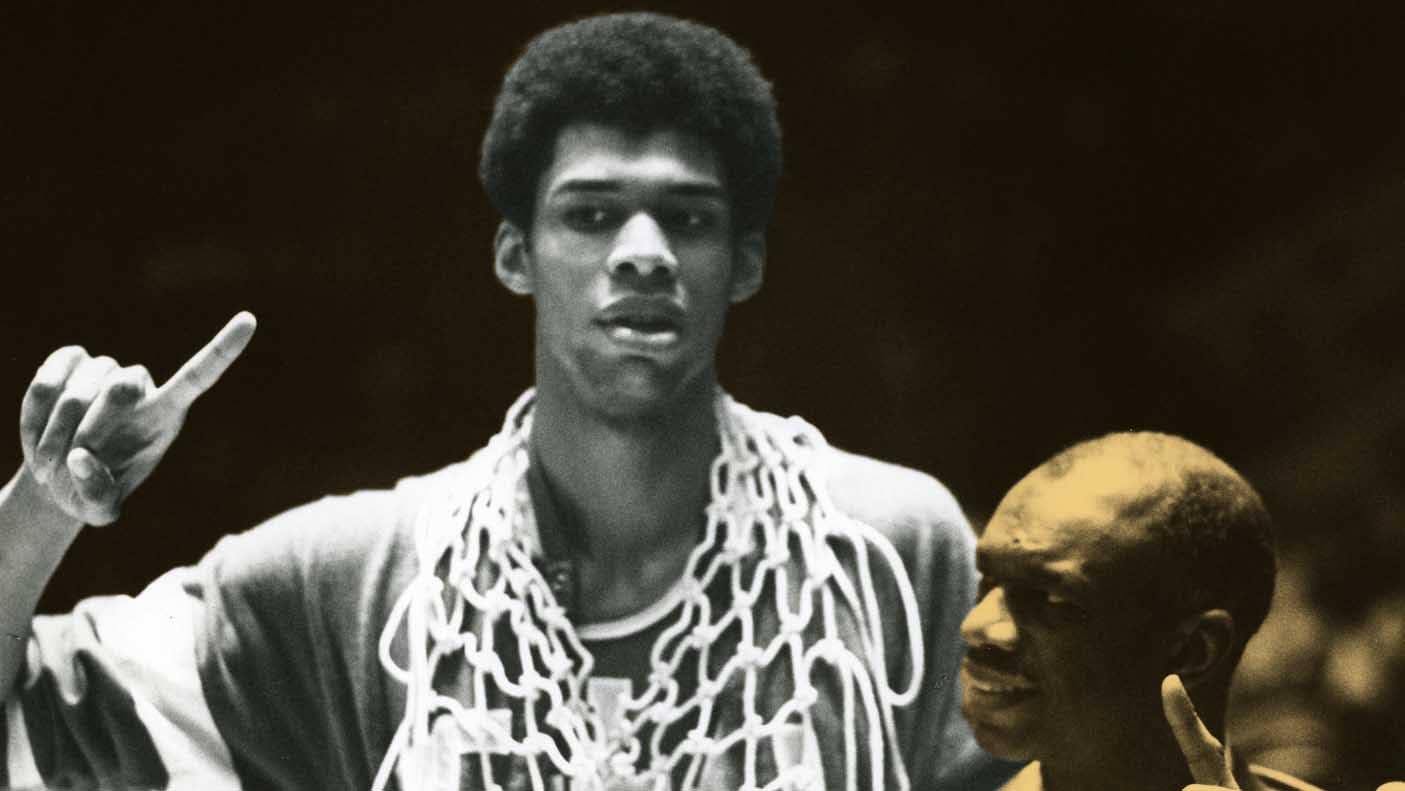
By 1965, the childhood of Lew Alcindor had come to an end. He was no longer just a boy from Manhattan; he was a national phenomenon. His decision to attend UCLA to play for Coach John Wooden was the final step in his journey away from the streets of New York.
However, he carried the lessons of his childhood with him: the discipline of the Catholic schools, the rhythm of his father’s jazz, the resilience required to be "different," and the burgeoning fire of social justice. These elements combined to create a man who would not only change the game of basketball but would also become a leading voice for African American identity and religious freedom.
Frequently Asked Questions
What was Kareem Abdul-Jabbar's birth name?
He was born Ferdinand Lewis Alcindor Jr. He used this name throughout his childhood and high school years at Power Memorial Academy, as well as during his legendary collegiate career at UCLA. He officially changed his name to Kareem Abdul-Jabbar in 1971 after leading the Milwaukee Bucks to an NBA championship.
How tall was Kareem Abdul-Jabbar as a child?
Kareem was exceptionally tall from birth. He was 5'8" by age nine and 6'8" by the time he entered high school at age 13. By the time he graduated from high school, he had reached nearly 7'1". His height was a primary factor in his early interest in basketball, though it also caused him significant social anxiety as a youth.
Where did Kareem Abdul-Jabbar grow up?
He spent his earliest years in Harlem, Manhattan. Later, his family moved to the Dyckman Street projects in the Inwood neighborhood of Upper Manhattan. This move was significant because Inwood was a largely white, ethnic neighborhood at the time, which heightened his sense of being an outsider.
Did Kareem Abdul-Jabbar play other sports as a kid?
While basketball was his primary focus due to his height, he also participated in baseball and track during his younger years. However, his rapid growth made him somewhat clumsy in other sports initially, leading him to dedicate his time almost exclusively to basketball by the time he reached the eighth grade.
What was his relationship like with his parents?
His relationship with his father was characterized by a "quiet respect." His father was a strict disciplinarian and a transit cop, which meant the household was very structured. His mother, Cora, provided a more nurturing influence. The discipline he learned from his father is often cited as the reason for his legendary work ethic and longevity in the NBA.
Final Recommendation
For those looking to understand the full legacy of Kareem Abdul-Jabbar as of 2026, it is essential to study his childhood through the lens of mid-century New York. His early life proves that his success was not merely a result of physical gifts, but rather a product of intense intellectual curiosity and a disciplined upbringing. To gain more insight into his early influences, readers should explore the history of Power Memorial Academy and the cultural impact of the Harlem Renaissance on the families who lived through its tail end. Understanding the "boy" Lew Alcindor is the only way to truly appreciate the "man" Kareem Abdul-Jabbar.
Image Gallery