2025 Hatchback Cars: A Comprehensive Guide to Performance, Efficiency, and Value
The 2025 hatchback market represents a pivotal moment in automotive engineering, blending refined internal combustion engines, advanced hybrid systems, and mature electric platforms. For drivers in 2026 looking at these vehicles, they...
The 2025 hatchback market represents a pivotal moment in automotive engineering, blending refined internal combustion engines, advanced hybrid systems, and mature electric platforms. For drivers in 2026 looking at these vehicles, they offer a versatile alternative to larger SUVs, providing superior fuel economy, easier urban maneuverability, and sophisticated technology suites that remain competitive with the newest 2026 releases.
Contents
The Evolving Landscape of the Hatchback in 2025
By the 2025 model year, the hatchback segment successfully transitioned from being "entry-level transport" to a sophisticated category defined by technological integration and powertrain diversity. While SUVs continue to dominate market share, the 2025 hatchback lineup appeals to a specific demographic that prioritizes driving dynamics, parking ease, and lower total cost of ownership.
In 2025, manufacturers leaned heavily into hybridization. The most significant shift was the move away from pure internal combustion engines (ICE) in flagship models toward "performance hybrids." This change wasn't just about fuel economy; it was about using electric torque to improve the driving experience. Additionally, the 2025 model year saw the "normalization" of electric hatchbacks, with brands focusing on range efficiency and charging speeds rather than just novelty.
From a design perspective, the 2025 models emphasized "long-roof" aerodynamics to maximize range and minimize wind noise. Inside, the industry standardized larger infotainment screens—often 10 to 12 inches—and integrated wireless smartphone connectivity across almost all trim levels. As we evaluate these vehicles from the perspective of 2026, their hardware remains robust enough to handle the latest software updates and navigation demands.
Leading Internal Combustion and Hybrid Hatchbacks
The traditional hatchback segment was revitalized in 2025 by major updates to perennial favorites. These vehicles serve as the benchmark for reliability and daily usability.
Honda Civic Hatchback: The Hybrid Transformation
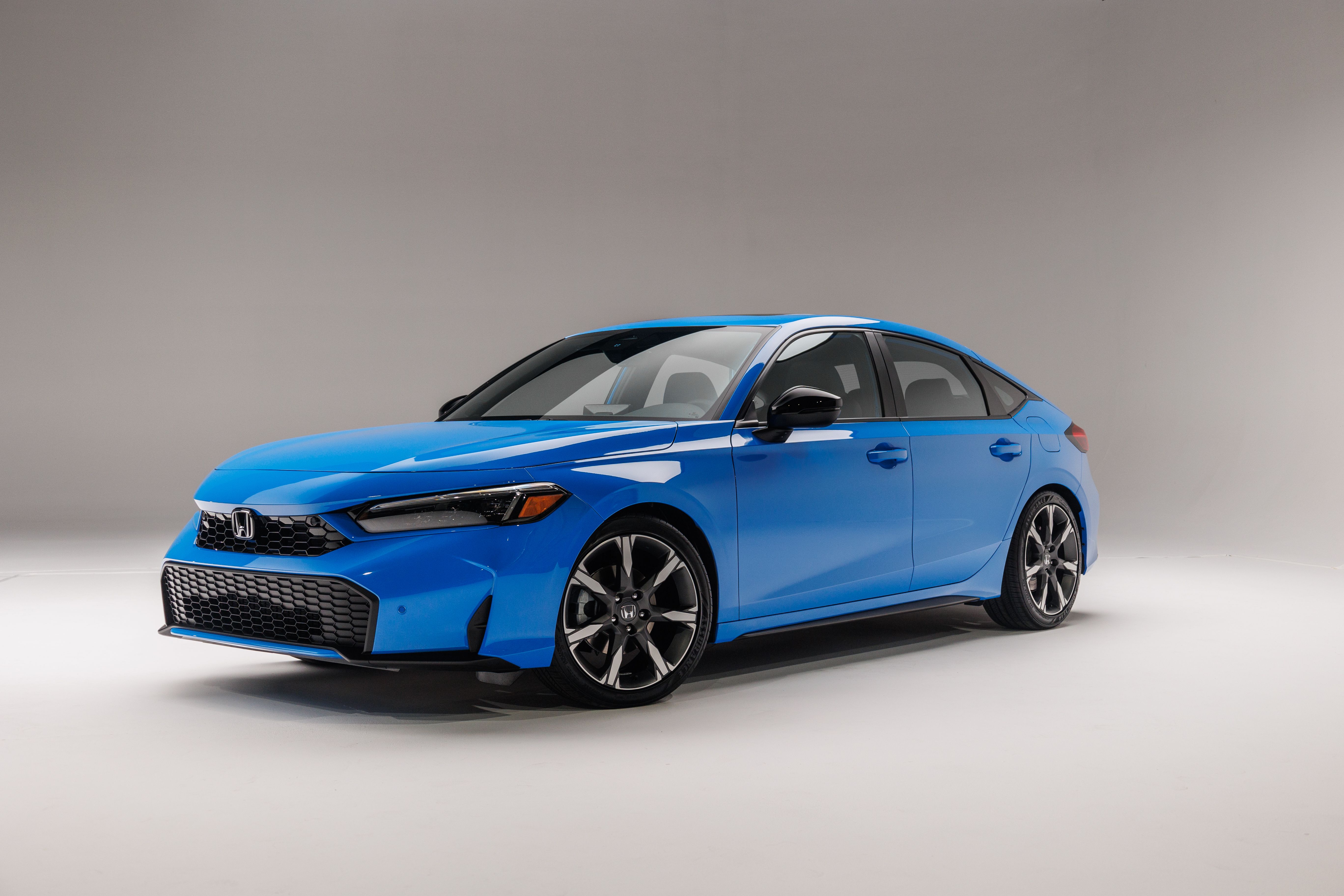
The 2025 Honda Civic Hatchback marked a major turning point with the reintroduction of the Civic Hybrid. Honda positioned the hybrid as the top-tier powertrain, replacing the previous 1.5-liter turbocharged engine in higher trims.
The 2025 Civic Hybrid utilizes a two-motor system paired with a 2.0-liter Atkinson-cycle engine. This setup produces a combined 200 horsepower and 232 lb-ft of torque, making it more powerful than the standard non-Si Civic models. From a technical standpoint, the lack of a traditional transmission—using the electric motors to drive the wheels most of the time—results in a remarkably smooth power delivery that rivals many luxury vehicles. For 2026 buyers, a used or "new old stock" 2025 Civic Hatchback represents one of the best balances of 50+ MPG and practical cargo space.
Toyota Corolla Hatchback: Stability and Safety
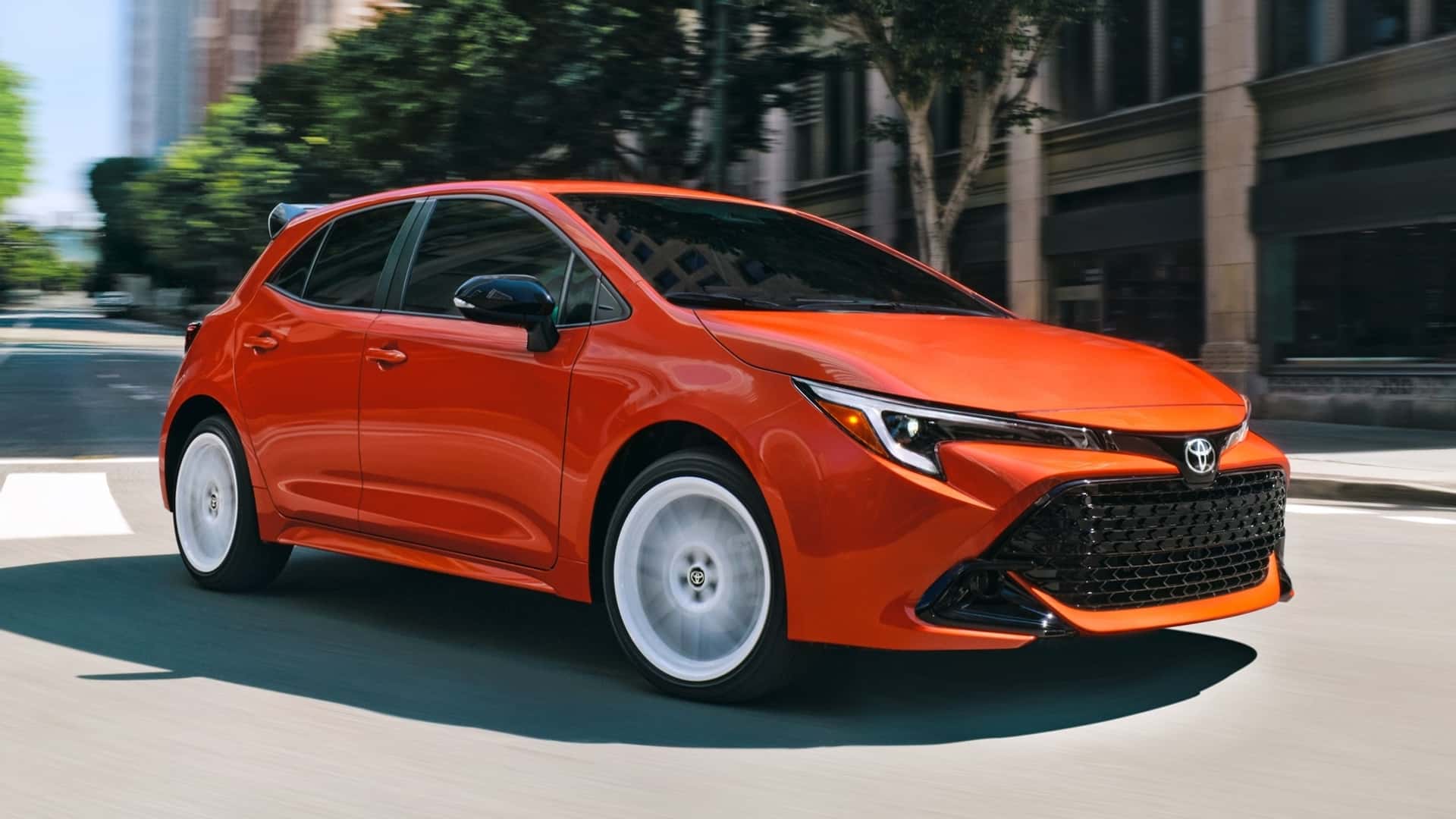
While the Civic went for a major powertrain overhaul, the 2025 Toyota Corolla Hatchback focused on refining its safety suite and connectivity. Built on the TNGA-C platform, the 2025 model continues to offer a lower center of gravity than its competitors, contributing to agile handling.
The 2025 Corolla features Toyota Safety Sense 3.0, which includes Proactive Driving Assist—a system that provides gentle braking into curves or behind other vehicles even when cruise control isn't engaged. While its cargo space is tighter than the Civic's, its reputation for long-term mechanical durability makes it a primary target for those looking at 2025 models in the secondary market today.
Mazda3 Hatchback: The Premium Alternative
The 2025 Mazda3 Hatchback remains the "enthusiast's choice" in the segment. Mazda’s commitment to internal combustion excellence is evident in the 2.5-liter Skyactiv-G engine, particularly the Turbo variants which deliver up to 250 horsepower.
In 2025, Mazda improved the technological interface, moving toward a 10.25-inch display that supports touchscreen functionality specifically through Apple CarPlay and Android Auto—a response to previous criticisms of their rotary-only controller. The Mazda3's interior materials, including genuine leather and dampened switchgear, allow it to compete with entry-level luxury brands like Audi or BMW at a significantly lower price point.
The Electric Hatchback Revolution
By 2025, the distinction between a "hatchback" and a "small crossover" became blurred in the EV space. However, several key models stayed true to the low-slung, efficient hatchback silhouette.
Hyundai Ioniq 5 (2025 Update)
The 2025 Ioniq 5 received a significant mid-cycle refresh that addressed several user concerns. Most notably, Hyundai added a rear window wiper, a physical button bank for frequently used climate and seat functions, and a larger 84 kWh battery pack in the Long Range versions.
The 2025 model also shifted to the NACS (North American Charging Standard) port natively in some regions, allowing access to the Tesla Supercharger network without adapters. This makes the 2025 model significantly more future-proof than 2023 or 2024 versions for owners operating in 2026 and beyond.
Volkswagen ID.3 and Global Variants
While the ID.3 remains a staple in European and Asian markets, its influence on the 2025 hatchback market was felt through improved software (Version 5.0). This update resolved the laggy interface issues that plagued earlier electric Volkswagens. The 2025 ID.3 also introduced pre-conditioning for the battery, allowing for faster DC charging speeds in cold weather—a critical feature for reliability in northern climates.
Performance Hatchbacks: The "Hot Hatch" Status
For drivers seeking engagement, 2025 was a "last hurrah" year for several purely mechanical performance cars.
- Volkswagen Golf GTI and Golf R (Mk 8.5): The 2025 refresh brought more horsepower (up to 241 hp for the GTI) and a larger 12.9-inch screen. Crucially, 2025 saw the removal of the manual transmission option in several markets, making the DSG (dual-clutch) the standard.
- Honda Civic Type R: Remaining largely unchanged for 2025, it continues to be the benchmark for front-wheel-drive performance. Its mechanical limited-slip differential and rev-matching 6-speed manual make it a highly coveted collector's item even in 2026.
- Toyota GR Corolla: The 2025 GR Corolla updated its cooling systems and increased torque for the base models. The introduction of an 8-speed "Direct Automatic Transmission" (DAT) expanded the appeal of this rally-bred hatchback to a wider audience.
Technical Specifications and Comparison Table
The following table compares the base specifications for the most popular 2025 hatchback models. Note that cargo volume is measured with rear seats in the upright position.
| Model | Powertrain Type | Horsepower | Est. Combined MPG/MPGe | Cargo Volume (cu. ft.) |
|---|---|---|---|---|
| Honda Civic Hatchback | Hybrid (2.0L) | 200 hp | 50 MPG | 24.5 |
| Toyota Corolla Hatch | Gas (2.0L) | 169 hp | 35 MPG | 17.8 |
| Mazda3 Hatchback | Gas (2.5L) | 191 hp | 30 MPG | 20.1 |
| Volkswagen Golf GTI | Turbo Gas (2.0L) | 241 hp | 28 MPG | 19.9 |
| Hyundai Ioniq 5 | Electric (RWD) | 225 hp | 114 MPGe | 27.2 |
| Subaru Impreza | Gas (2.0L/2.5L) | 152-182 hp | 30 MPG | 20.4 |
Factors to Consider When Buying a 2025 Hatchback in 2026
As we evaluate these vehicles a year after their release, several factors influence their value and suitability for current buyers.
Depreciation and Market Value
Hatchbacks typically depreciate slightly faster than SUVs, which makes the 2025 models excellent "nearly new" purchases in 2026. The high-demand hybrids, like the Civic and Corolla, tend to hold their value better due to high fuel prices. Conversely, luxury hatchbacks like the Audi A3 or BMW 1 Series may see a 15-20% drop in value after the first year, providing a window for savvy buyers to get premium features at a mainstream price.
Technology and Longevity
The 2025 model year was the point where Over-the-Air (OTA) updates became standard. When buying a 2025 vehicle now, ensure the software has been updated to the latest 2026 versions. This is particularly important for EVs (like the Ioniq 5 or Kia EV6), where software updates can improve range management and charging curves.
Cargo vs. Passenger Space
A common mistake is assuming all hatchbacks are equal in utility. The 2025 Civic Hatchback utilizes a "liftback" design, offering nearly as much floor space as a small crossover. In contrast, the Toyota Corolla Hatchback prioritizes a sporty rear profile, which significantly limits vertical cargo space. Buyers should test their specific needs—such as fitting a stroller or golf clubs—before committing to a specific model.
Common Challenges and Troubleshooting
Even with high reliability ratings, 2025 hatchbacks have specific areas that require attention:
- Low Ground Clearance: Unlike SUVs, 2025 hatchbacks sit low to the ground. This improves fuel economy and handling but makes them susceptible to damage from high curbs or deep snow. Many 2025 Mazda3 and Corolla owners have noted the importance of checking the front plastic air dams for scrapes.
- Infotainment Glitches: Early production runs of the 2025 Golf GTI (Mk 8.5) and some Hyundai models experienced software "hangs" where the screen would momentarily freeze. Ensure all factory recalls and service bulletins regarding software have been addressed.
- Tire Wear on EVs: Owners of electric hatchbacks like the Ioniq 5 often find that the high torque leads to faster wear on the factory-equipped low-rolling-resistance tires. In 2026, many of these vehicles may be nearing their first tire replacement.
FAQ
Is the 2025 Honda Civic Hatchback better than the 2025 SUV alternatives?
In many ways, yes. The 2025 Civic Hatchback Hybrid offers better fuel economy (50 MPG) than almost any non-plug-in SUV while providing 24.5 cubic feet of cargo space. It is also easier to park and offers a more engaged driving experience. However, it lacks the high seating position and available All-Wheel Drive (AWD) found in SUVs like the Honda HR-V.
Which 2025 hatchback has the best safety ratings?
Most 2025 hatchbacks from major manufacturers like Toyota, Honda, and Subaru earned the IIHS Top Safety Pick or Top Safety Pick+ awards. The Subaru Impreza and Toyota Corolla are particularly noted for their standard suite of active safety tech, including lane-keep assist and emergency braking, which are standard even on base trims.
Are there any manual transmission hatchbacks left in 2025?
Options for manual transmissions significantly dwindled in 2025. You can still find them in the Honda Civic Type R, Toyota GR Corolla, and the Mazda3 (though often restricted to the Premium non-turbo trim). Most "standard" hatchbacks, including the Volkswagen GTI in many markets, shifted exclusively to automatic or dual-clutch transmissions for 2025.
Can the 2025 Ioniq 5 use Tesla Superchargers?
Yes, as of the 2025 model year update, the Ioniq 5 began transitioning to the NACS port. For those with the older CCS port, adapters became widely available in 2025 and 2026, allowing most 2025 Hyundai EVs to access the Supercharger network, provided the charging station is "Magic Dock" equipped or the owner has an approved adapter.
Final Recommendation
For those navigating the automotive market in 2026, the 2025 Honda Civic Hatchback Hybrid stands as the most well-rounded choice for the average driver, offering a near-perfect blend of efficiency, modern tech, and resale value. If performance is the priority, the 2025 Volkswagen Golf GTI remains the gold standard for daily-driver thrills, despite the move away from manual gearboxes. For those ready to go fully electric, the 2025 Hyundai Ioniq 5 is the recommended choice due to its recent physical and software refinements that make it feel entirely contemporary even against 2026 models.
Image Gallery